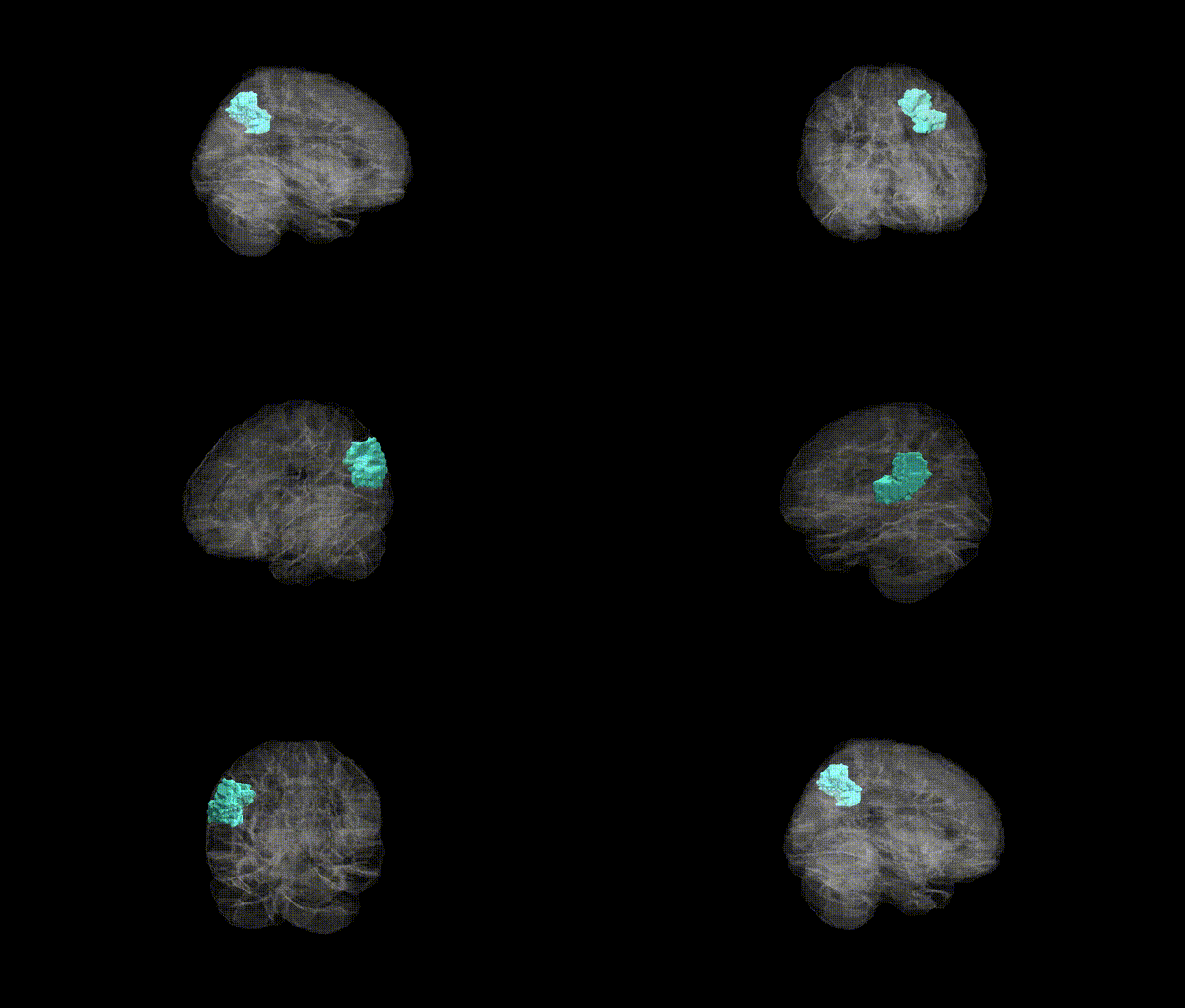
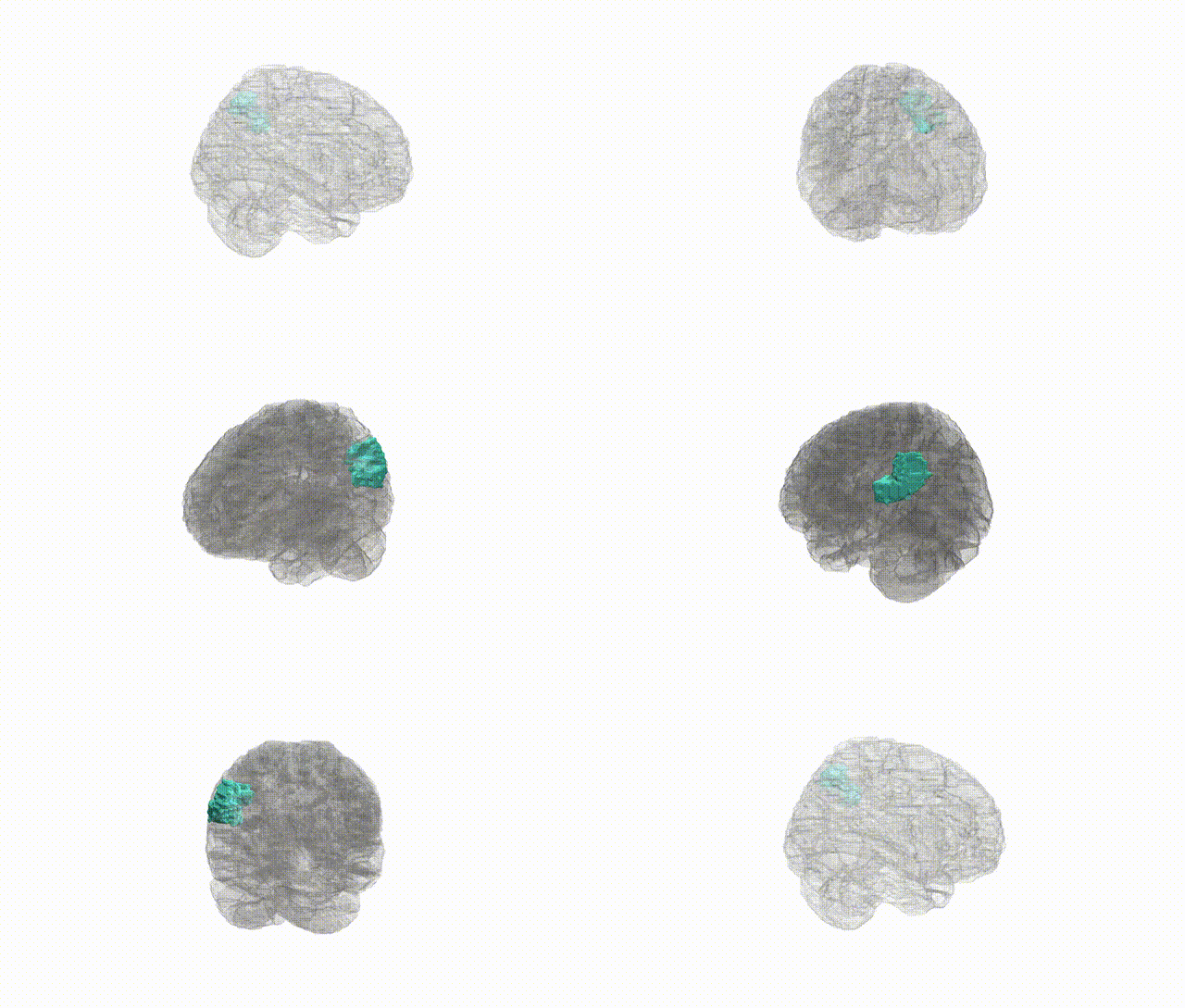
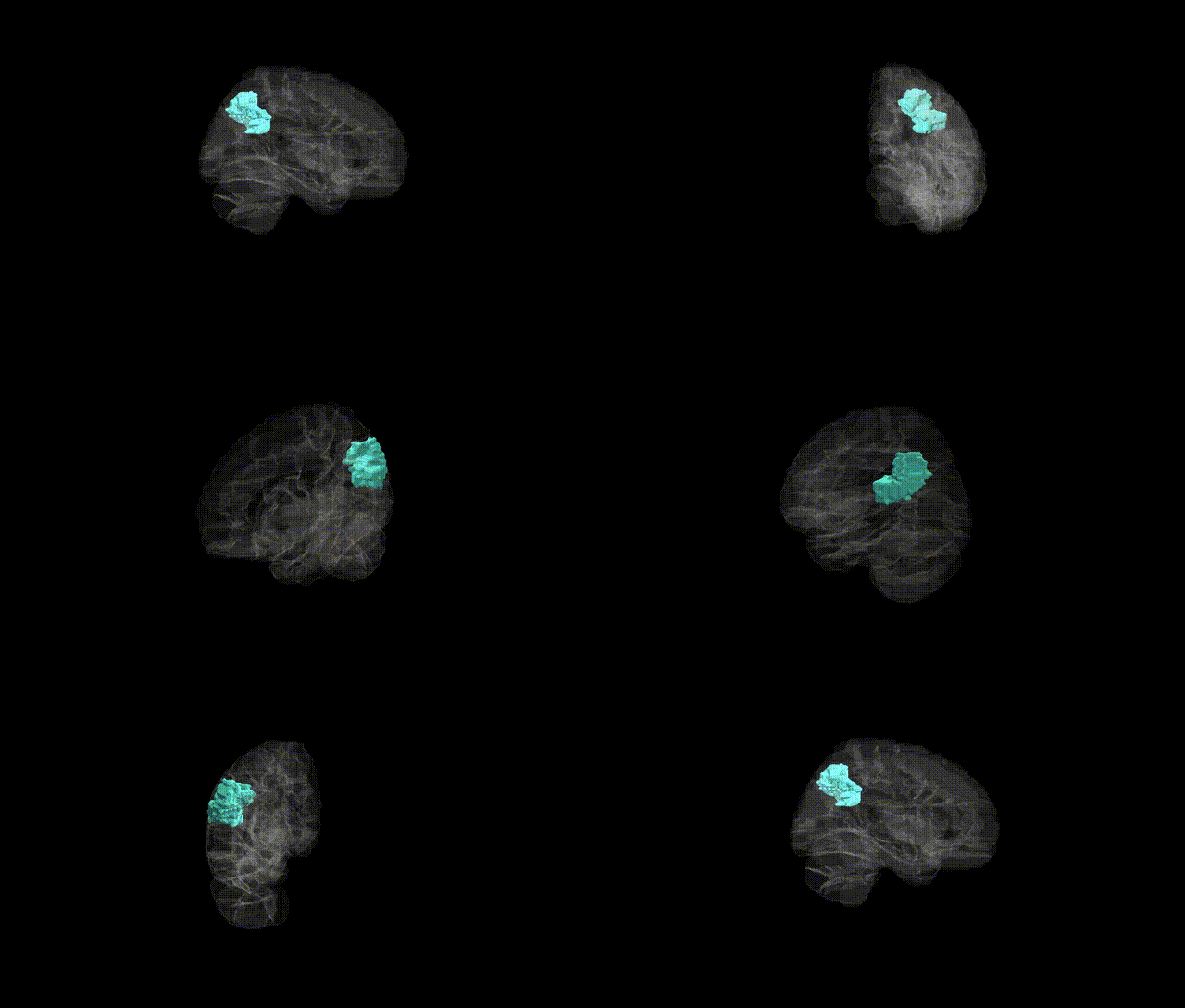
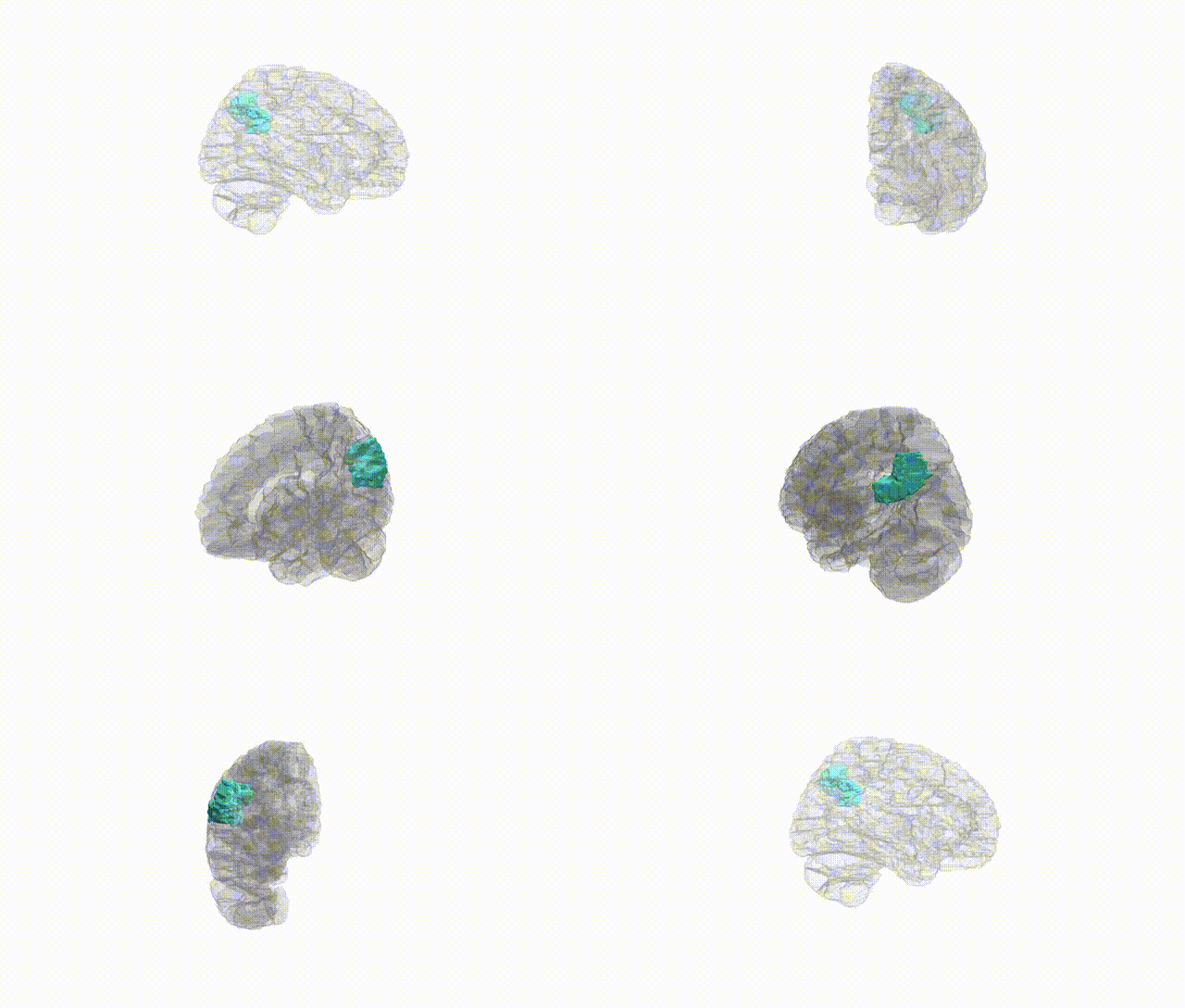
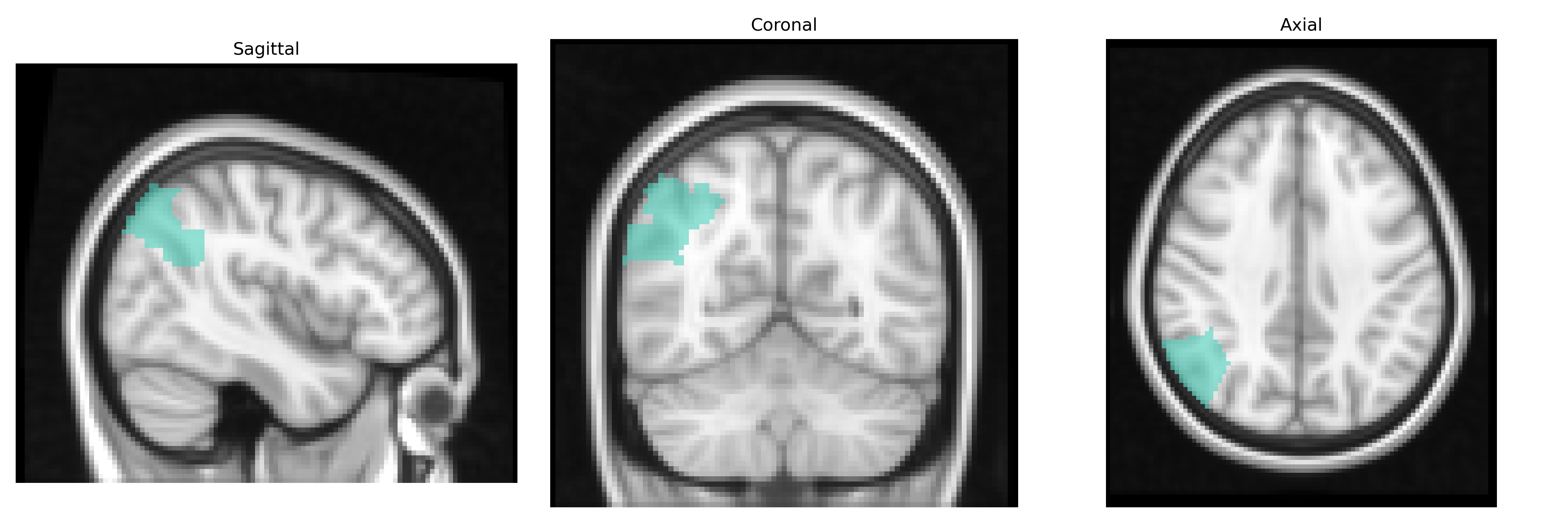
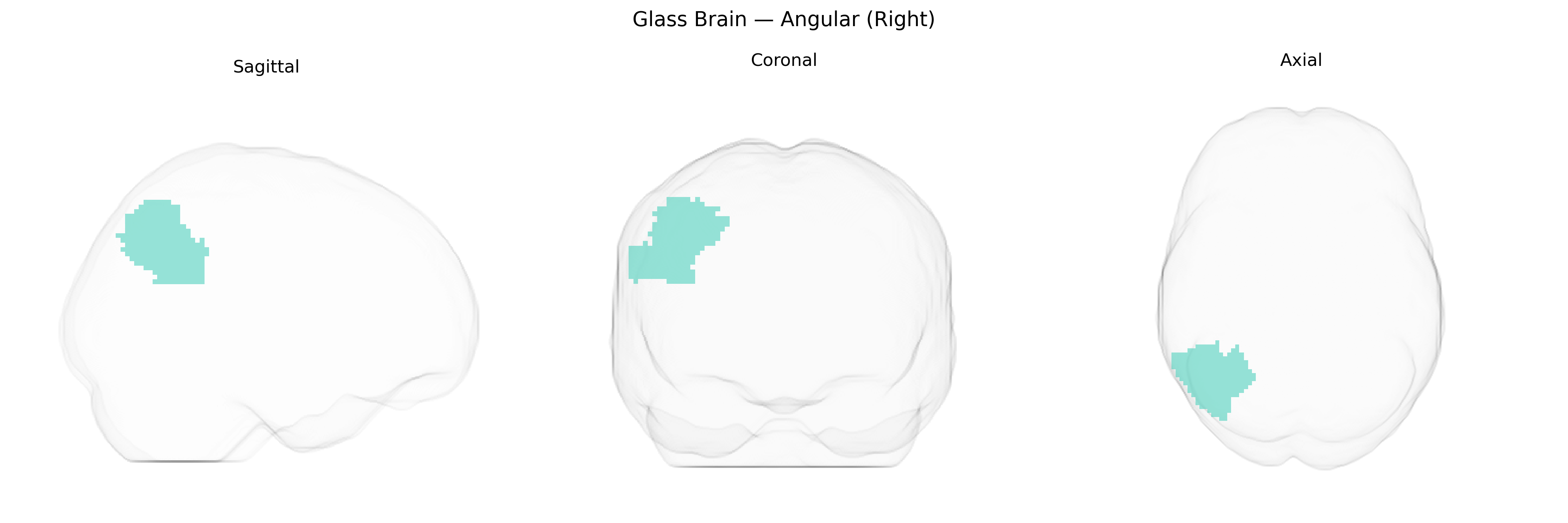
The right angular gyrus is a multimodal association region located in the inferior parietal lobule at the junction of the temporal, parietal, and occipital lobes, corresponding approximately to Brodmann area 39. In the AAL2 atlas, it forms part of the heteromodal association cortex, integrating visual, auditory, and somatosensory information and contributing to higher-order cognitive functions including language processing (especially semantic and reading-related tasks), number processing, spatial cognition, theory of mind, and aspects of memory retrieval. Lesions in this region have been associated with phenomena such as semantic aphasia, acalculia, and deficits in spatial attention and body schema.
Angular gyrus
The right angular gyrus (AAL2: Angular_R) has been implicated in several genetic and genome‑wide association findings, largely through imaging‑genetics and neuropsychiatric GWAS. ENIGMA and related consortia have reported that common variants in genes involved in neurodevelopment, synaptic plasticity, and axon guidance (for example, pathways including MAPT, MIR124‑3, and WNT signaling–related loci) show associations with cortical thickness or surface area in inferior parietal and angular regions, although single loci specific strictly to right angular gyrus rarely reach genome‑wide significance when analyzed separately. Polygenic risk for schizophrenia, autism spectrum disorder, and major depressive disorder has been linked to structural and functional alterations in the right angular gyrus in large imaging‑genetics studies, suggesting that distributed genetic liability for these conditions partly converges on this region’s morphology and connectivity. Variants associated with educational attainment, general cognitive ability, and language‑related traits have also been associated with activity or structural differences in inferior parietal cortex, including right angular gyrus, consistent with its role in semantic processing, number cognition, and theory of mind. In neurodegenerative and cerebrovascular GWAS, risk alleles for Alzheimer’s disease (e.g., APOE ε4 and loci in CLU, PICALM, and CR1) and small‑vessel disease have been associated with atrophy or altered perfusion in parietal association cortices that encompass the right angular gyrus, though these effects are typically reported at the network or lobe level rather than as region‑specific signals confined to this single AAL2 parcel.
Overview generated by GPT-4o (2026).
Region ID: 6222
Hemisphere: right
Atlas: AAL2
Full Quality Version: Download MP4
Full Quality Version: Download MP4
Full Quality Version: Download MP4
Full Quality Version: Download MP4
Wali Sidiqyar*, Gaurav Rudravaram*, Elyssa M. McMaster, Trent M. Schwartz, Adam M. Saunders, Kurt G. Schilling, Bennett A. Landman "Introducing SPINS: A Shared Public Visualization Library of Neuroanatomical Structures." Medical Imaging with Deep Learning- short paper
This resource is licensed under CC0 1.0 Universal (Public Domain).