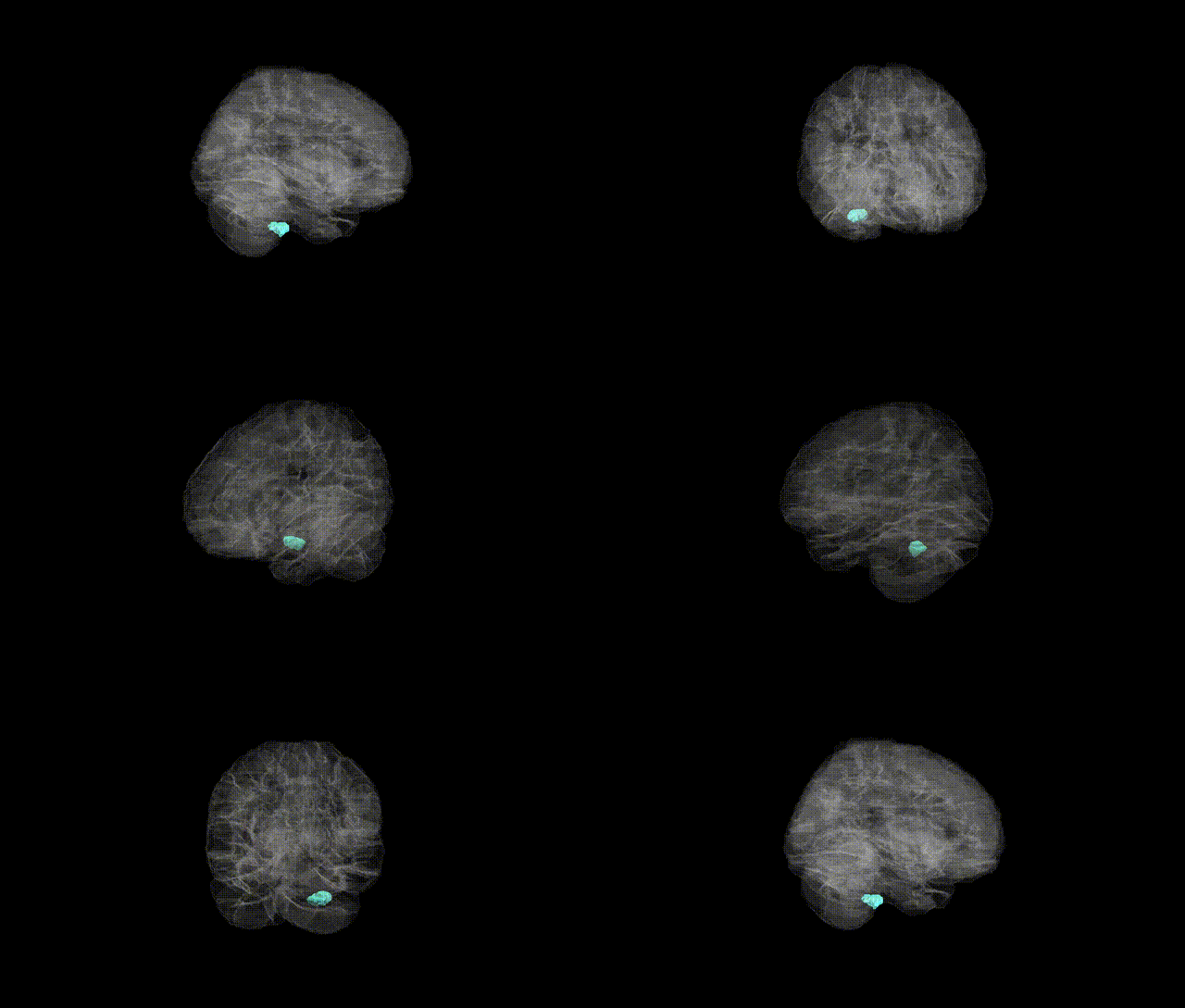
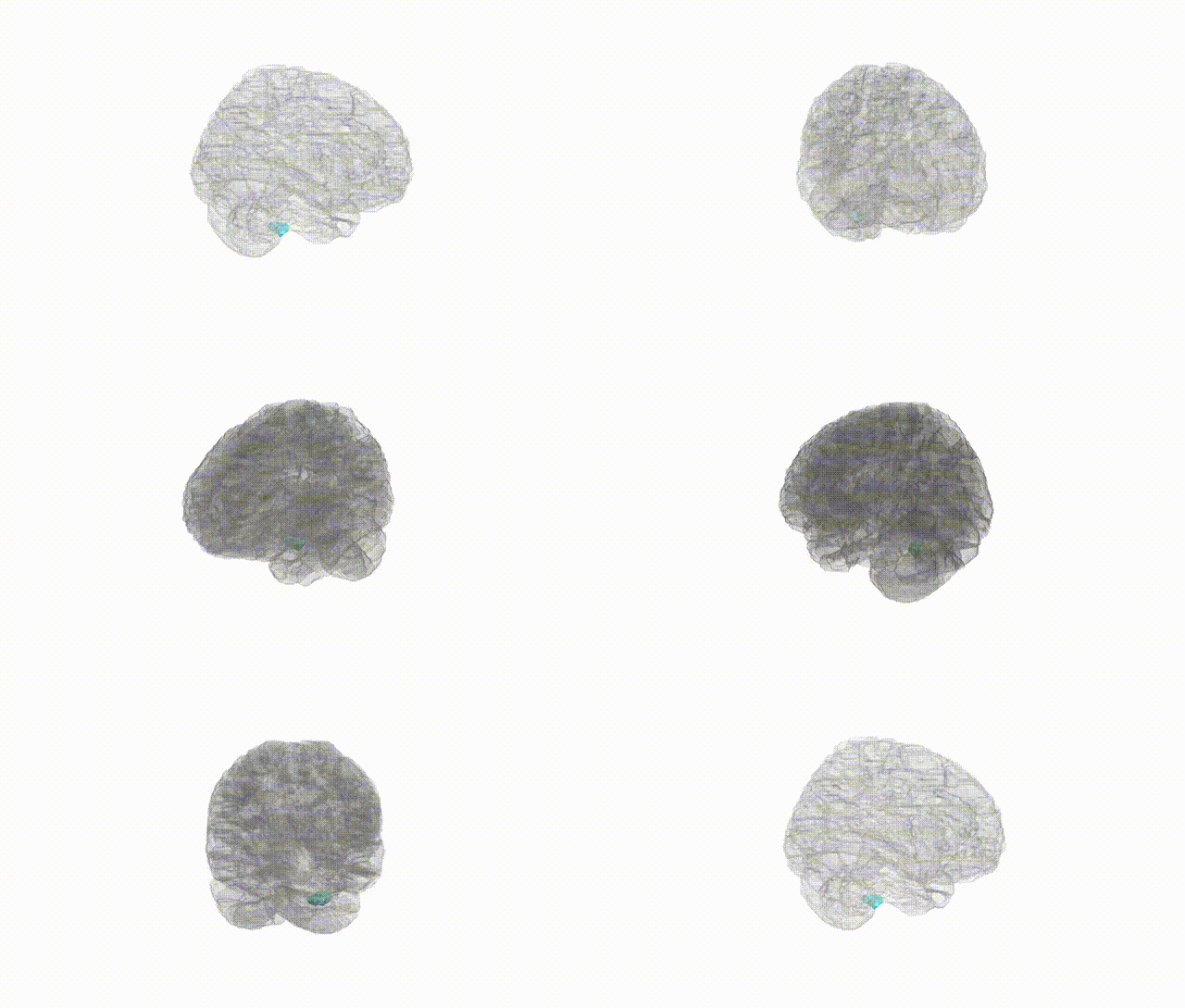
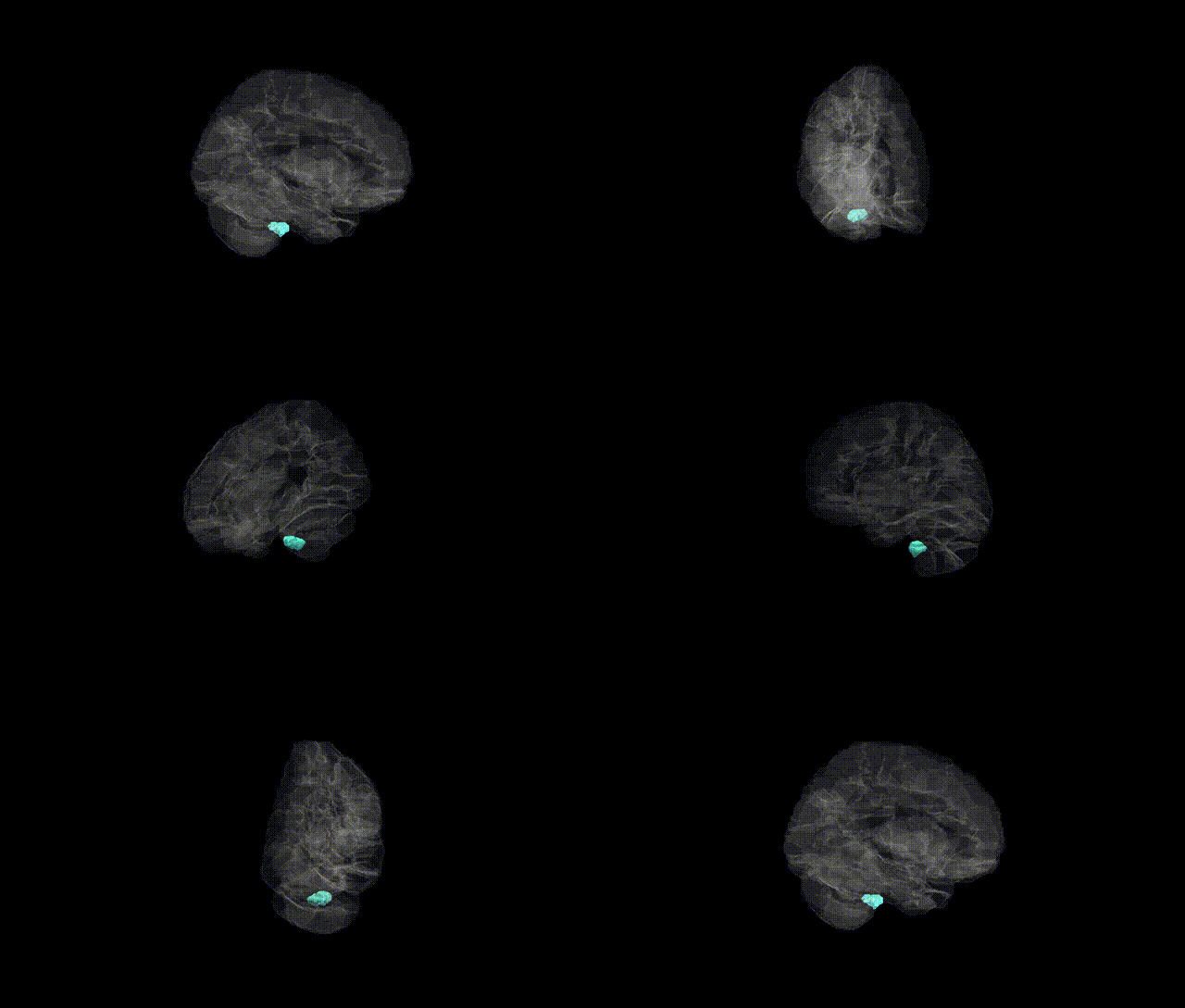
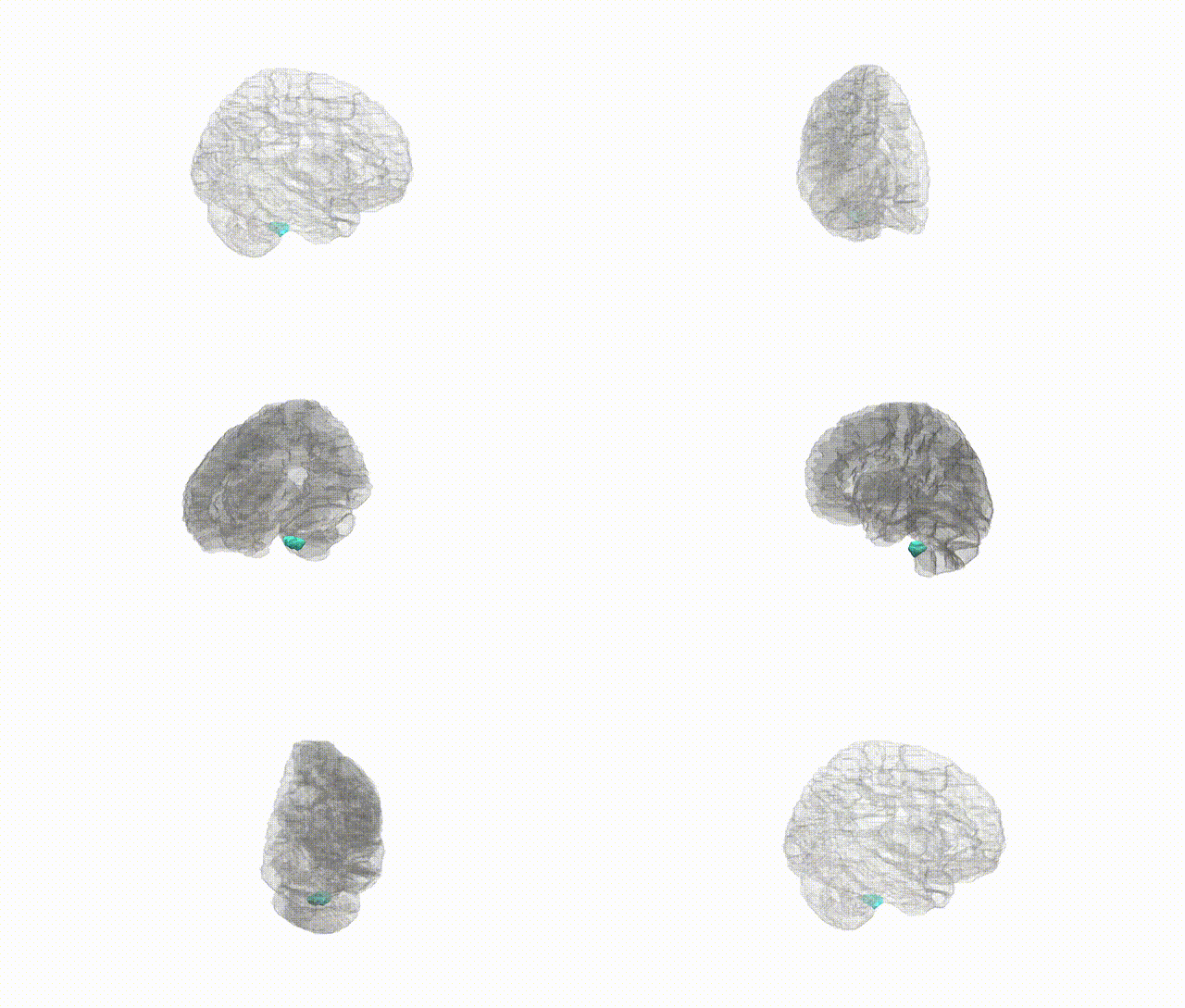
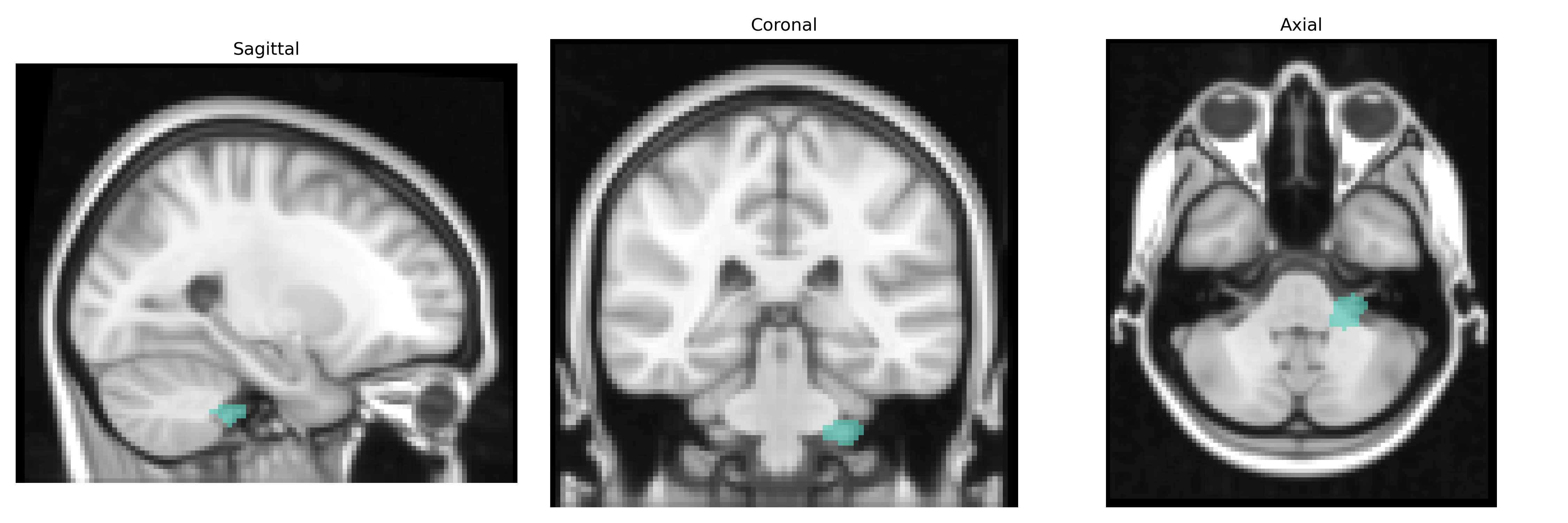
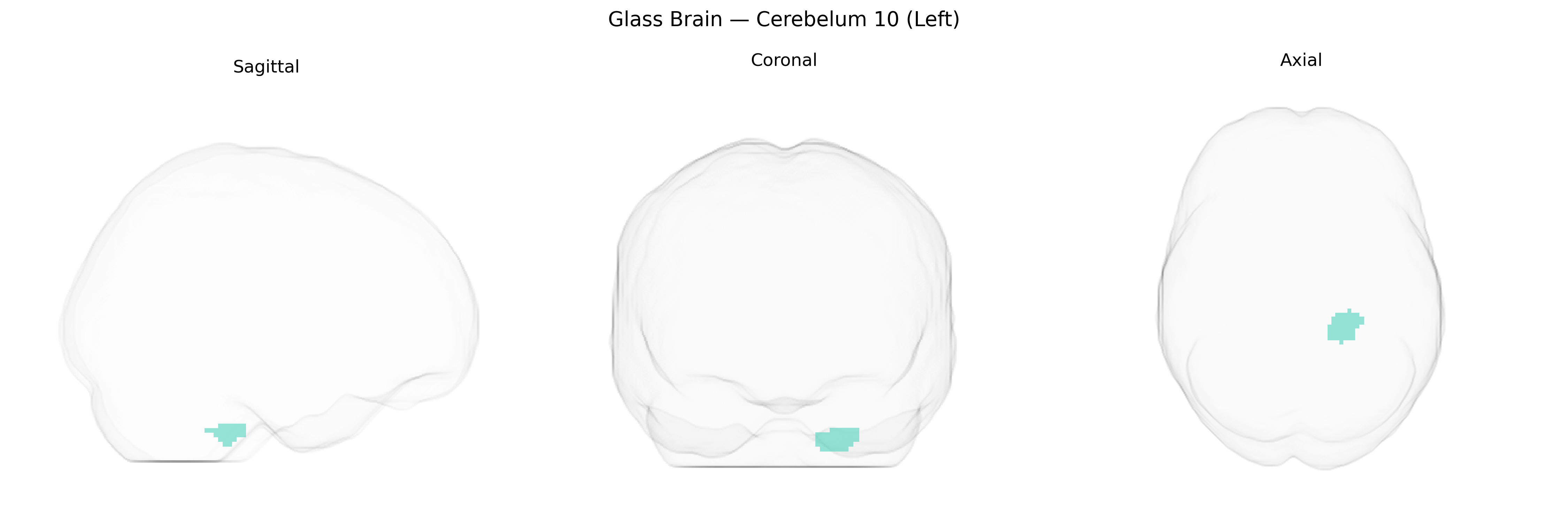
The left Cerebelum 10 (Left) region in the AAL2 atlas corresponds to the left cerebellar tonsil and adjacent portions of the inferior cerebellar hemisphere, located in the posteroinferior cerebellum near the foramen magnum. This region is part of the vestibulocerebellum and spinocerebellum networks, contributing to fine-tuning of posture, balance, and eye–head coordination, as well as modulation of ongoing motor activity via connections with the vestibular nuclei and brainstem. Functionally, it participates in sensorimotor integration required for smooth, coordinated movements and may also be involved in timing and error correction of motor commands. Pathology affecting this area, such as Chiari malformation or infarction of the posterior inferior cerebellar artery territory, can lead to disequilibrium, gait ataxia, and nystagmus. There is no direct link for Cerebelum 10; a related structure is the cerebellum: Cerebellum.
The AAL2 “Cerebelum_10_L” region corresponds to part of the posterior cerebellar hemispheric cortex, for which genetic associations are typically inferred from imaging genetics and GWAS of brain structure rather than region-specific candidate studies. Large-scale GWAS of brain morphology (e.g., ENIGMA and UK Biobank datasets) have shown that cerebellar volume and cortical thickness, including posterior regions overlapping with Cerebelum_10_L, are influenced by polygenic variation in loci implicating neurodevelopmental and synaptic pathways, with recurrent signals near genes such as KIAA0586, PAPPA, and those in Wnt and calcium signaling pathways, although these findings are generally reported for lobular or whole-cerebellum measures rather than AAL2 subregions. Cerebellar structural variation has been genetically linked to neurodevelopmental and psychiatric traits—including autism spectrum disorder, schizophrenia, ADHD, and mood disorders—through shared polygenic architectures and pleiotropic loci, and cerebellar changes in Crus II/VIIB–VIIC regions adjacent to AAL2 Cerebelum_10_L are frequently observed in these conditions. Additionally, GWAS of cognitive performance, motor coordination, and educational attainment identify genetic variants that correlate with cerebellar morphometry, suggesting that alleles affecting cerebellar development and connectivity can contribute to higher-order cognitive and affective traits. However, no robust, widely replicated GWAS signals have yet been reported specifically and uniquely for AAL2 Cerebelum_10_L as a distinct ROI; current evidence supports a broad, highly polygenic architecture where variants influencing general cerebellar structure and function also impact traits and disorders involving this posterior cerebellar territory.
Overview generated by GPT-4o (2026).
Region ID: 9081
Hemisphere: left
Atlas: AAL2
Full Quality Version: Download MP4
Full Quality Version: Download MP4
Full Quality Version: Download MP4
Full Quality Version: Download MP4
Wali Sidiqyar*, Gaurav Rudravaram*, Elyssa M. McMaster, Trent M. Schwartz, Adam M. Saunders, Kurt G. Schilling, Bennett A. Landman "Introducing SPINS: A Shared Public Visualization Library of Neuroanatomical Structures." Medical Imaging with Deep Learning- short paper
This resource is licensed under CC0 1.0 Universal (Public Domain).