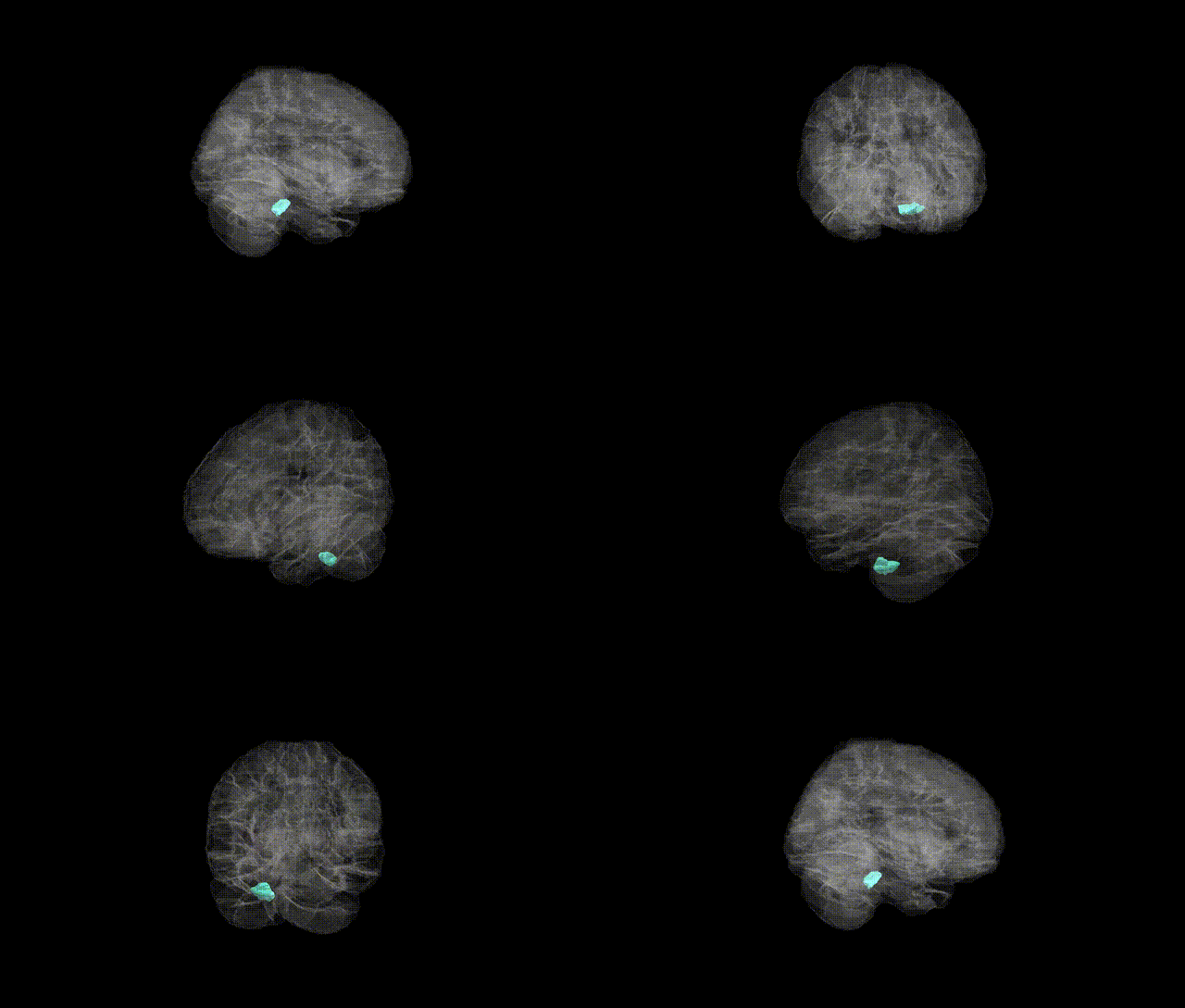
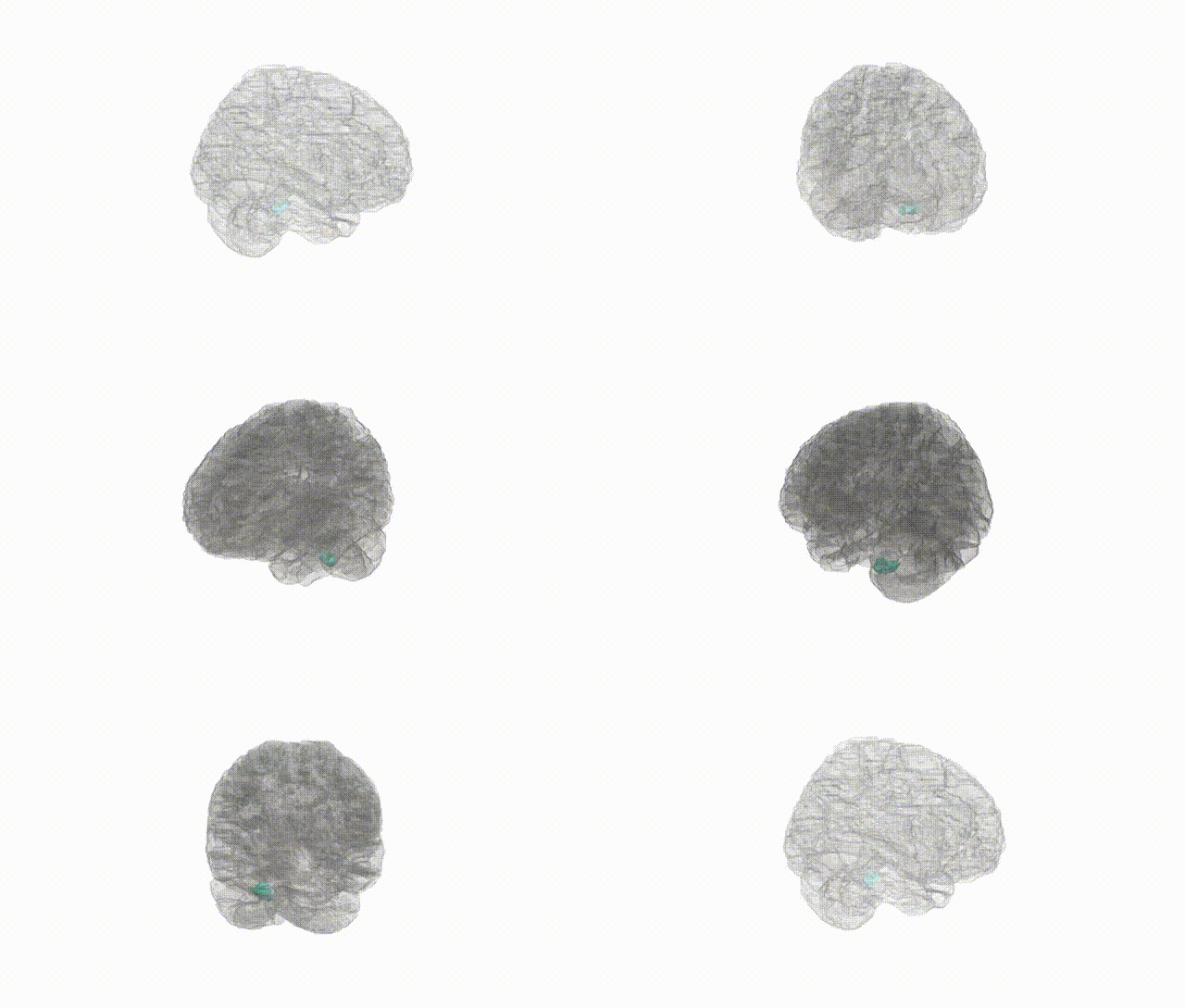
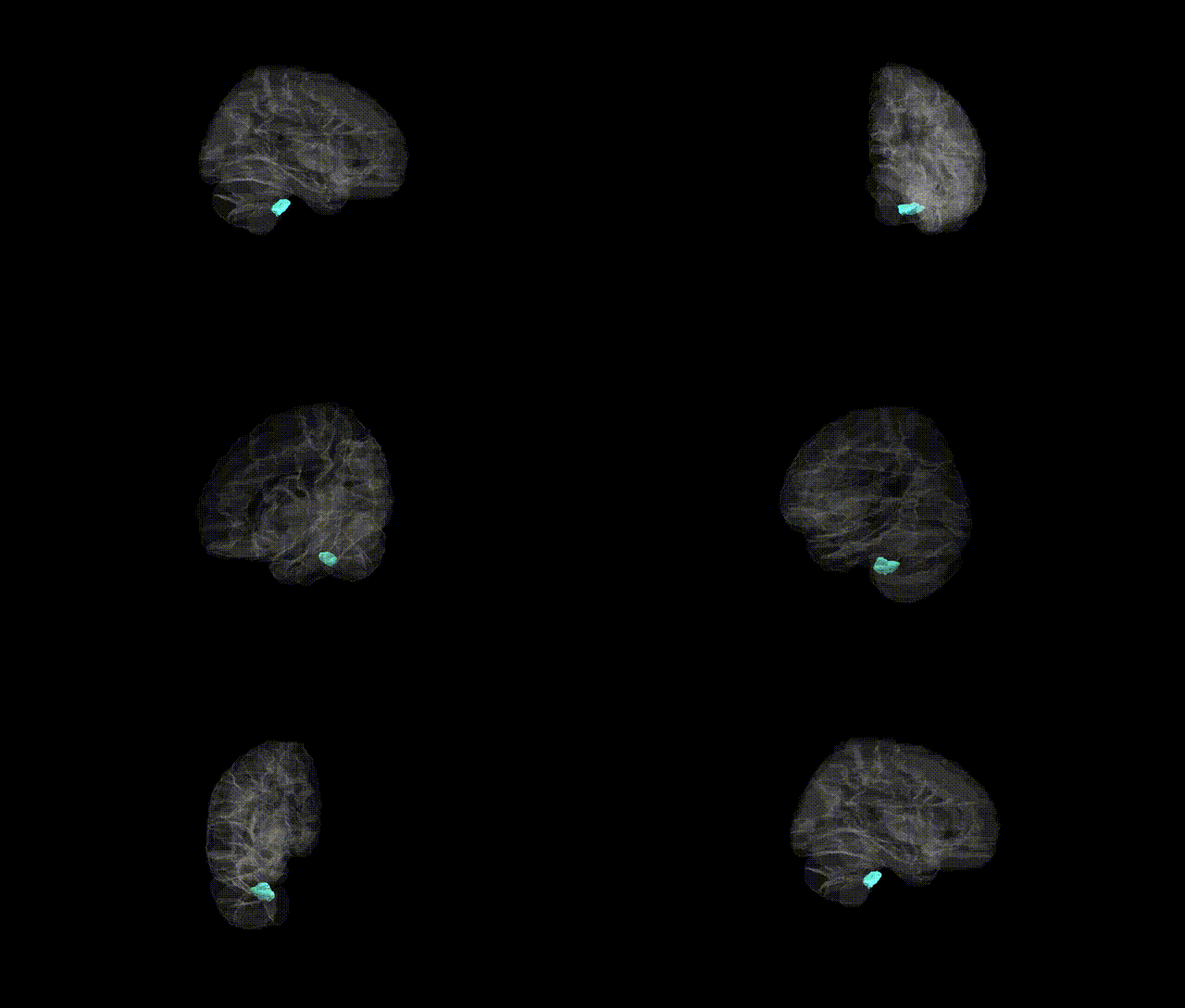
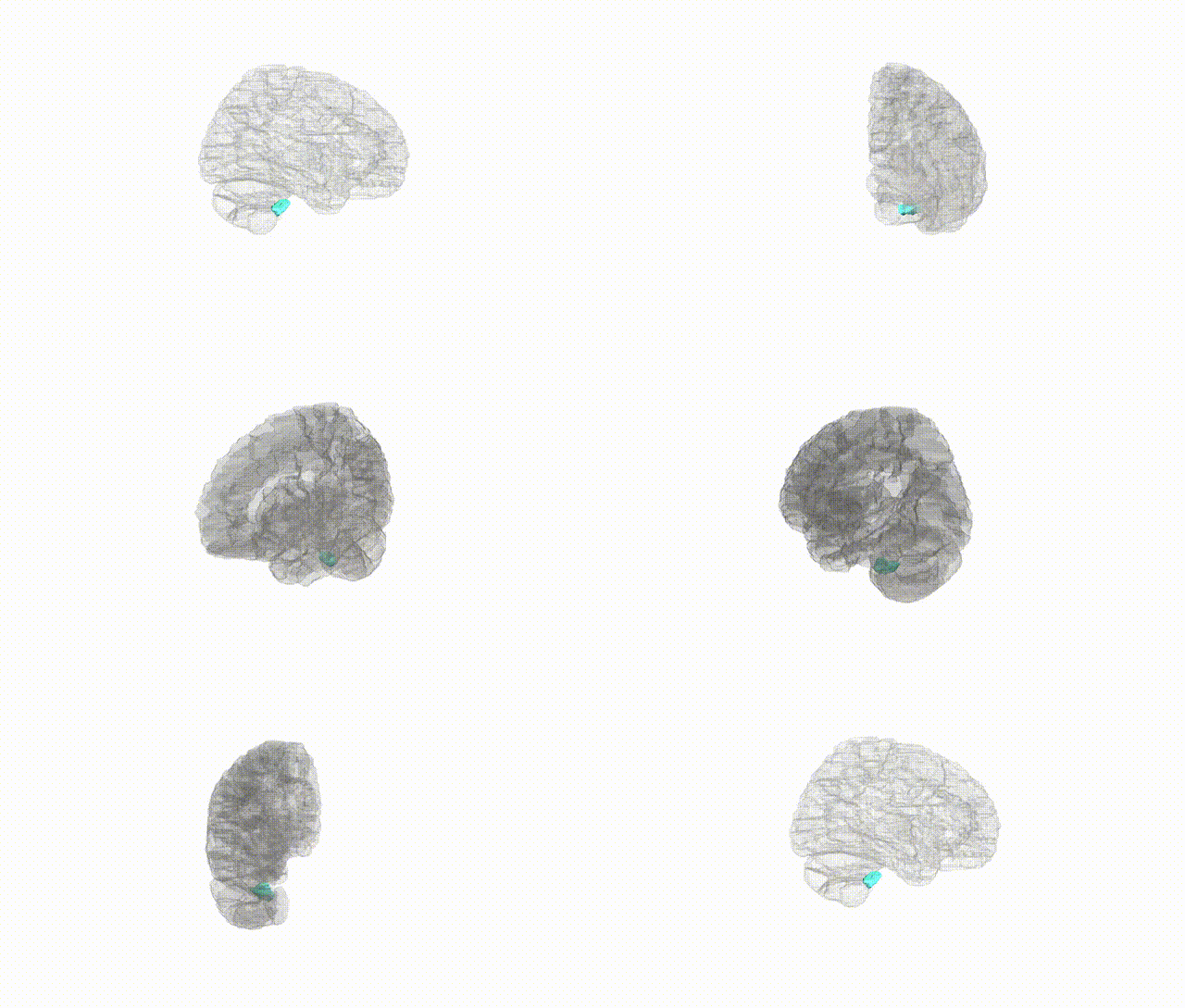
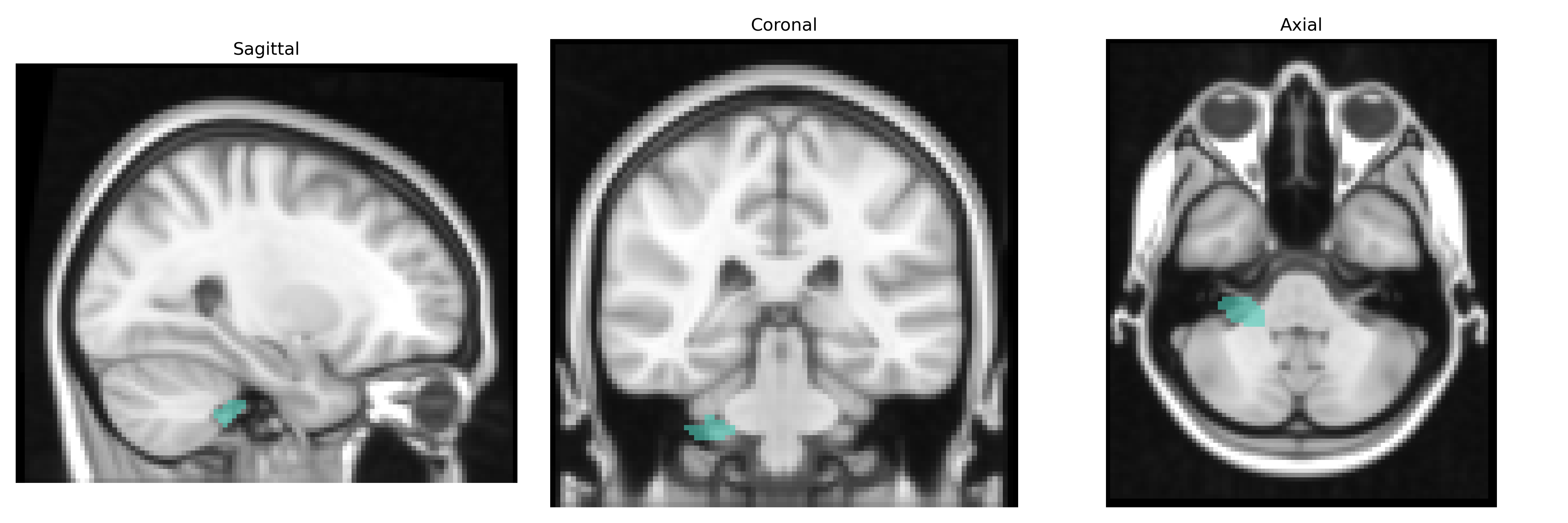
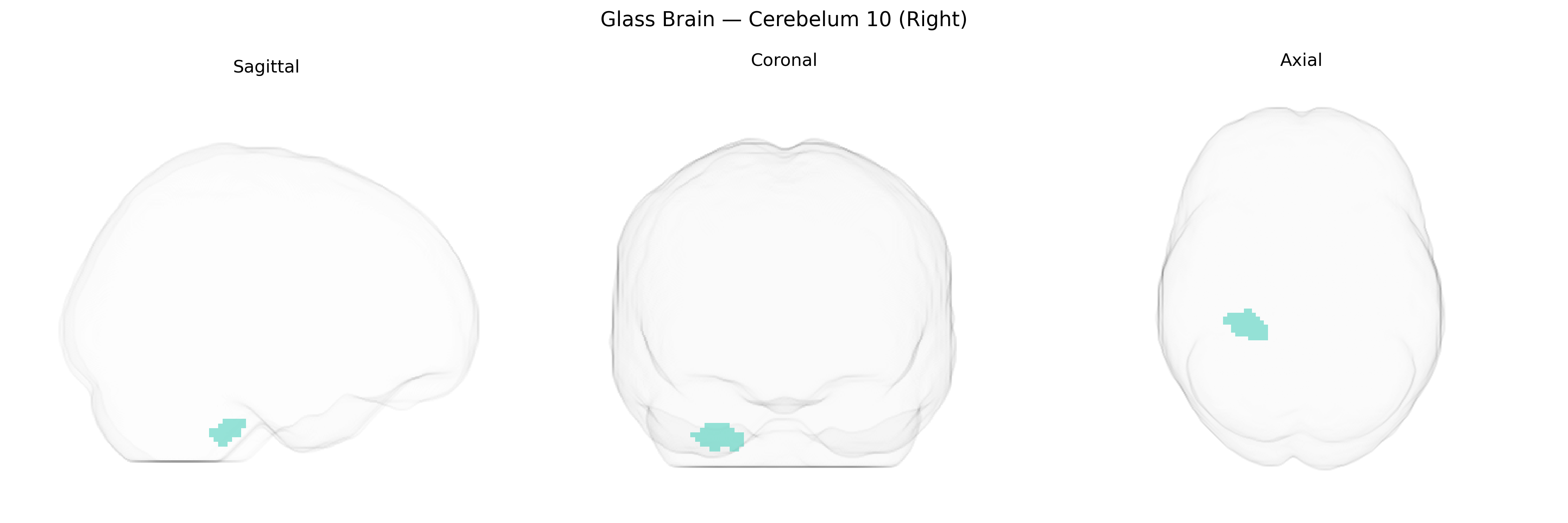
The AAL2 region Cerebelum_10_R corresponds to lobule X (nodulus) of the right cerebellar hemisphere, part of the flocculonodular lobe that is primarily involved in vestibular and oculomotor functions. This region integrates vestibular input and visual motion information to contribute to balance, postural control, and the coordination of eye movements, particularly through its participation in the vestibulo-cerebellar circuits. Functionally, lobule X is linked to smooth pursuit eye movements, gaze stabilization, and adaptation of reflexes such as the vestibulo-ocular reflex. It is also implicated in fine-tuning motor control related to equilibrium and may have ancillary roles in spatial orientation. There is no direct Wikipedia article for “Cerebelum 10 (Right)” in the AAL2 sense; a closely related structure is the Flocculonodular lobe.
The right Cerebellum Crus II (AAL2 “Cerebelum_10_R”) has been implicated in genetic studies primarily through large-scale neuroimaging GWAS that examine cerebellar volume and cortical–cerebellar connectivity rather than region-specific candidate genes. Variants in genes related to neurodevelopment and synaptic function—such as those in the MAPT locus on chromosome 17, the APOE region, and polygenic architectures influencing brain volume—have been associated with global and lobule-specific cerebellar morphology, including posterior cerebellar regions encompassing Crus II. Cerebellar GWAS from consortia like ENIGMA and UK Biobank indicate that polygenic scores for cognitive performance, educational attainment, and general intelligence correlate with structural and functional properties of Crus II, consistent with its role in higher-order cognition and language. In psychiatric genetics, risk variants for schizophrenia, bipolar disorder, major depressive disorder, and autism spectrum disorder show associations with altered cerebellar connectivity and volume, and imaging–genetics work often identifies Crus I/II as a node where polygenic risk manifests in dysregulated fronto-cerebellar circuits. Additionally, alleles influencing motor coordination, gait, and balance, as well as neurodegenerative disease risk (e.g., spinocerebellar ataxias driven by expansions in genes like ATXN1, ATXN2, and CACNA1A), affect cerebellar network integrity that includes Crus II, although these conditions typically involve widespread cerebellar pathology rather than a selective effect on the AAL2 Cerebelum_10_R region.
Overview generated by GPT-4o (2026).
Region ID: 9082
Hemisphere: right
Atlas: AAL2
Full Quality Version: Download MP4
Full Quality Version: Download MP4
Full Quality Version: Download MP4
Full Quality Version: Download MP4
Wali Sidiqyar*, Gaurav Rudravaram*, Elyssa M. McMaster, Trent M. Schwartz, Adam M. Saunders, Kurt G. Schilling, Bennett A. Landman "Introducing SPINS: A Shared Public Visualization Library of Neuroanatomical Structures." Medical Imaging with Deep Learning- short paper
This resource is licensed under CC0 1.0 Universal (Public Domain).