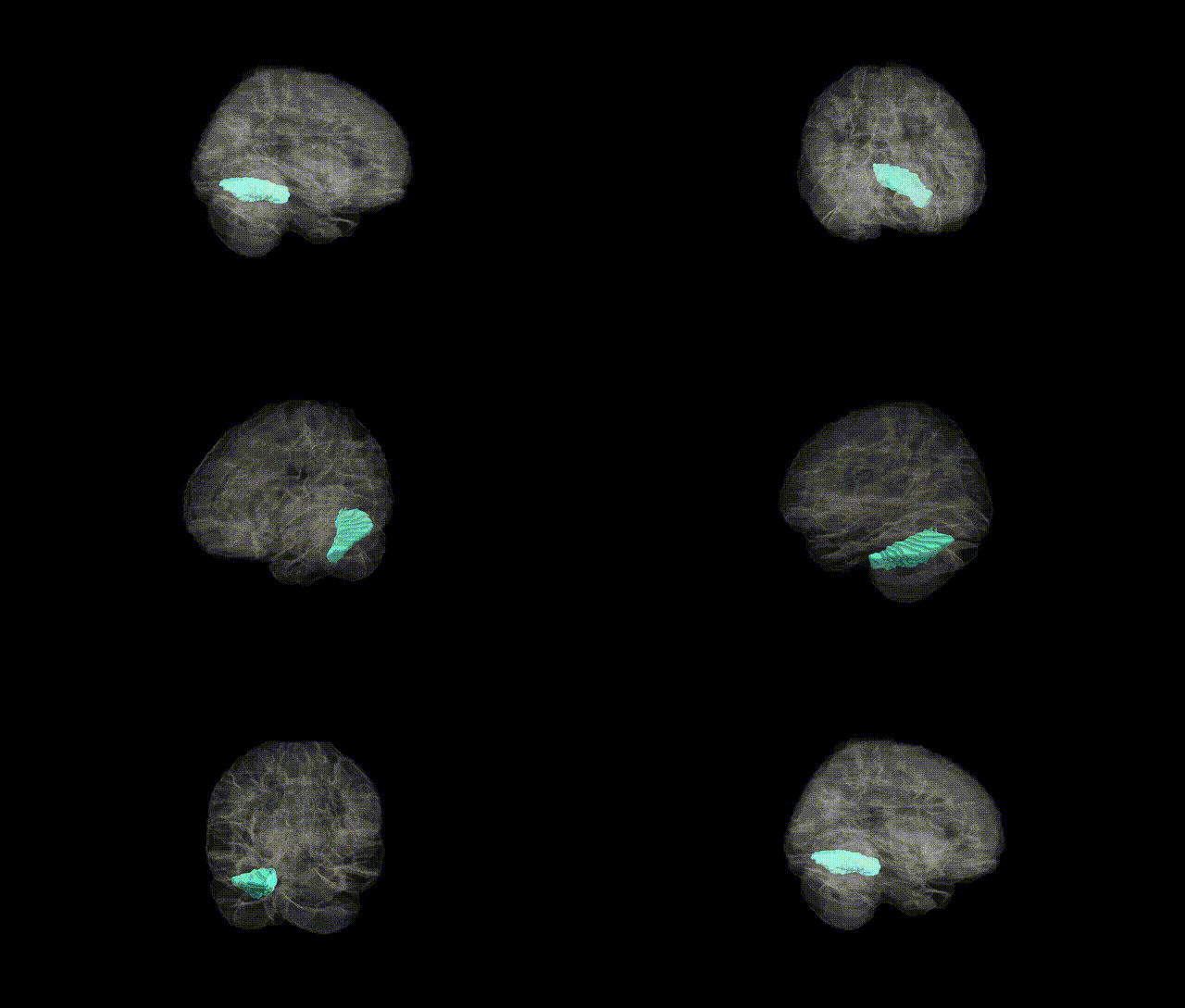
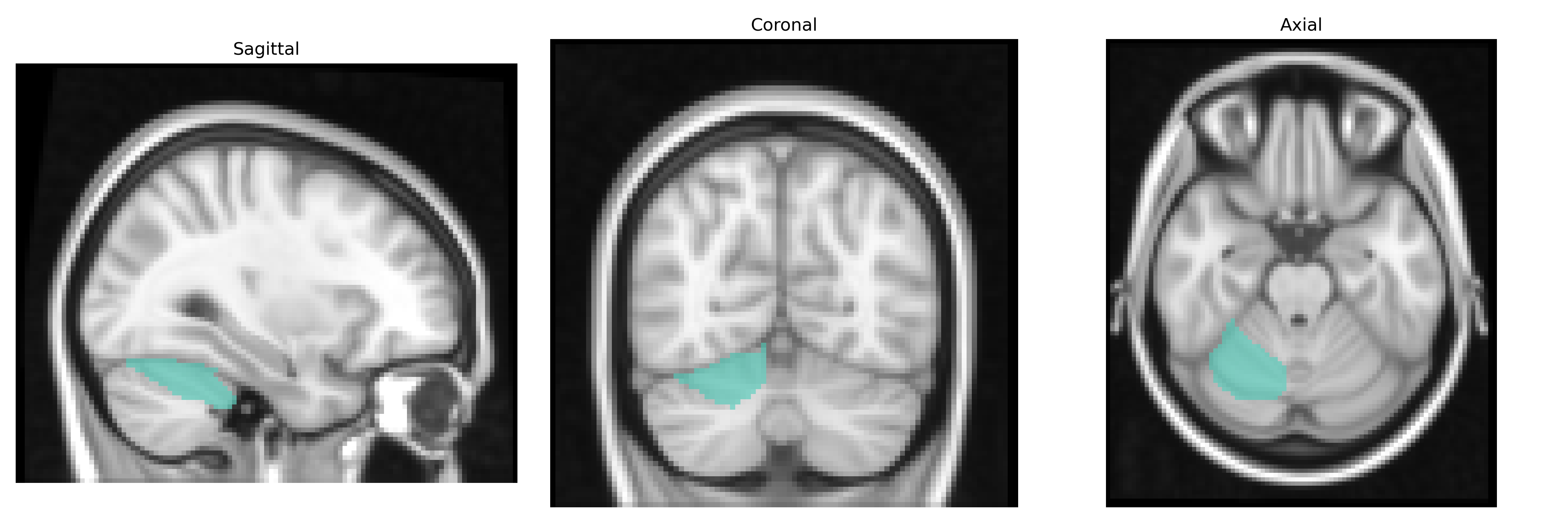
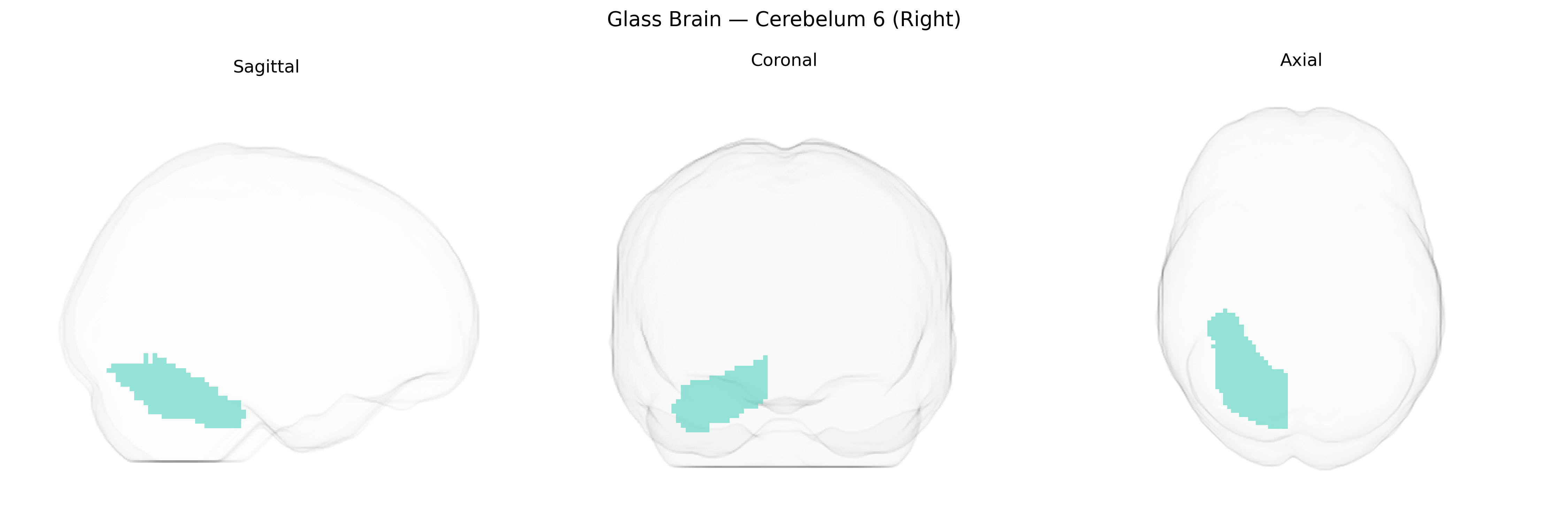
The right Cerebelum 6 (Right) region from the AAL2 atlas refers to the right hemispheric portion of cerebellar lobule VI, a subdivision of the anterior part of the cerebellar hemisphere involved in fine motor coordination, sensorimotor integration, and aspects of higher cognition such as attention and working memory through its dense connections with cortical association areas. Lobule VI participates in the modulation of voluntary movements, timing, and error correction via cerebello-thalamo-cortical circuits, and is also implicated in oculomotor control and visuomotor processing. Functionally, this region contributes to both motor and non-motor cerebellar networks, reflecting the cerebellum’s broader role in cognitive and affective regulation in addition to movement. There is no direct Wikipedia article for “Cerebelum 6 (Right)” or “lobule VI” as labeled in AAL2; a closely related structure is the Cerebellum.
The right Cerebellum 6 region in the AAL2 atlas has been implicated in several genetic and GWAS findings that link cerebellar structure and function to neurodevelopmental, psychiatric, and cognitive traits. Large-scale imaging genetics studies using atlases like AAL/AAL2 and cerebellar parcellations have identified common variants near genes such as KIAA0586, RELN, PAX6, and FOXP2 as associated with cerebellar volume and morphology, including regions overlapping lobule VI, which corresponds approximately to Cerebellum 6. Polygenic influences on cerebellar volume in this area have been reported in GWAS of intracranial and regional brain volumes (e.g., ENIGMA and UK Biobank), with enrichment in neurodevelopmental and synaptic genes. Cerebellar lobule VI—containing the AAL2 right Cerebellum 6 parcel—has shown structural and functional alterations in autism spectrum disorder, schizophrenia, major depressive disorder, and attention-deficit/hyperactivity disorder, and these changes co-localize with disorder polygenic risk scores in imaging–genetics analyses. GWAS of cognitive traits, such as general intelligence, working memory, and educational attainment, have linked polygenic scores to volume and activation in right lateral cerebellar regions, including lobule VI, suggesting that genetic variation influencing synaptic plasticity, neuronal migration, and cortical–cerebellar connectivity contributes to individual differences in cognition and vulnerability to psychiatric disorders through this cerebellar subregion.
Overview generated by GPT-4o (2026).
Region ID: 9042
Hemisphere: right
Atlas: AAL2
Full Quality Version: Download MP4
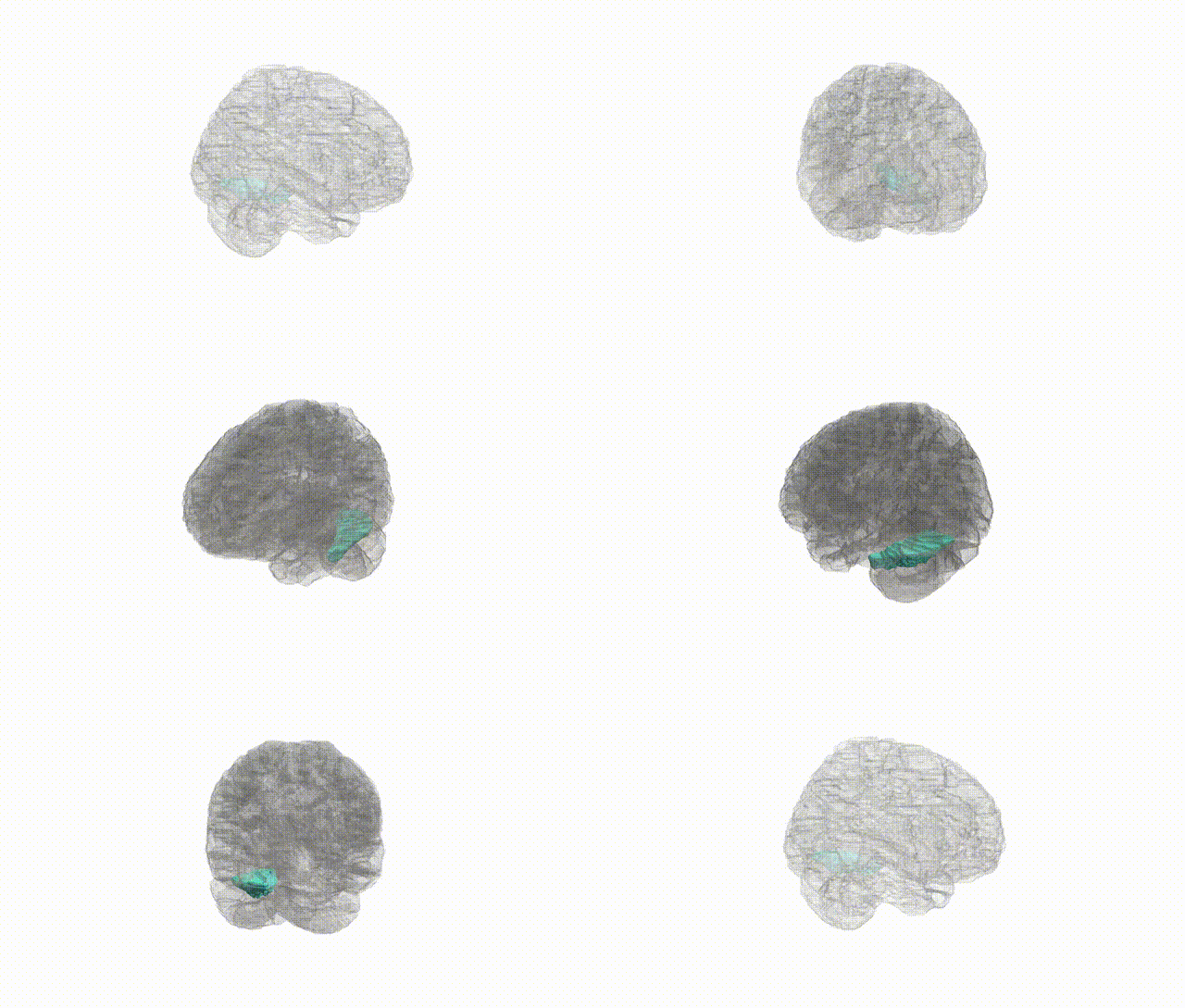
Full Quality Version: Download MP4
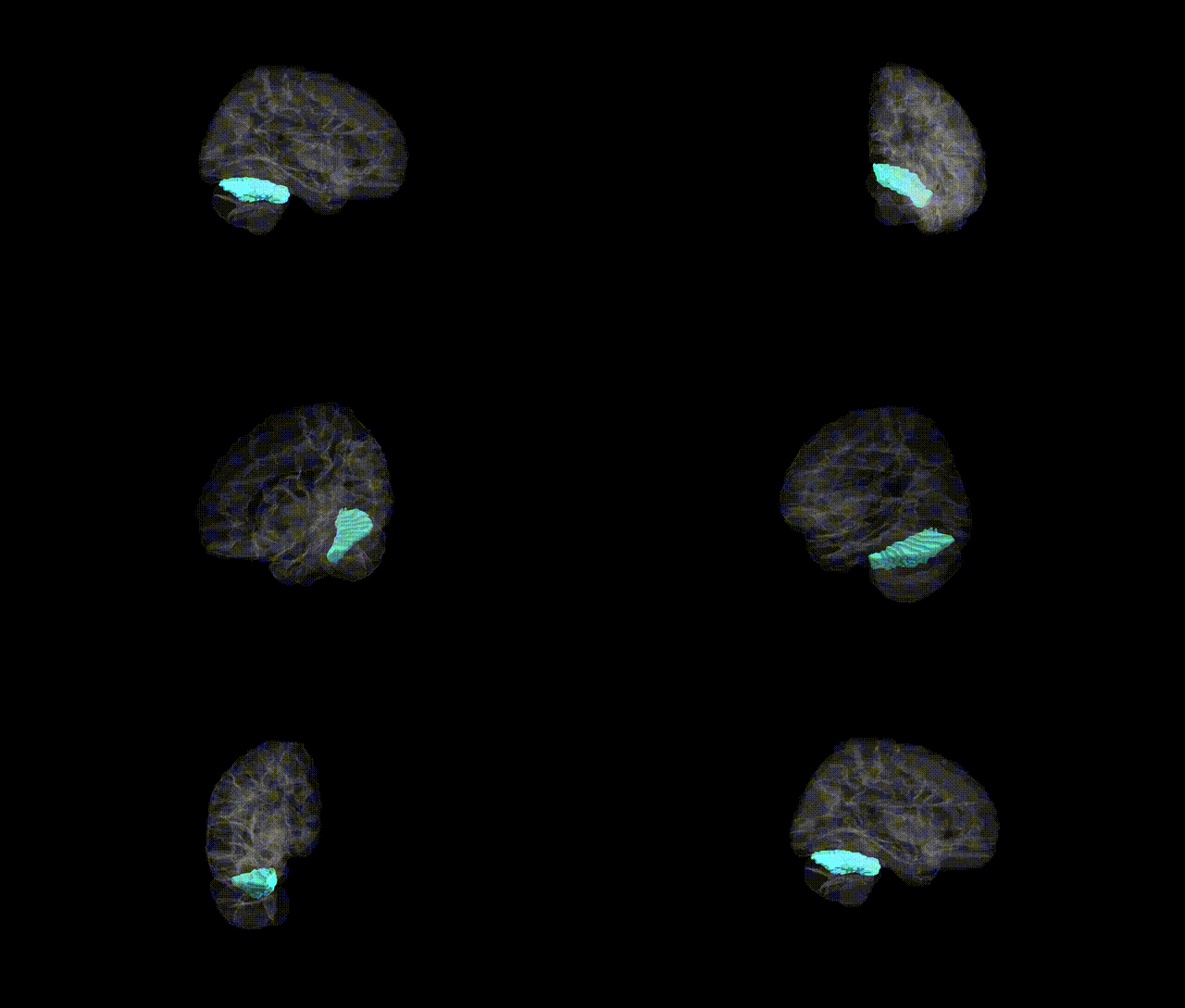
Full Quality Version: Download MP4
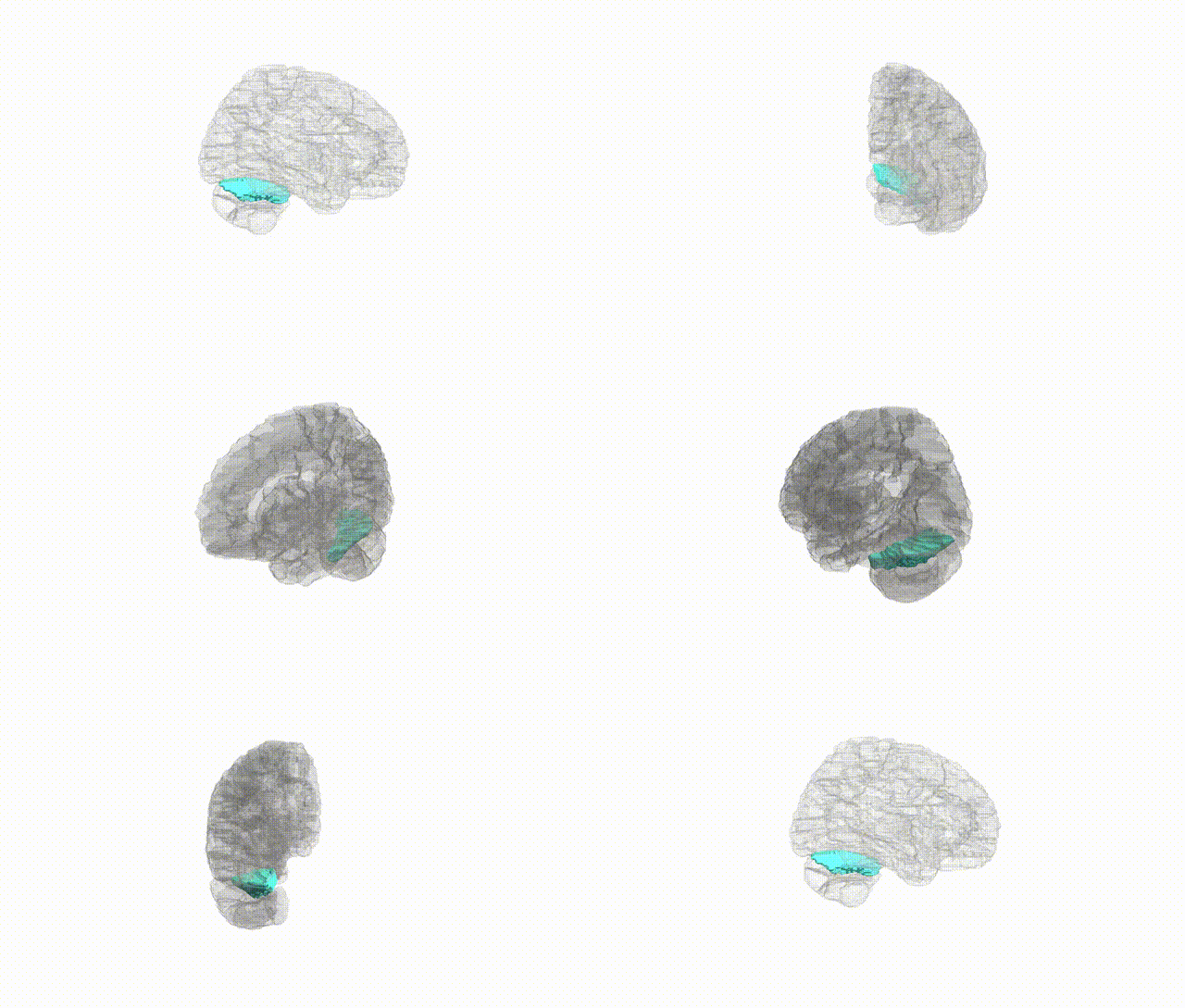
Full Quality Version: Download MP4
Wali Sidiqyar*, Gaurav Rudravaram*, Elyssa M. McMaster, Trent M. Schwartz, Adam M. Saunders, Kurt G. Schilling, Bennett A. Landman "Introducing SPINS: A Shared Public Visualization Library of Neuroanatomical Structures." Medical Imaging with Deep Learning- short paper
This resource is licensed under CC0 1.0 Universal (Public Domain).