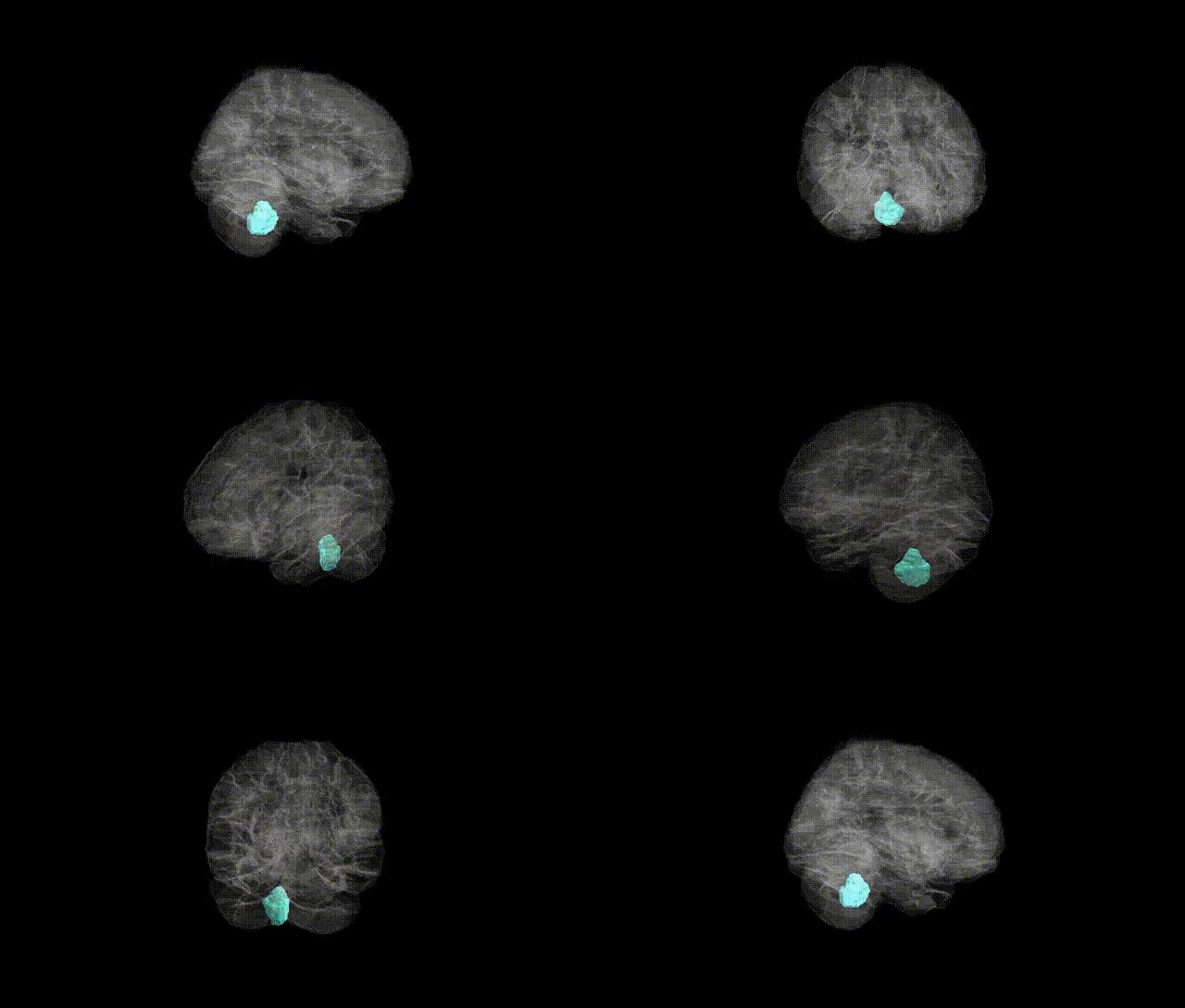
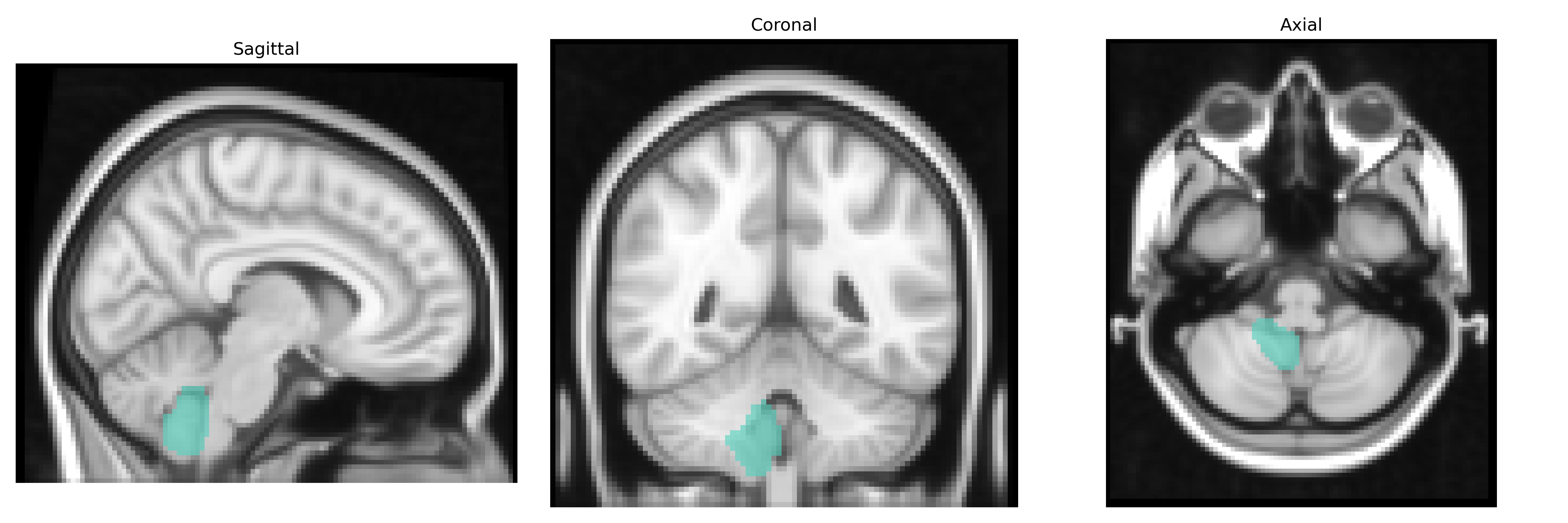
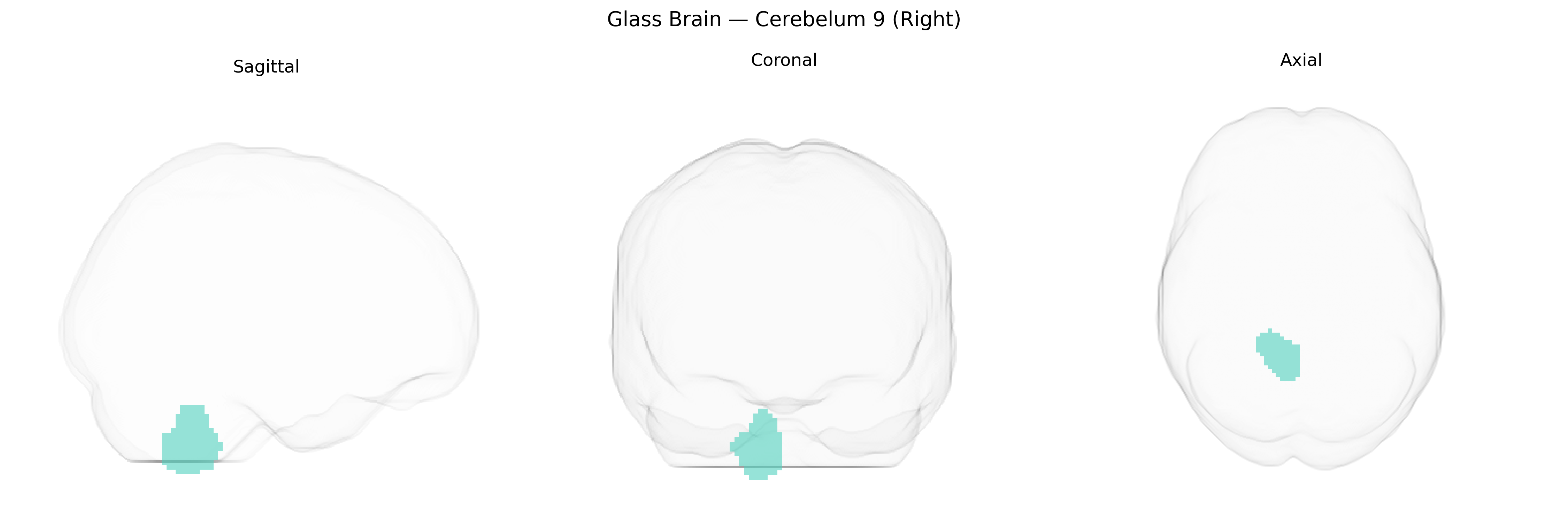
The Cerebelum_9_R region in the AAL2 atlas corresponds to lobule IX of the right posterior cerebellar hemisphere, a subdivision of the cerebellar cortex located in the inferior vermis and adjacent hemispheric tissue. This lobule is part of the phylogenetically newer cerebrocerebellum, which receives extensive input from association areas of the cerebral cortex via pontine nuclei and projects back through the dentate nucleus and thalamus to cortical regions involved in higher-order sensorimotor integration and cognitive processing. Functionally, lobule IX has been implicated in postural control, oculomotor functions, and aspects of cognitive and affective regulation, often co-activating with networks supporting attention and default-mode processing. There is no direct Wikipedia article for “Cerebelum_9_R” or “cerebellar lobule IX (right hemisphere)”; a closely related and encompassing structure is the cerebellum: Cerebellum.
Genetic associations specifically involving the AAL2-defined right Cerebelum 9 region are sparse, but broader imaging genetics and GWAS work on cerebellar structure and function implicates several loci and pathways that plausibly extend to this territory. Large MRI-based GWAS of cerebellar volume and morphology (e.g., ENIGMA and UK Biobank studies) have identified variants near KIAA0586, PAPPA2, RP11-12B17.4, and other genes involved in neurodevelopment, synaptic signaling, and axonal guidance, contributing to inter-individual differences in regional cerebellar volumes that include lobule IX (to which Cerebelum 9 approximately corresponds). Polygenic risk for schizophrenia, bipolar disorder, major depression, autism spectrum disorder, and ADHD has been associated with altered cerebellar connectivity and volume, with several studies reporting cerebellar crus and lobule IX changes in these conditions, although the genetic findings typically target cerebellar networks rather than a single AAL region. Rare variants and Mendelian mutations affecting cerebellar development (e.g., in genes such as CACNA1A, GRID2, and ITPR1) can produce structural abnormalities that involve posterior cerebellar hemispheric regions, including lobule IX, and GWAS of cognitive traits and educational attainment have also linked common variants in neurodevelopmental and synaptic genes to individual differences in posterior cerebellar structure. Overall, current evidence points to polygenic influences on cerebellar morphology and its involvement in neuropsychiatric and cognitive phenotypes, but no major GWAS has yet reported locus-specific associations uniquely and reproducibly assigned to the right Cerebelum 9 (AAL2) region.
Overview generated by GPT-4o (2026).
Region ID: 9072
Hemisphere: right
Atlas: AAL2
Full Quality Version: Download MP4
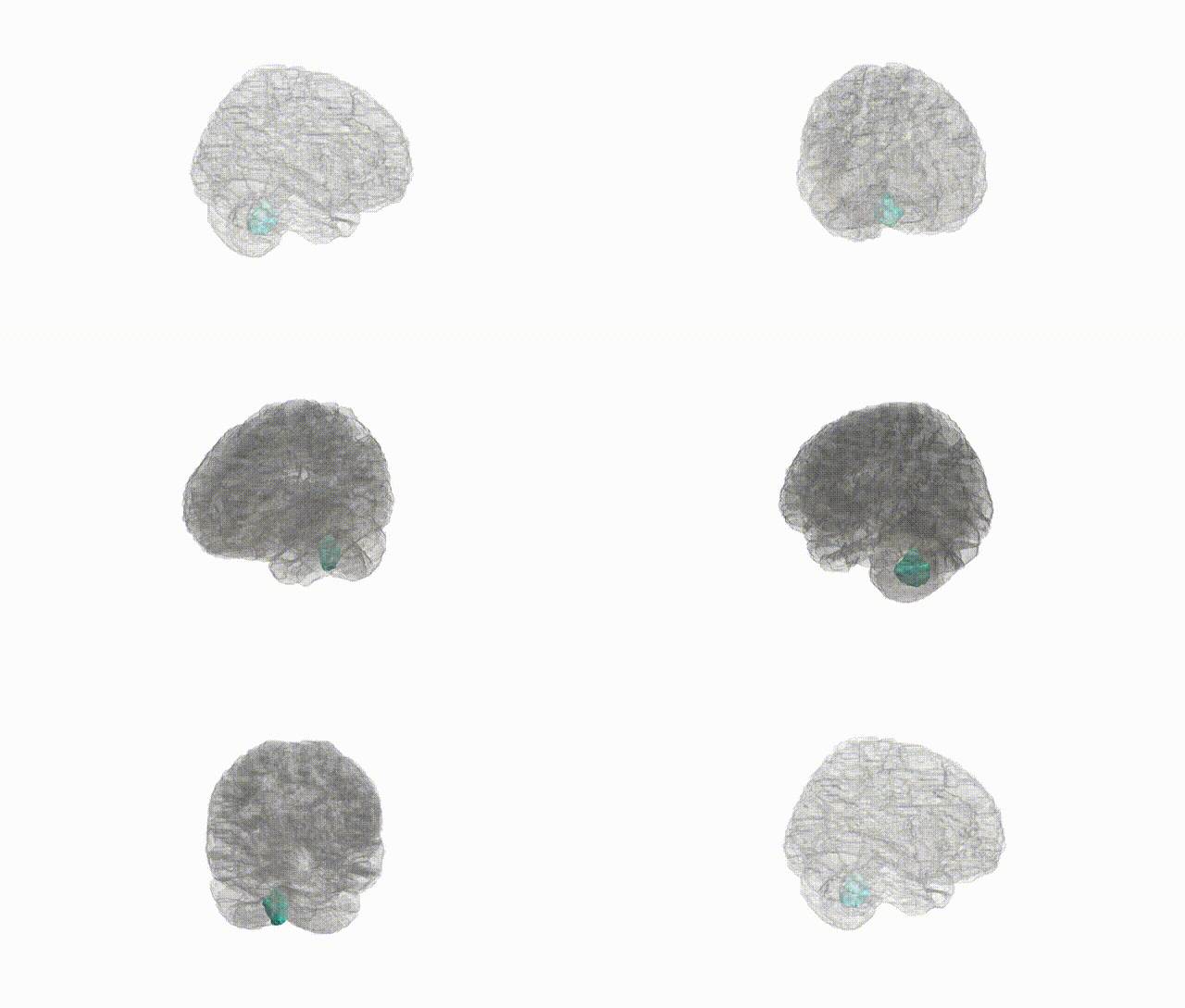
Full Quality Version: Download MP4
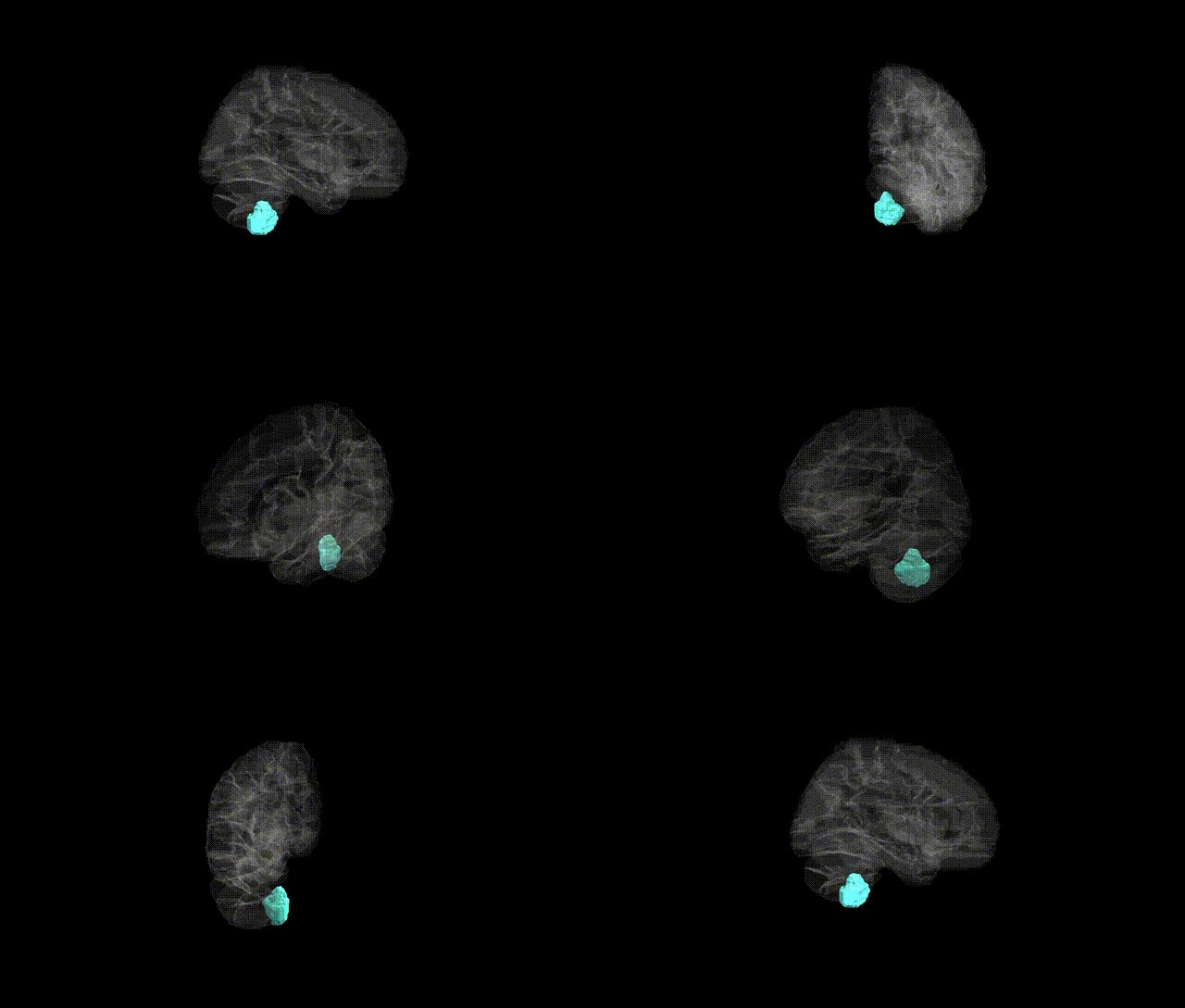
Full Quality Version: Download MP4
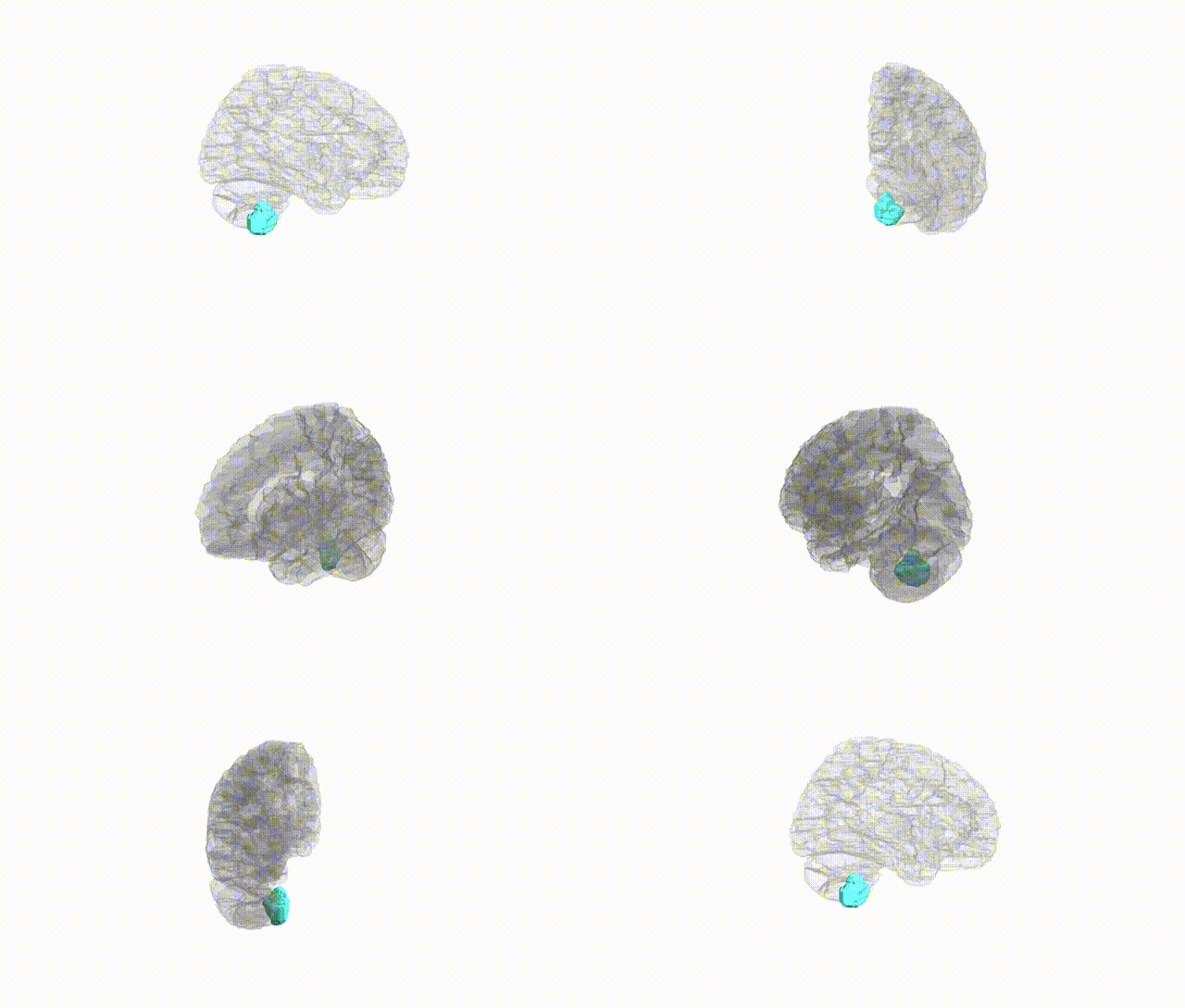
Full Quality Version: Download MP4
Wali Sidiqyar*, Gaurav Rudravaram*, Elyssa M. McMaster, Trent M. Schwartz, Adam M. Saunders, Kurt G. Schilling, Bennett A. Landman "Introducing SPINS: A Shared Public Visualization Library of Neuroanatomical Structures." Medical Imaging with Deep Learning- short paper
This resource is licensed under CC0 1.0 Universal (Public Domain).