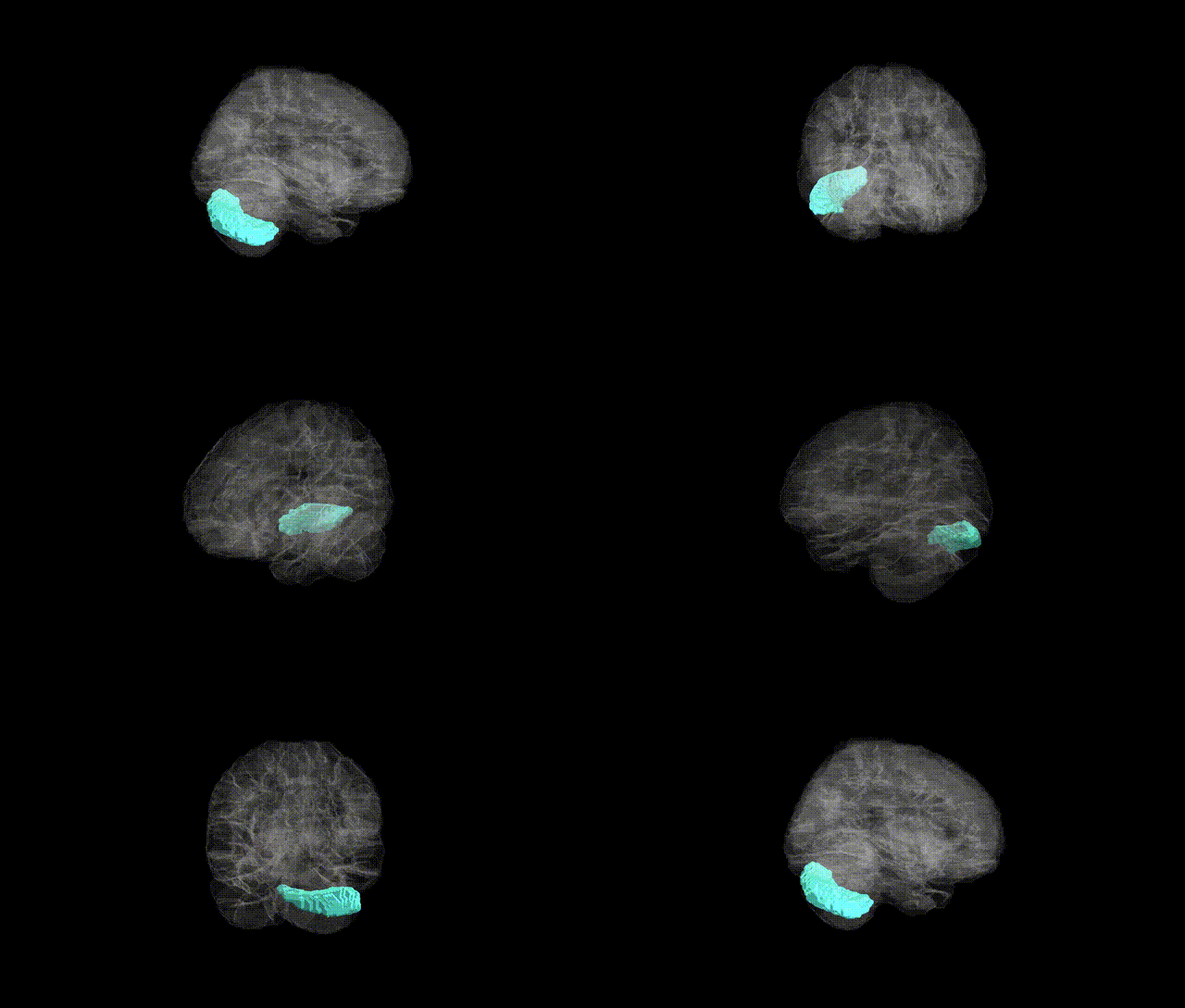
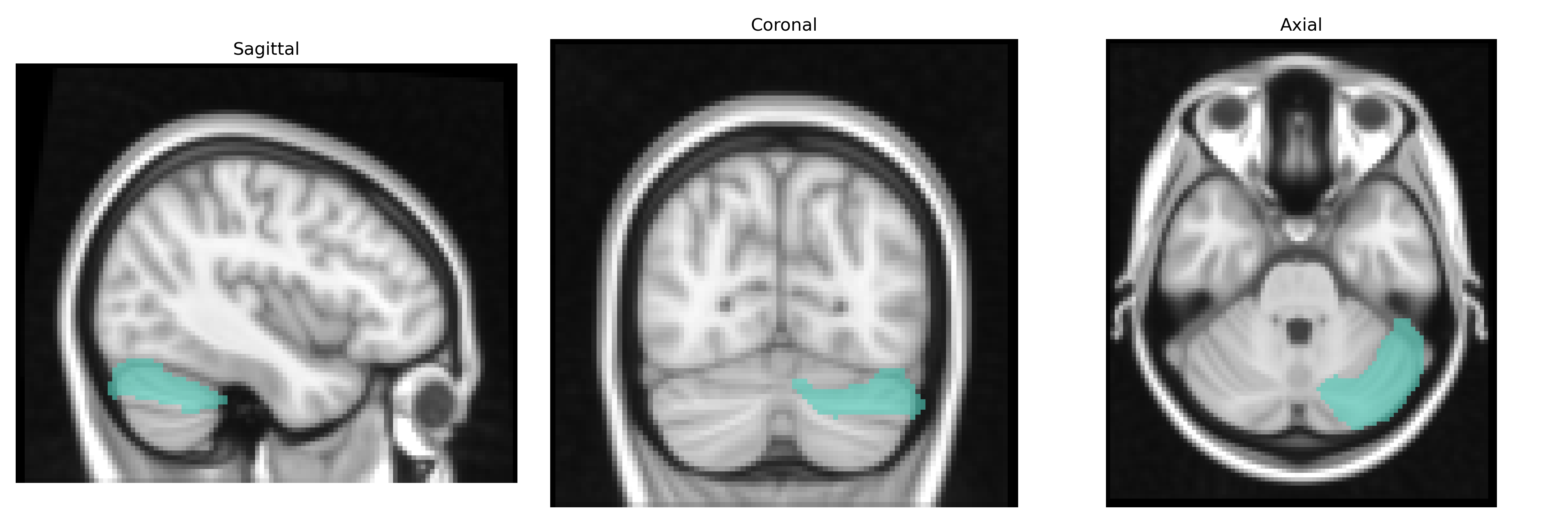
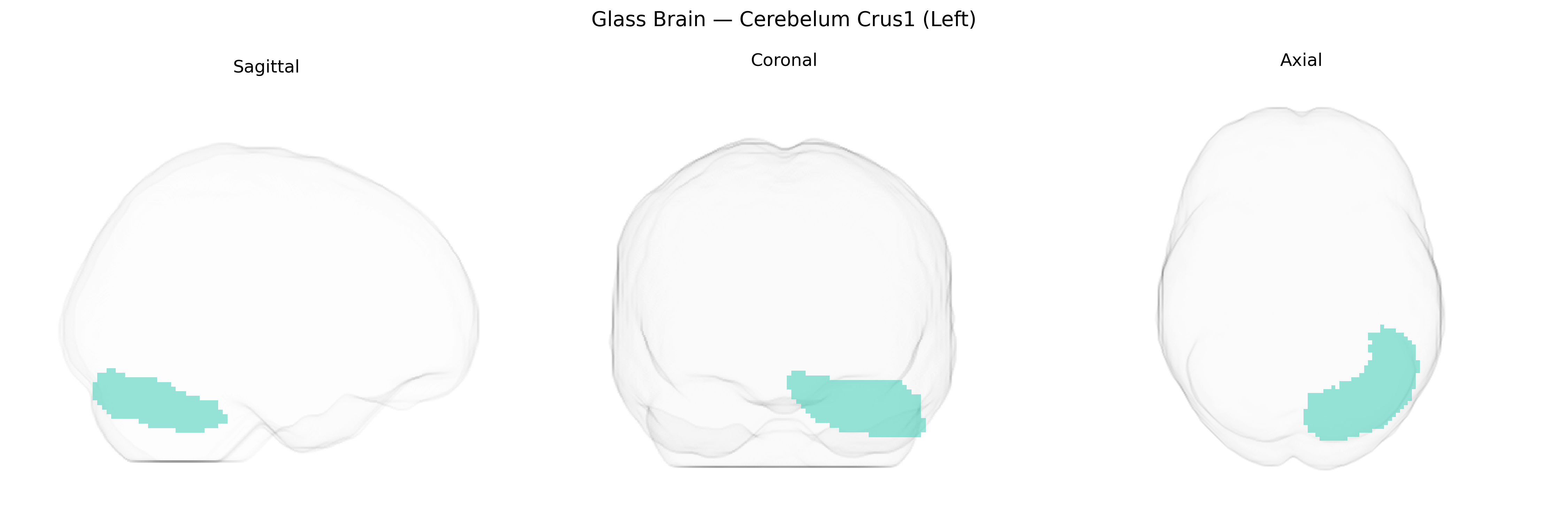
The left Cerebellum Crus I, as defined in the AAL2 atlas, is a lateral portion of the cerebellar hemisphere located within the posterior lobe, superior to Crus II and adjacent to lobule VI. Structurally, it consists of highly folded cerebellar cortex organized into microzones that integrate extensive inputs from cerebral association areas, particularly prefrontal and parietal regions. Functionally, Crus I is strongly implicated in higher-order cognitive processes—including working memory, language, executive control, and social cognition—as well as in fine-tuning complex, learned motor sequences via cerebro-cerebellar loops that project through the dentate nucleus to thalamus and back to neocortex. Although it participates in sensorimotor coordination, its activity patterns and connectivity profiles emphasize its role in cognition rather than purely in movement regulation. There is no direct link for “Cerebellum Crus I”; a related structure is the cerebellum: Cerebellum.
The left cerebellar Crus I, as defined in the AAL2 atlas, has been implicated in genetic studies of brain structure, cognition, and psychiatric risk, although findings are often reported bilaterally or at lobular rather than strictly regional resolution. Large-scale GWAS of brain imaging phenotypes (e.g., ENIGMA, UK Biobank) have identified multiple loci associated with cerebellar volume and cortical thickness that encompass Crus I, including variants near genes involved in neurodevelopment and synaptic function such as KIAA0586, FOXP1, and MAPT, though these are typically linked to overall cerebellar measures rather than specifically to left Crus I. Imaging–genetics work has shown that polygenic scores for schizophrenia, bipolar disorder, major depression, and autism spectrum disorder relate to altered cerebellar structure and functional connectivity in cognitive and default-mode–related cerebellar territories, with Crus I frequently highlighted as a hub for higher-order cognitive and affective processing. GWAS of cognitive traits (general intelligence, executive function, working memory) and educational attainment have reported associations between polygenic scores and Crus I morphology or activation, supporting a genetically influenced role of this region in cognitive control and language-related networks. Associations have also been reported between cerebellar Crus I measures and genetic risk for neurodegenerative diseases (e.g., Alzheimer’s disease) and coordination-related motor traits, though these tend to be weaker and less spatially specific. Overall, genetic influences on left Crus I appear to be embedded within broader cerebellar and cortico-cerebellar networks, with current evidence pointing to polygenic contributions affecting cognition, psychiatric vulnerability, and brain connectivity rather than single, strongly region-specific variants.
Overview generated by GPT-4o (2026).
Region ID: 9001
Hemisphere: left
Atlas: AAL2
Full Quality Version: Download MP4
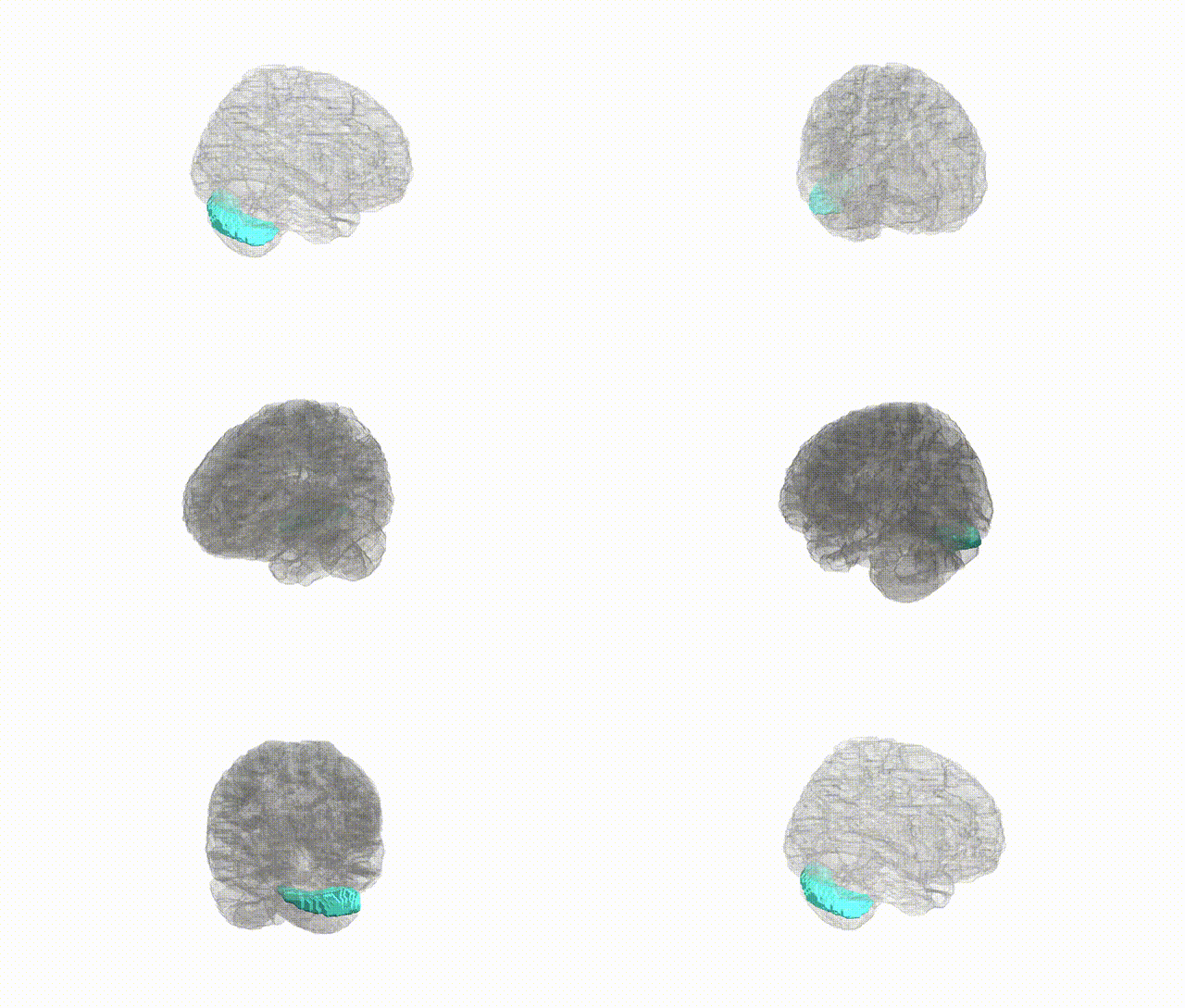
Full Quality Version: Download MP4
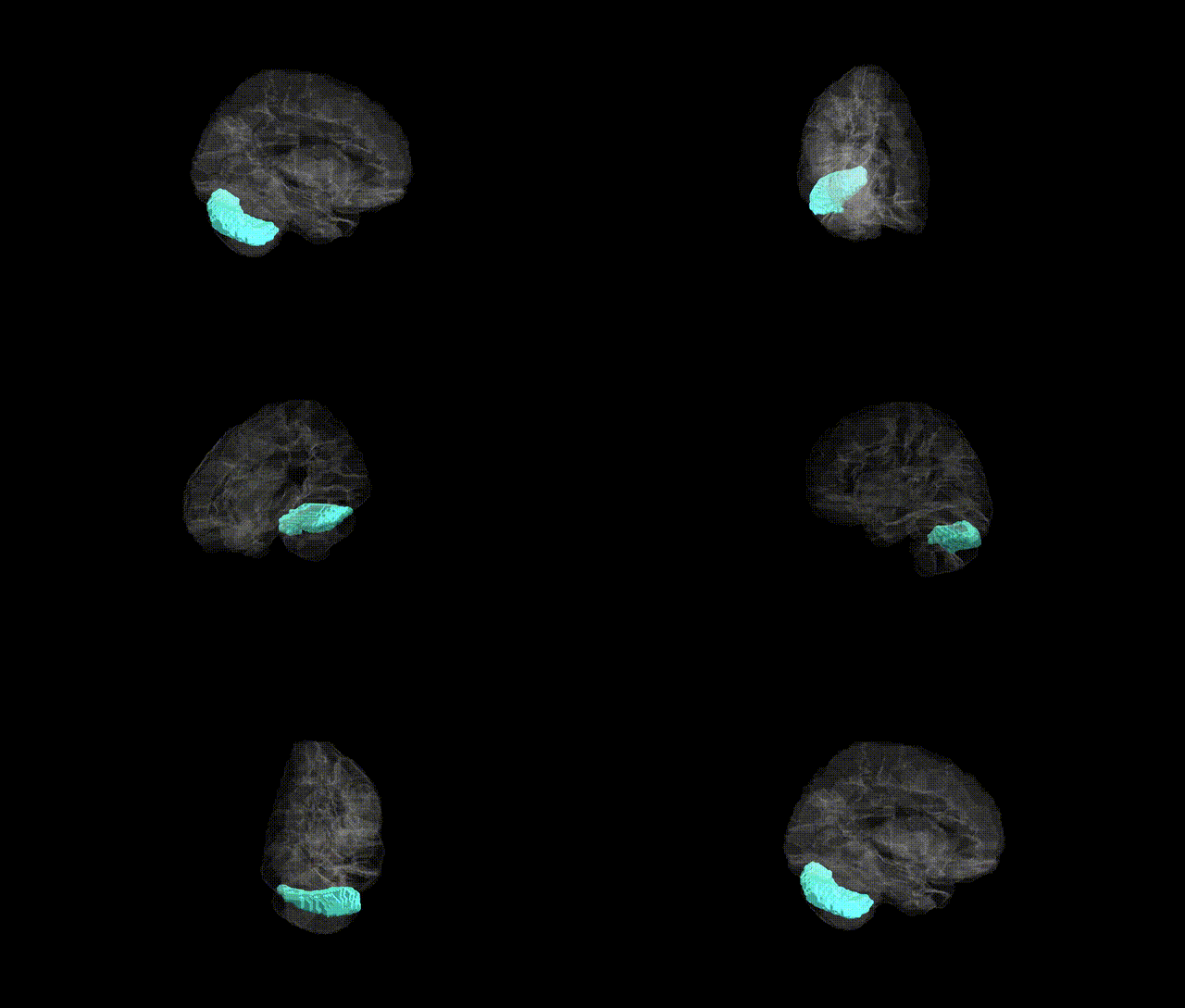
Full Quality Version: Download MP4
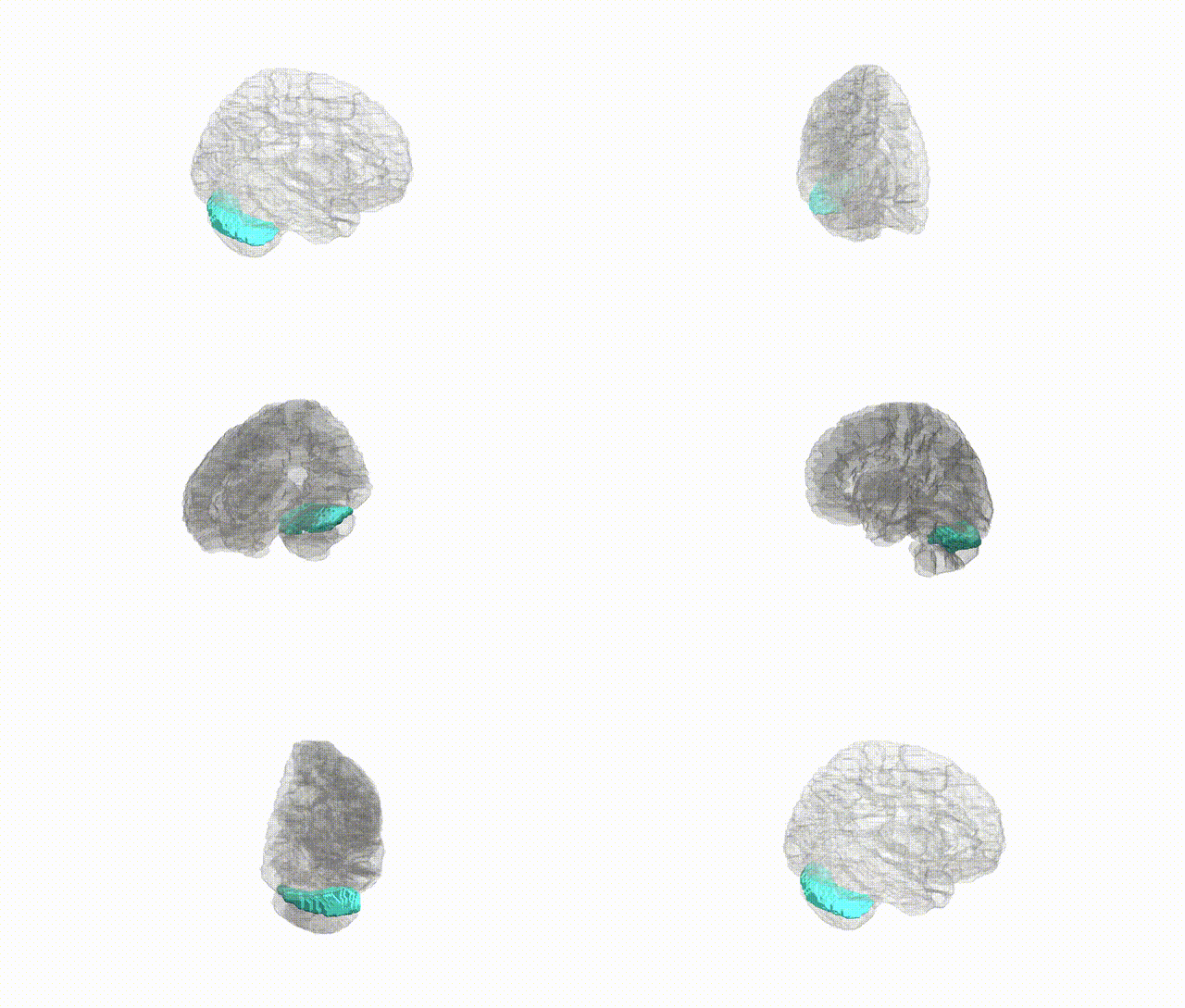
Full Quality Version: Download MP4
Wali Sidiqyar*, Gaurav Rudravaram*, Elyssa M. McMaster, Trent M. Schwartz, Adam M. Saunders, Kurt G. Schilling, Bennett A. Landman "Introducing SPINS: A Shared Public Visualization Library of Neuroanatomical Structures." Medical Imaging with Deep Learning- short paper
This resource is licensed under CC0 1.0 Universal (Public Domain).