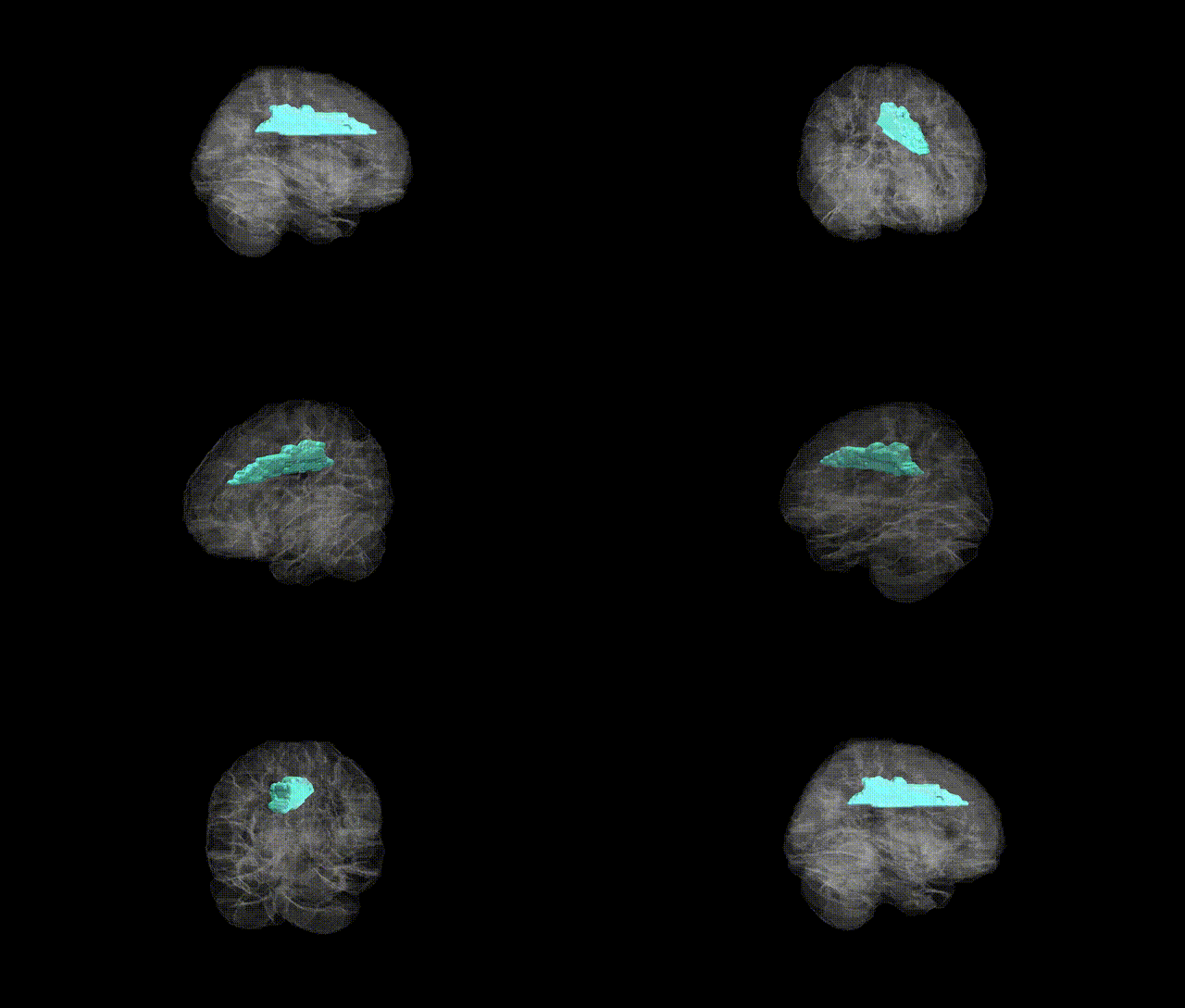
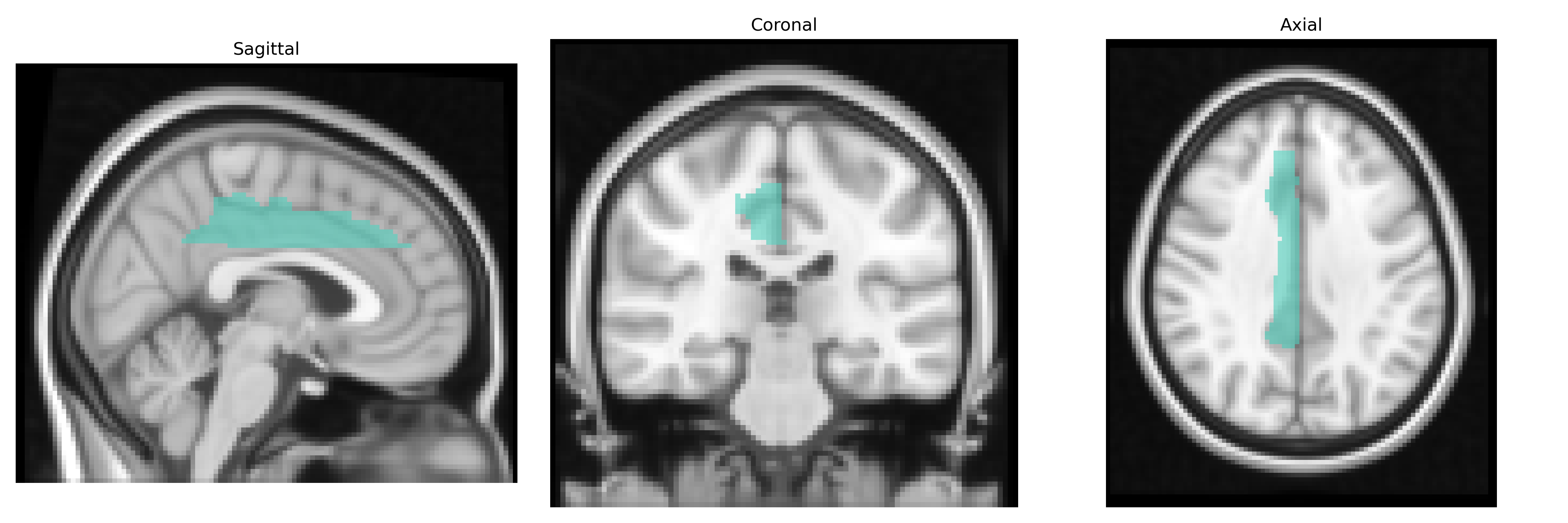
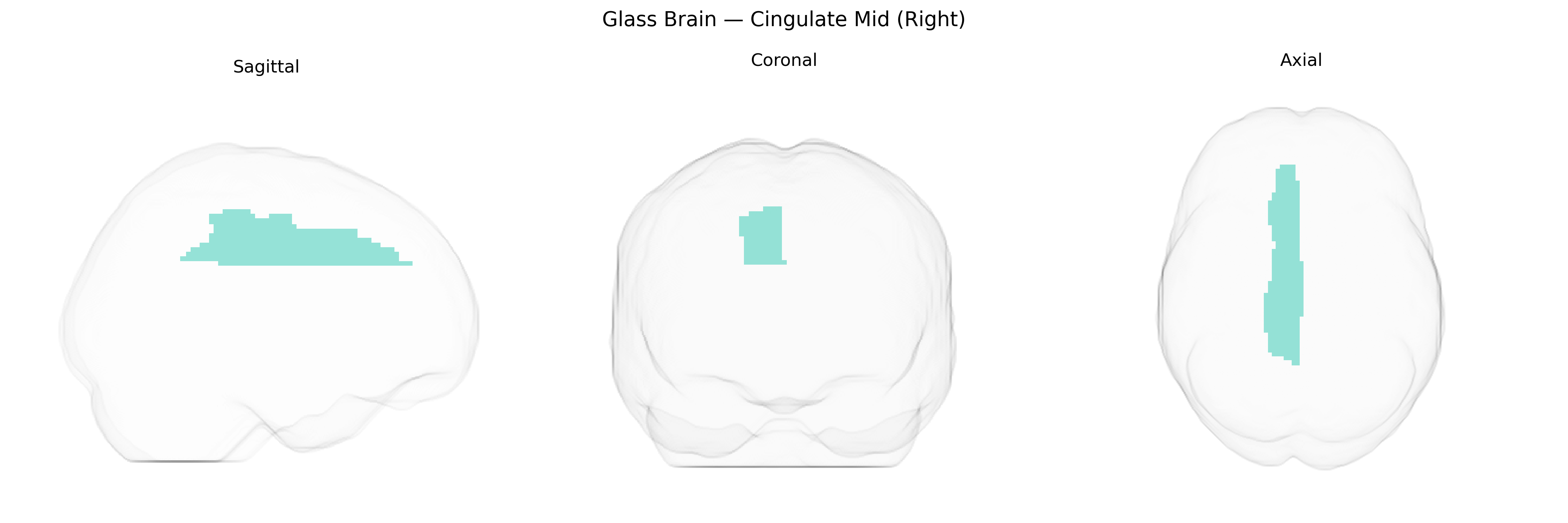
The right cingulate mid region (Right Cingulate Gyrus, mid-part) in the AAL2 atlas corresponds to the middle segment of the cingulate gyrus on the right hemisphere, a key component of the limbic system arching above the corpus callosum. This region integrates cognitive and emotional information, contributing to processes such as conflict monitoring, error detection, attention allocation, and aspects of motivational and affective regulation. It is functionally connected with prefrontal, parietal, and limbic structures, supporting goal-directed behavior and adaptive responses to changing environmental demands. In many functional parcellations, this territory overlaps substantially with the dorsal anterior and mid-cingulate cortex. There is no direct Wikipedia article for “right cingulate mid” as specified in AAL2, but it is encompassed within the Cingulate gyrus.
Genetic associations involving the right mid cingulate cortex (Right Cingulate Mid in AAL2, part of the cingulate gyrus) largely emerge from imaging–genetics and GWAS of cortical thickness, surface area, and connectivity, rather than region-specific case–control studies. Variants in genes implicated in neurodevelopment and synaptic function—such as those within or near BDNF, NRG1, GRIN2B, and COMT—have been repeatedly linked to structural or functional variation in cingulate regions, including mid/anterior sectors, often in the context of cognitive control, pain processing, and emotion regulation. Large-scale neuroimaging GWAS (e.g., ENIGMA and UK Biobank–based studies) have identified polygenic influences on cingulate morphology and connectivity, with loci near HMGA2, MIR4761, and other developmental regulators contributing to global and regional cortical measures that include the mid cingulate. Clinically, genetic risk for major depressive disorder, schizophrenia, bipolar disorder, ADHD, and autism spectrum disorder has been associated with altered cingulate structure or activity, and polygenic risk scores for these disorders correlate with mid/anterior cingulate thickness or function in some cohorts. In addition, genetic variants affecting pain sensitivity (e.g., in OPRM1 and other nociceptive pathways), anxiety-related traits, and executive function show associations with cingulate activation patterns in fMRI paradigms, implicating the right mid cingulate as a convergence zone where polygenic influences on cognition, emotion, and nociception manifest at the level of brain structure and function, even though locus-specific GWAS confined strictly to the AAL2 Right Cingulate Mid label remain limited.
Overview generated by GPT-4o (2026).
Region ID: 4012
Hemisphere: right
Atlas: AAL2
Full Quality Version: Download MP4
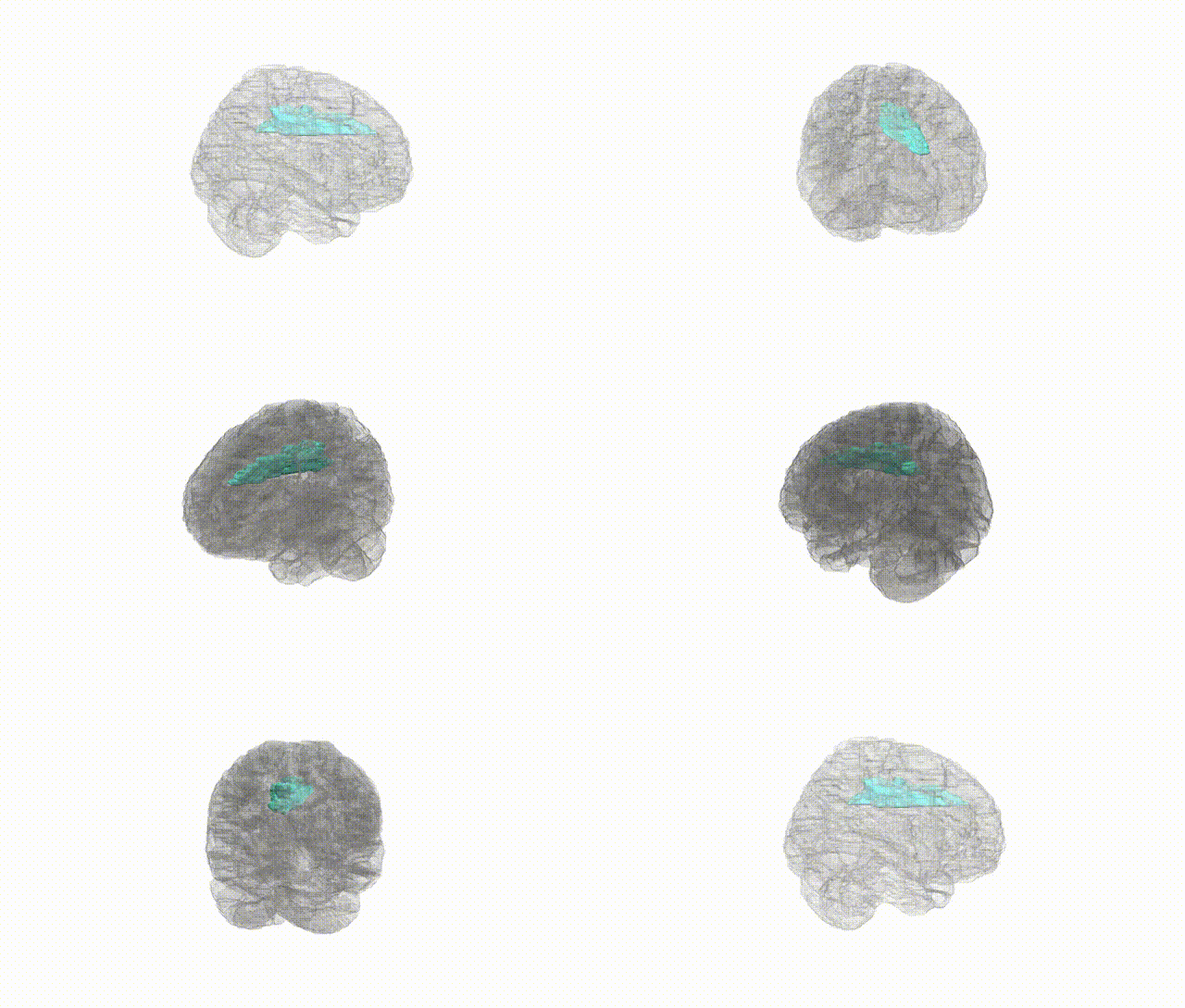
Full Quality Version: Download MP4
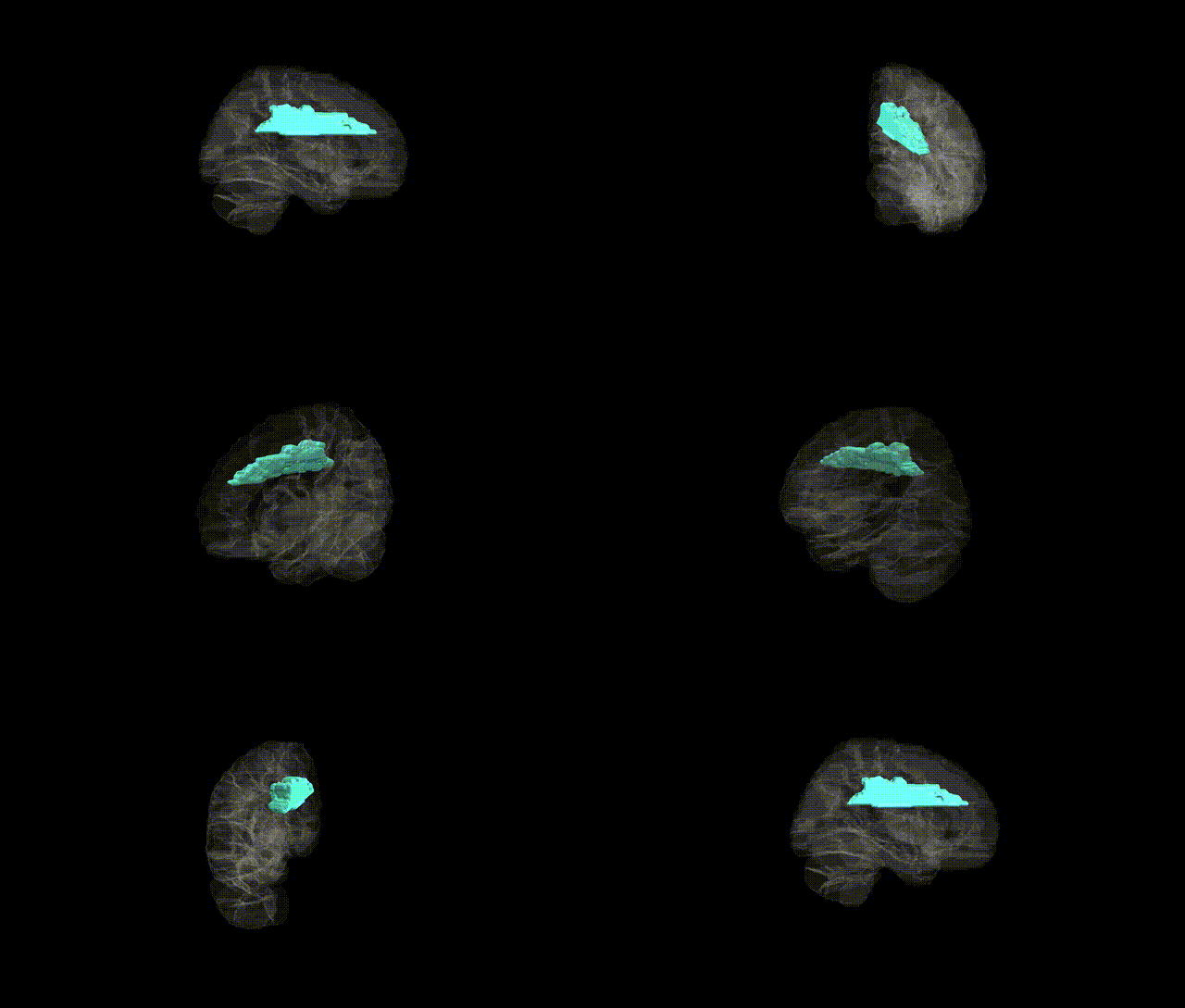
Full Quality Version: Download MP4
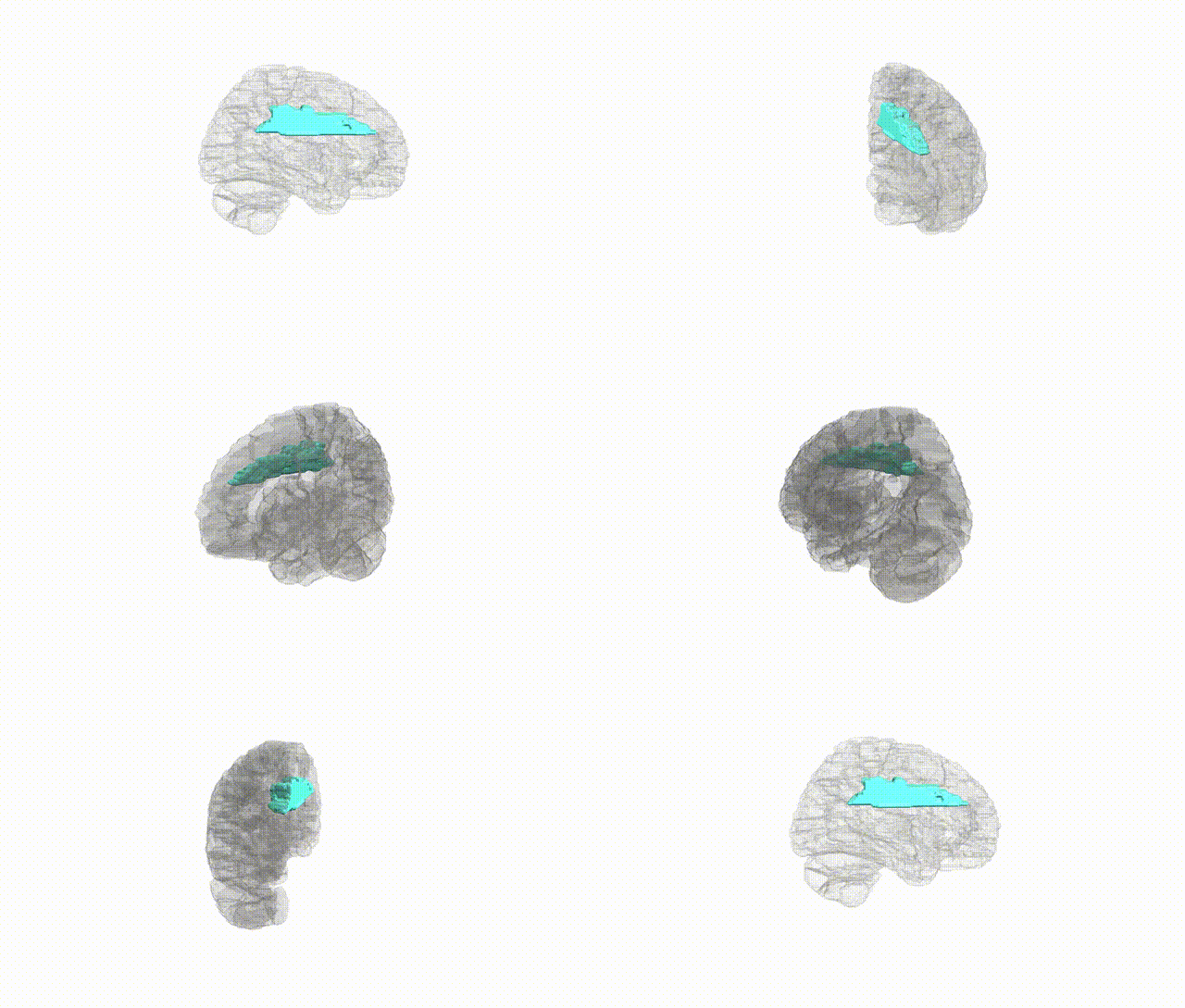
Full Quality Version: Download MP4
Wali Sidiqyar*, Gaurav Rudravaram*, Elyssa M. McMaster, Trent M. Schwartz, Adam M. Saunders, Kurt G. Schilling, Bennett A. Landman "Introducing SPINS: A Shared Public Visualization Library of Neuroanatomical Structures." Medical Imaging with Deep Learning- short paper
This resource is licensed under CC0 1.0 Universal (Public Domain).