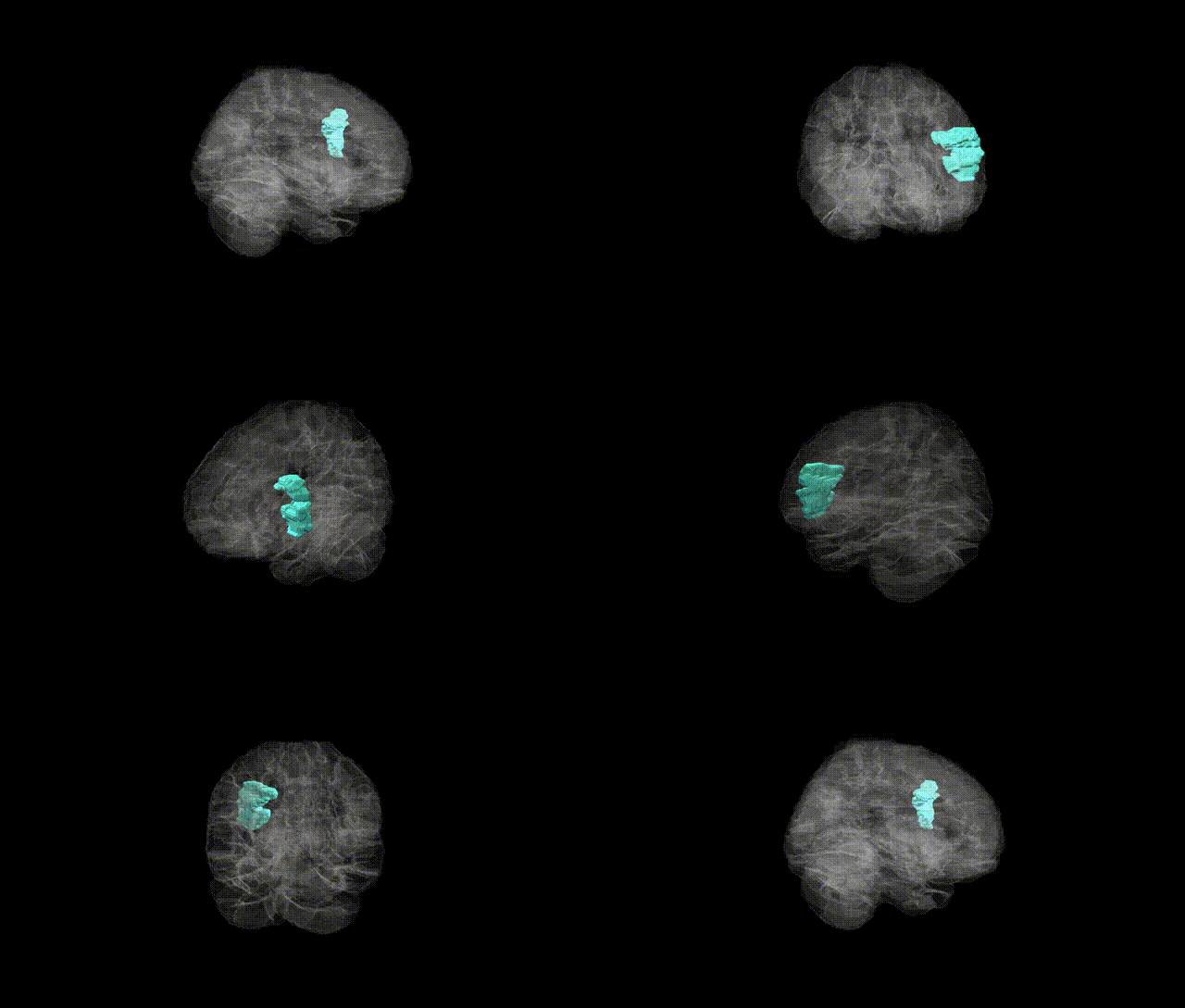
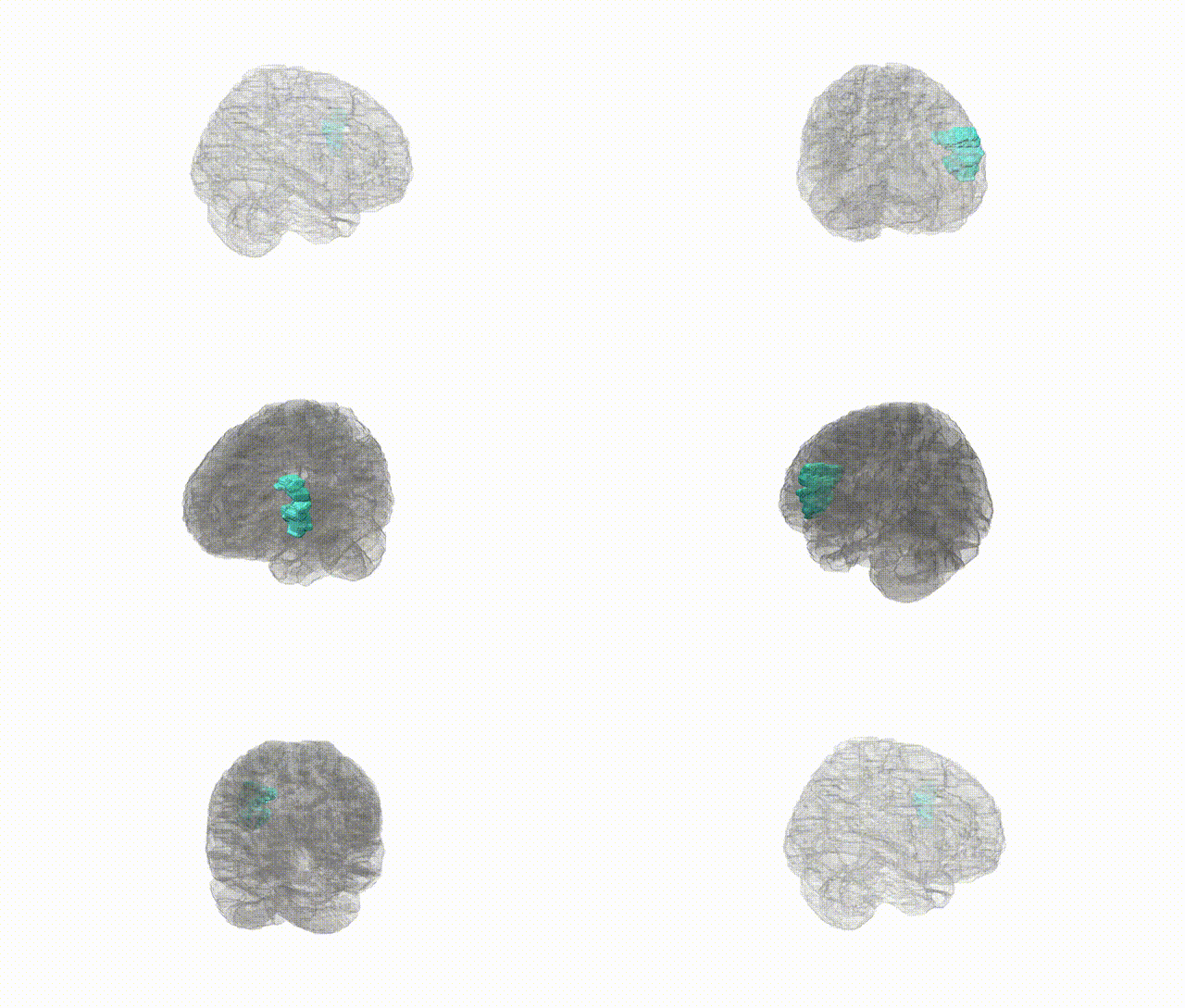
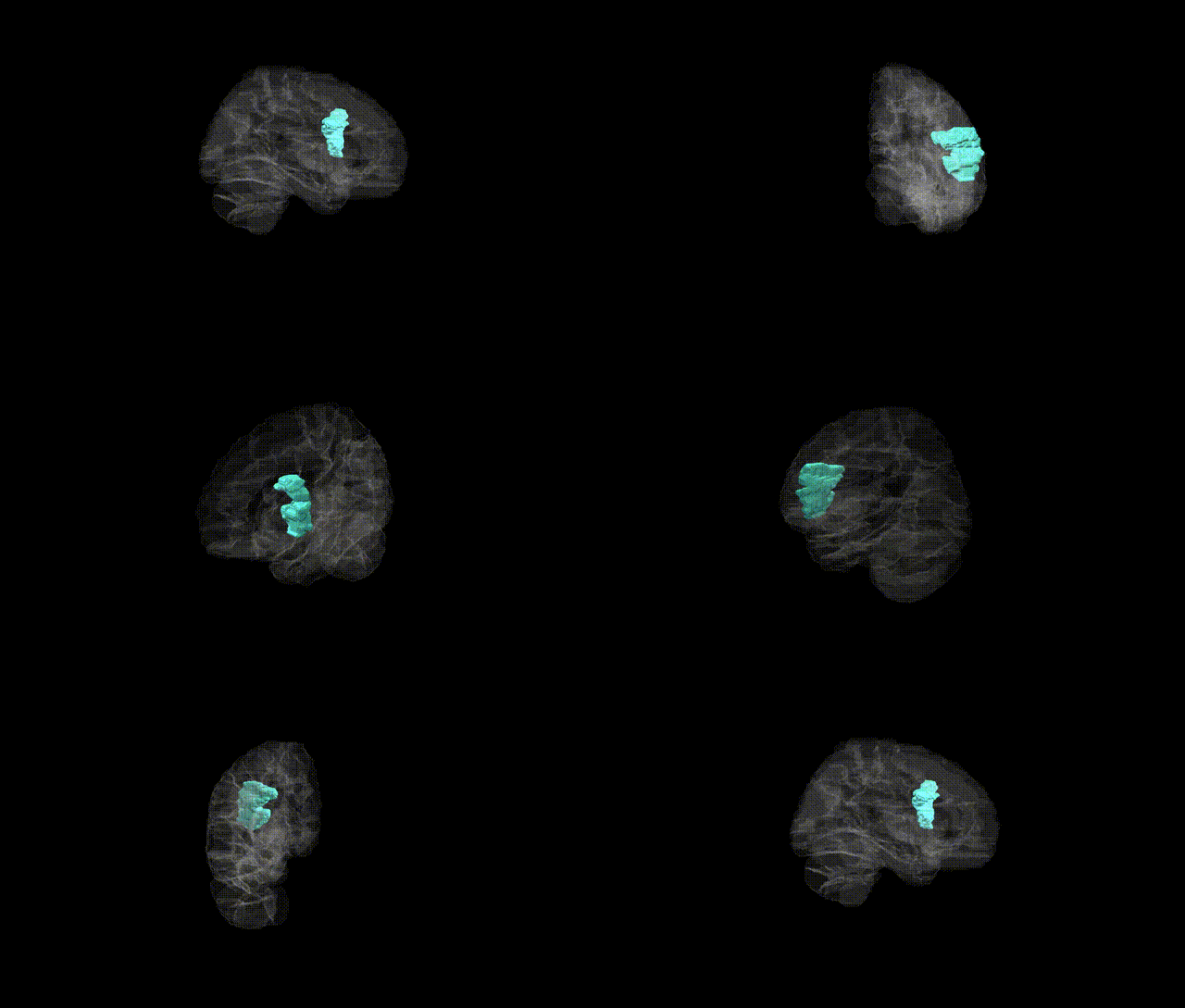
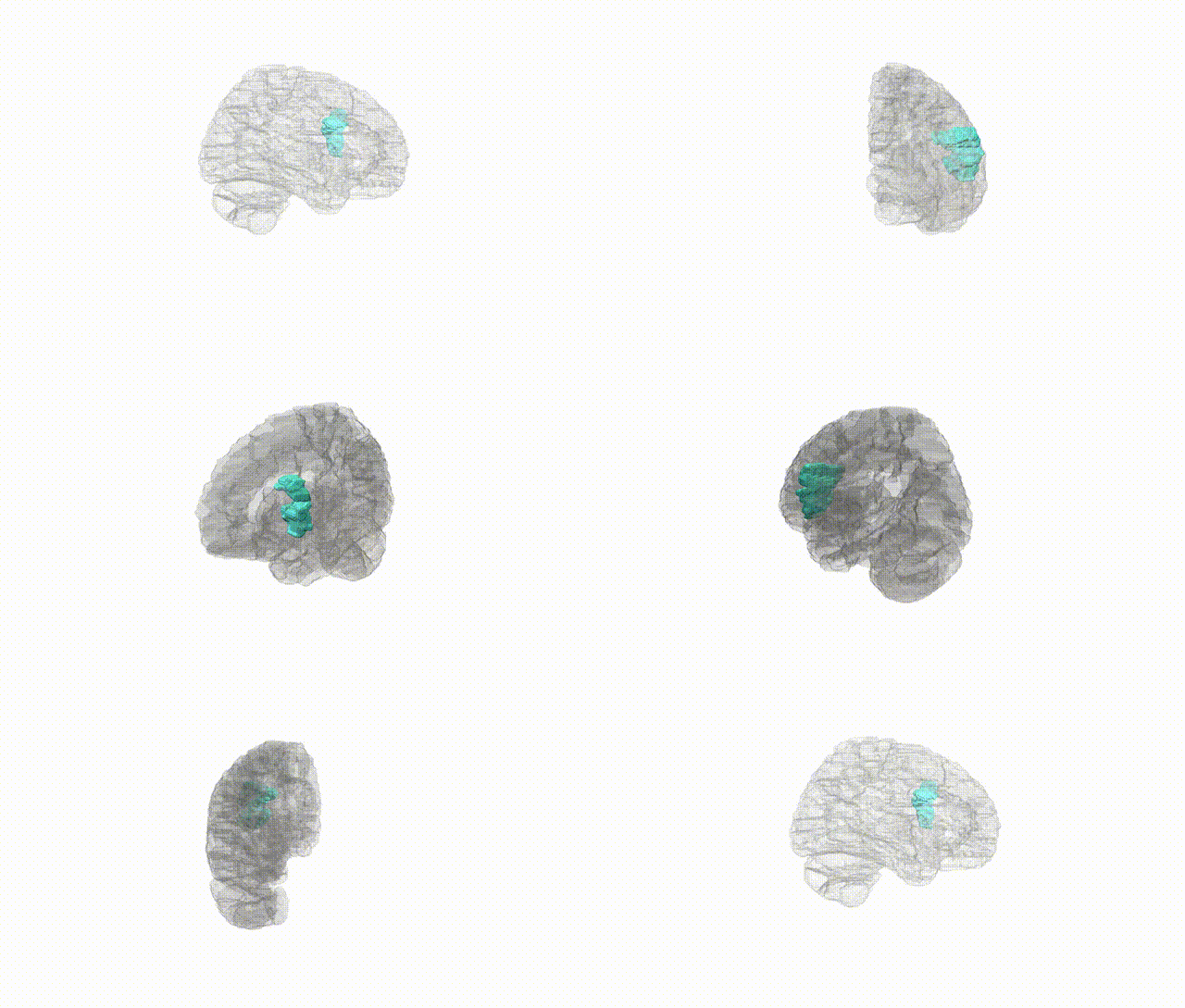
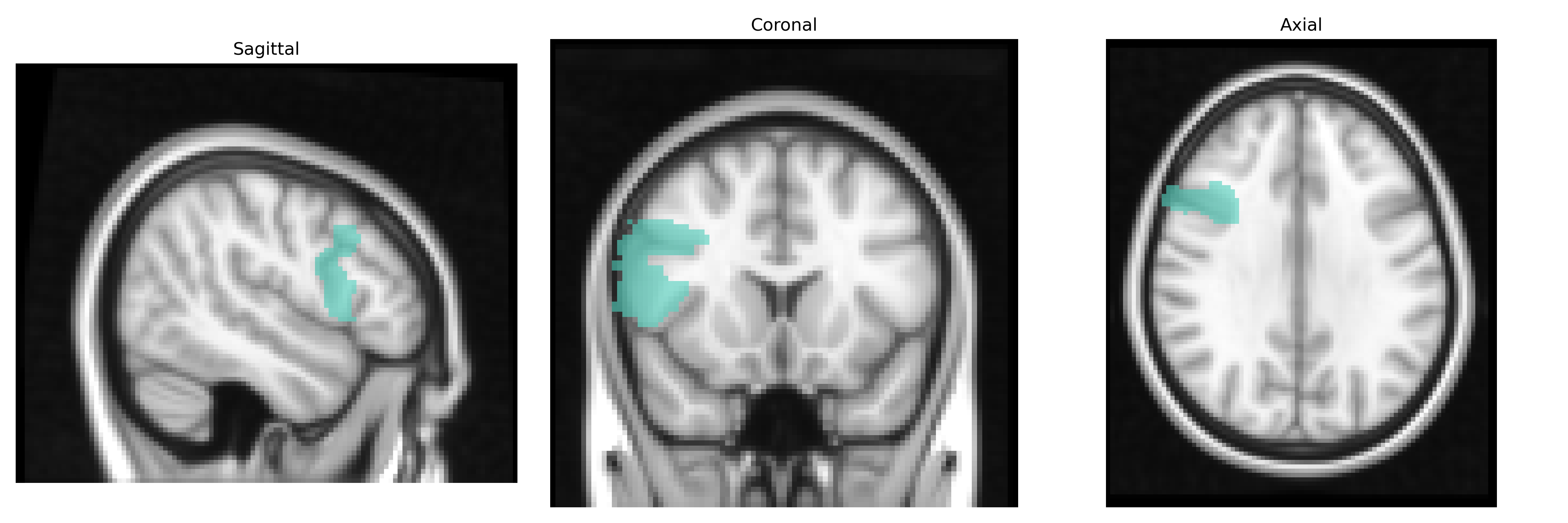
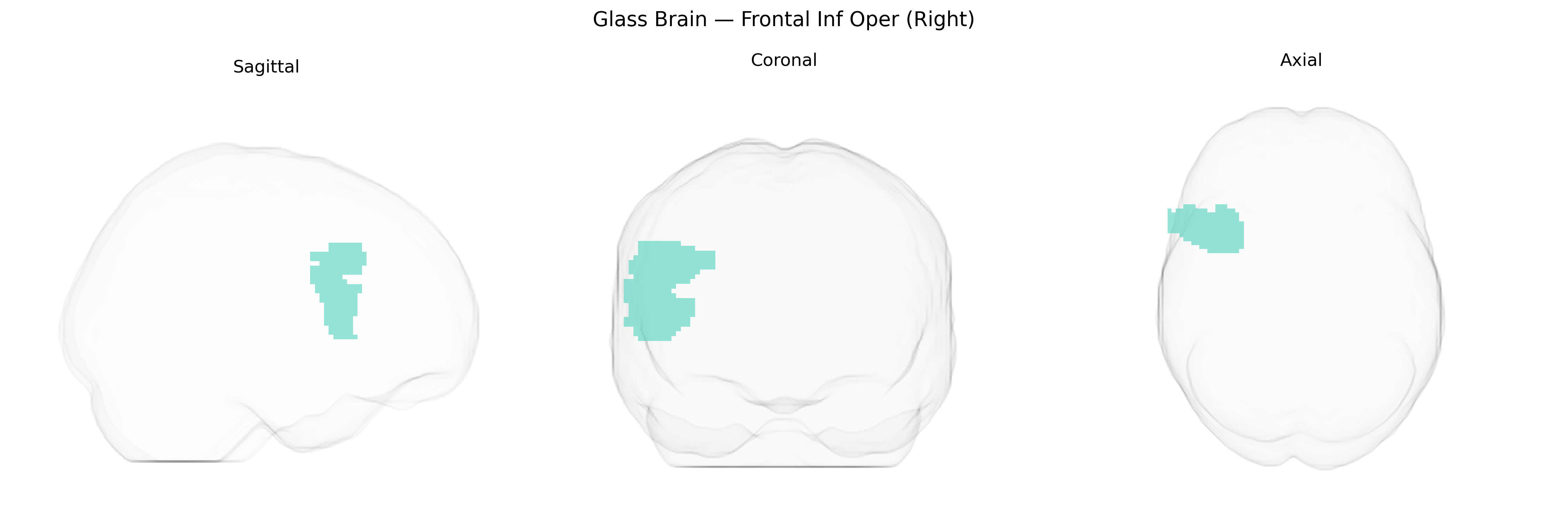
The right frontal inferior operculum (Frontal Inf Oper (Right)) in the AAL2 atlas corresponds to the opercular part of the right inferior frontal gyrus, a cortical region overlying the insula and forming part of the lateral frontal operculum. Anatomically, it lies anterior to the precentral gyrus and inferior to the middle frontal gyrus, bordering the Sylvian fissure. Functionally, this region is implicated in language processing (including aspects of speech production and phonological processing), cognitive control, response inhibition, and working memory, and often participates in the broader fronto-parietal control and language networks. It is also involved in sensorimotor integration related to orofacial musculature and may play a role in social cognition and emotional prosody. There is no direct Wikipedia article for “frontal inferior operculum”; a closely related and overlapping structure is the Inferior frontal gyrus.
The right inferior frontal gyrus, opercular part (right Frontal Inf Oper in the AAL2 atlas), typically encompassing Brodmann areas 44/45, has been repeatedly implicated in genetic studies of language, executive control, and psychiatric risk, though most findings are regionally broad rather than AAL2-specific. Structural and functional variation in this region has been associated in GWAS and imaging–genetics studies with common variants in FOXP2, CNTNAP2, and other language-related genes, as well as polygenic scores for educational attainment and general cognitive ability, consistent with its role in speech production and inhibitory control. Large-scale neuroimaging GWAS (e.g., ENIGMA and UK Biobank–based studies) have linked surface area and cortical thickness of inferior frontal regions, including the opercular part, to loci involved in neurodevelopmental patterning (such as genes in WNT and FGF pathways) and to variants contributing to global brain size. Right inferior frontal operculum alterations have also been observed in genetic risk contexts for ADHD, autism spectrum disorder, and schizophrenia, where polygenic risk scores correlate with structural or functional changes in this and adjacent frontal regions related to response inhibition and cognitive control. Moreover, lesion and functional-genetic work in fronto-insular and inferior frontal networks suggests overlap between genetic variants conferring risk for impulse-control disorders or substance use and differences in activation of the right inferior frontal operculum during stop-signal and go/no-go tasks, supporting a genetically influenced frontostriatal inhibition circuit in which this region is a key node.
Overview generated by GPT-4o (2026).
Region ID: 2302
Hemisphere: right
Atlas: AAL2
Full Quality Version: Download MP4
Full Quality Version: Download MP4
Full Quality Version: Download MP4
Full Quality Version: Download MP4
Wali Sidiqyar*, Gaurav Rudravaram*, Elyssa M. McMaster, Trent M. Schwartz, Adam M. Saunders, Kurt G. Schilling, Bennett A. Landman "Introducing SPINS: A Shared Public Visualization Library of Neuroanatomical Structures." Medical Imaging with Deep Learning- short paper
This resource is licensed under CC0 1.0 Universal (Public Domain).