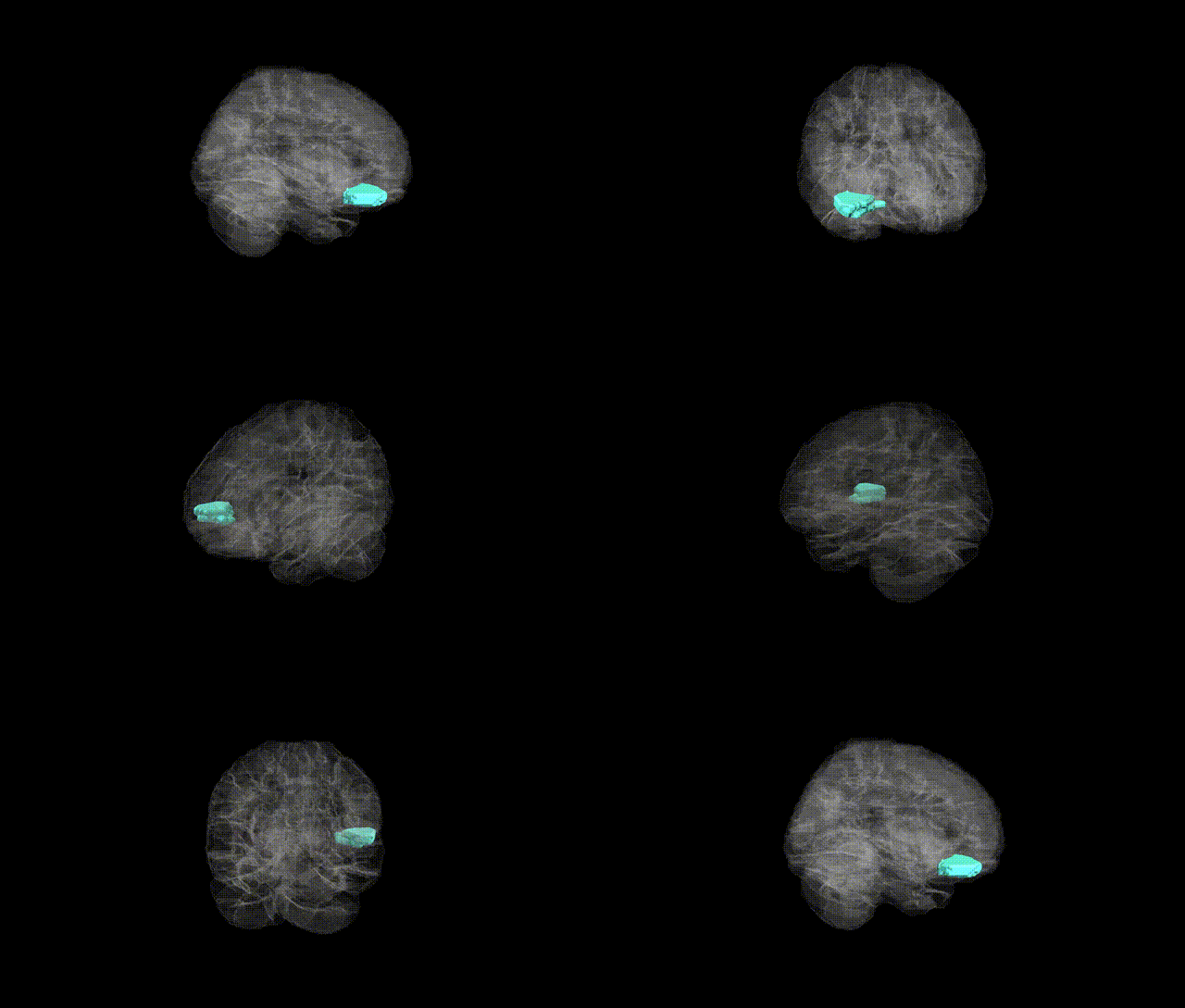
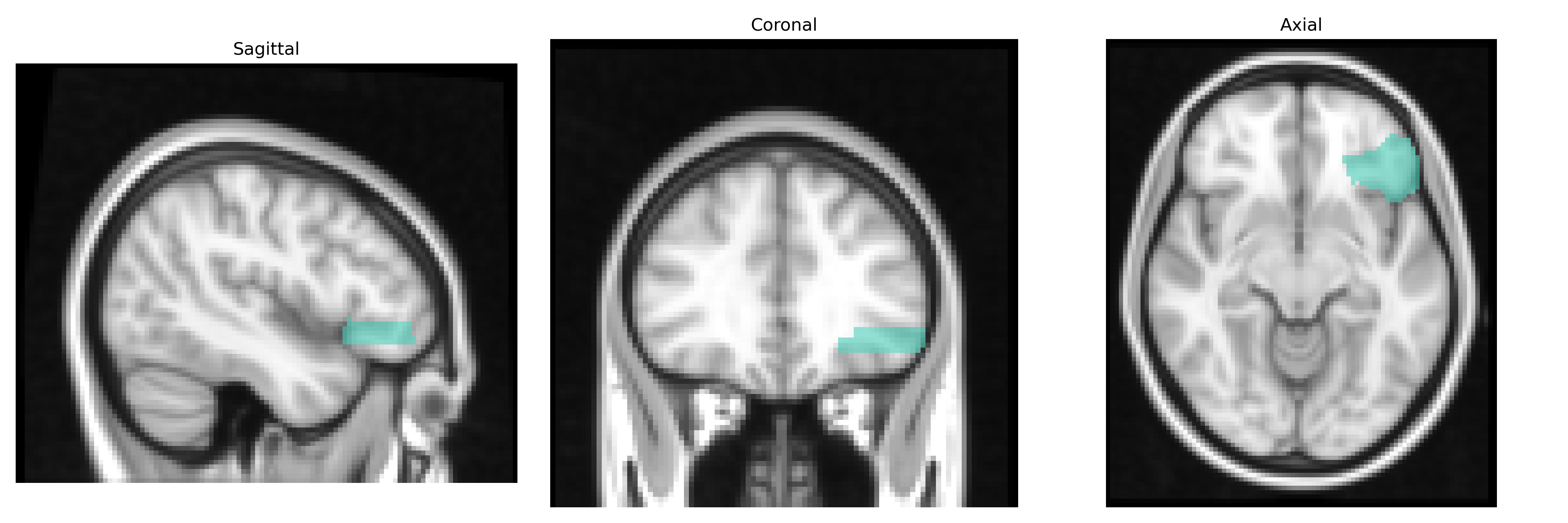
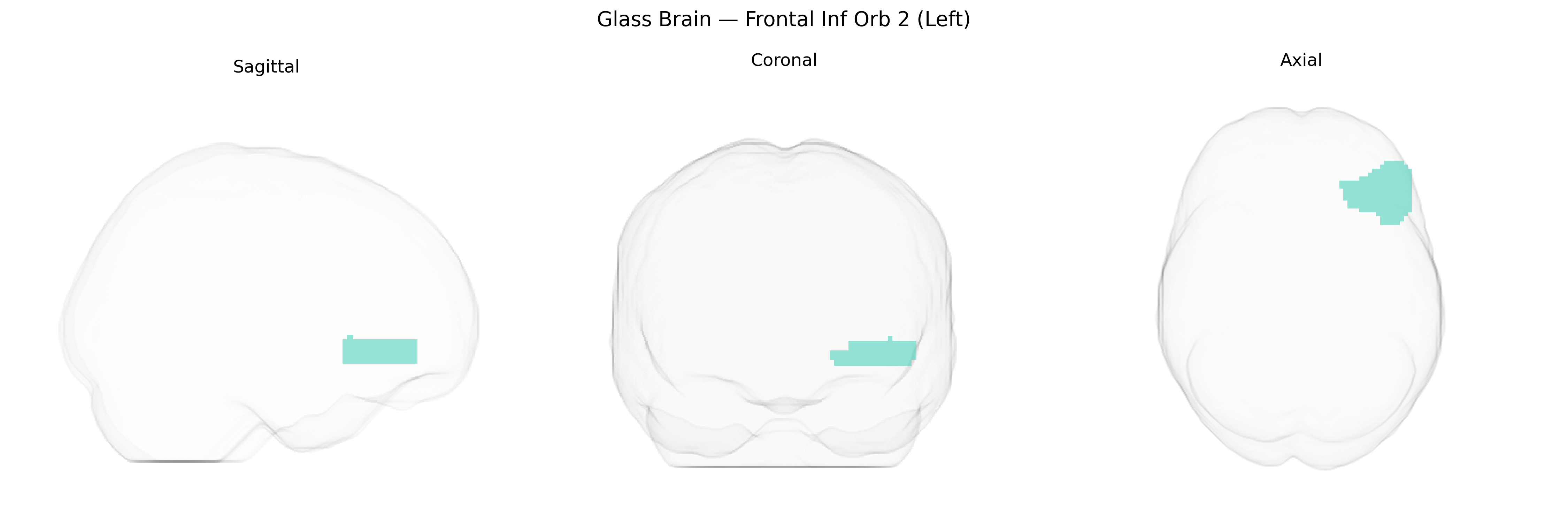
The left Frontal Inf Orb 2 (Left) region in the AAL2 atlas corresponds to a subdivision of the left orbitofrontal portion of the inferior frontal gyrus, located on the ventral surface of the frontal lobe above the orbits. This area is part of the broader orbitofrontal cortex, which is implicated in reward processing, decision-making, evaluation of emotional and social stimuli, and adaptive behavioral control based on changing reinforcement contingencies. Cytoarchitectonically, it overlaps with portions of the lateral and medial orbitofrontal areas, integrating sensory, limbic, and associative inputs to guide flexible goal-directed behavior and affective valuation. There is no direct link for “Frontal Inf Orb 2 (Left)” as an AAL2 label; a related structure is the orbitofrontal cortex: Orbitofrontal cortex.
The left inferior frontal gyrus (AAL2: Frontal Inf Orb 2 Left), encompassing orbitofrontal and ventrolateral prefrontal territories, shows convergent genetic associations from imaging–genetics and GWAS-based studies implicating polygenic influences on cortical thickness, surface area, and functional activation related to language, cognitive control, and emotion. Large-scale consortia such as ENIGMA and UK Biobank have linked common variants in genes involved in neurodevelopment, synaptic plasticity, and myelination (e.g., in pathways including MAPT, WNT signaling, and glutamatergic systems) to structural variation in inferior frontal and orbitofrontal regions, although locus-level specificity to the exact AAL2 “Frontal Inf Orb 2 Left” parcel is limited. Genetic correlations and GWAS of functional MRI phenotypes indicate that polygenic risk for major depressive disorder, bipolar disorder, schizophrenia, attention-deficit/hyperactivity disorder, and autism spectrum disorder is associated with altered volume, cortical thickness, or activation in inferior frontal and orbitofrontal territories, including left-lateralized regions implicated in response inhibition, reward valuation, and affective regulation. Additionally, imaging–genetic studies of addictive behaviors, impulsivity, and risk-taking reveal that allelic variation in dopaminergic, serotonergic, and opioid-related genes, as well as polygenic risk for substance use disorders, is associated with altered structure and function in left orbitofrontal/inferior frontal cortex, supporting a role for this region as a key intermediate phenotype linking genetic liability to externalizing and mood-related traits.
Overview generated by GPT-4o (2026).
Region ID: 2321
Hemisphere: left
Atlas: AAL2
Full Quality Version: Download MP4
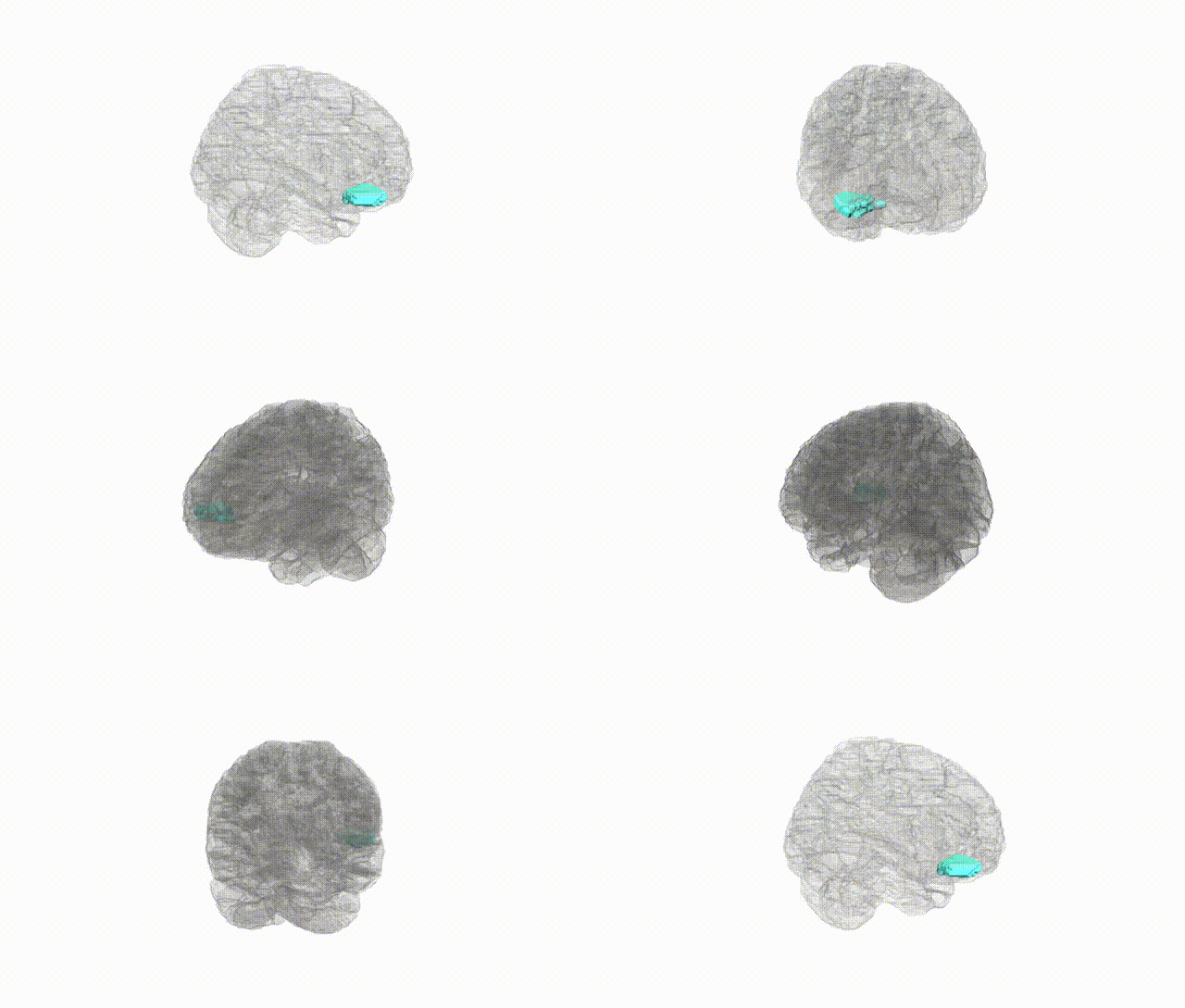
Full Quality Version: Download MP4
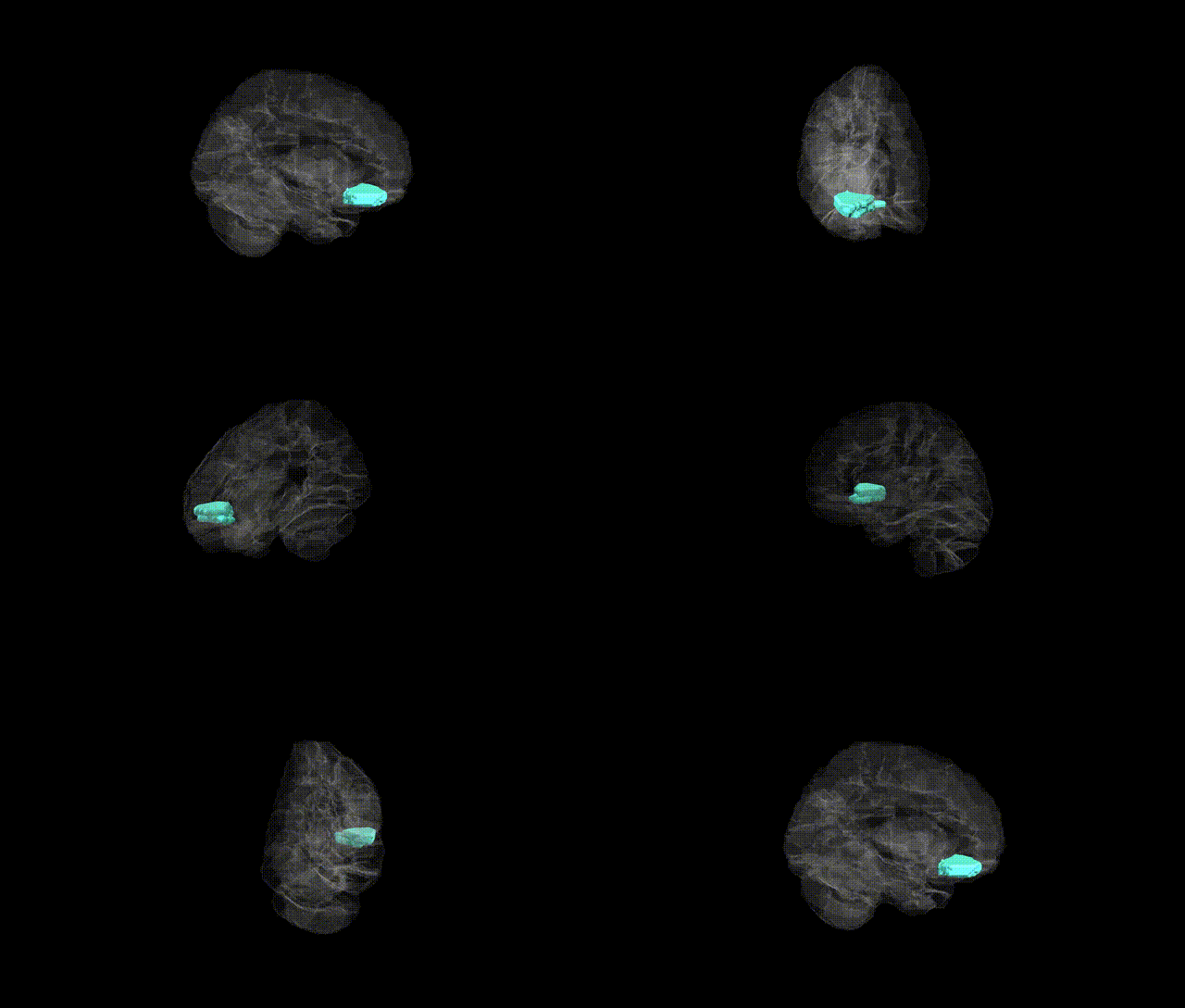
Full Quality Version: Download MP4
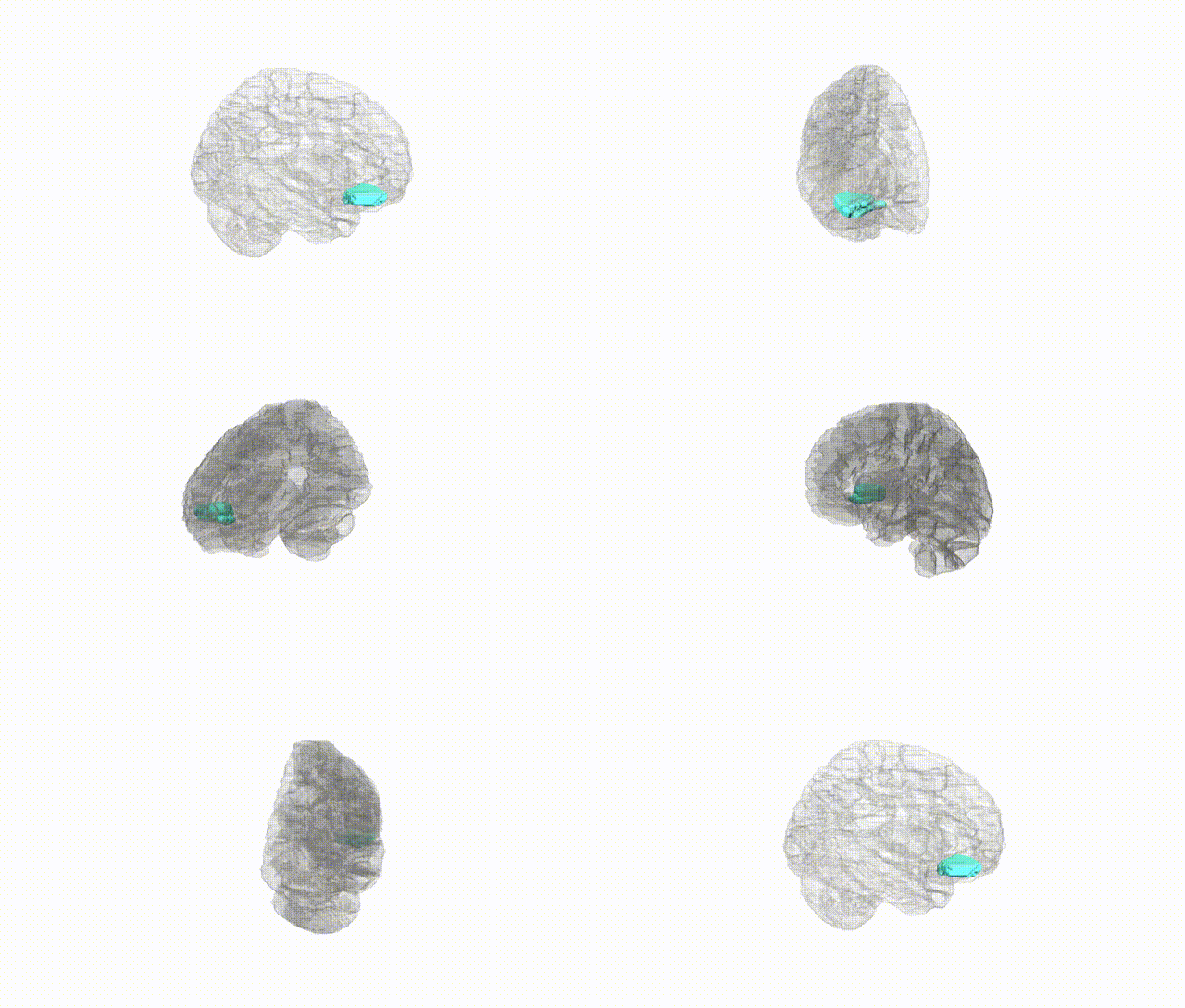
Full Quality Version: Download MP4
Wali Sidiqyar*, Gaurav Rudravaram*, Elyssa M. McMaster, Trent M. Schwartz, Adam M. Saunders, Kurt G. Schilling, Bennett A. Landman "Introducing SPINS: A Shared Public Visualization Library of Neuroanatomical Structures." Medical Imaging with Deep Learning- short paper
This resource is licensed under CC0 1.0 Universal (Public Domain).