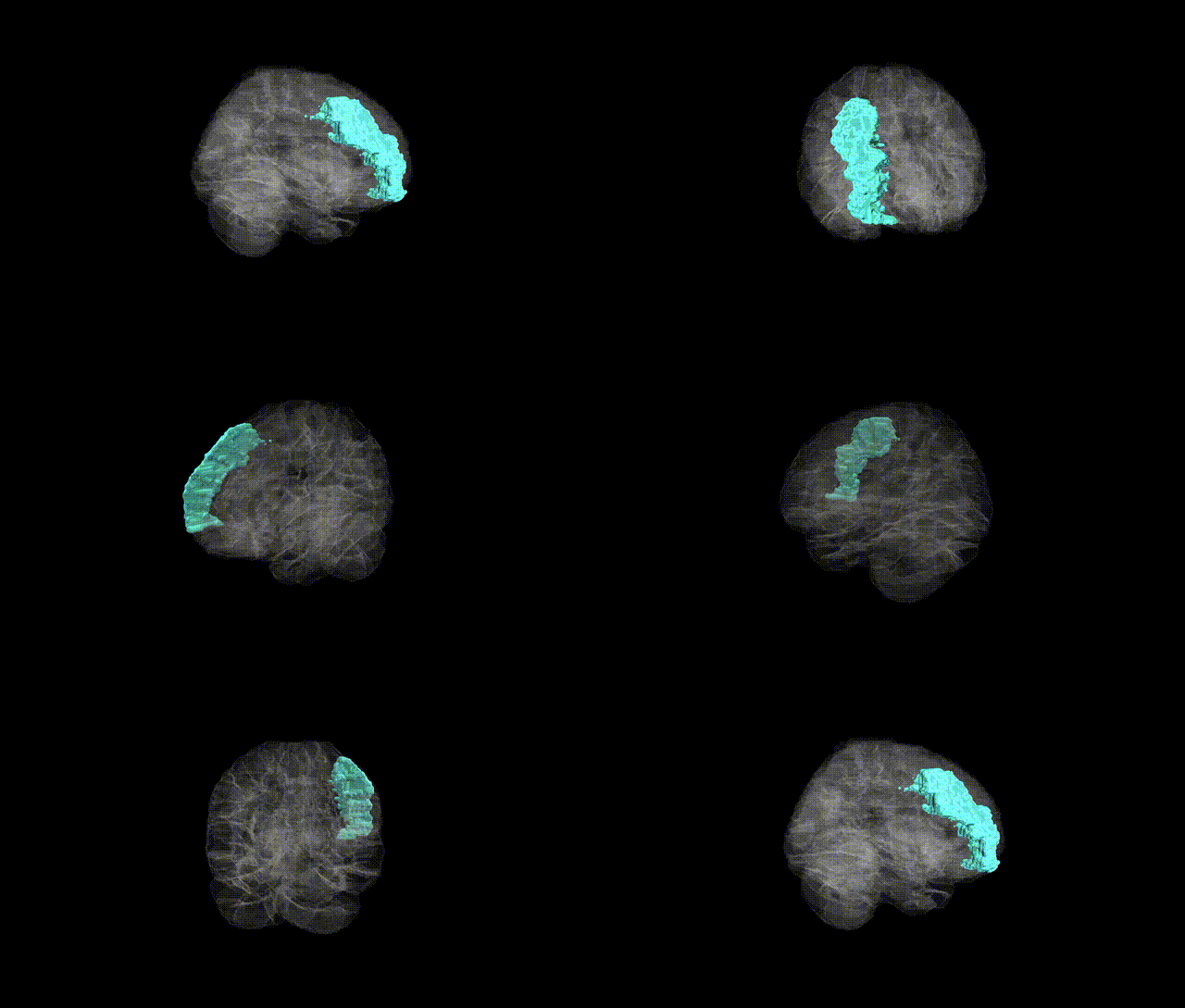
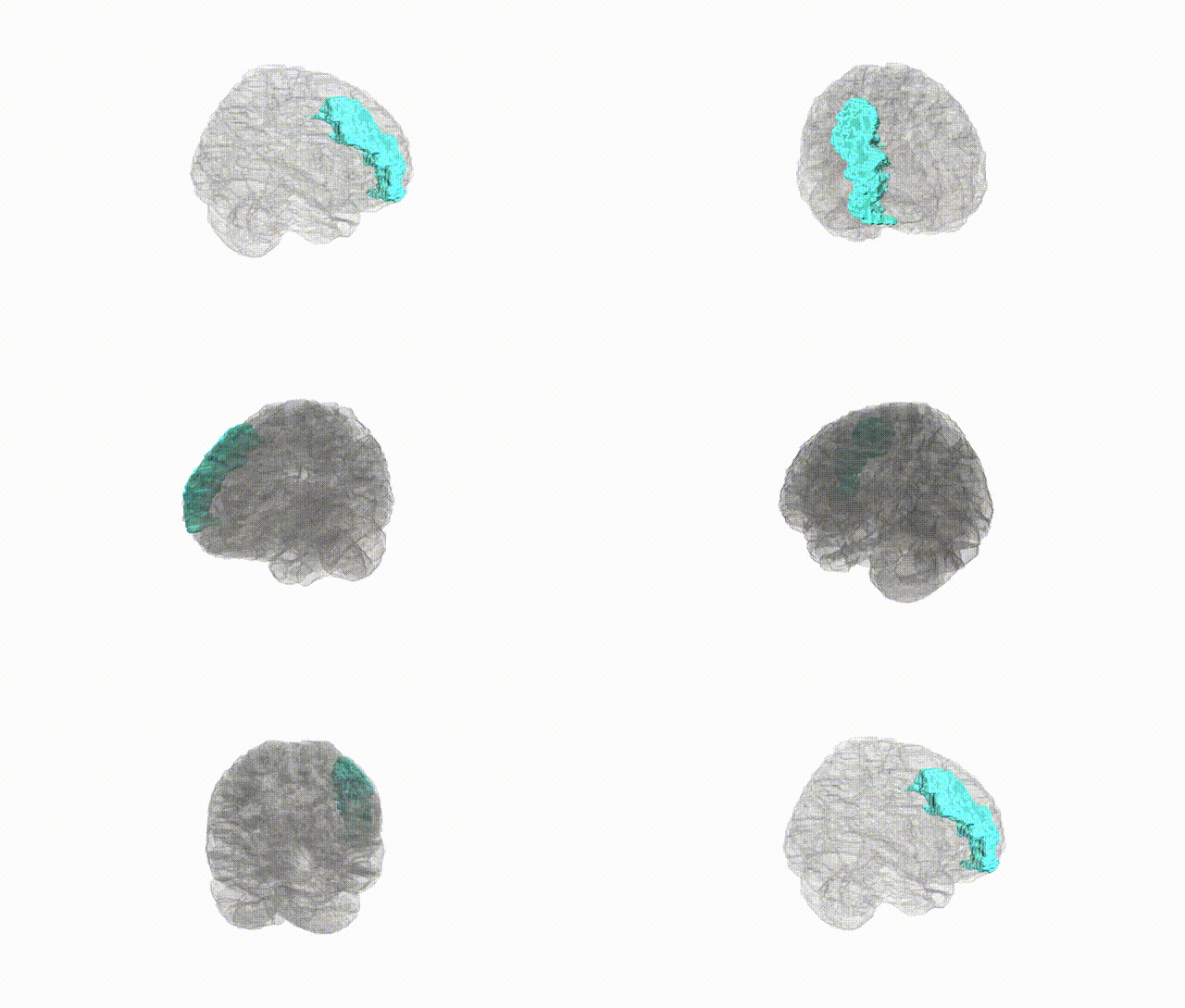
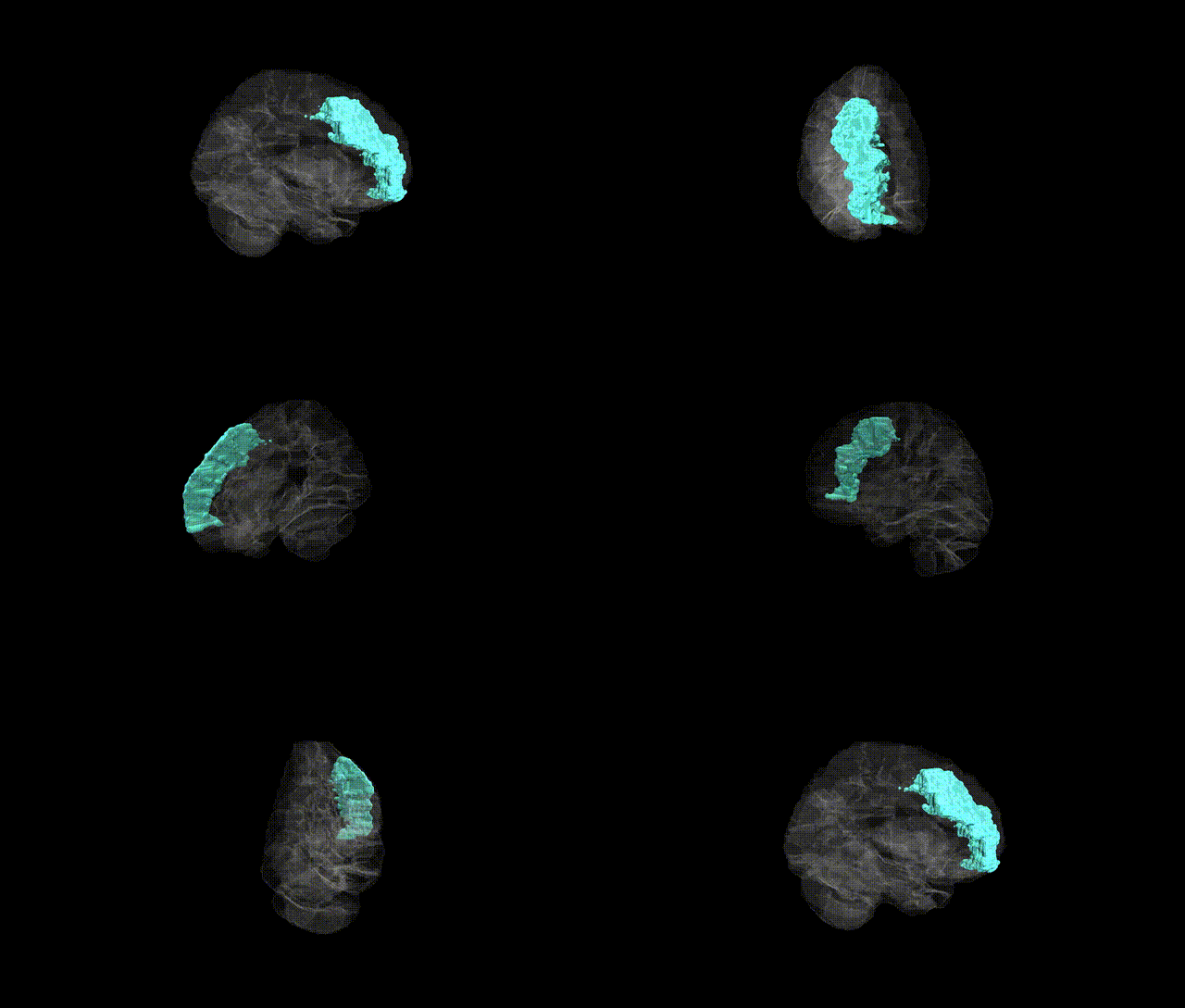
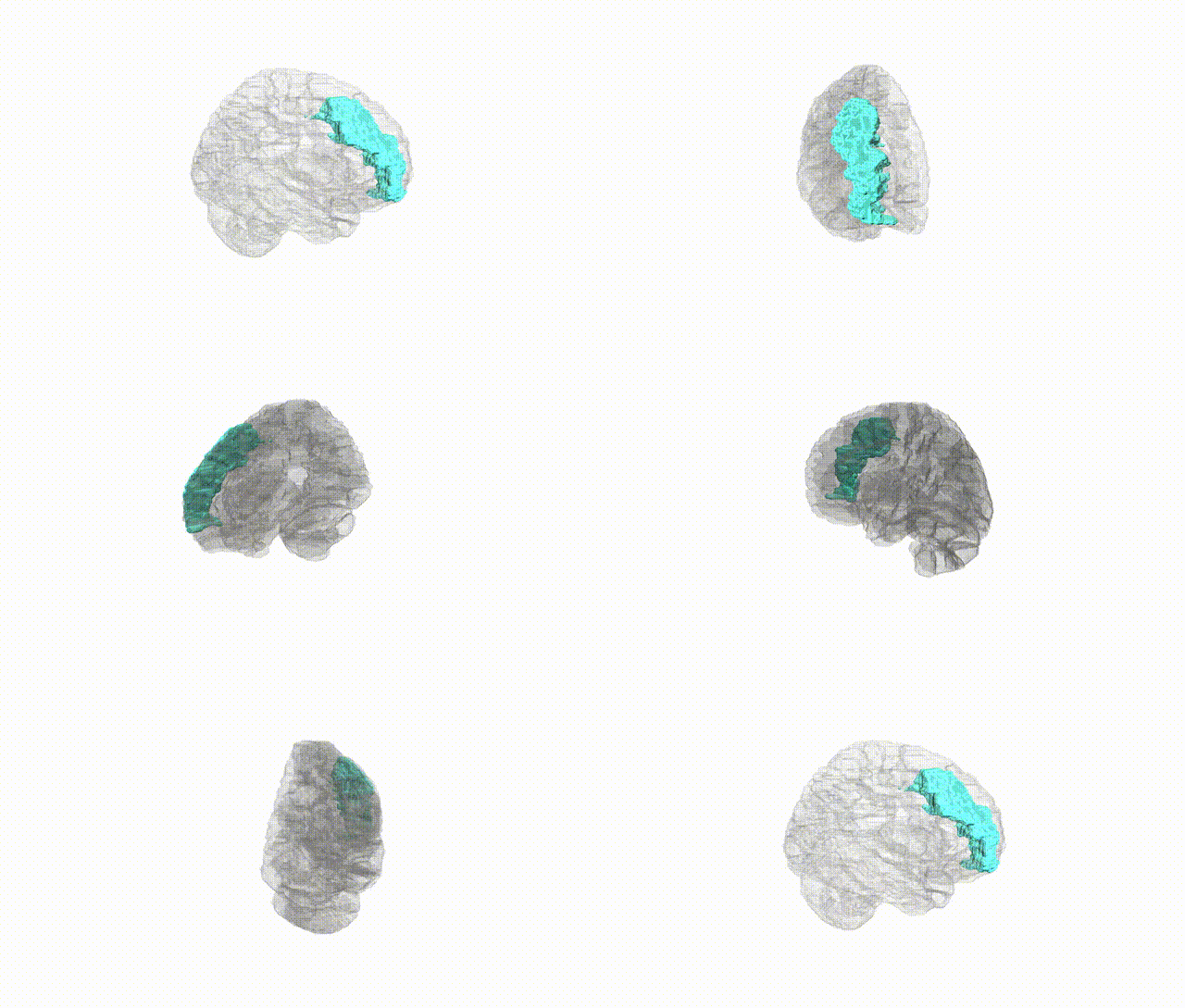
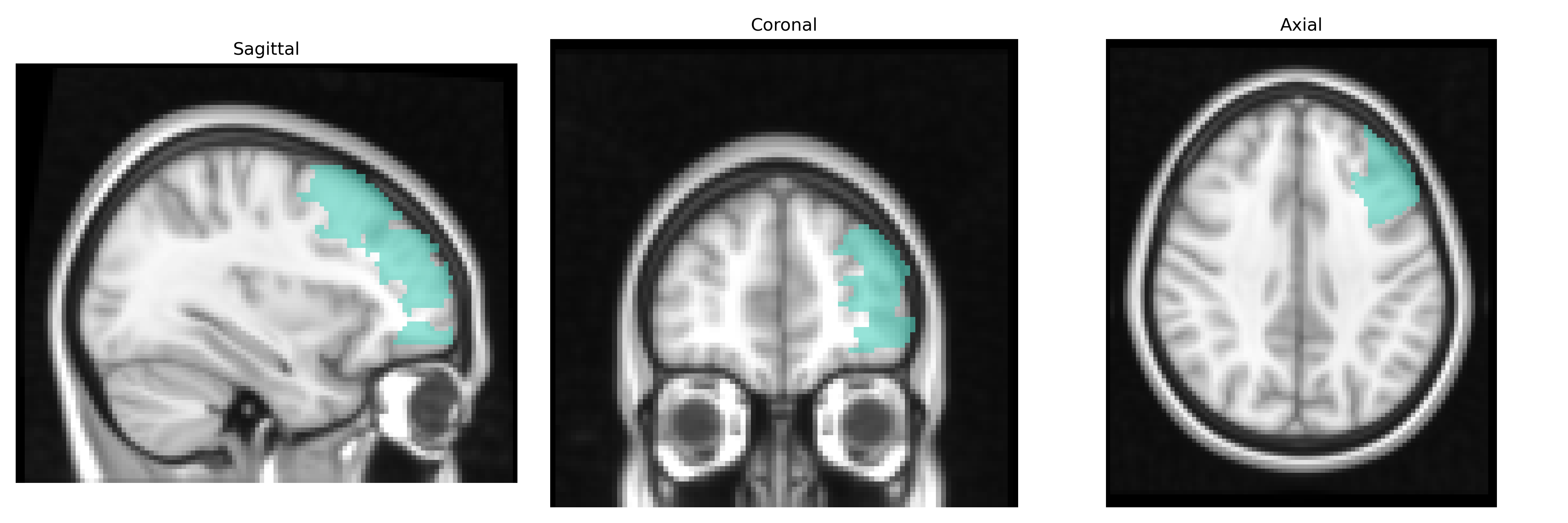
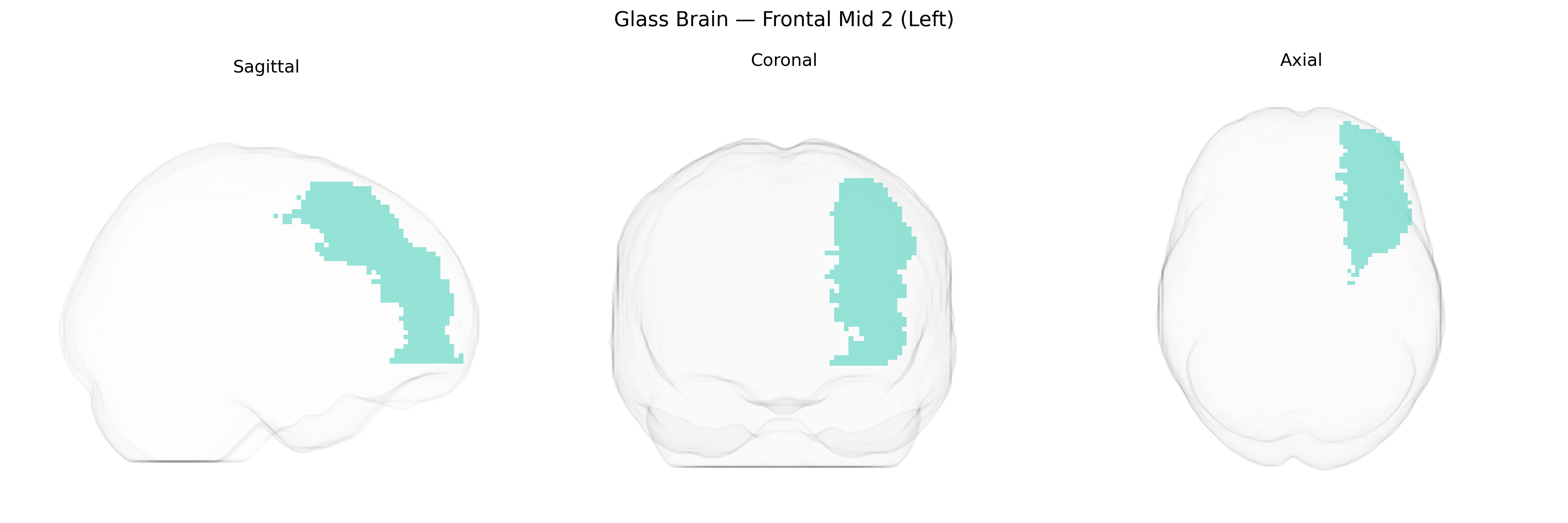
The left Frontal Mid 2 region in the AAL2 atlas corresponds to a middle frontal gyrus subdivision within the dorsolateral prefrontal cortex of the left hemisphere, implicated in higher-order executive functions such as working memory, cognitive control, planning, and attentional regulation. Anatomically, it occupies part of the lateral frontal lobe anterior to the precentral gyrus and superior to the inferior frontal regions, with cytoarchitectonic characteristics associated with prefrontal association cortex rather than primary motor areas. Functionally, this region participates in frontoparietal control networks, contributing to manipulation of information in working memory, decision-making, and goal-directed behavior, and shows task-related activation in complex cognitive paradigms including problem solving and response inhibition. There is no direct Wikipedia article for “Frontal Mid 2,” but it is a subregion of the middle frontal gyrus: Middle frontal gyrus.
The left Frontal Mid 2 region in the AAL2 atlas corresponds approximately to the midportion of the left middle frontal gyrus, encompassing parts of dorsolateral prefrontal cortex and adjacent premotor territory, and has been implicated in several imaging genetics and GWAS-based neuroimaging studies. Large-scale consortia such as ENIGMA and UK Biobank have identified polygenic influences from thousands of variants across the genome on cortical thickness and surface area in this general region, with recurrent signals in genes related to neurodevelopment (e.g., microtubule and cytoskeletal pathways), synaptic function, and transcriptional regulation, although no single gene is uniquely or specifically tied to the AAL2 “Frontal Mid 2 (Left)” parcel. Variants in genes such as BDNF, COMT, and DISC1, as well as polygenic risk scores for schizophrenia, bipolar disorder, major depression, ADHD, and autism spectrum disorder, have been associated with structural and functional changes in the left middle frontal gyrus/dorsolateral prefrontal cortex, including altered cortical thickness, grey matter volume, and task-related activation in working memory and cognitive control paradigms. GWAS of cognitive traits, educational attainment, and general intelligence repeatedly show that genetic architectures influencing these traits also modulate prefrontal morphology and connectivity, with the left middle frontal region frequently emerging as a key anatomical mediator in imaging–genetic mediation analyses. Additionally, risk variants for neurodegenerative diseases such as Alzheimer’s disease (e.g., in APOE) and frontotemporal dementia, as well as for substance use disorders, have been linked to volumetric and connectivity alterations in overlapping left middle frontal territories, indicating that the genetic influences on this AAL2 region are highly polygenic and pleiotropic, spanning neurodevelopmental, psychiatric, cognitive, and neurodegenerative domains rather than a single disorder-specific pattern.
Overview generated by GPT-4o (2026).
Region ID: 2201
Hemisphere: left
Atlas: AAL2
Full Quality Version: Download MP4
Full Quality Version: Download MP4
Full Quality Version: Download MP4
Full Quality Version: Download MP4
Wali Sidiqyar*, Gaurav Rudravaram*, Elyssa M. McMaster, Trent M. Schwartz, Adam M. Saunders, Kurt G. Schilling, Bennett A. Landman "Introducing SPINS: A Shared Public Visualization Library of Neuroanatomical Structures." Medical Imaging with Deep Learning- short paper
This resource is licensed under CC0 1.0 Universal (Public Domain).