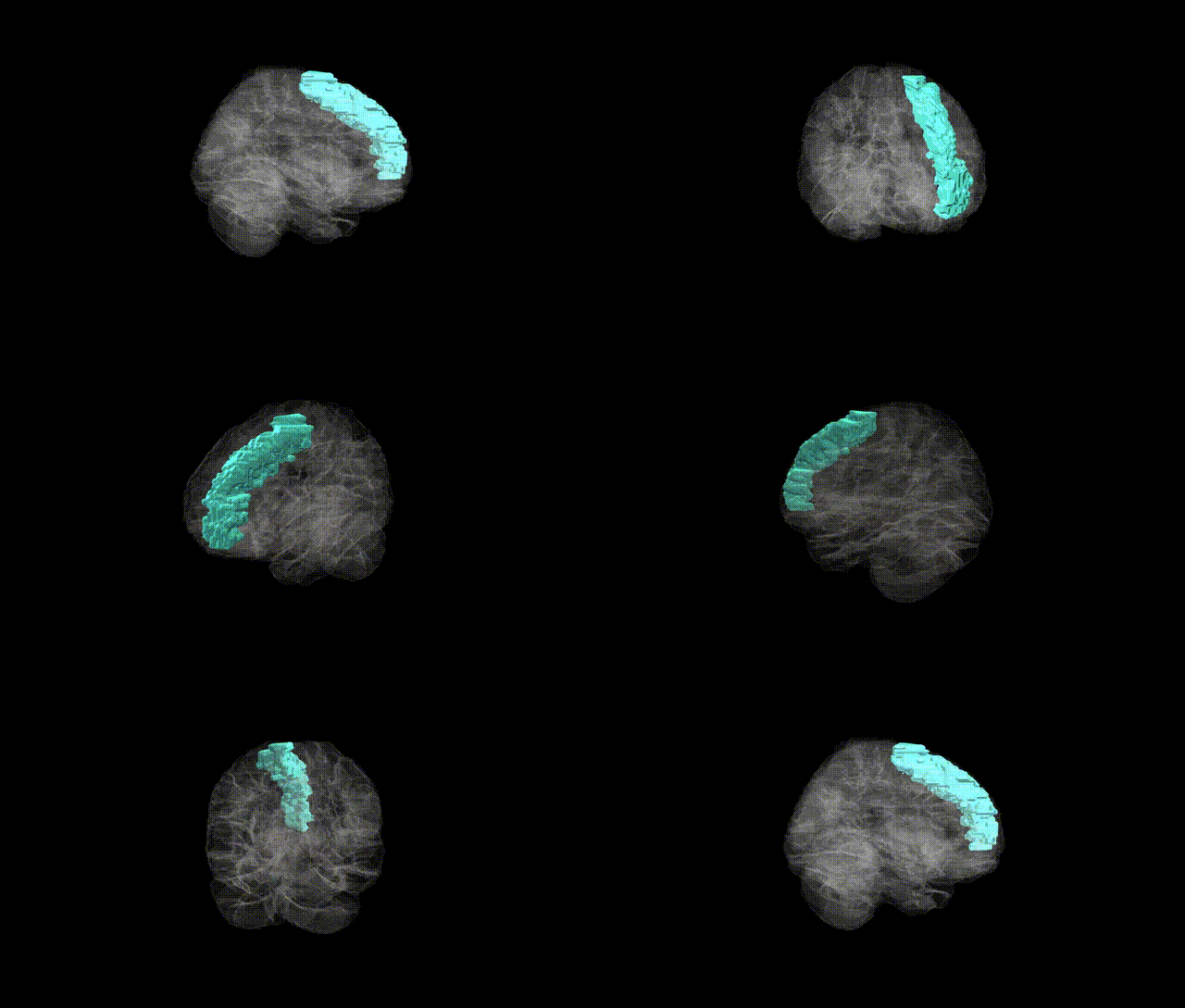
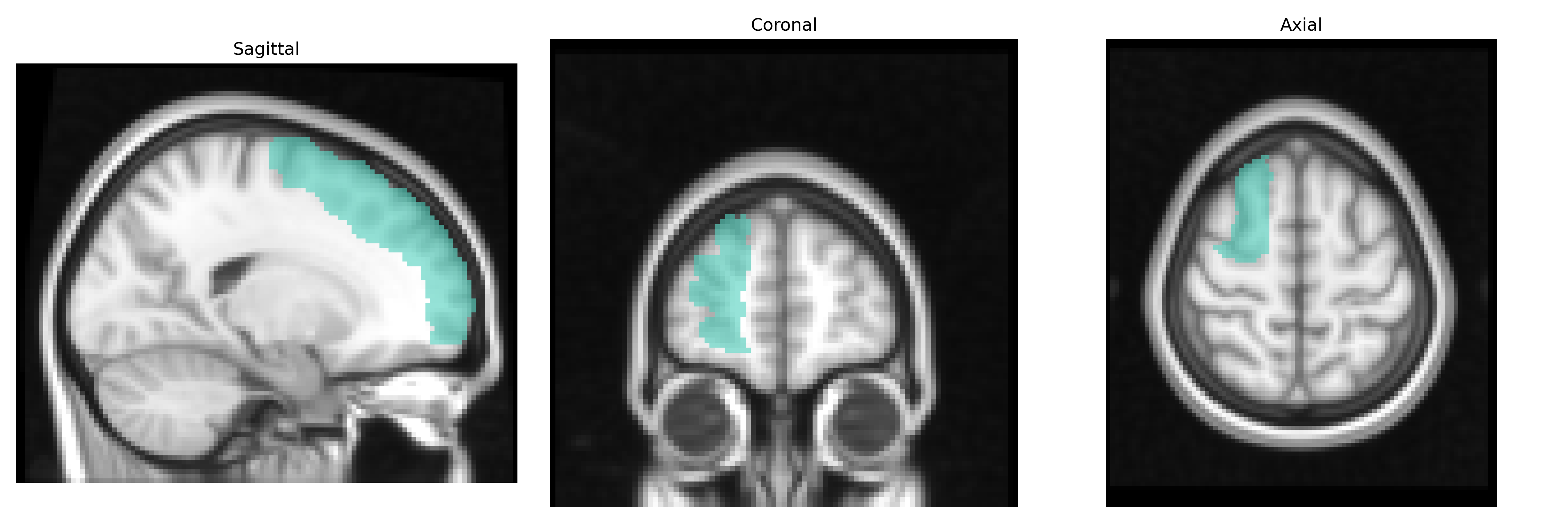
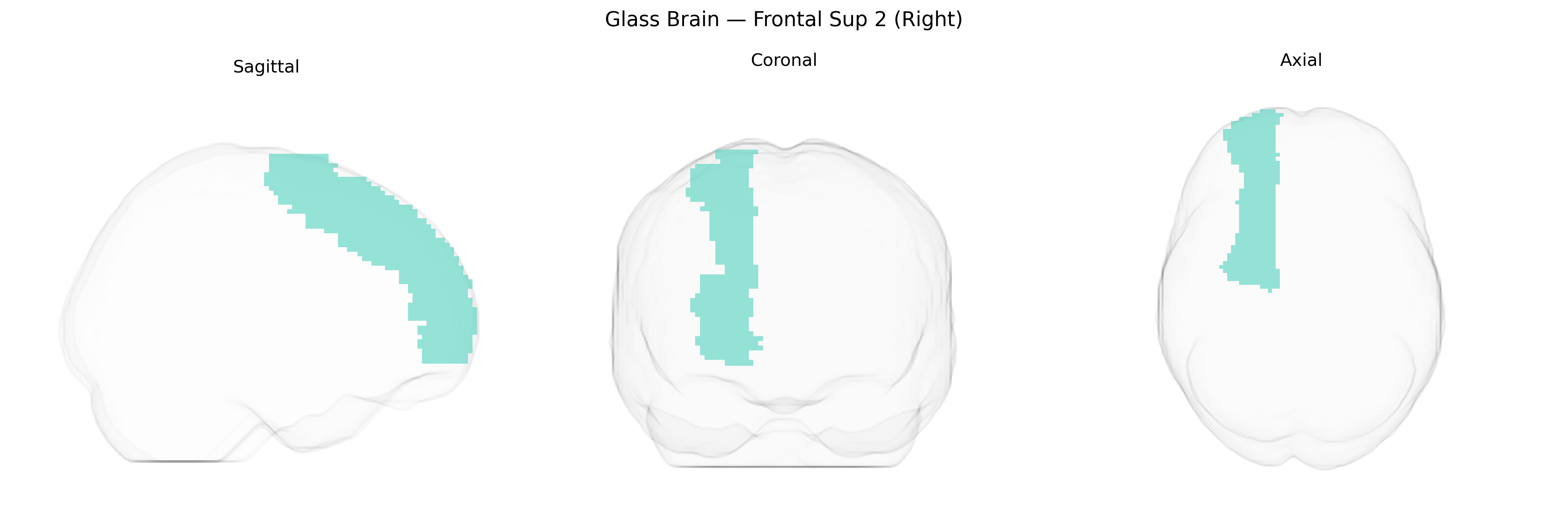
The right Frontal Sup 2 region in the AAL2 atlas corresponds to a superior segment of the right superior frontal gyrus, part of the dorsomedial prefrontal cortex situated on the medial aspect of the frontal lobe anterior to the premotor and supplementary motor areas. This region is implicated in higher-order executive functions, including working memory, attentional control, and aspects of decision-making and cognitive flexibility, as well as in self-referential processing and components of the default mode and frontoparietal control networks. Cytoarchitectonically, it overlaps primarily with medial Brodmann areas 8, 9, and possibly 10, receiving multimodal association input and projecting to other prefrontal, cingulate, and parietal association areas, thus contributing to integration of internal goals with externally guided behavior. There is no direct Wikipedia article for “Frontal Sup 2 (Right)”; a related structure is the Superior frontal gyrus.
The right superior frontal gyrus (Frontal Sup 2, right, in AAL2) has been implicated in several imaging genetics and GWAS studies that link common variants to regional volume, cortical thickness, or functional connectivity, with downstream associations to cognitive, psychiatric, and behavioral traits. Large-scale consortia such as ENIGMA and UK Biobank have identified polygenic influences on this region, implicating loci in or near genes associated with neurodevelopment and synaptic function (for example, variants near MIR137, MAPT, and other frontally expressed genes) that contribute to prefrontal morphology and connectivity. Genetic risk for schizophrenia, major depressive disorder, bipolar disorder, ADHD, and autism spectrum disorder has been associated with altered structure or activity in the superior frontal gyrus, and polygenic risk scores for these conditions often correlate with prefrontal measures that include right superior frontal subregions. In addition, GWAS on cognitive performance, educational attainment, working memory, and executive function have reported overlapping genetic architectures with prefrontal cortical traits, suggesting that common variants influencing right superior frontal structure or function also contribute to higher-order cognition. Some studies of impulse control, risk-taking, and substance use disorders have linked prefrontal risk alleles to altered activation or connectivity in this region, though most findings are at the level of broader dorsomedial or dorsolateral prefrontal territories rather than the specific AAL2 Frontal Sup 2 parcel. Overall, the genetic associations for the right Frontal Sup 2 region emerge primarily from polygenic and distributed effects rather than single, region-specific variants, with convergence on neurodevelopmental, psychiatric, and cognitive-related pathways.
Overview generated by GPT-4o (2026).
Region ID: 2102
Hemisphere: right
Atlas: AAL2
Full Quality Version: Download MP4
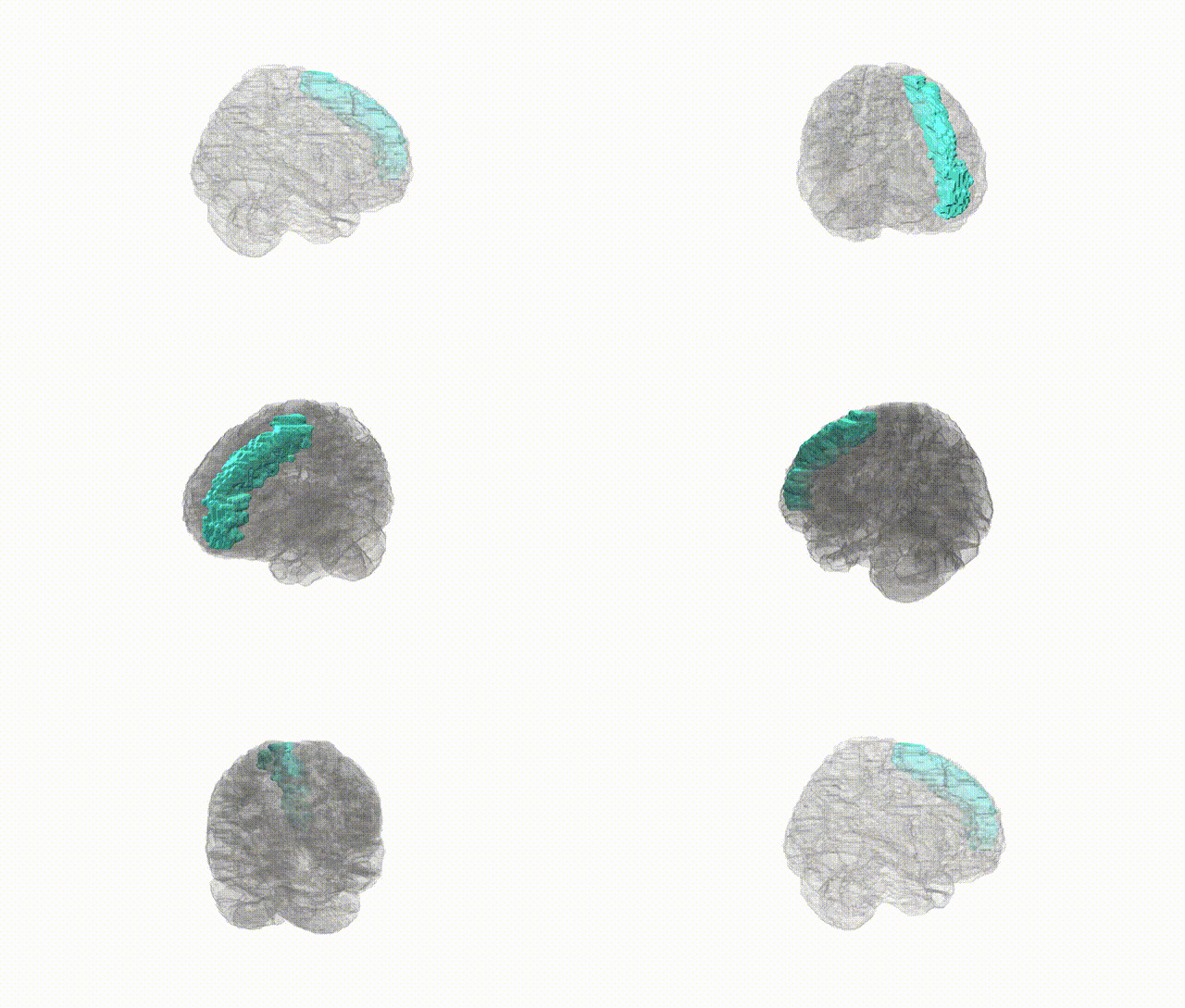
Full Quality Version: Download MP4
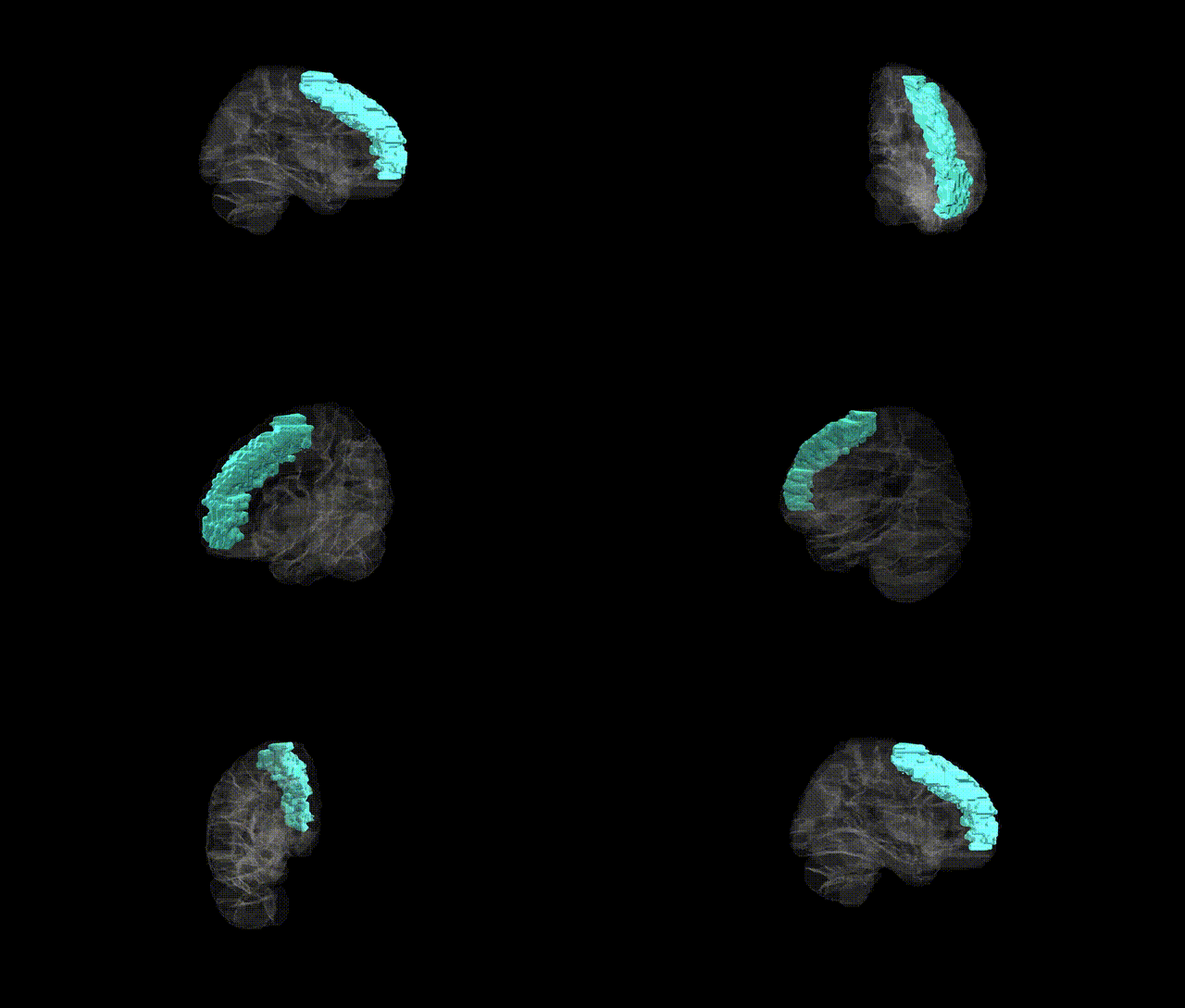
Full Quality Version: Download MP4
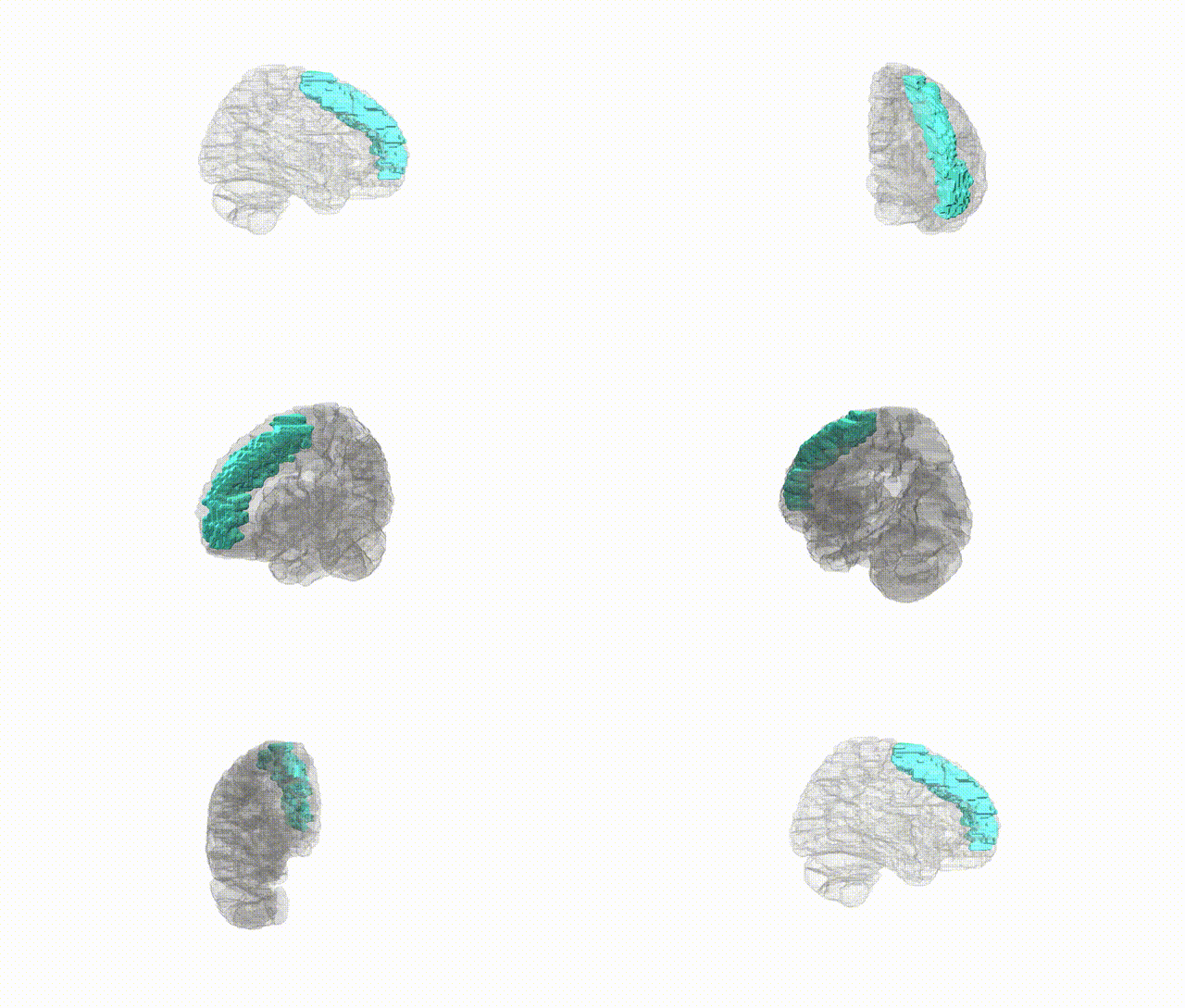
Full Quality Version: Download MP4
Wali Sidiqyar*, Gaurav Rudravaram*, Elyssa M. McMaster, Trent M. Schwartz, Adam M. Saunders, Kurt G. Schilling, Bennett A. Landman "Introducing SPINS: A Shared Public Visualization Library of Neuroanatomical Structures." Medical Imaging with Deep Learning- short paper
This resource is licensed under CC0 1.0 Universal (Public Domain).