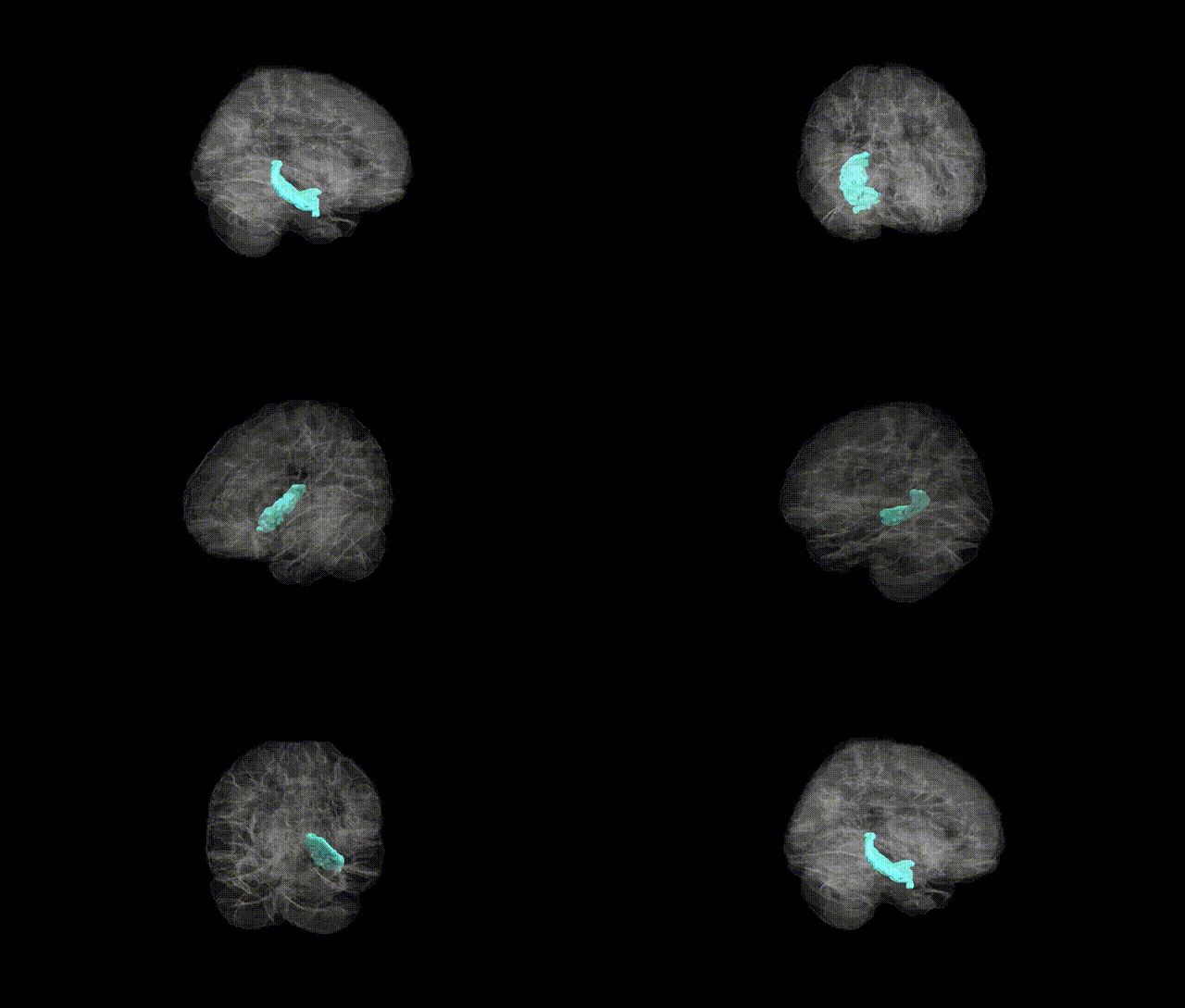
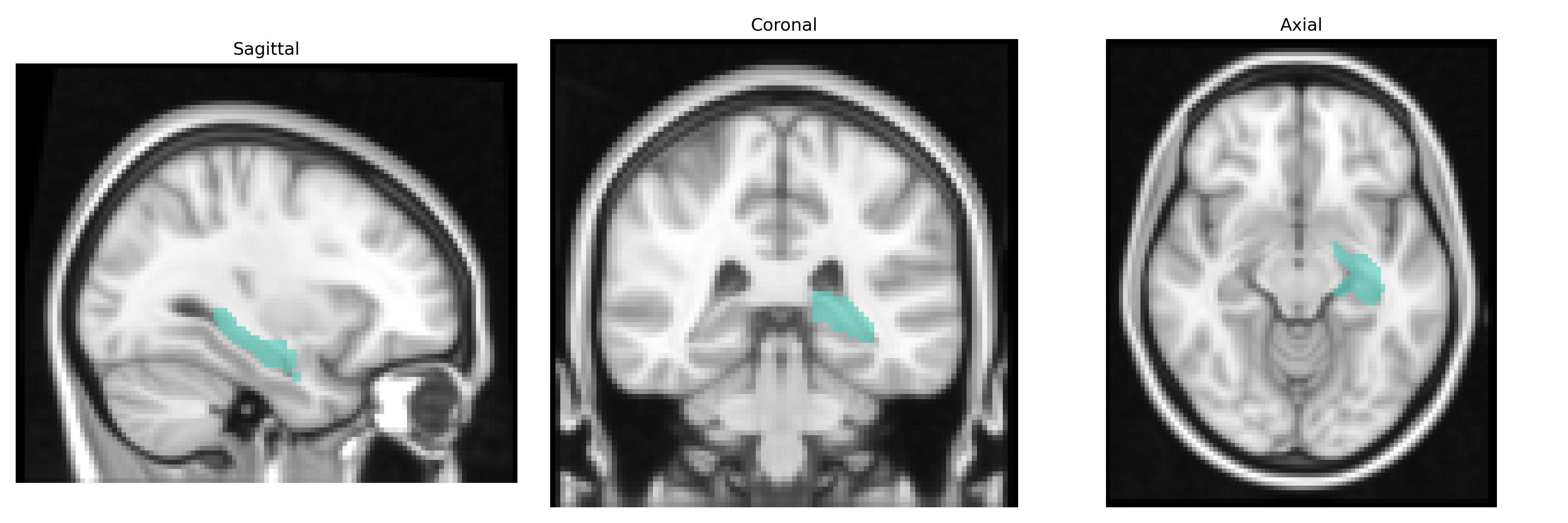
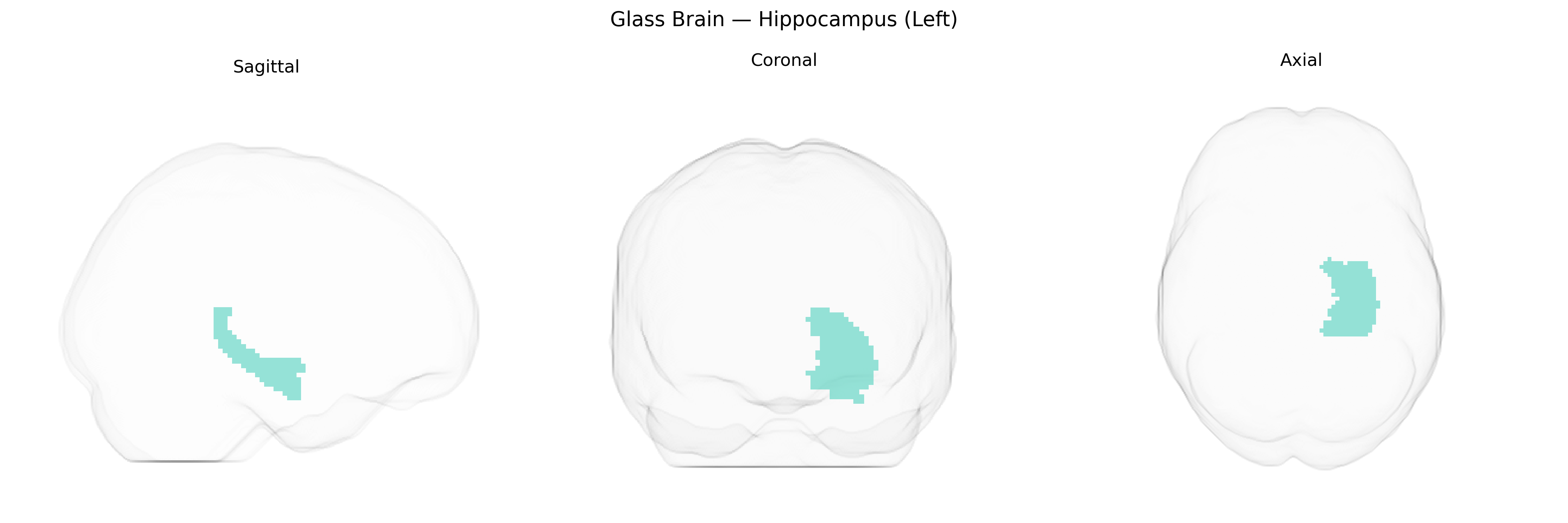
The left hippocampus is a bilateral medial temporal lobe structure in the AAL2 atlas, forming part of the hippocampal formation and situated within the floor of the temporal horn of the lateral ventricle. It is composed of subfields including CA1–CA4, dentate gyrus, and subiculum, and is interconnected with the entorhinal cortex, amygdala, thalamus, and widespread neocortical association areas via the fornix and perforant pathways. Functionally, the left hippocampus is critically involved in declarative (especially verbal) memory encoding and consolidation, spatial navigation, and contextual processing, and it exhibits lateralization patterns such that lesions often result in deficits in verbal learning and recall. It is a key structure in neuroplasticity, showing prominent long-term potentiation, and is implicated in numerous neurological and psychiatric conditions, including temporal lobe epilepsy, Alzheimer’s disease, depression, and stress-related disorders. Hippocampus
The left hippocampus, as defined in the AAL2 Atlas, shows robust genetic associations with memory, cognitive performance, and vulnerability to neuropsychiatric and neurodegenerative disorders. GWAS of hippocampal volume consistently implicate variants in or near genes such as DPP4, ASTN2, HRK, MSRB3, and others involved in neurodevelopment, synaptic plasticity, and apoptosis, with several loci showing lateralized or region-specific effects that include the left hippocampus. Polygenic risk scores for Alzheimer’s disease, schizophrenia, major depressive disorder, and bipolar disorder correlate with reduced hippocampal volume or altered microstructure, and some studies report stronger or more consistent effects in the left hippocampus for depression and stress-related phenotypes. APOE ε4 status and common variants in genes related to amyloid processing, tau, and neuroinflammation have been linked to hippocampal atrophy, including asymmetric atrophy with pronounced left-hemisphere involvement in some cohorts. Large imaging-genetics consortia (e.g., ENIGMA) have identified numerous common variants influencing hippocampal morphology and connectivity, which in turn mediate risk for cognitive decline, PTSD, and anxiety traits, with left hippocampal structure and function often emerging as a key intermediate phenotype connecting genetic liability to clinical and behavioral outcomes.
Overview generated by GPT-4o (2026).
Region ID: 4101
Hemisphere: left
Atlas: AAL2
Full Quality Version: Download MP4
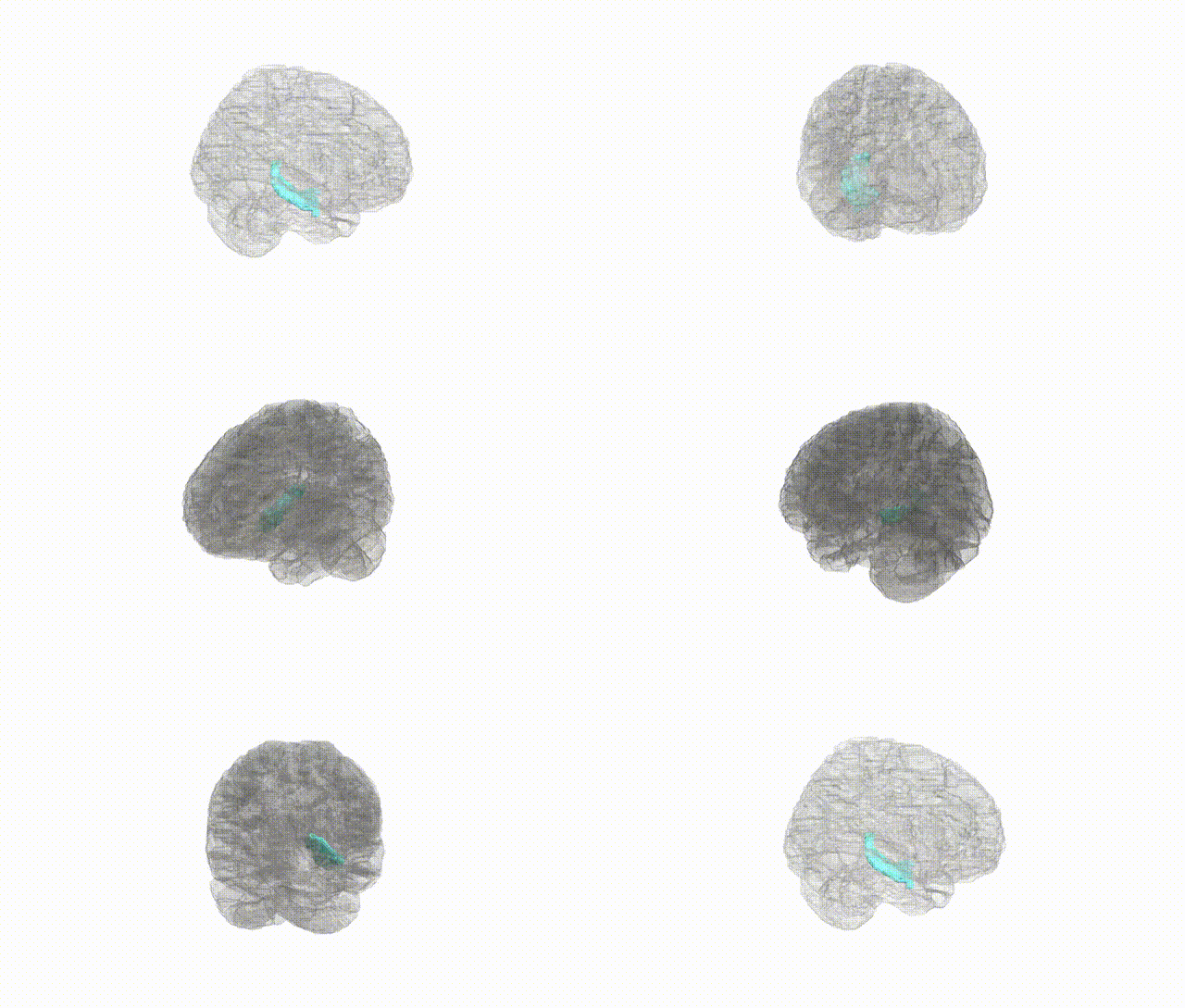
Full Quality Version: Download MP4
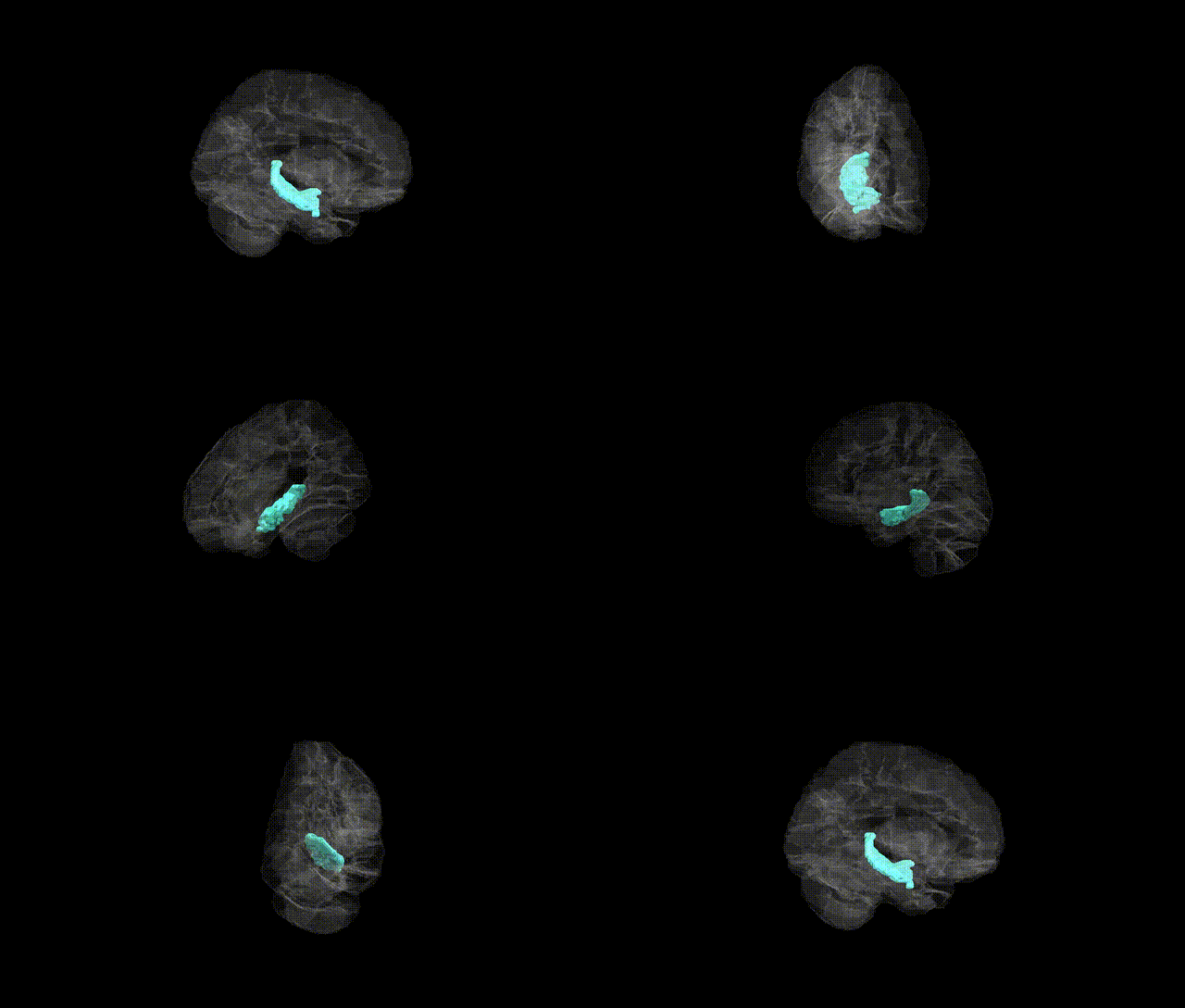
Full Quality Version: Download MP4
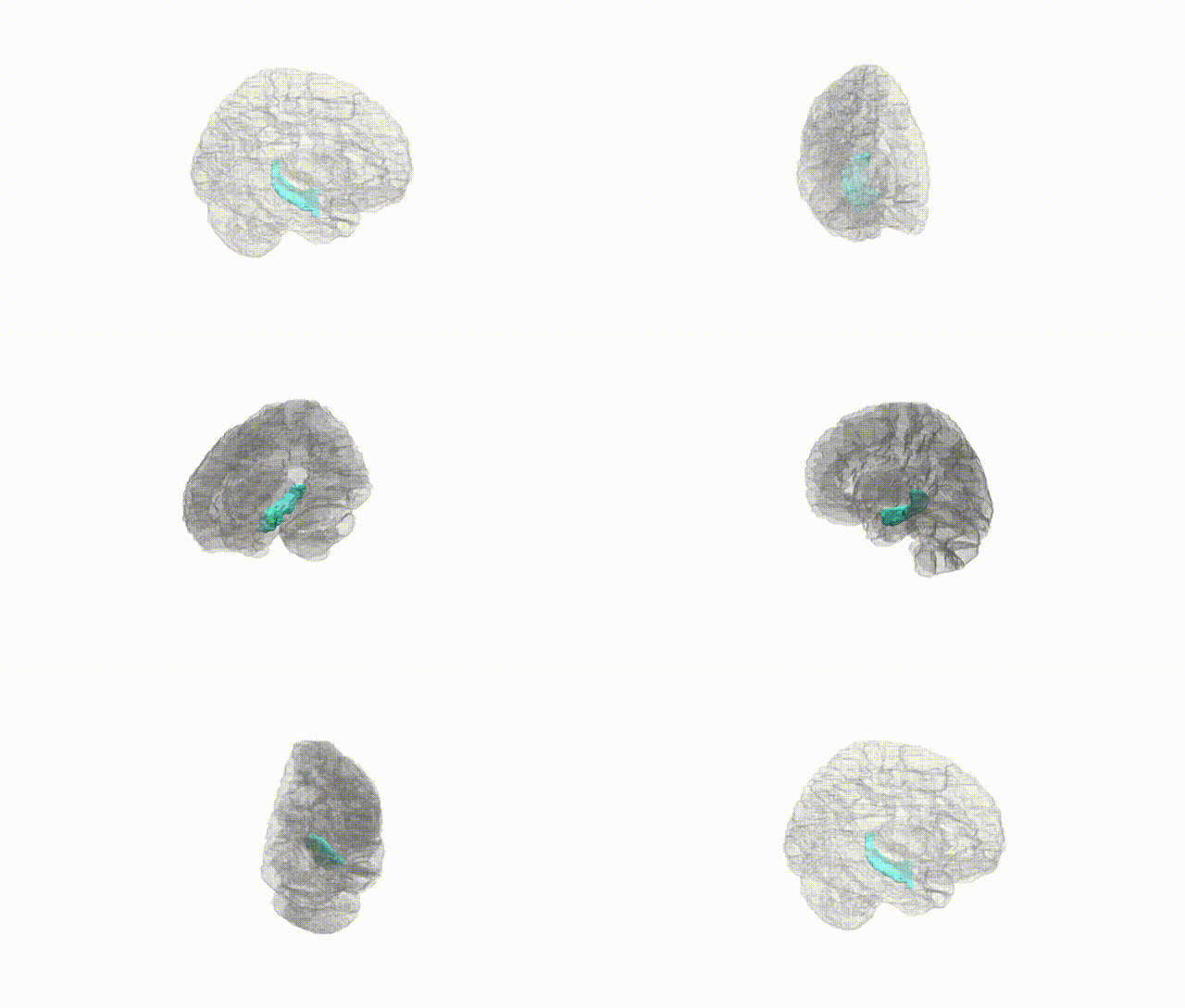
Full Quality Version: Download MP4
Wali Sidiqyar*, Gaurav Rudravaram*, Elyssa M. McMaster, Trent M. Schwartz, Adam M. Saunders, Kurt G. Schilling, Bennett A. Landman "Introducing SPINS: A Shared Public Visualization Library of Neuroanatomical Structures." Medical Imaging with Deep Learning- short paper
This resource is licensed under CC0 1.0 Universal (Public Domain).