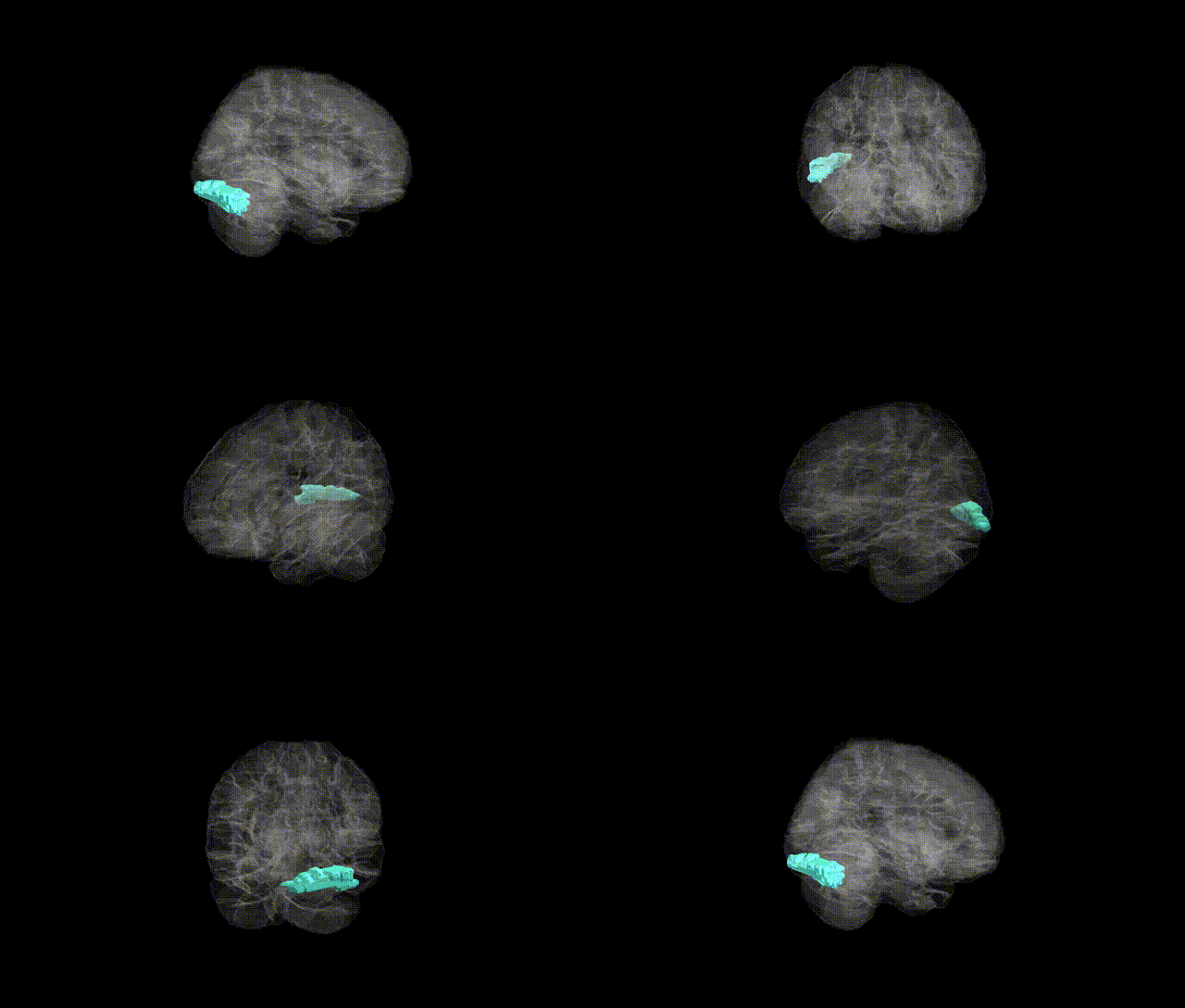
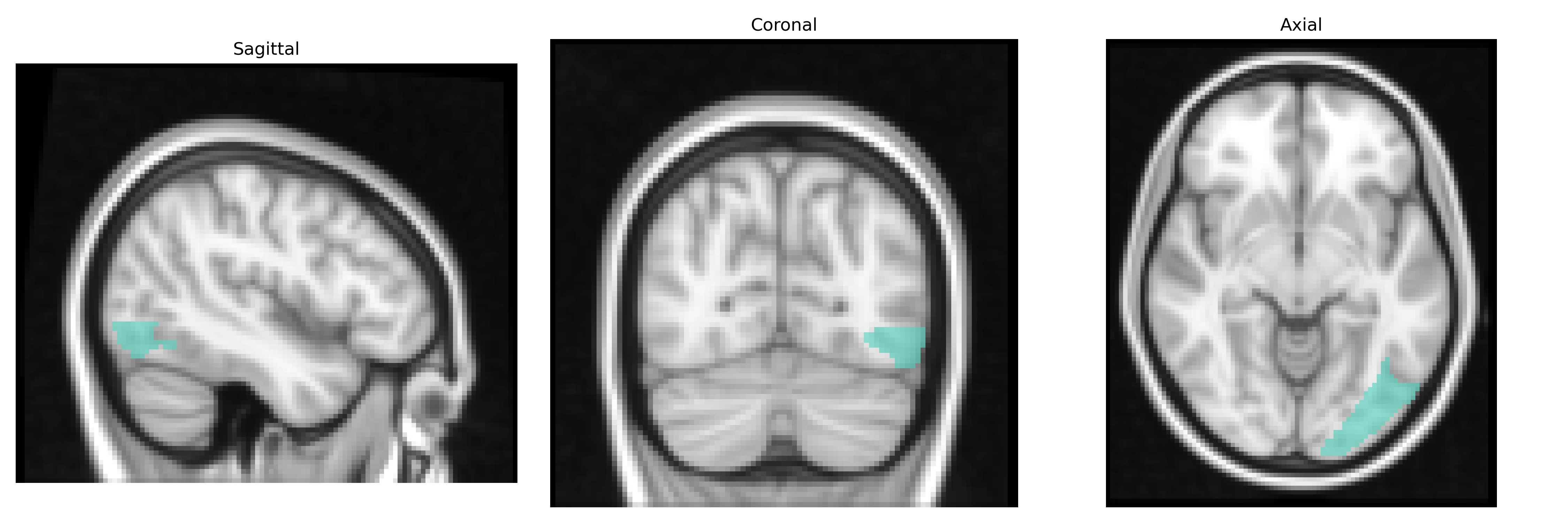
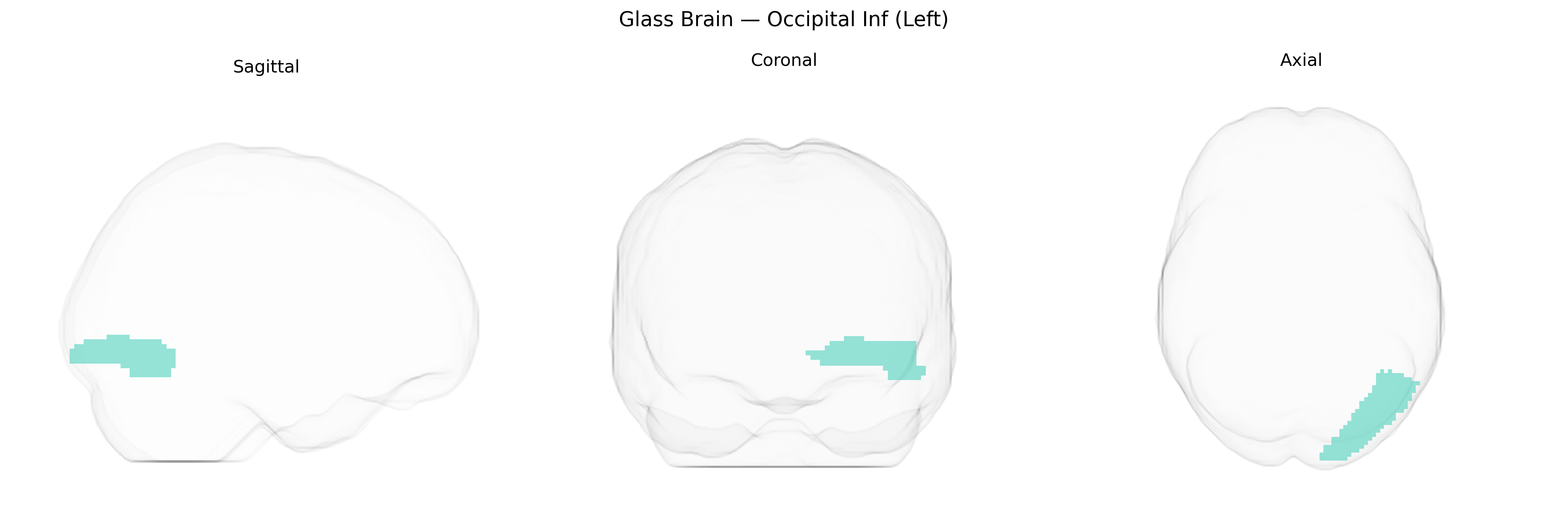
The left Occipital Inferior (Occipital Inf L) region in the AAL2 atlas corresponds primarily to the left inferior occipital gyrus, a cortical area in the occipital lobe involved in early visual processing and analysis of complex visual features. This region participates in the ventral visual stream, contributing to the processing of object form, texture, and fine-grained visual details, and interacts with adjacent temporal areas involved in higher-level recognition. Neuronal populations here respond selectively to visual stimuli and support functions such as visual discrimination and aspects of pattern recognition. There is no direct Wikipedia article for “inferior occipital gyrus,” but it is part of the occipital lobe: Occipital lobe.
Genetic associations specific to the left inferior occipital gyrus (Occipital Inf L in the AAL2 atlas) are limited, as most GWAS and imaging-genetics studies treat occipital or visual cortex regions collectively rather than focusing on this subregion. Broadly, variants influencing occipital cortical thickness, surface area, and volume have been identified in large neuroimaging GWAS (e.g., ENIGMA, UK Biobank), with loci in genes such as HMGA2, PAX6, KIAA0586, and others contributing to general occipital morphology, but these are not resolved to the inferior occipital gyrus alone. Functional imaging-genetics work links polygenic risk for schizophrenia, autism spectrum disorder, and major depressive disorder to altered activation or connectivity in occipital and ventral visual areas during face, emotion, and visual processing tasks, suggesting that risk variants affecting synaptic function, neurodevelopment, and myelination (e.g., in genes like CACNA1C, GRIN2A, and various cell-adhesion and axon-guidance genes) may indirectly modulate inferior occipital function. GWAS of traits such as visual acuity, refractive error, and reading ability/dyslexia have implicated neurodevelopmental and axon-guidance genes (e.g., ROBO1, KIAA0319, DCDC2) that influence the broader visual word and object recognition network, including occipital regions that encompass the inferior occipital gyrus and adjacent fusiform and lateral occipital cortex. However, current evidence does not support any strong, region-specific genetic risk locus that is uniquely or definitively tied to the left Occipital Inf region; rather, its genetic associations appear to be shared with the wider occipital and ventral visual system and mediated by polygenic influences on cortical development, visual processing, and neuropsychiatric vulnerability.
Overview generated by GPT-4o (2026).
Region ID: 5301
Hemisphere: left
Atlas: AAL2
Full Quality Version: Download MP4
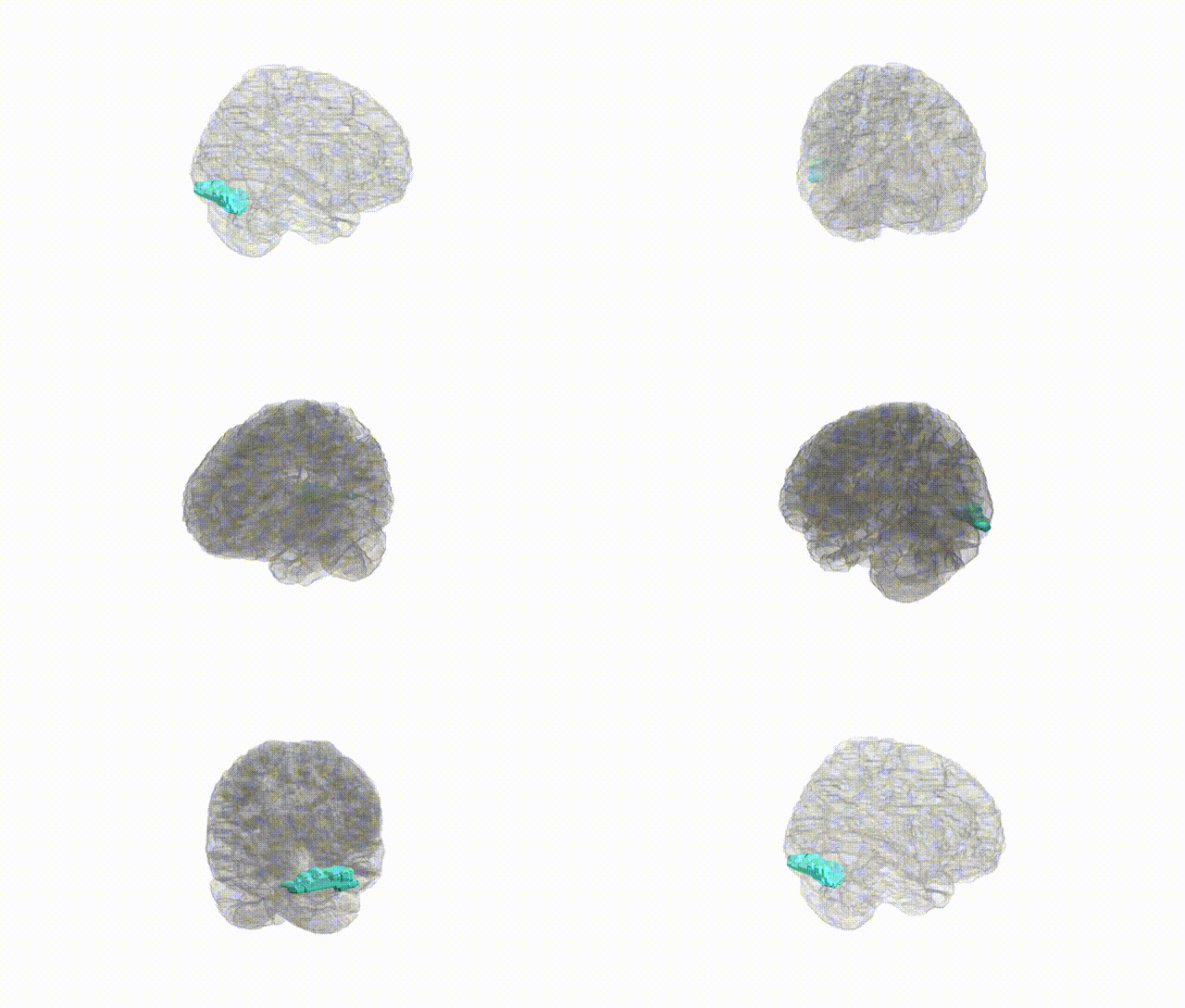
Full Quality Version: Download MP4
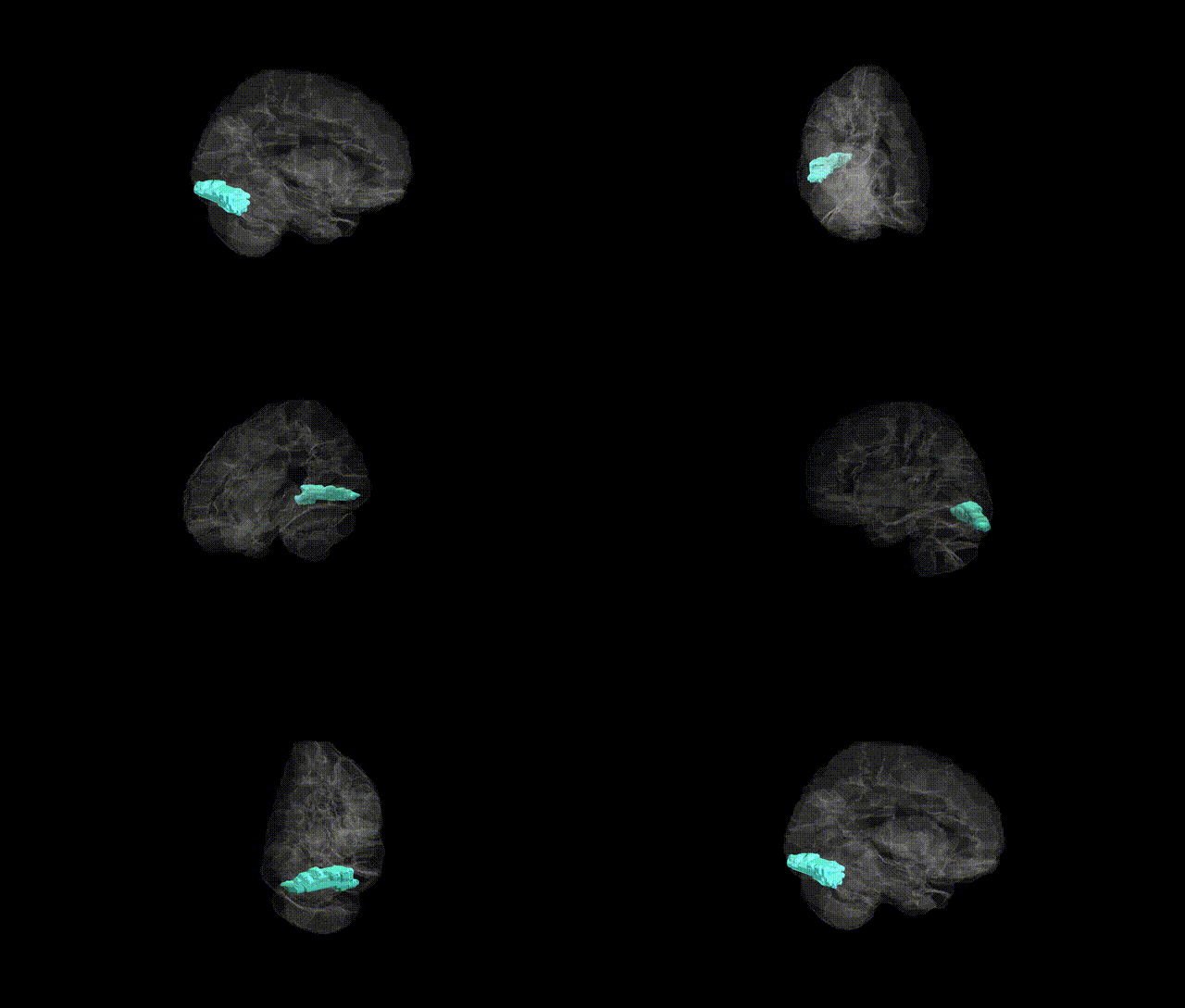
Full Quality Version: Download MP4
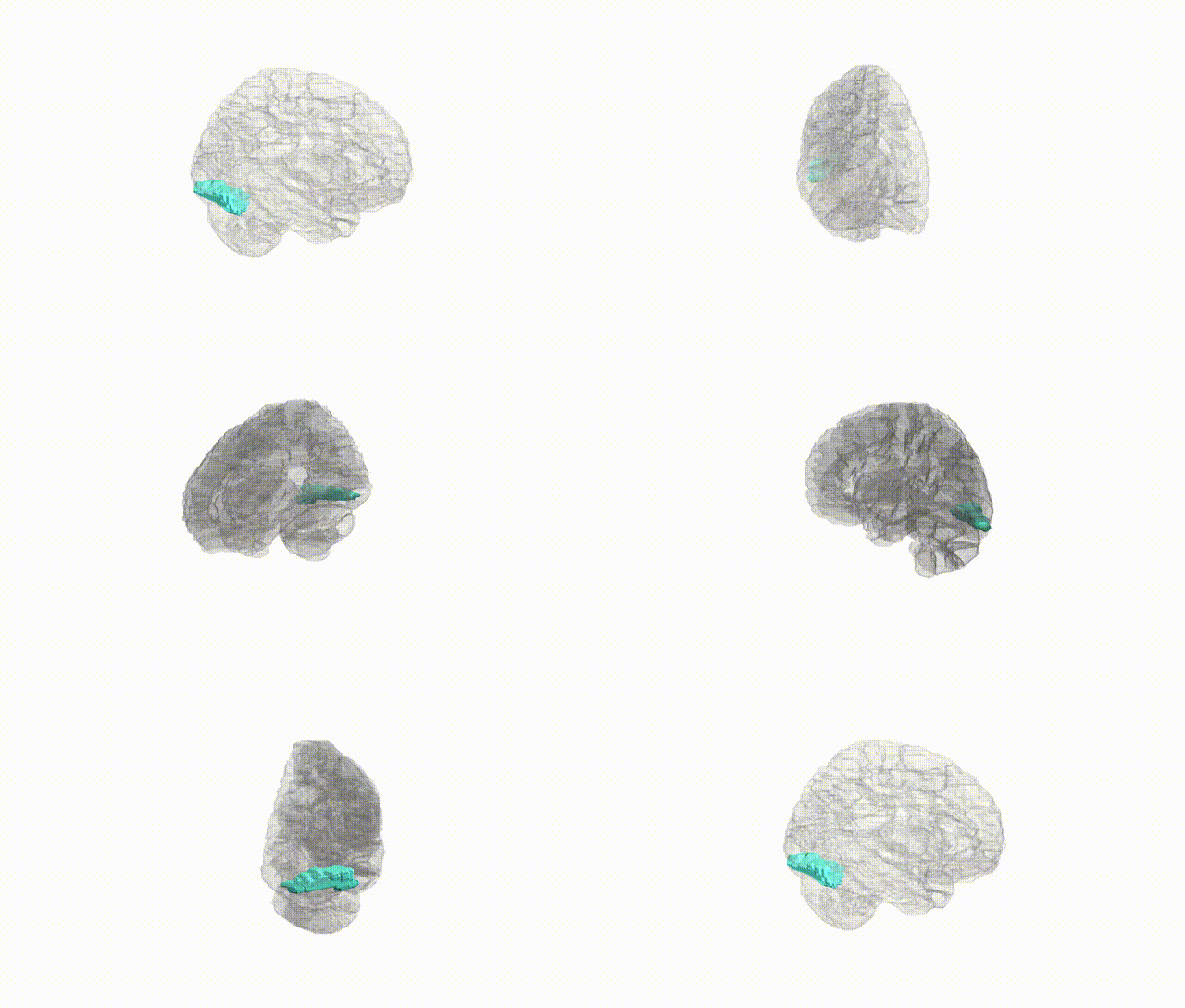
Full Quality Version: Download MP4
Wali Sidiqyar*, Gaurav Rudravaram*, Elyssa M. McMaster, Trent M. Schwartz, Adam M. Saunders, Kurt G. Schilling, Bennett A. Landman "Introducing SPINS: A Shared Public Visualization Library of Neuroanatomical Structures." Medical Imaging with Deep Learning- short paper
This resource is licensed under CC0 1.0 Universal (Public Domain).