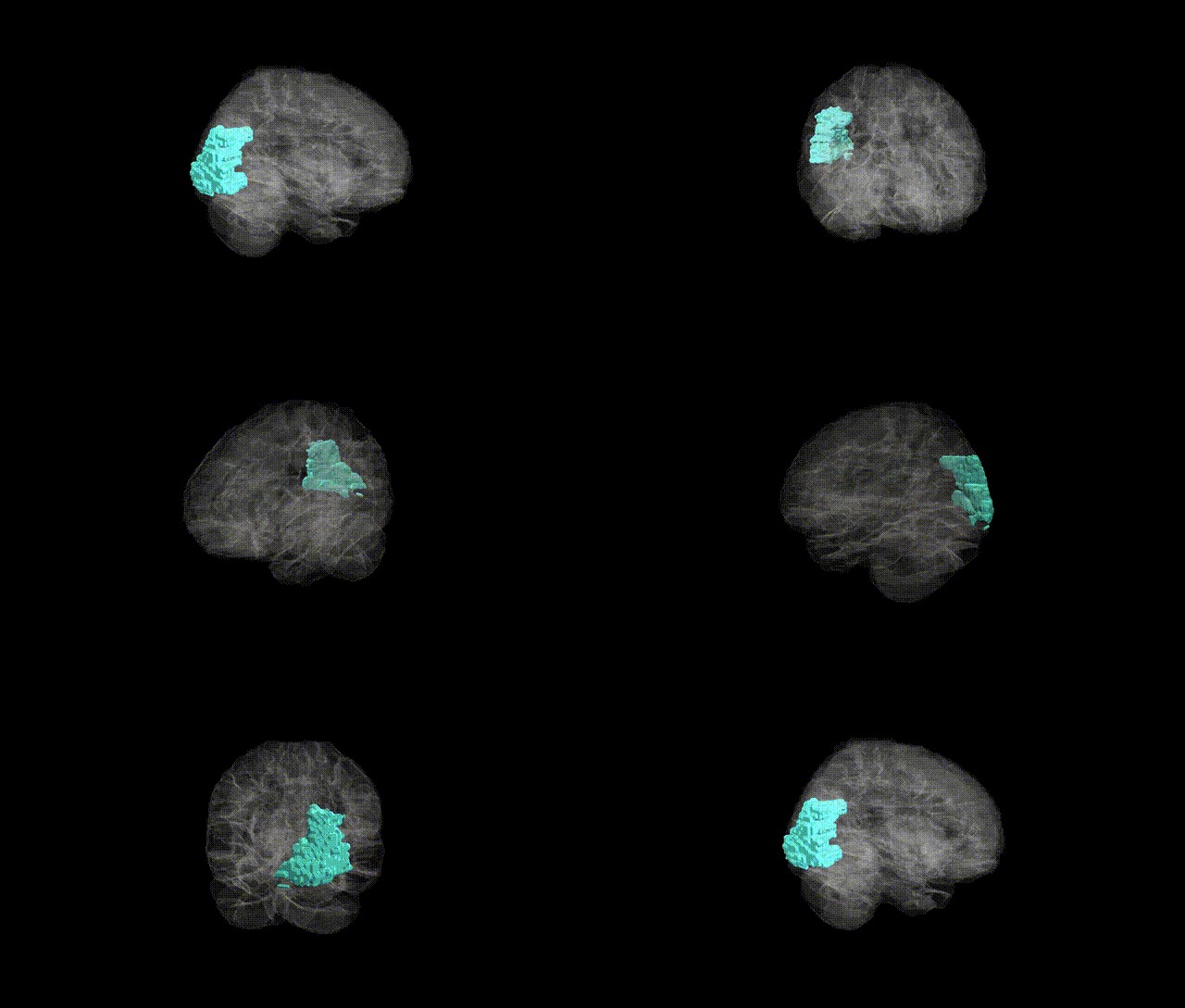
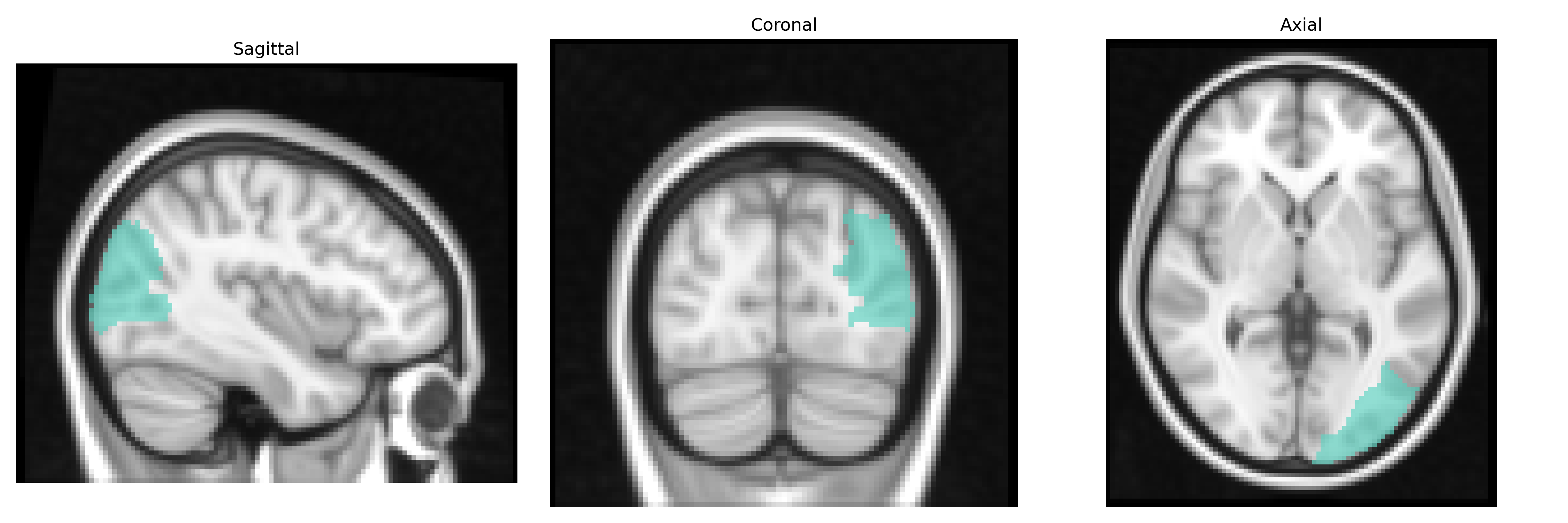
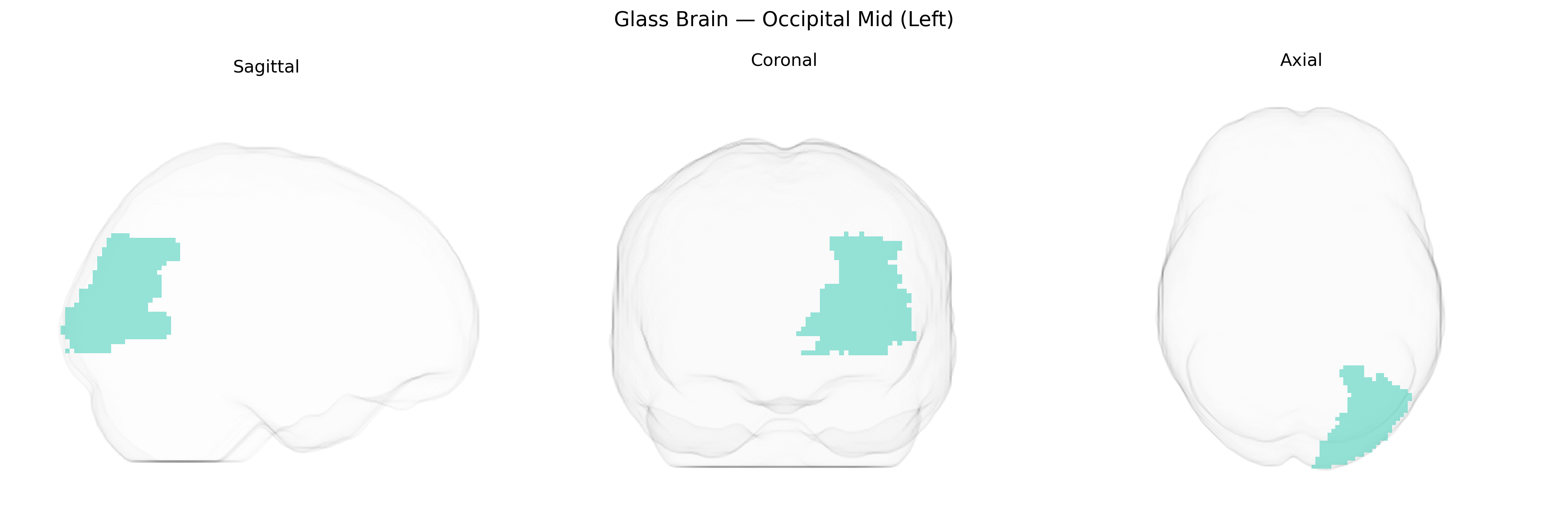
The left Occipital Mid (Left) region in the AAL2 atlas corresponds to the middle portion of the left occipital lobe, encompassing areas involved in intermediate stages of visual processing. This territory includes parts of the lateral occipital cortex and regions bordering the dorsal and ventral visual pathways, supporting functions such as shape and object recognition, motion perception, and integration of visual features into coherent percepts. Neuronal populations in this region receive input from primary visual cortex (V1) and transmit processed information to higher-order temporal and parietal regions for further analysis, contributing to visually guided behavior and perception of complex scenes. There is no direct link for “Occipital Mid” as an AAL2 label, but it is part of the occipital lobe: Occipital lobe.
The left middle occipital gyrus (Occipital Mid Left in the AAL2 atlas), a core component of visual association cortex, is indirectly implicated in several genetic findings from imaging and neuropsychiatric GWAS, though few loci are specific to this exact parcel. Large imaging–genetics consortia (e.g., ENIGMA, UK Biobank) have identified polygenic influences on occipital cortical thickness, surface area, and volume, including variants near genes such as HMGA2, IGF1, and other neurodevelopmental and synaptic genes, with effects spanning multiple occipital subregions. Occipital midline and lateral areas, including middle occipital regions, often emerge in GWAS of global or regional cortical thickness and surface area rather than as isolated, region-specific signals, and contribute to highly polygenic architectures for visual cortex morphology. Disorder-focused studies show that schizophrenia, major depression, autism spectrum disorder, and ADHD exhibit heritable alterations in occipital structure or activation patterns, with polygenic risk scores for these conditions associated with differences in occipital cortical metrics, including in or near middle occipital regions; however, associations are generally distributed and not unique to this parcel. Visual processing traits (such as basic visual perception and reading-related skills) also display heritable patterns linked to occipito-temporal networks, though gene-level results tend to implicate broader pathways (e.g., neurodevelopment, axon guidance, synaptic plasticity) rather than a specific genetic signature confined to the left middle occipital gyrus.
Overview generated by GPT-4o (2026).
Region ID: 5201
Hemisphere: left
Atlas: AAL2
Full Quality Version: Download MP4
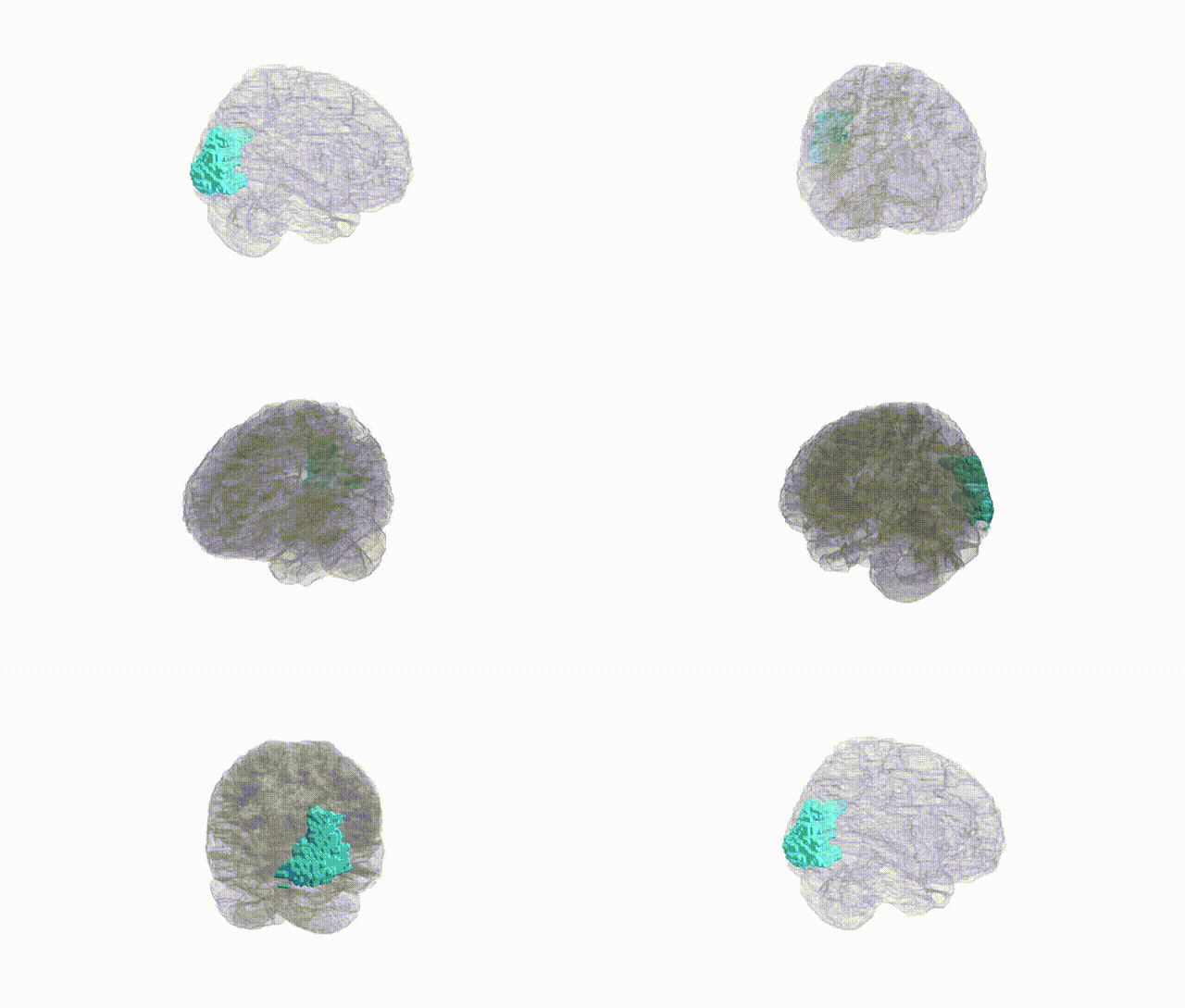
Full Quality Version: Download MP4
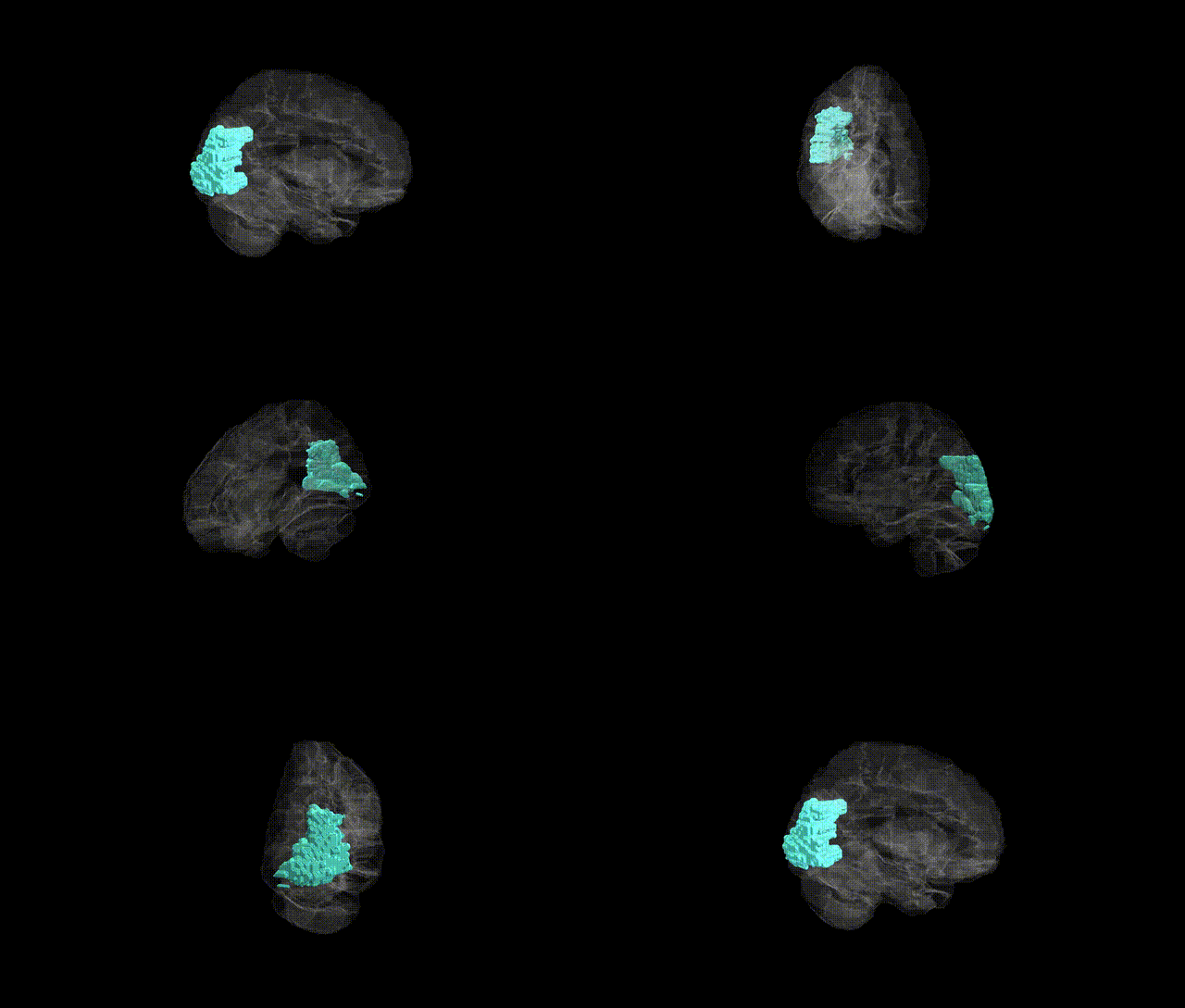
Full Quality Version: Download MP4
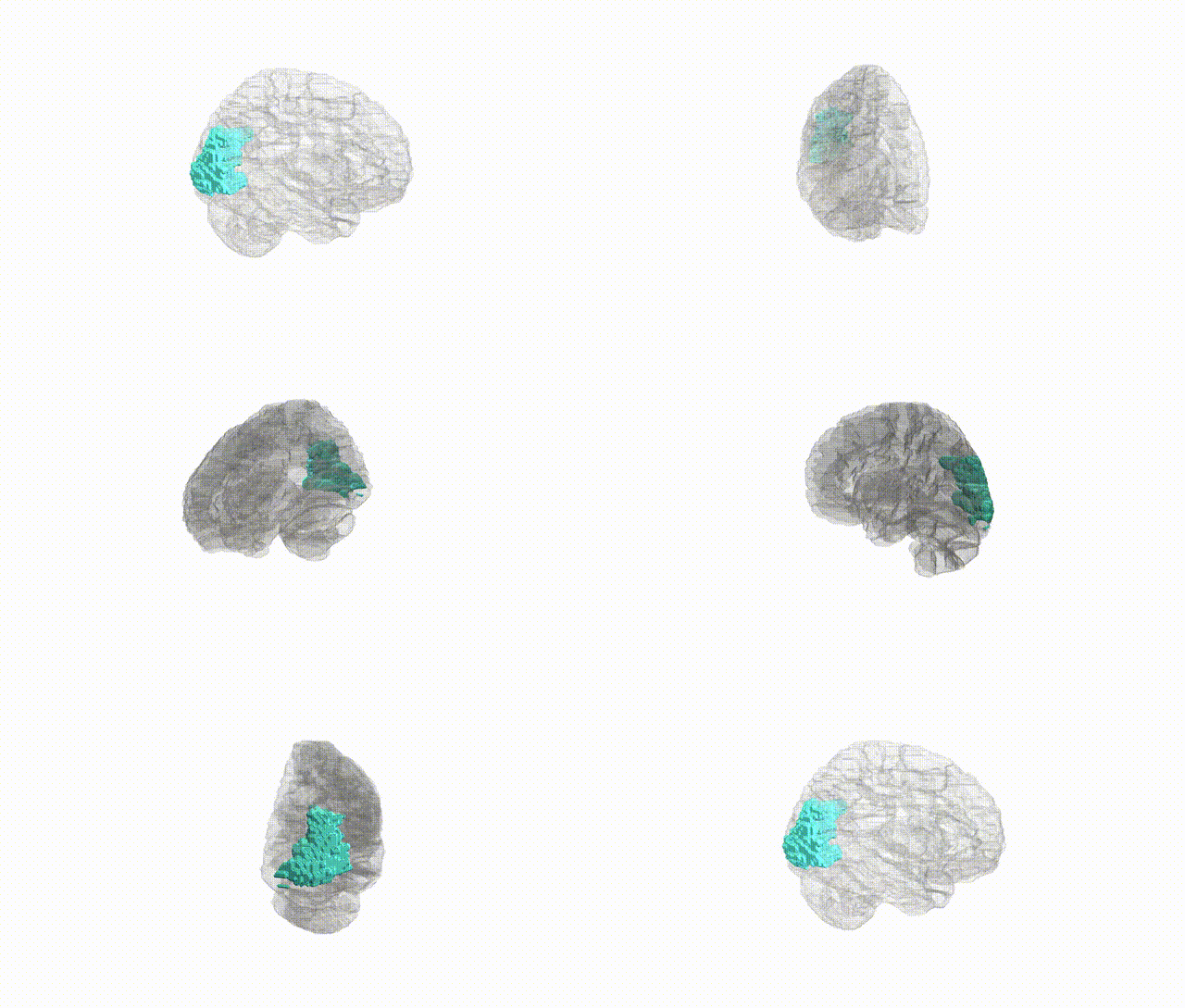
Full Quality Version: Download MP4
Wali Sidiqyar*, Gaurav Rudravaram*, Elyssa M. McMaster, Trent M. Schwartz, Adam M. Saunders, Kurt G. Schilling, Bennett A. Landman "Introducing SPINS: A Shared Public Visualization Library of Neuroanatomical Structures." Medical Imaging with Deep Learning- short paper
This resource is licensed under CC0 1.0 Universal (Public Domain).