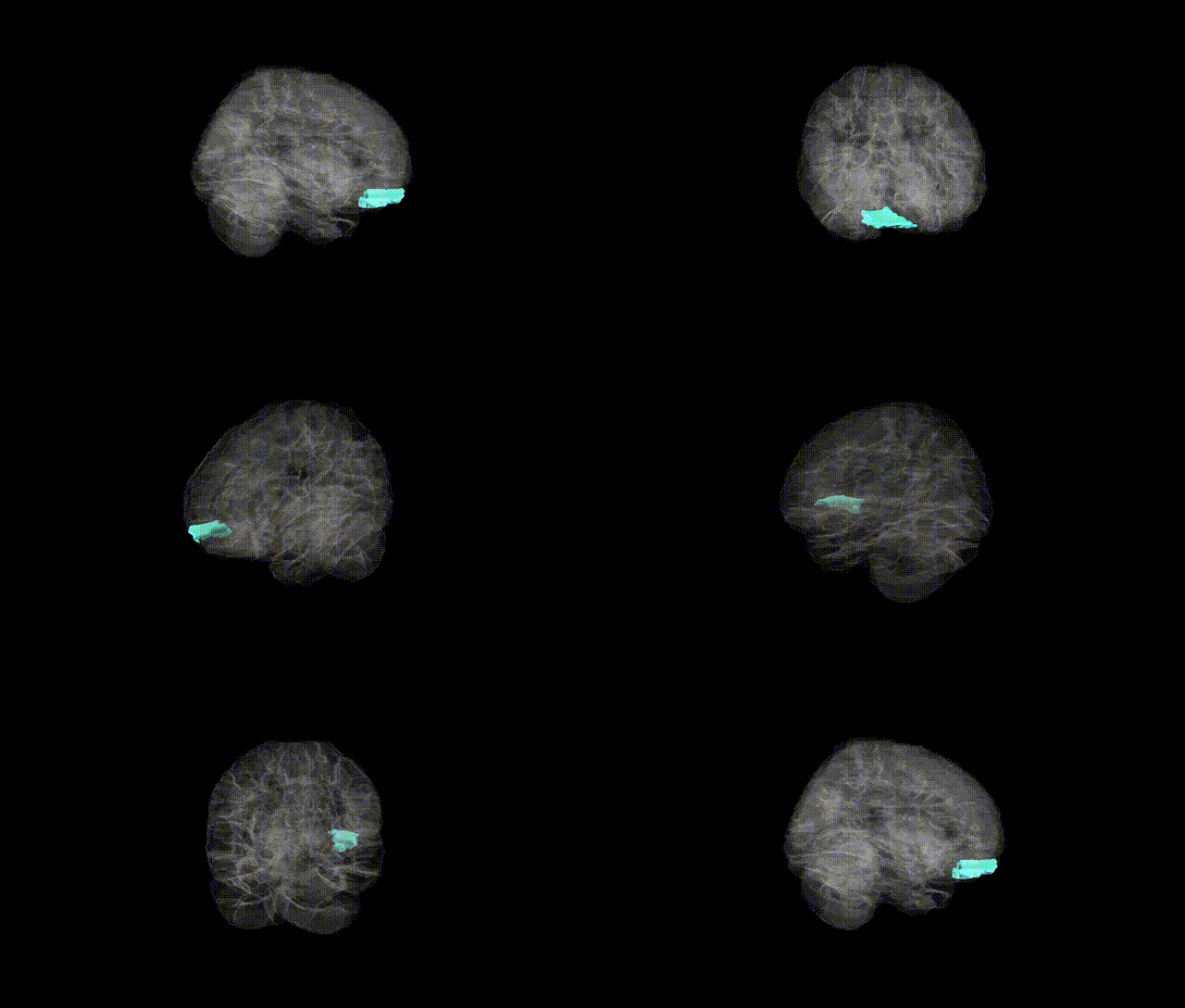
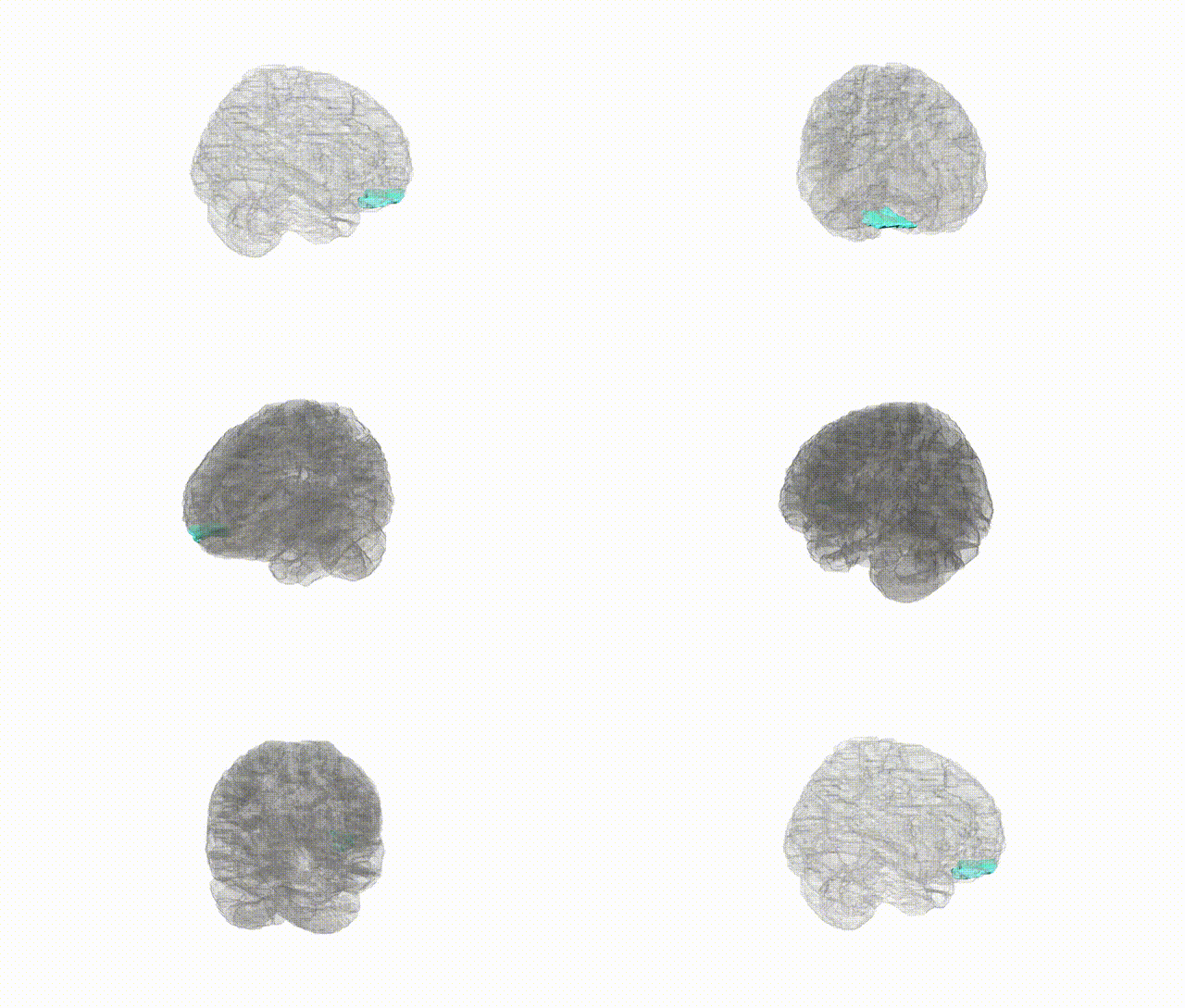
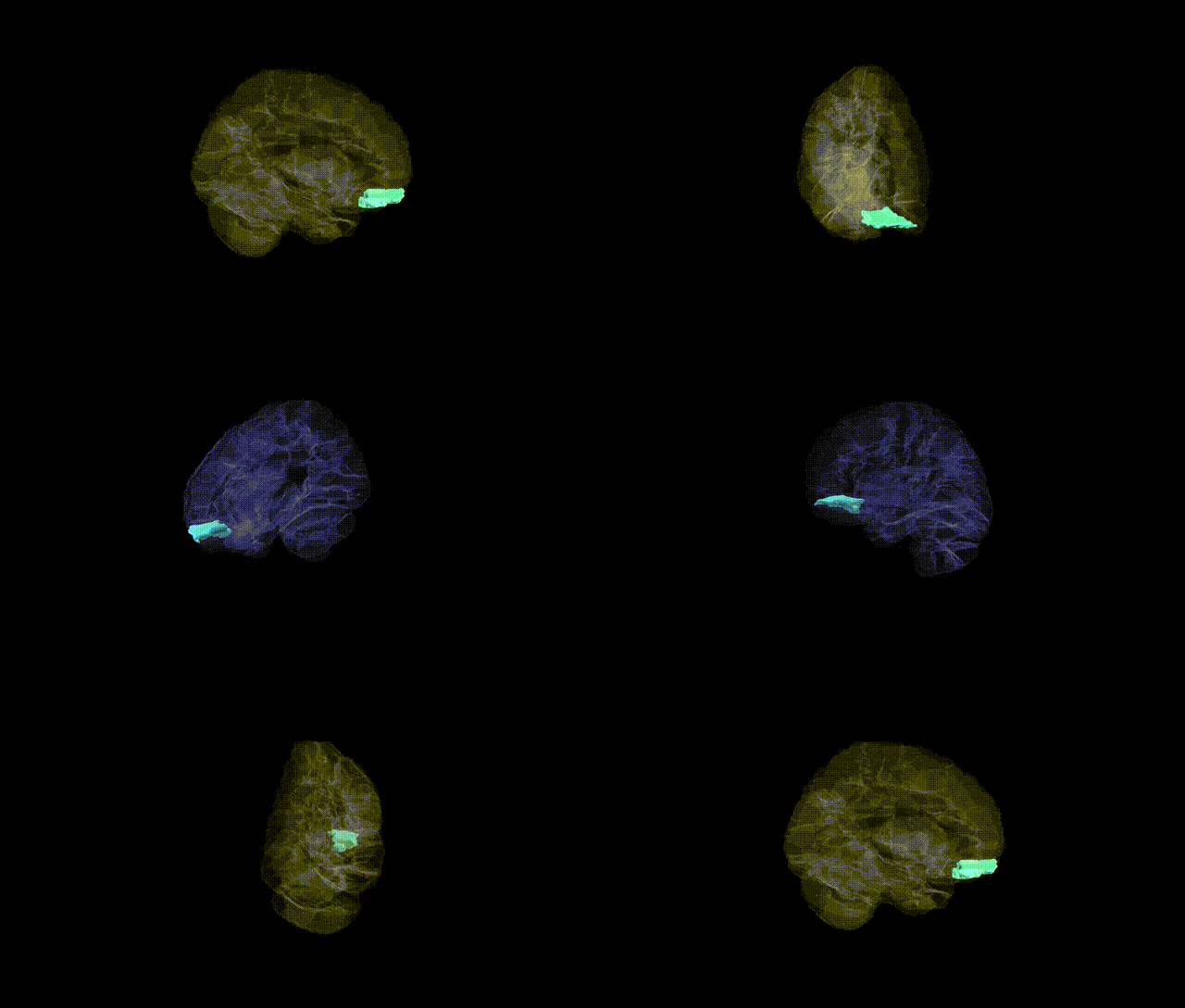
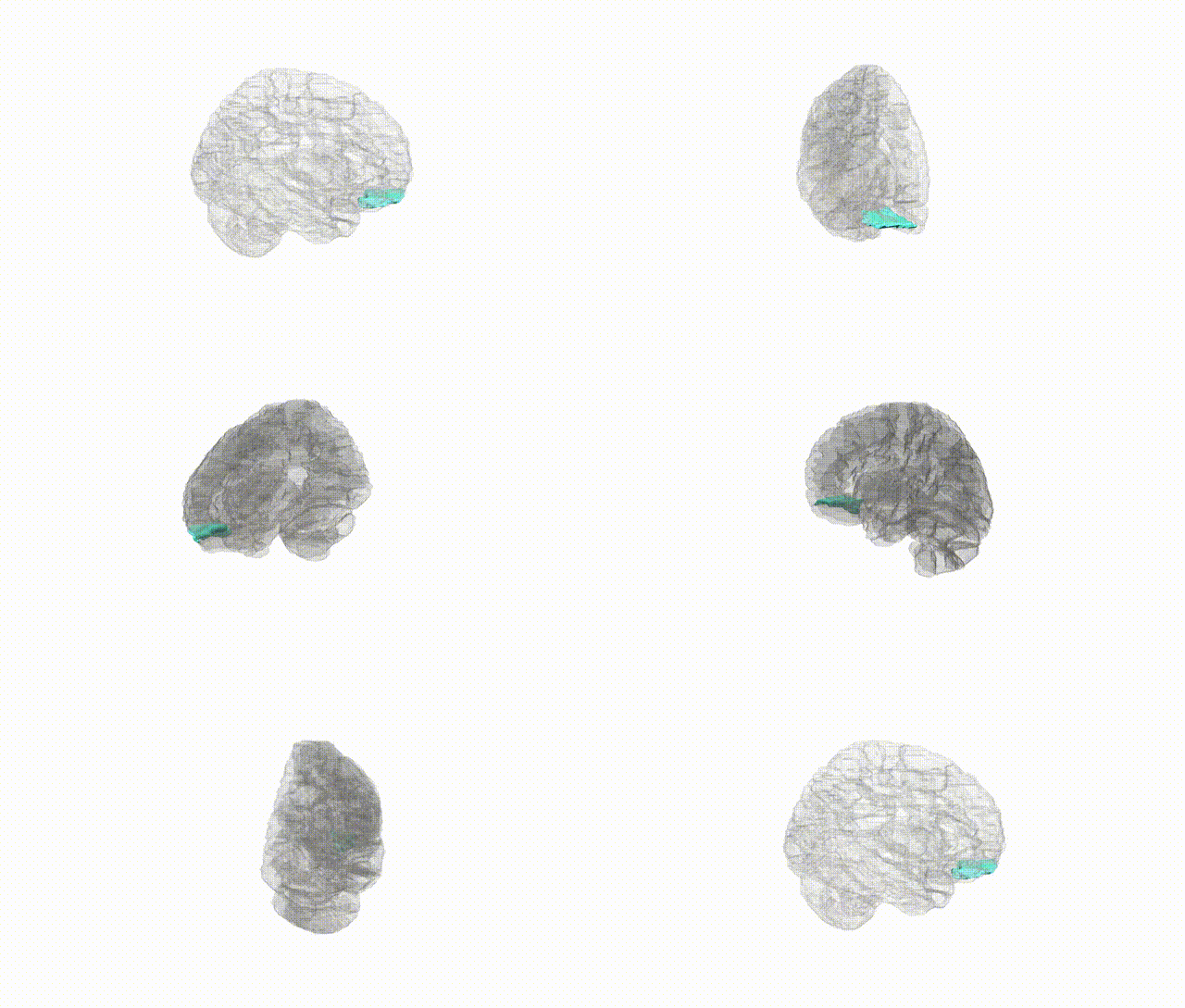
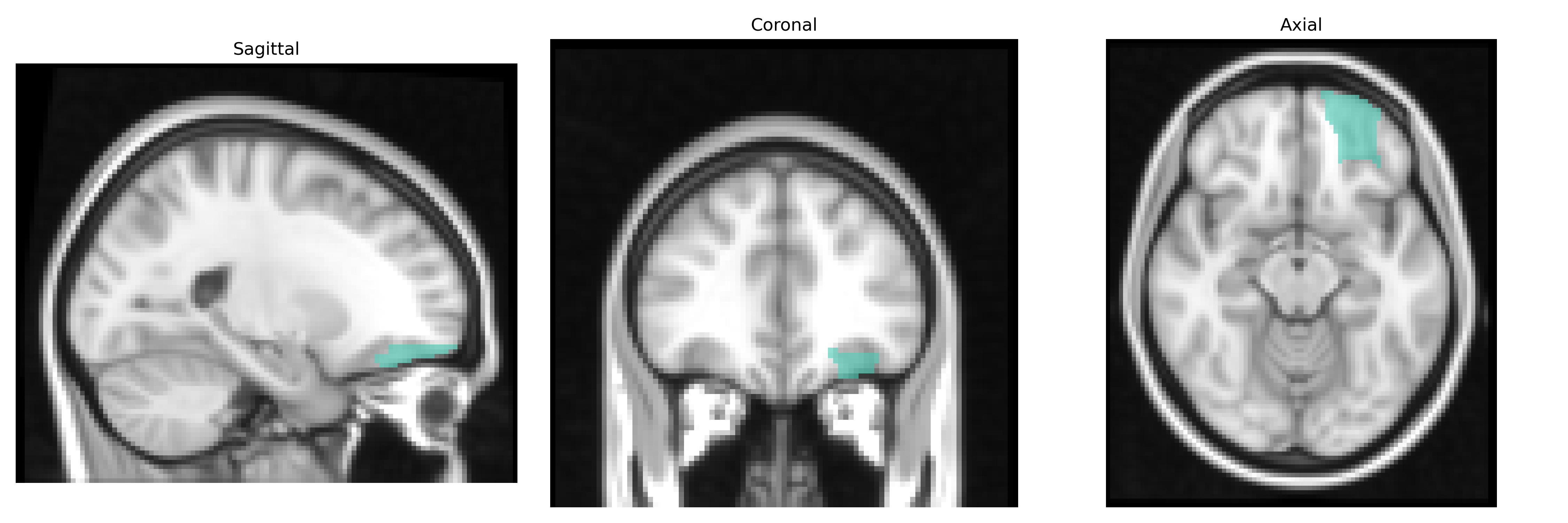
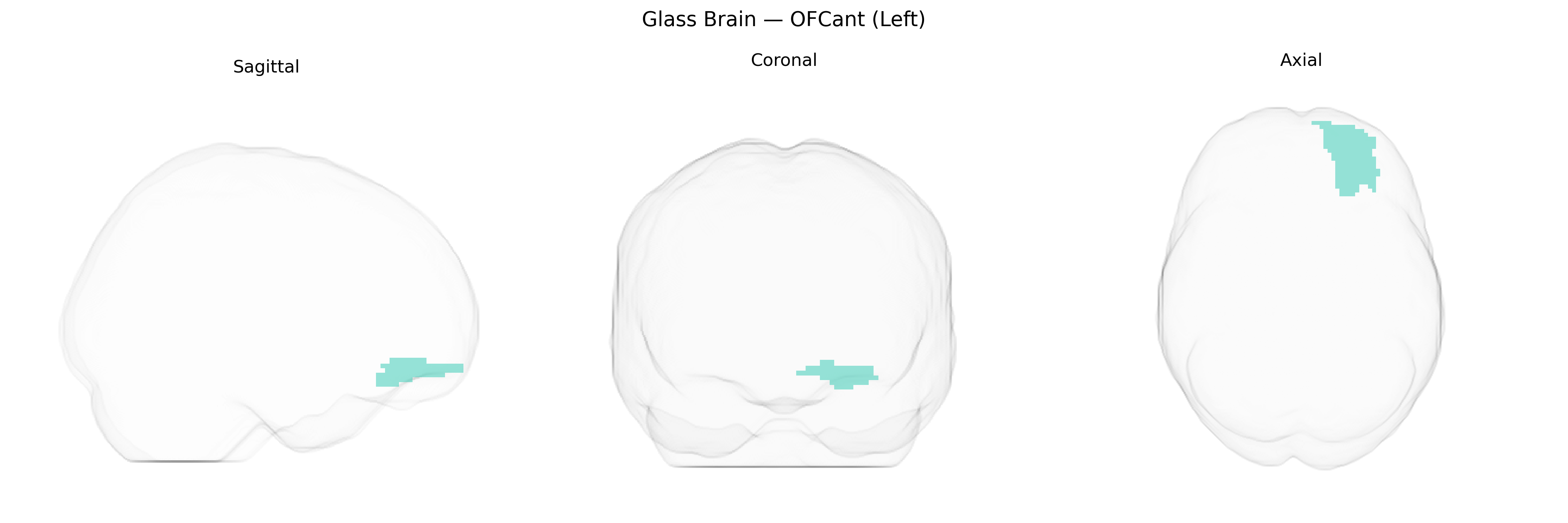
The left OFCant (orbitofrontal cortex, anterior part, left) in the AAL2 atlas corresponds to an anterior subdivision of the left orbitofrontal cortex, located on the ventral surface of the frontal lobe above the orbits. This region is part of the prefrontal cortex and is implicated in integrating sensory, affective, and reward-related information to guide decision-making, especially in evaluating the emotional and motivational significance of stimuli. It contributes to processes such as reward anticipation, outcome evaluation, adaptive learning, and the modulation of social and emotional behavior, including inhibition of maladaptive responses. Cytoarchitectonically, it overlaps with areas of the ventromedial prefrontal cortex and is heavily interconnected with limbic structures such as the amygdala and ventral striatum, as well as other prefrontal regions, supporting its role in affective and value-based cognition. There is no direct Wikipedia article for “left OFCant”; a closely related structure is the Orbitofrontal cortex.
The left OFCant (left anterior orbitofrontal cortex) from the AAL2 atlas, while not usually analyzed under this exact parcel name in genetic studies, corresponds to orbitofrontal regions that have been repeatedly implicated in GWAS and imaging genetics research on psychiatric and behavioral traits. Variants in genes involved in synaptic function, neurotransmission, and neurodevelopment—such as CACNA1C, ANK3, DRD2, GRM3, and those within the major histocompatibility complex (e.g., complement component genes like C4)—have been associated with disorders showing orbitofrontal structural or functional alterations, including major depressive disorder, bipolar disorder, schizophrenia, obsessive–compulsive disorder, and substance use disorders. Large-scale imaging GWAS from consortia such as ENIGMA and UK Biobank have identified polygenic influences on cortical thickness and surface area in orbitofrontal regions, linking these measures to common variants near genes regulating neuronal growth and synaptic plasticity, and to traits like cognitive performance, neuroticism, risk-taking, and impulsivity. Additionally, orbitofrontal measures have been tied to genetic liability for obesity and eating behavior, as the region is central to reward valuation and decision-making, though these associations are typically reported at the level of broader orbitofrontal or frontal lobe clusters rather than the specific left OFCant label.
Overview generated by GPT-4o (2026).
Region ID: 2811
Hemisphere: left
Atlas: AAL2
Full Quality Version: Download MP4
Full Quality Version: Download MP4
Full Quality Version: Download MP4
Full Quality Version: Download MP4
Wali Sidiqyar*, Gaurav Rudravaram*, Elyssa M. McMaster, Trent M. Schwartz, Adam M. Saunders, Kurt G. Schilling, Bennett A. Landman "Introducing SPINS: A Shared Public Visualization Library of Neuroanatomical Structures." Medical Imaging with Deep Learning- short paper
This resource is licensed under CC0 1.0 Universal (Public Domain).