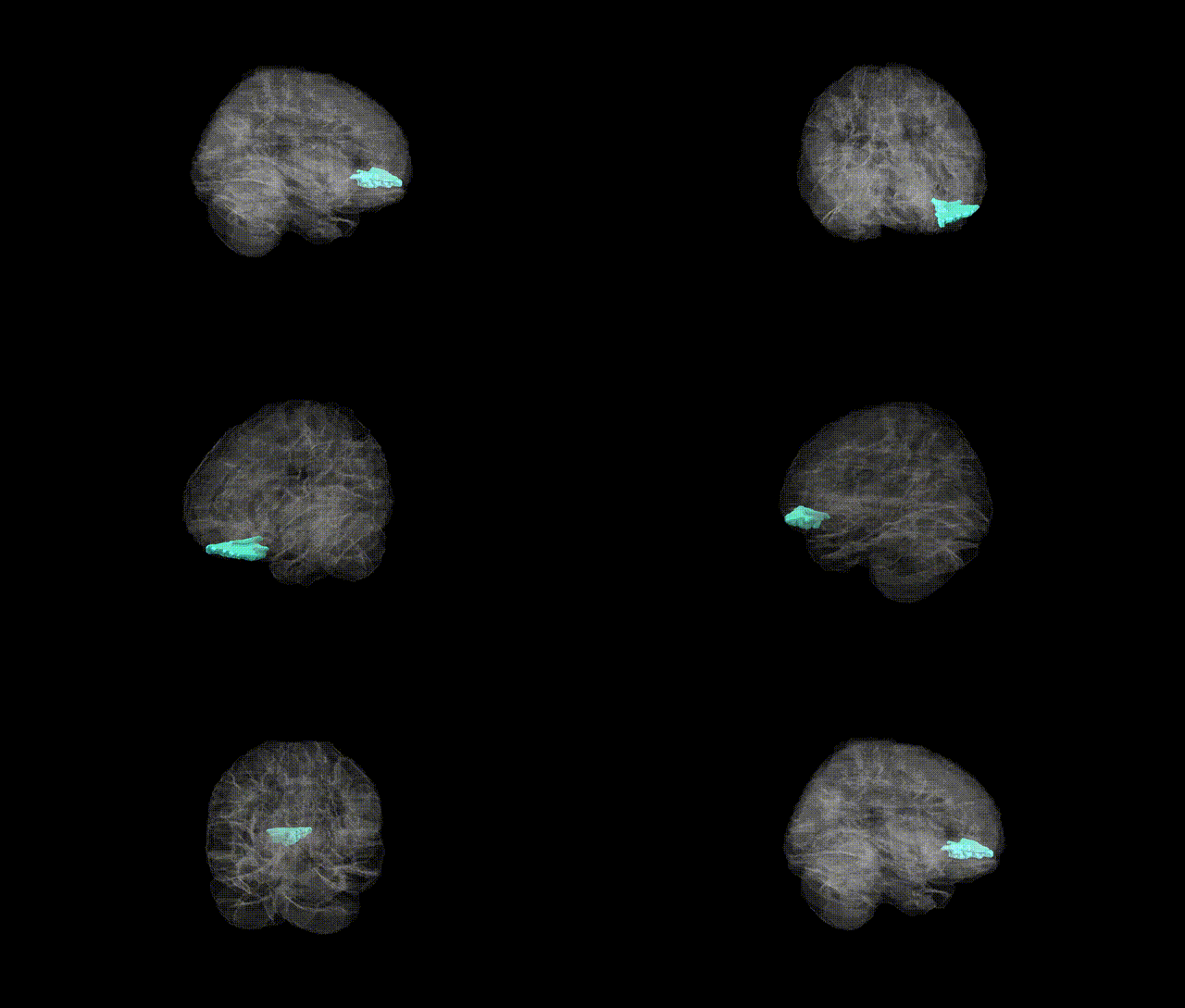
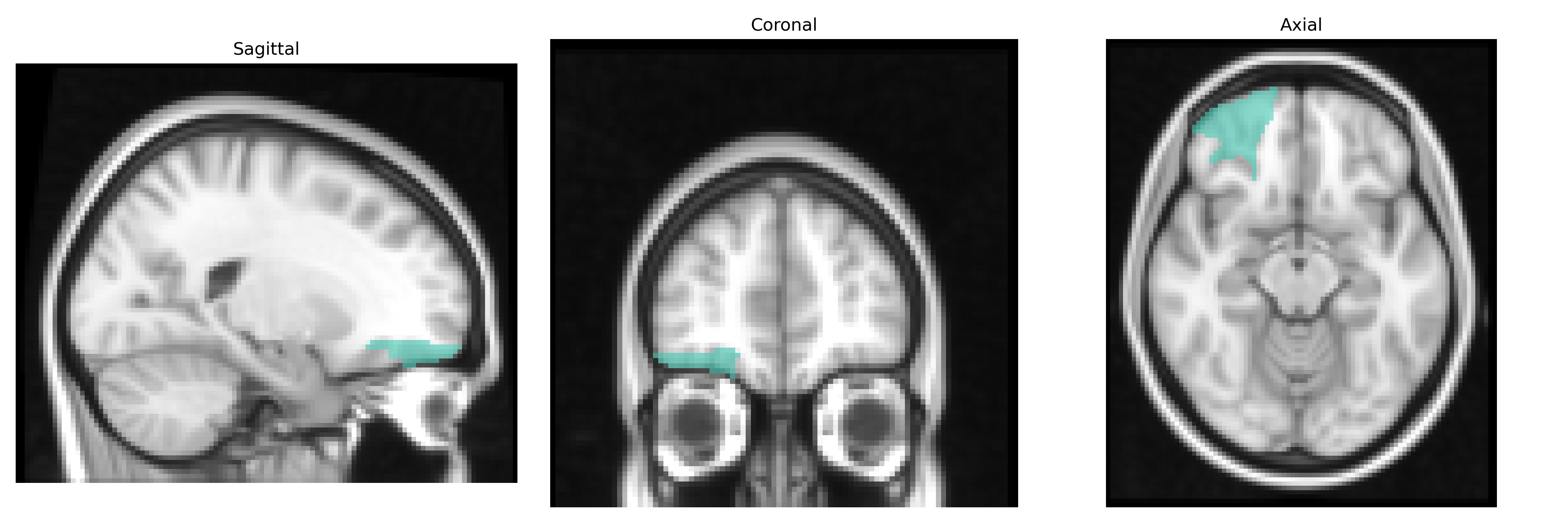
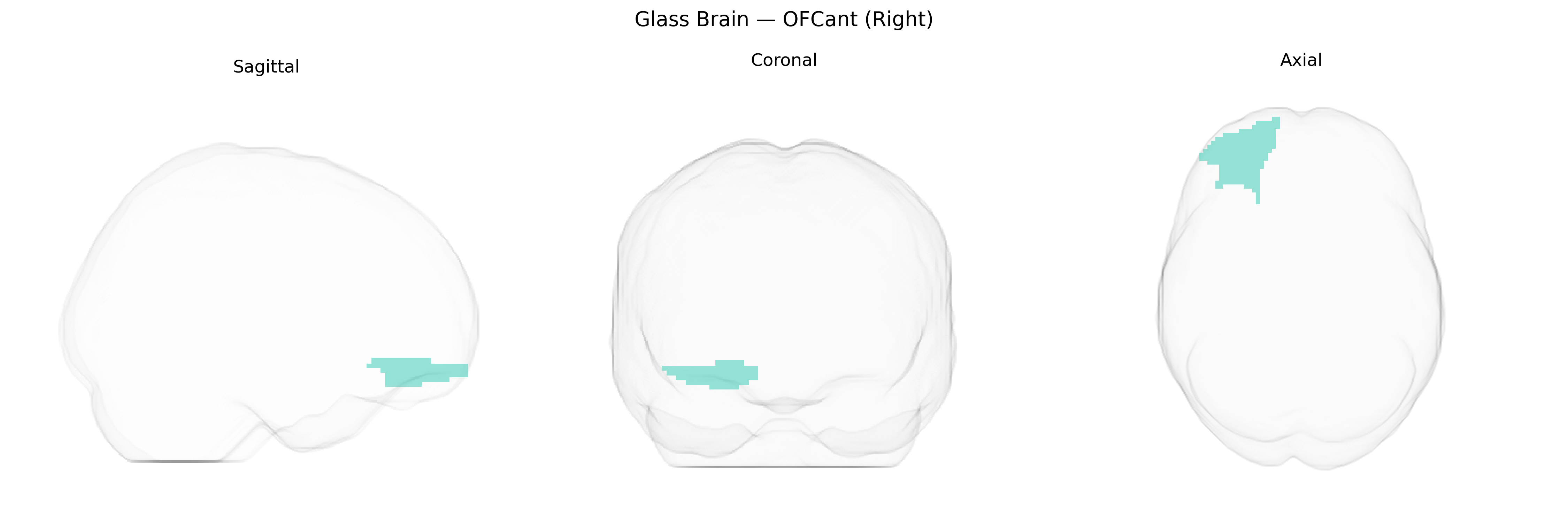
The right OFCant (Right) region in the AAL2 atlas corresponds to the right anterior portion of the orbitofrontal cortex, a ventral prefrontal area located on the inferior surface of the frontal lobe, just above the orbits. It is composed primarily of granular and dysgranular cortex and is heavily interconnected with limbic, sensory, and subcortical structures, including the amygdala, hippocampus, mediodorsal thalamus, and ventral striatum. Functionally, this region is implicated in reward valuation, decision-making under uncertainty, reversal learning, and the integration of affective and sensory information to guide adaptive behavior. It plays a key role in encoding the subjective value of outcomes, updating stimulus–reward contingencies, and modulating emotional responses, with dysfunction linked to mood disorders, obsessive-compulsive disorder, addiction, and impulsive behavior. There is no direct Wikipedia article for “Right OFCant”; the closest related structure is the Orbitofrontal cortex.
The right OFCant (right anterior orbitofrontal cortex) region from the AAL2 atlas, while not often targeted under that exact label, is implicated in multiple genetic and GWAS findings through studies of orbitofrontal and ventromedial prefrontal structure and function. Variants in genes related to synaptic plasticity and neurodevelopment—such as BDNF, COMT, and DISC1—have been associated with orbitofrontal cortical volume and activity, which in turn relate to decision making, reward processing, and affect regulation. Large-scale imaging genetics consortia (e.g., ENIGMA) have identified polygenic influences on prefrontal cortical thickness and surface area, showing that common variants contributing to psychiatric risk (including schizophrenia, major depressive disorder, bipolar disorder, ADHD, and autism spectrum disorder) are enriched in networks that involve orbitofrontal regions, including right-sided areas. GWAS of impulsivity, risk-taking, substance use, and behavioral addictions point to genetic architectures that overlap with orbitofrontal circuitry, consistent with lesion and functional MRI evidence implicating the right OFC in inhibitory control and valuation. Additionally, structural and functional alterations in the right orbitofrontal cortex have been reported in OCD and anxiety disorders, with heritable risk across serotonergic and glutamatergic pathways, although specific SNP-level associations localized explicitly to the “right OFCant” parcel remain limited and are generally inferred from broader orbitofrontal or frontal lobe analyses rather than parcel-specific GWAS.
Overview generated by GPT-4o (2026).
Region ID: 2812
Hemisphere: right
Atlas: AAL2
Full Quality Version: Download MP4
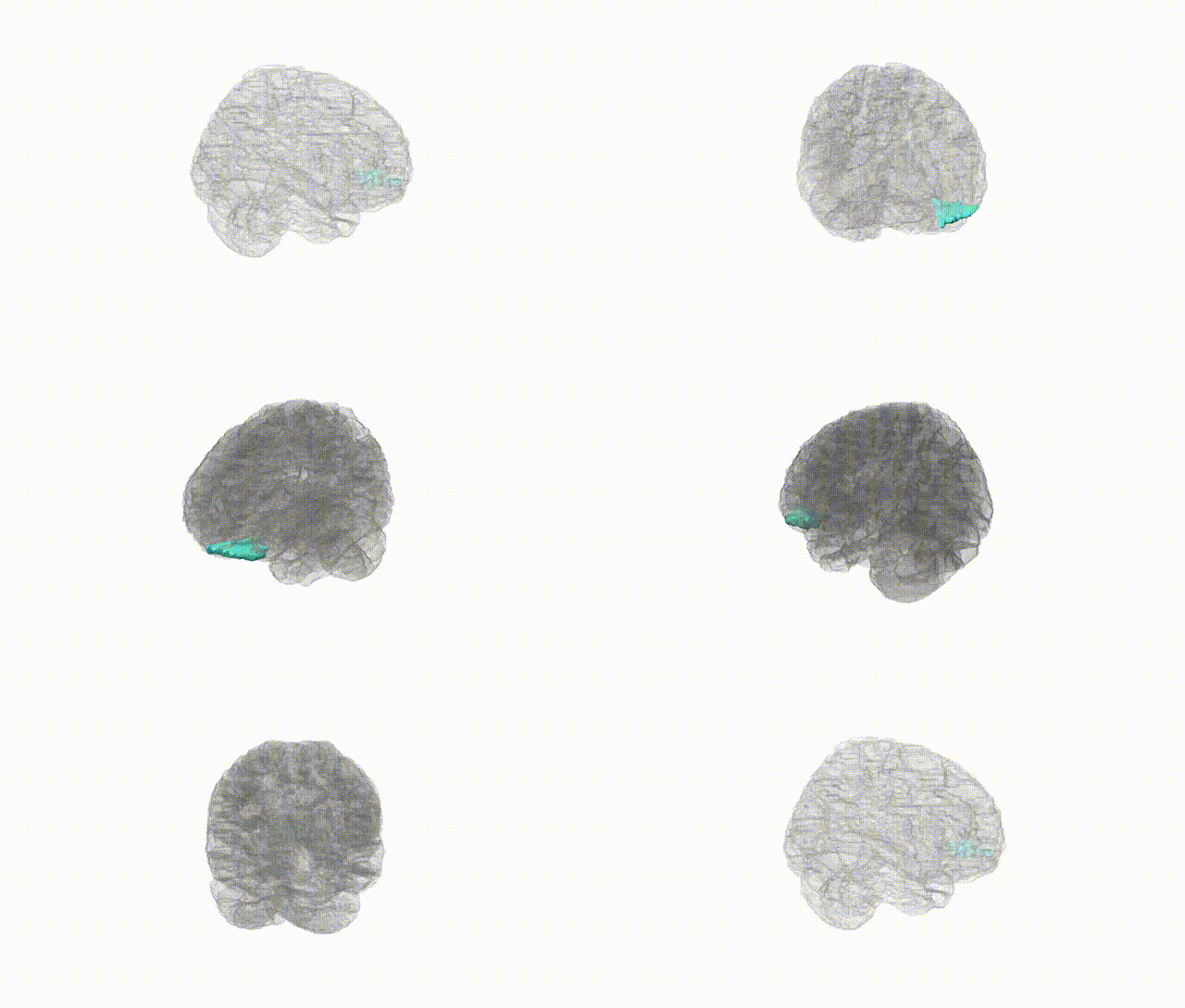
Full Quality Version: Download MP4
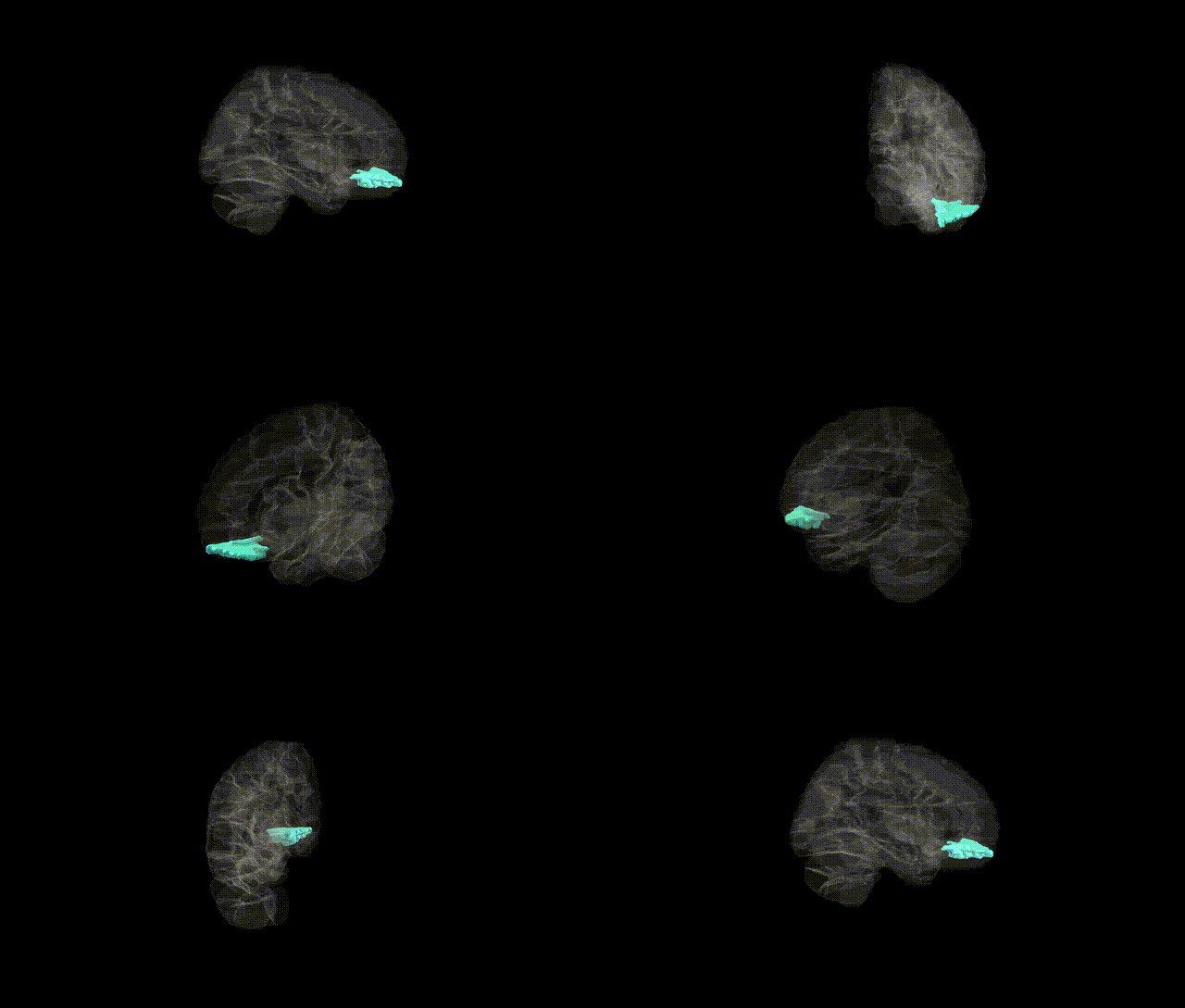
Full Quality Version: Download MP4
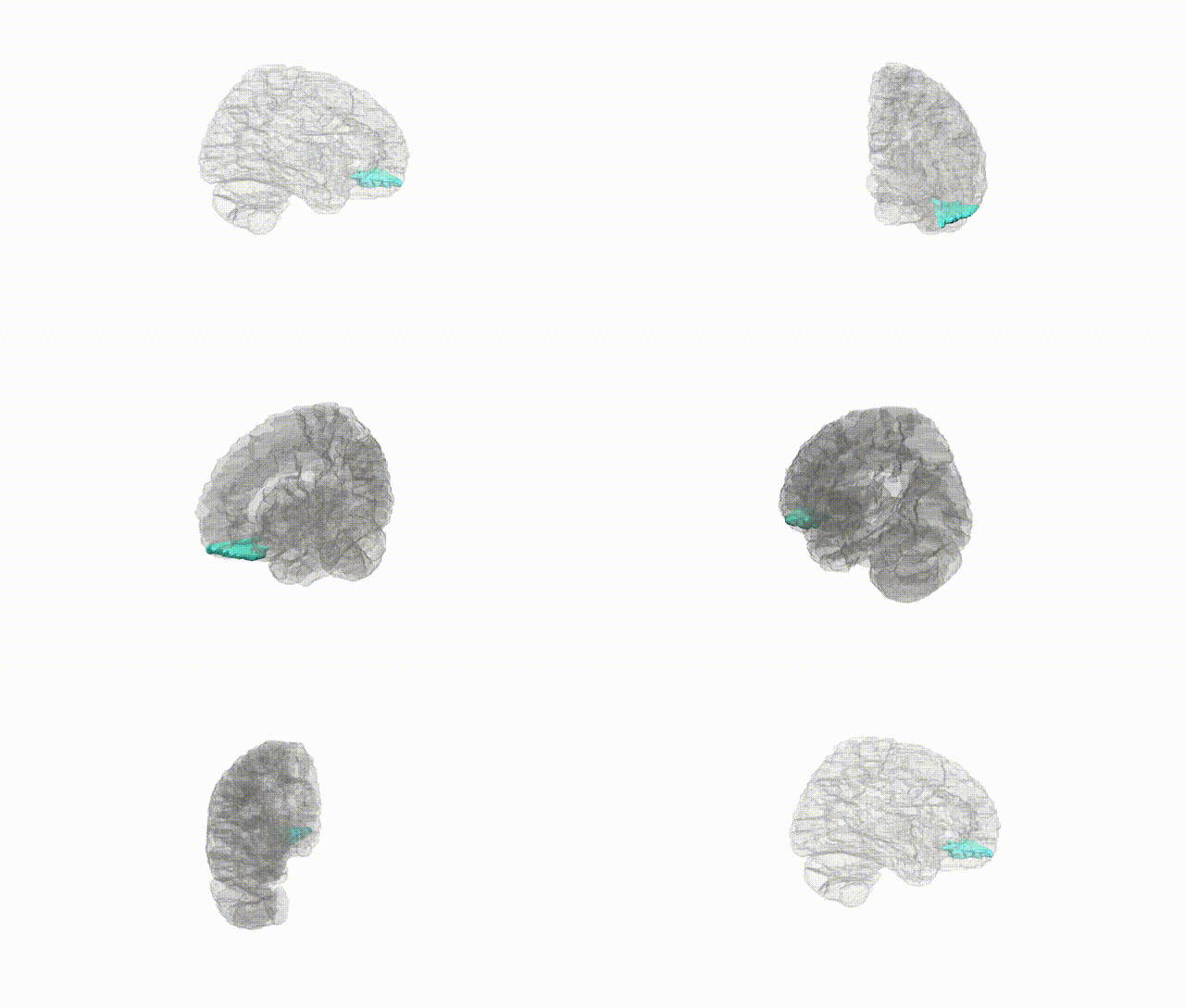
Full Quality Version: Download MP4
Wali Sidiqyar*, Gaurav Rudravaram*, Elyssa M. McMaster, Trent M. Schwartz, Adam M. Saunders, Kurt G. Schilling, Bennett A. Landman "Introducing SPINS: A Shared Public Visualization Library of Neuroanatomical Structures." Medical Imaging with Deep Learning- short paper
This resource is licensed under CC0 1.0 Universal (Public Domain).