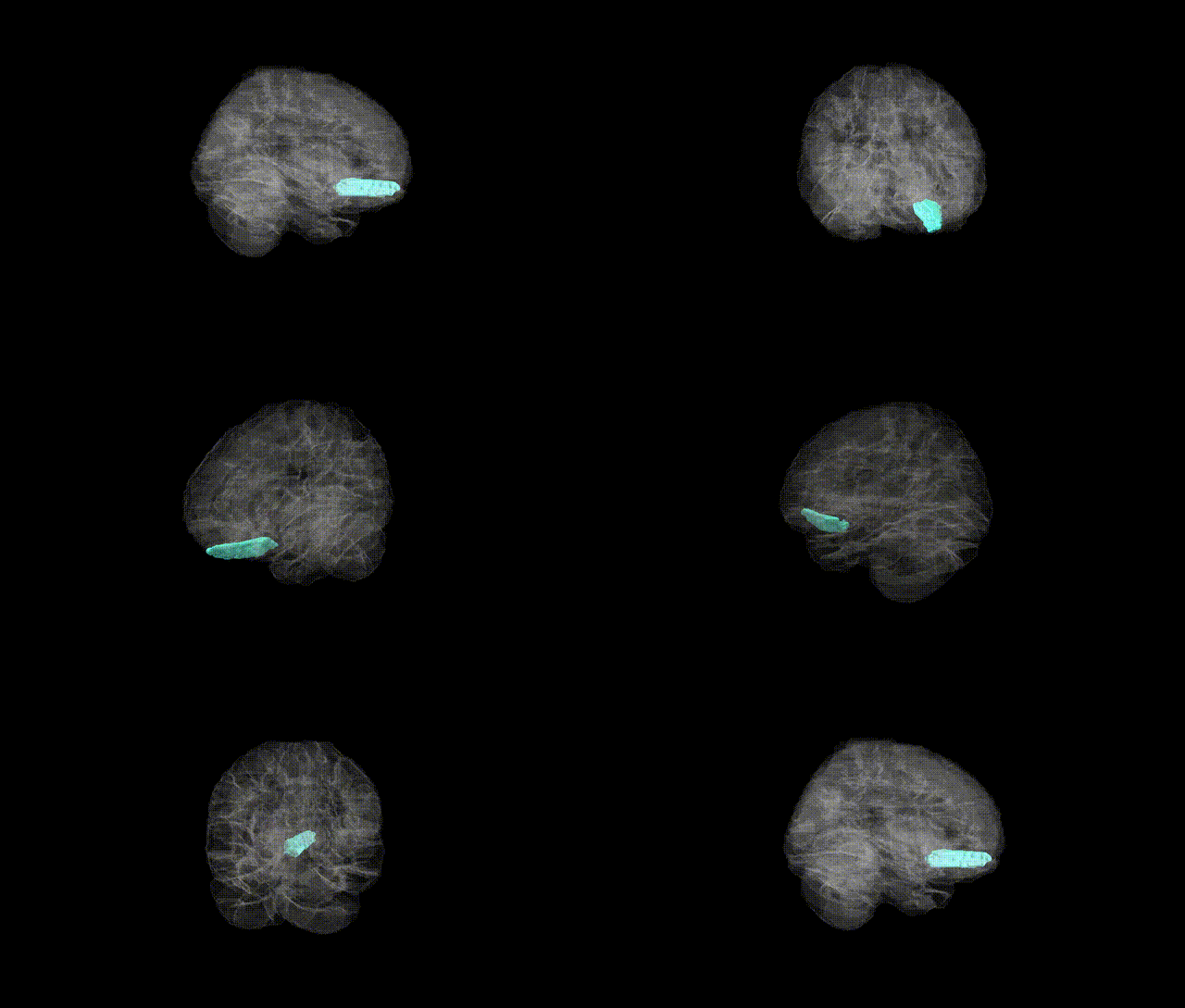
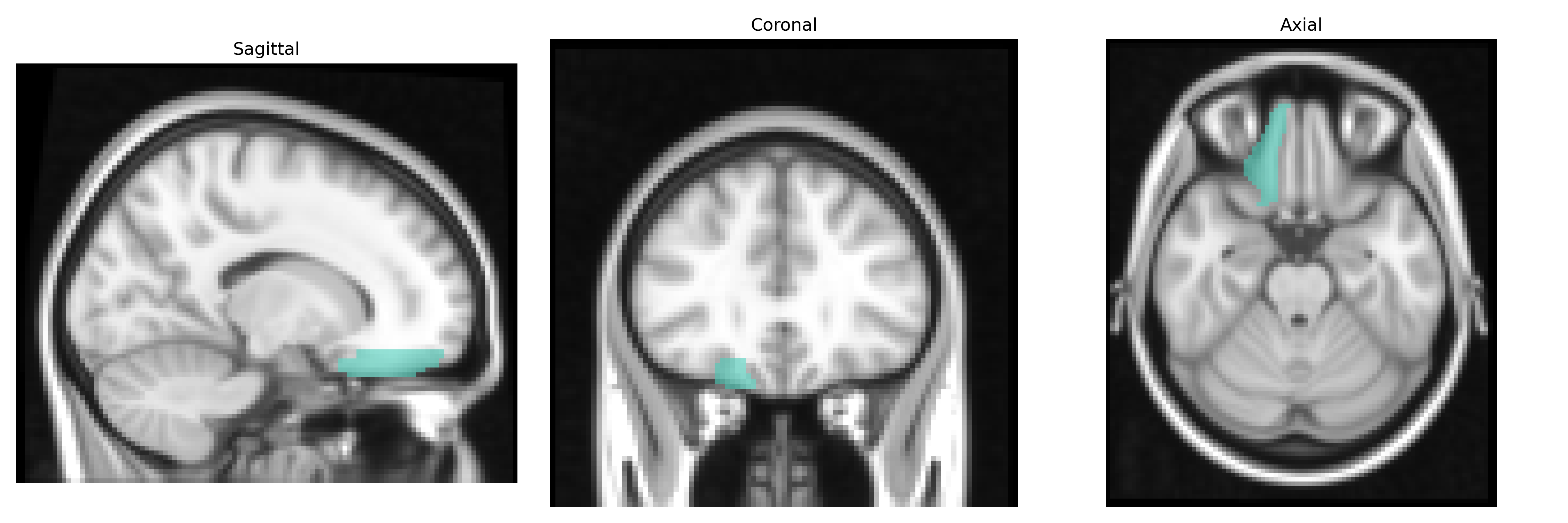
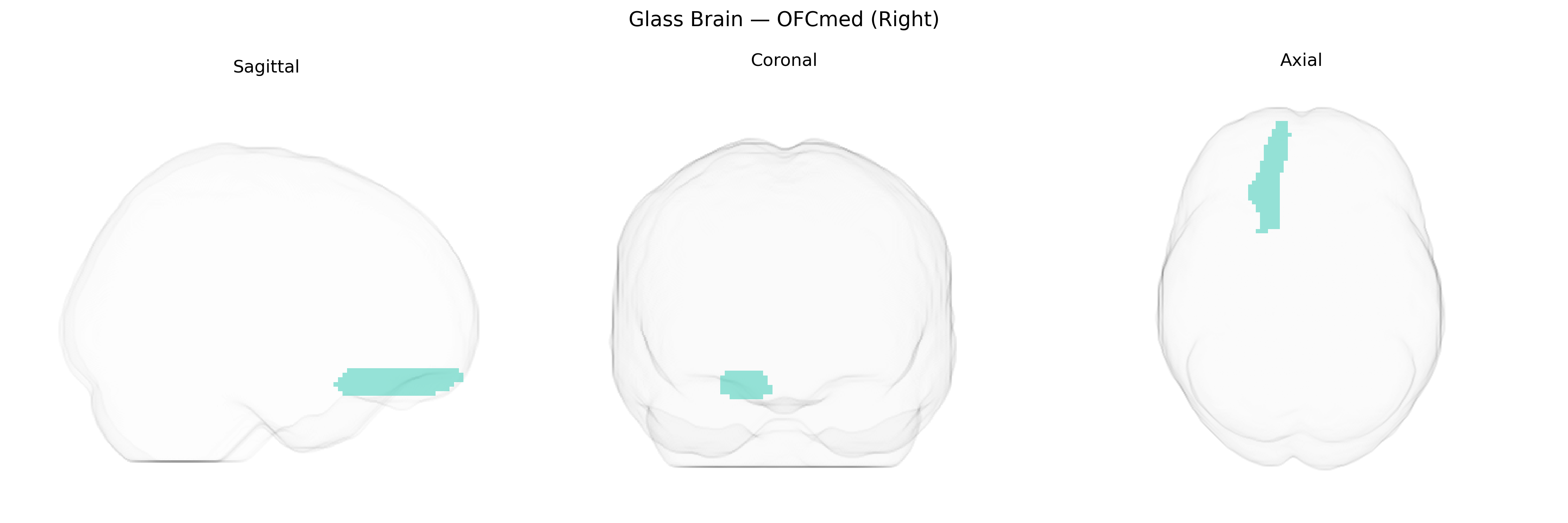
The right OFCmed (Right) region in the AAL2 atlas corresponds to the medial sector of the right orbitofrontal cortex, located on the ventral surface of the frontal lobe above the orbits. This area is part of the prefrontal cortex and is strongly connected with limbic and paralimbic structures, including the amygdala, hippocampus, ventral striatum, and medial thalamus. Functionally, it is implicated in reward valuation, outcome prediction, emotional decision-making, and reversal learning, integrating sensory, visceral, and emotional information to guide flexible behavior. Lesions or dysfunction in this medial orbitofrontal territory have been associated with impaired judgment, altered reward processing, and affective disturbances. There is no direct Wikipedia article for “right OFCmed (Right)”; a closely related structure is the Orbitofrontal cortex.
The medial orbitofrontal cortex (right OFCmed in the AAL2 atlas) has been repeatedly implicated in genetic studies of brain structure and function, particularly through large-scale GWAS of cortical thickness, surface area, and subcortical–cortical networks; loci in or near genes such as HMGA2, FGFR3, TESC, CENPW, and others have shown associations with orbitofrontal morphology, while polygenic scores for traits like cognitive ability, education, and intracranial volume correlate with variation in orbitofrontal metrics. Imaging–genetics work links orbitofrontal characteristics to risk loci for major depressive disorder, bipolar disorder, schizophrenia, and anxiety, often implicating genes involved in synaptic plasticity, dopamine and serotonin signaling, and neurodevelopment (for example, CACNA1C, SLC6A4, DRD2-related networks, and BDNF polymorphisms), which modulate orbitofrontal volume, activity, or connectivity. GWAS and candidate-gene studies of substance use (including alcohol and nicotine), obesity and eating behavior, impulsivity, and reward sensitivity also find that risk variants (e.g., in FTO and dopaminergic genes) are associated with structural or functional changes in medial and lateral orbitofrontal cortex. Although many findings are atlas- or parcel-dependent rather than specific to the AAL2 OFCmed label, convergent evidence supports a heritable component to right medial orbitofrontal anatomy and function, with pleiotropic genetic influences spanning psychiatric disorders, personality traits, and metabolic or reward-related behaviors.
Overview generated by GPT-4o (2026).
Region ID: 2802
Hemisphere: right
Atlas: AAL2
Full Quality Version: Download MP4
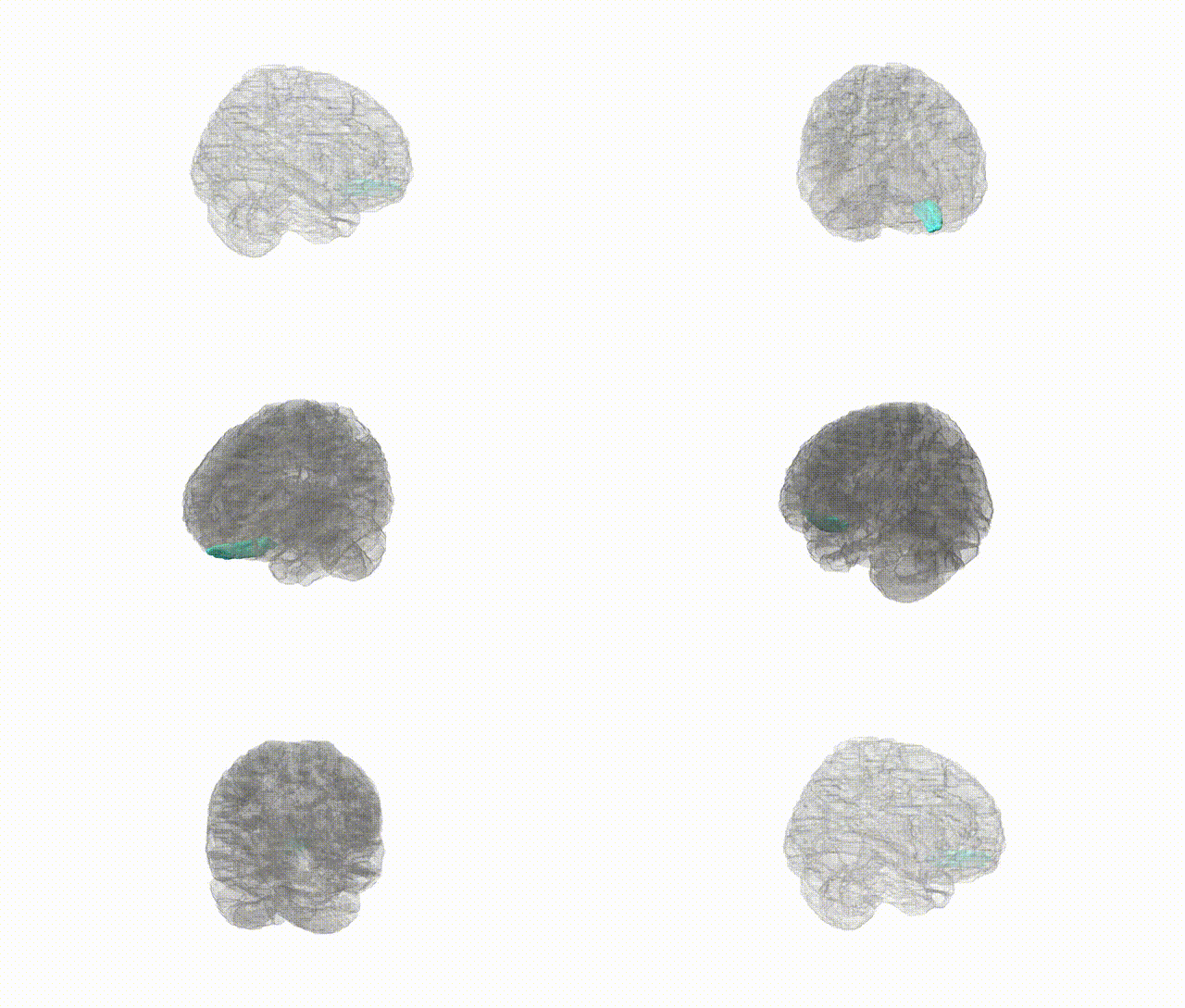
Full Quality Version: Download MP4
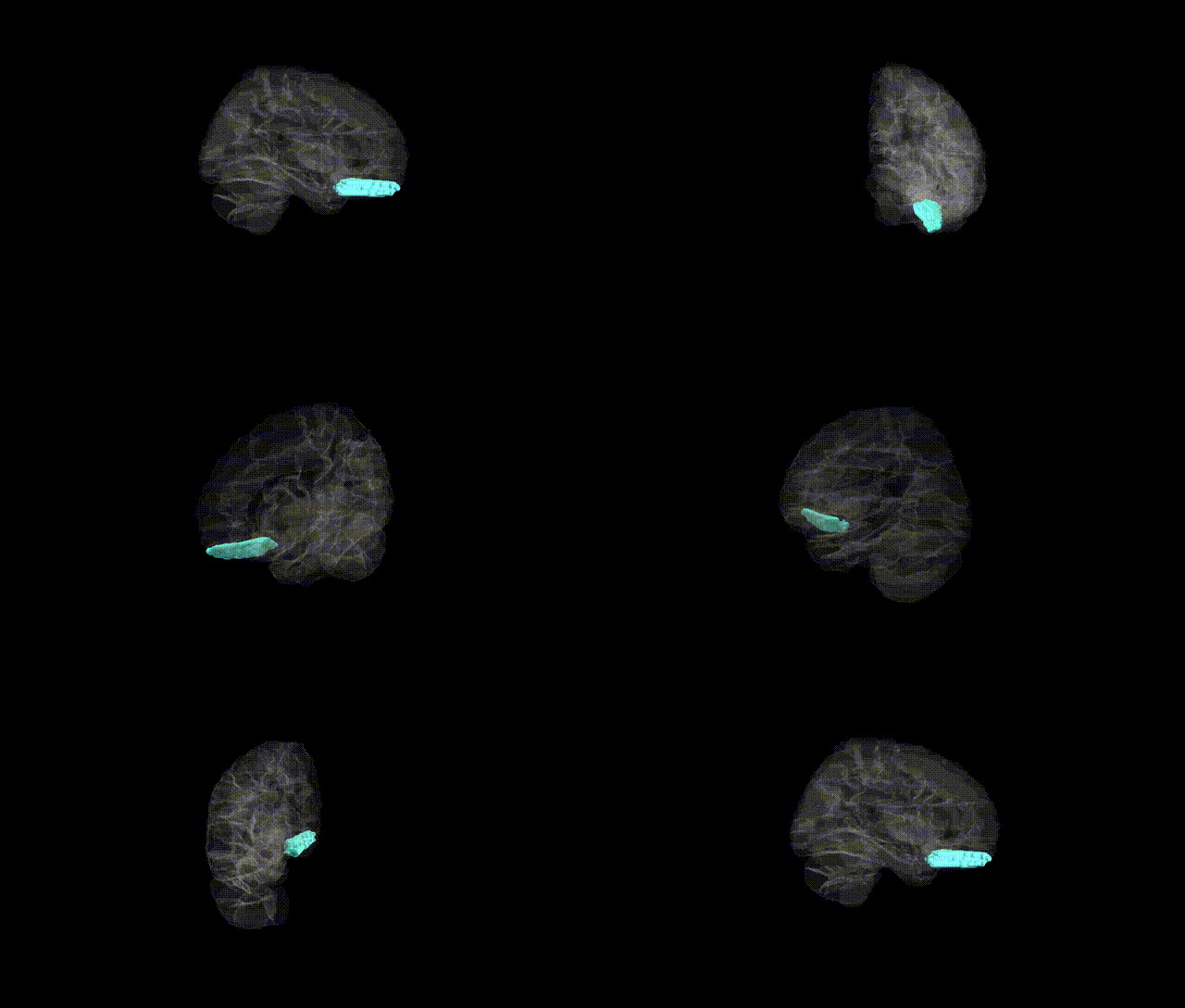
Full Quality Version: Download MP4
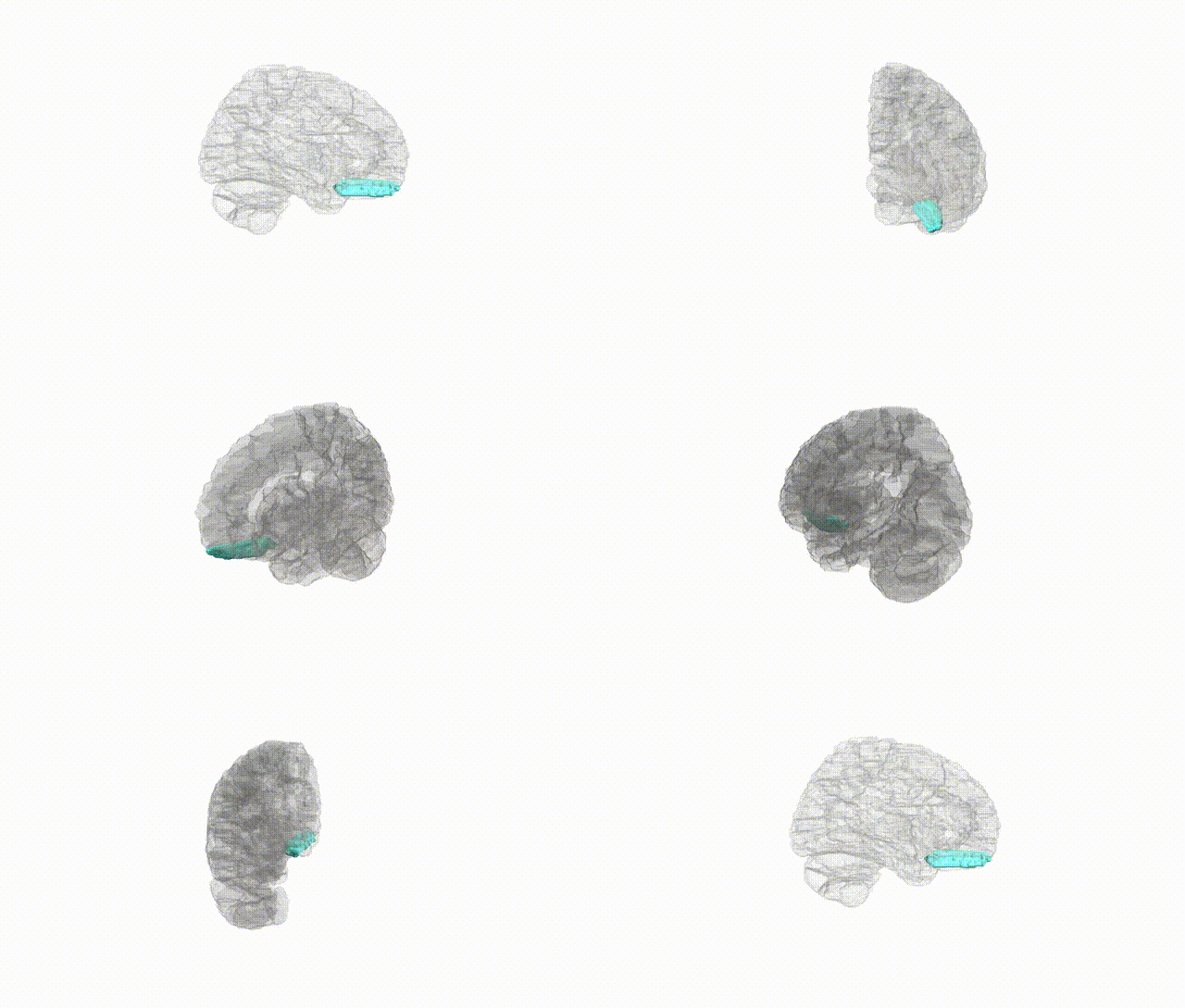
Full Quality Version: Download MP4
Wali Sidiqyar*, Gaurav Rudravaram*, Elyssa M. McMaster, Trent M. Schwartz, Adam M. Saunders, Kurt G. Schilling, Bennett A. Landman "Introducing SPINS: A Shared Public Visualization Library of Neuroanatomical Structures." Medical Imaging with Deep Learning- short paper
This resource is licensed under CC0 1.0 Universal (Public Domain).