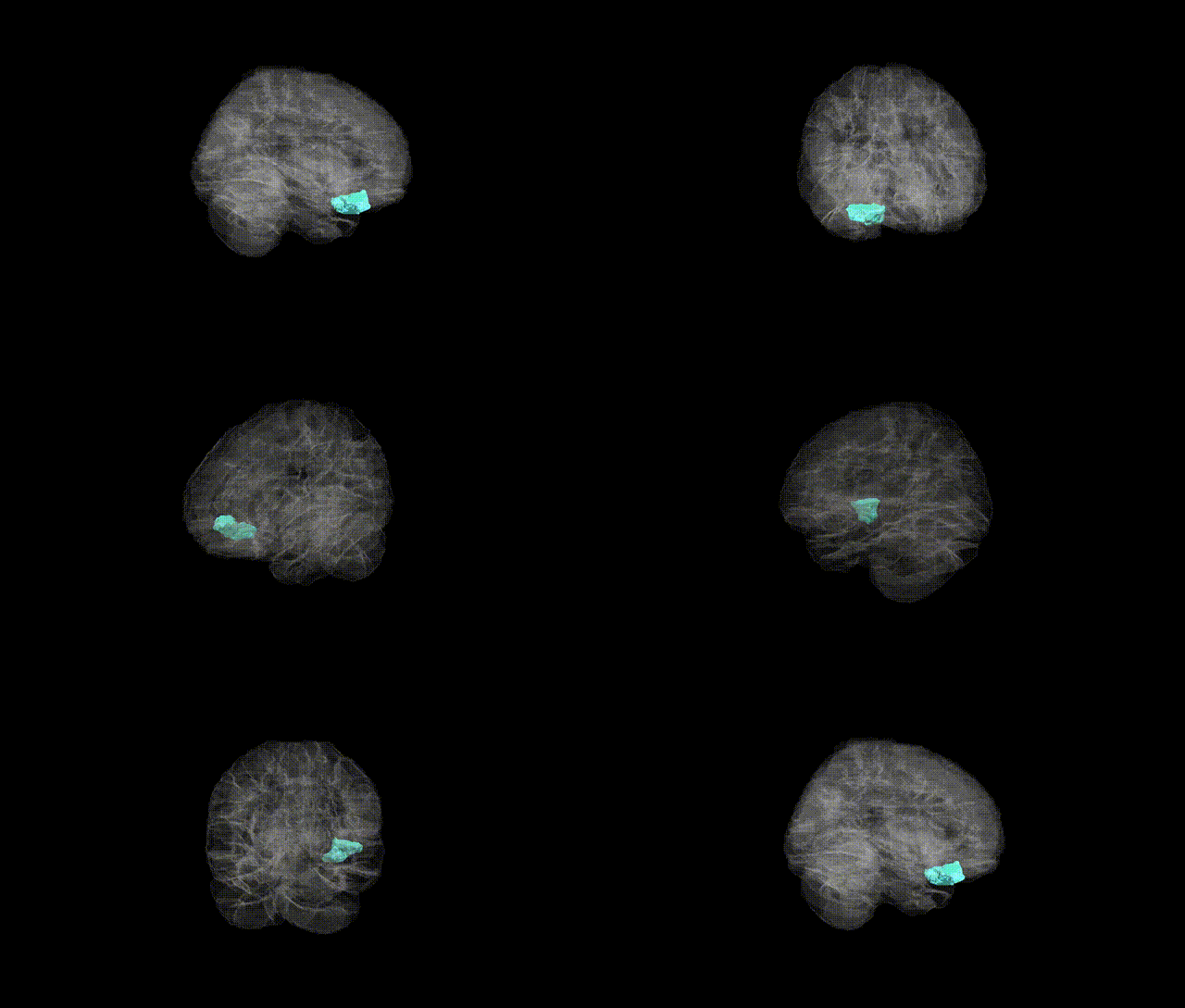
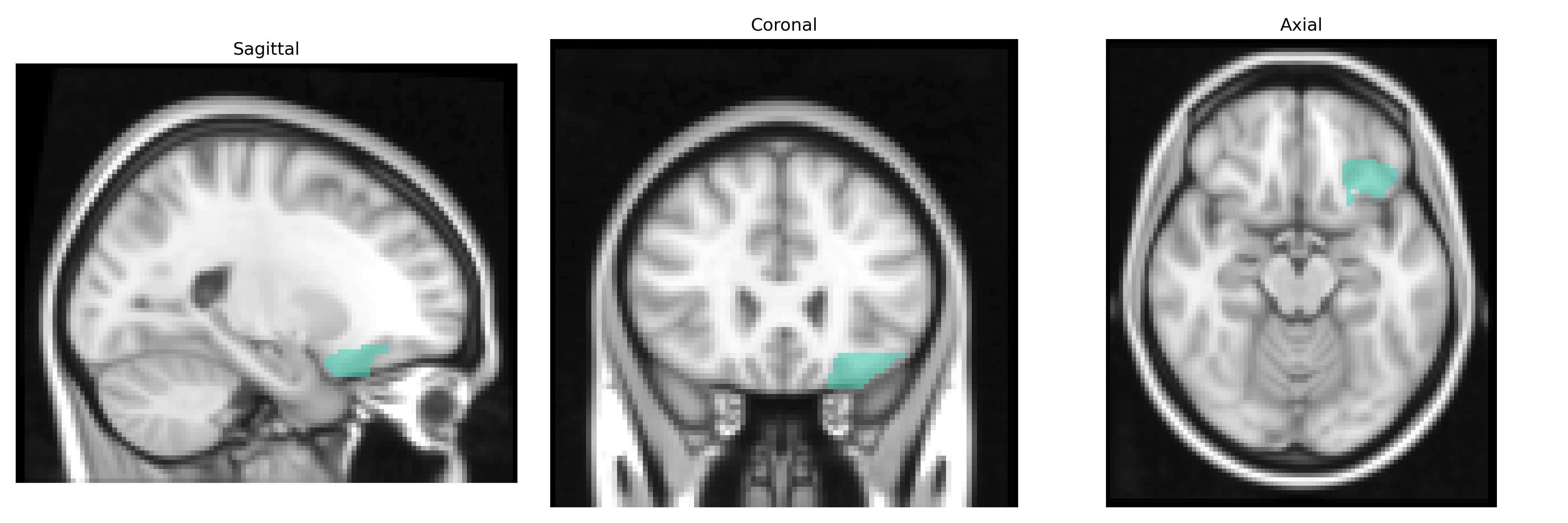
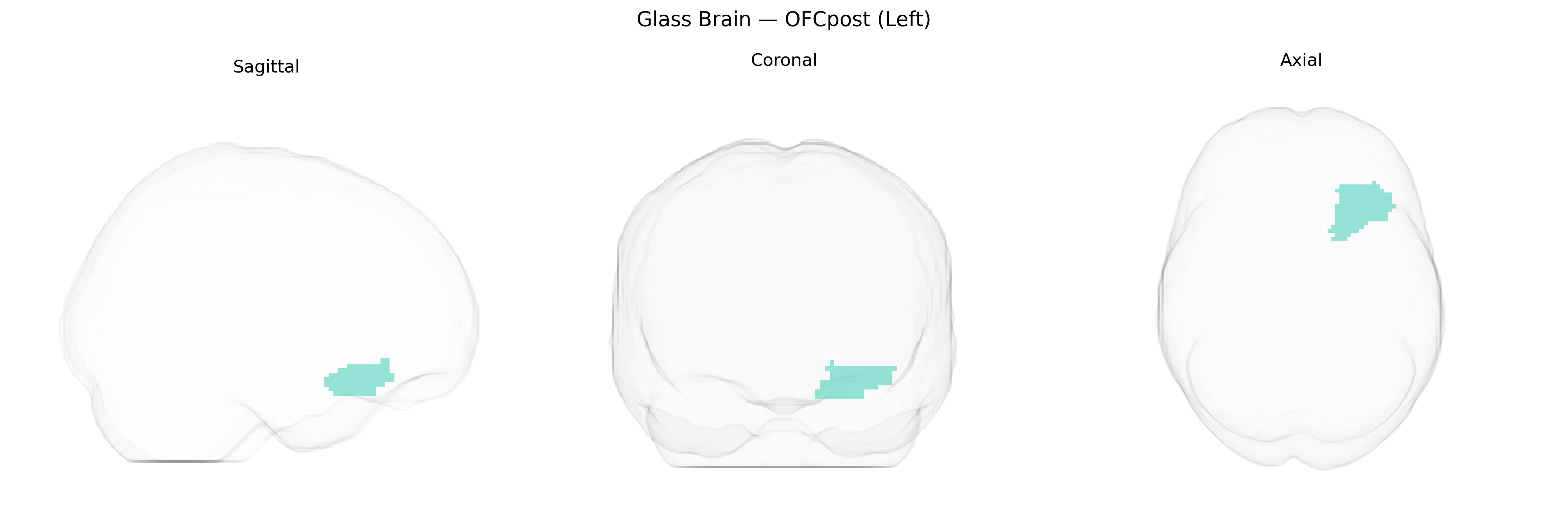
The left OFCpost (Left) region in the AAL2 atlas corresponds to the posterior part of the left orbitofrontal cortex, located on the inferior surface of the frontal lobe, above the orbits of the eyes. This area is part of the prefrontal cortex and is implicated in reward processing, evaluation of outcomes, decision-making, and the integration of emotional and sensory information to guide behavior. Cytoarchitectonically, it encompasses portions of Brodmann areas typically associated with orbitofrontal function (e.g., BA11/BA47), receiving multimodal inputs from limbic structures, sensory association cortices, and thalamic nuclei, and projecting to other prefrontal and limbic regions involved in affective and cognitive control. There is no direct Wikipedia article for “posterior orbitofrontal cortex”; a related structure is the broader orbitofrontal cortex: Orbitofrontal cortex.
The left posterior orbitofrontal cortex (OFCpost, left) in the AAL2 atlas has been implicated in several genetic and GWAS-based findings through its involvement in reward processing, decision-making, and affect regulation, although few studies target this parcel specifically and typically report orbitofrontal or ventromedial prefrontal regions more broadly. Large neuroimaging GWAS (e.g., ENIGMA, UK Biobank) have identified common variants in genes affecting cortical thickness and surface area in orbitofrontal regions, including loci near or within genes related to synaptic function and neurodevelopment (such as BDNF, CACNA1C, DISC1, and genes in glutamatergic signaling), which in turn show pleiotropic associations with psychiatric traits. Structural and functional measures of the orbitofrontal cortex are genetically correlated with major depressive disorder, schizophrenia, bipolar disorder, obsessive-compulsive disorder, and substance use disorders, consistent with GWAS findings that variants influencing these conditions often modulate orbitofrontal volume or activation. Polygenic risk scores for depression, psychosis, and addiction have been associated with altered OFC morphology and connectivity patterns, and orbitofrontal measures frequently mediate genetic effects on impulsivity, risk-taking, and neuroticism identified in behavioral GWAS. Although parcel-specific genetic associations for left OFCpost from AAL2 are not yet well characterized, convergent evidence suggests that this region participates in the broader genetically influenced orbitofrontal circuitry underlying mood, compulsive behavior, and reward-related traits.
Overview generated by GPT-4o (2026).
Region ID: 2821
Hemisphere: left
Atlas: AAL2
Full Quality Version: Download MP4
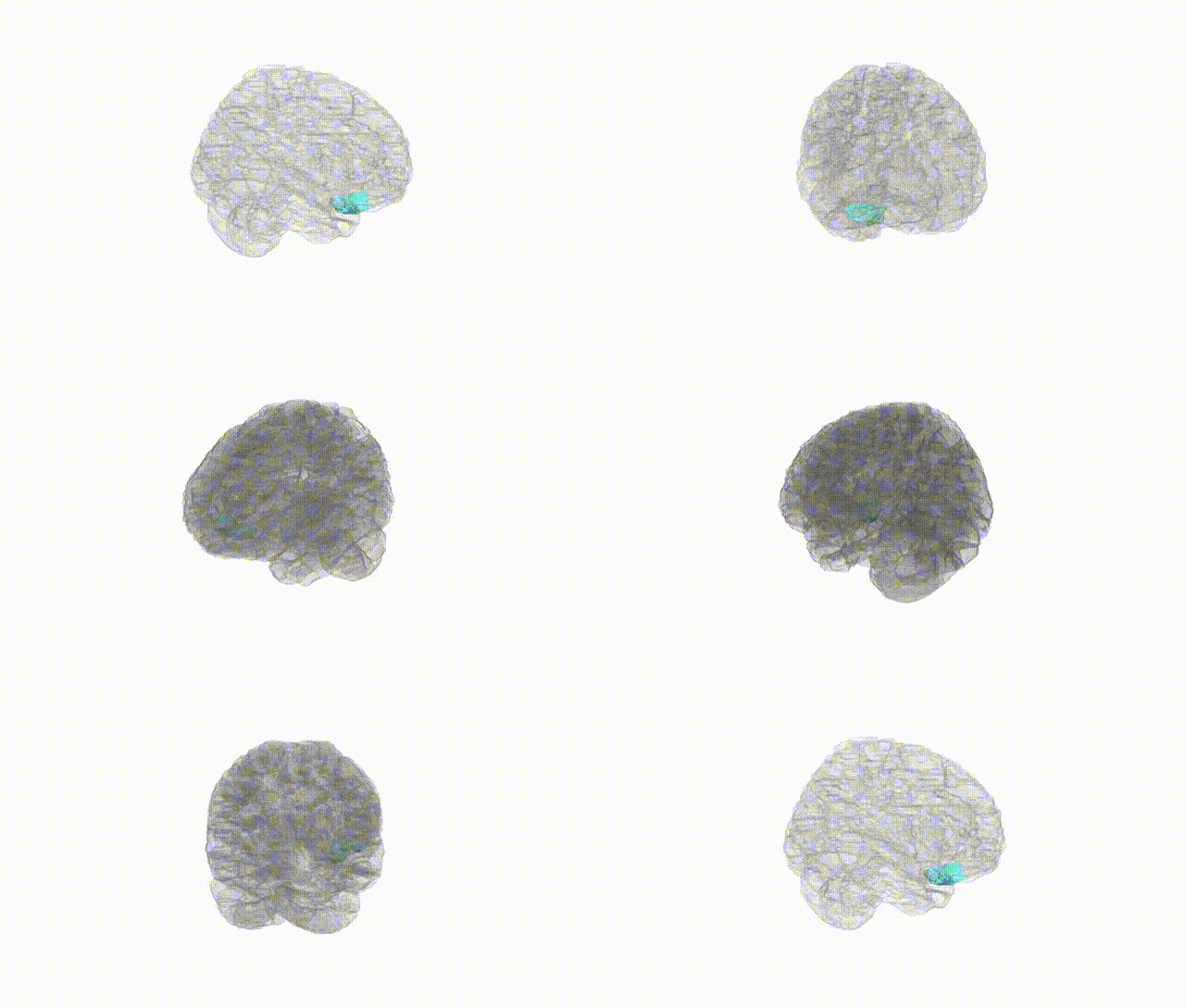
Full Quality Version: Download MP4
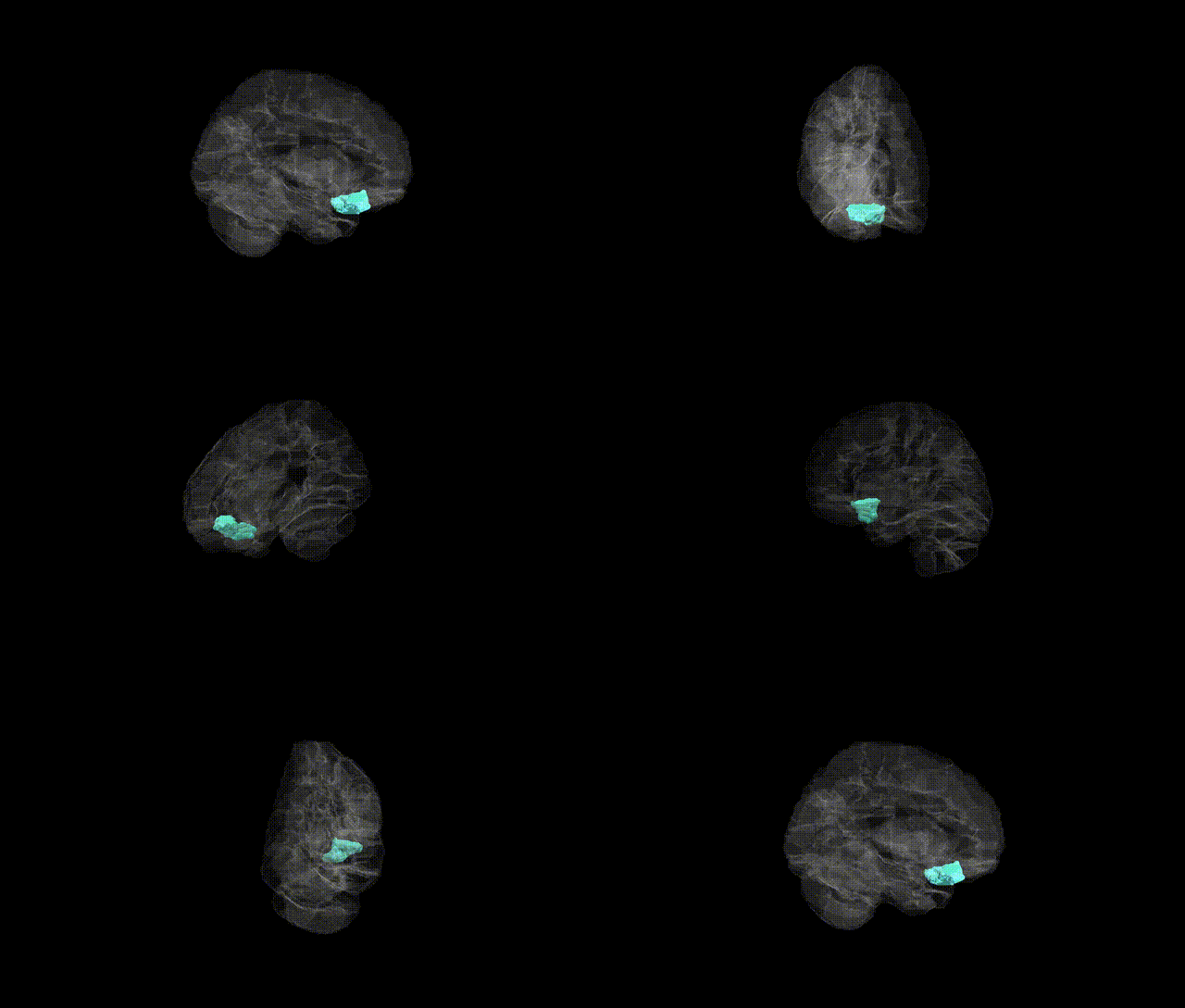
Full Quality Version: Download MP4
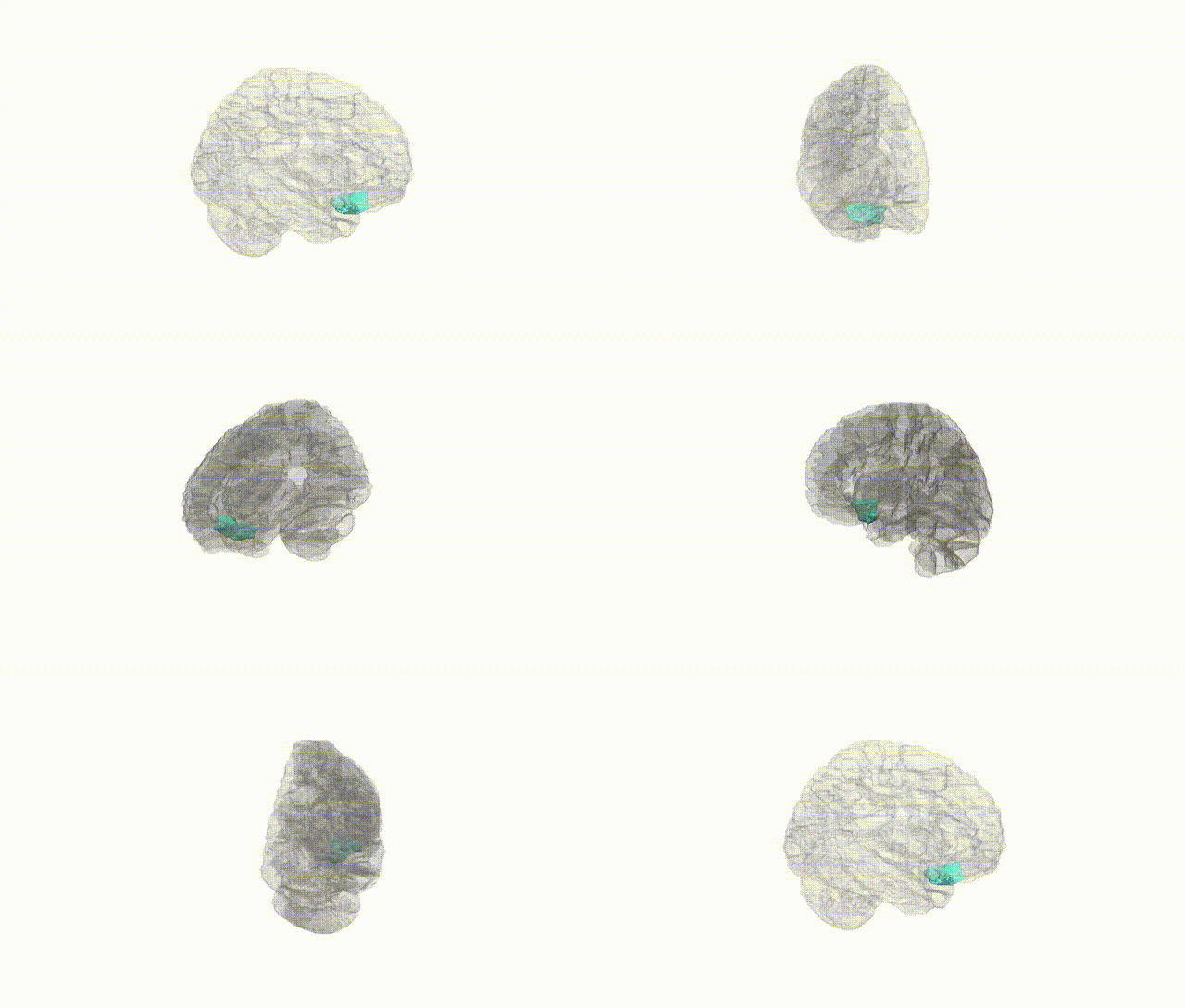
Full Quality Version: Download MP4
Wali Sidiqyar*, Gaurav Rudravaram*, Elyssa M. McMaster, Trent M. Schwartz, Adam M. Saunders, Kurt G. Schilling, Bennett A. Landman "Introducing SPINS: A Shared Public Visualization Library of Neuroanatomical Structures." Medical Imaging with Deep Learning- short paper
This resource is licensed under CC0 1.0 Universal (Public Domain).