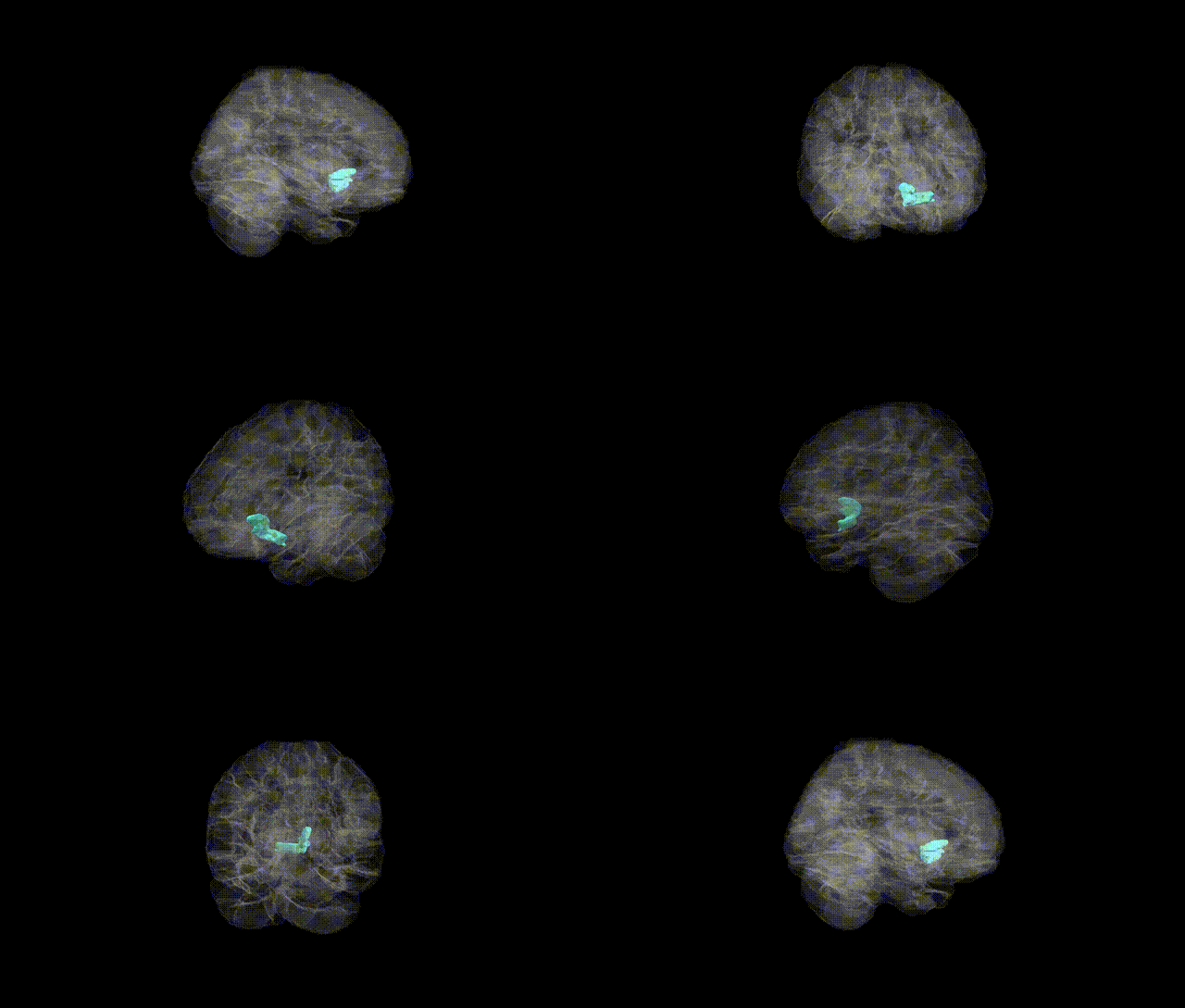
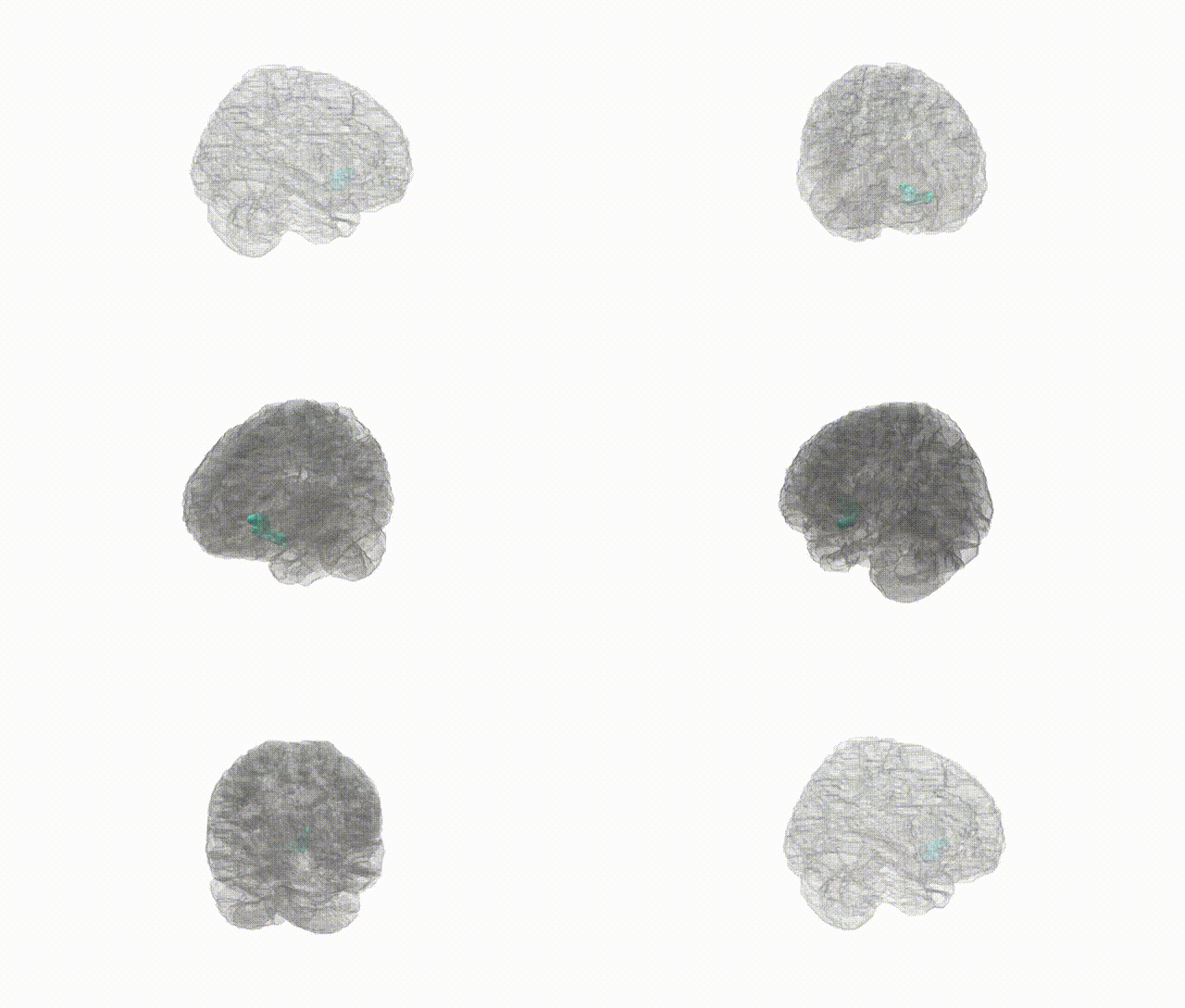
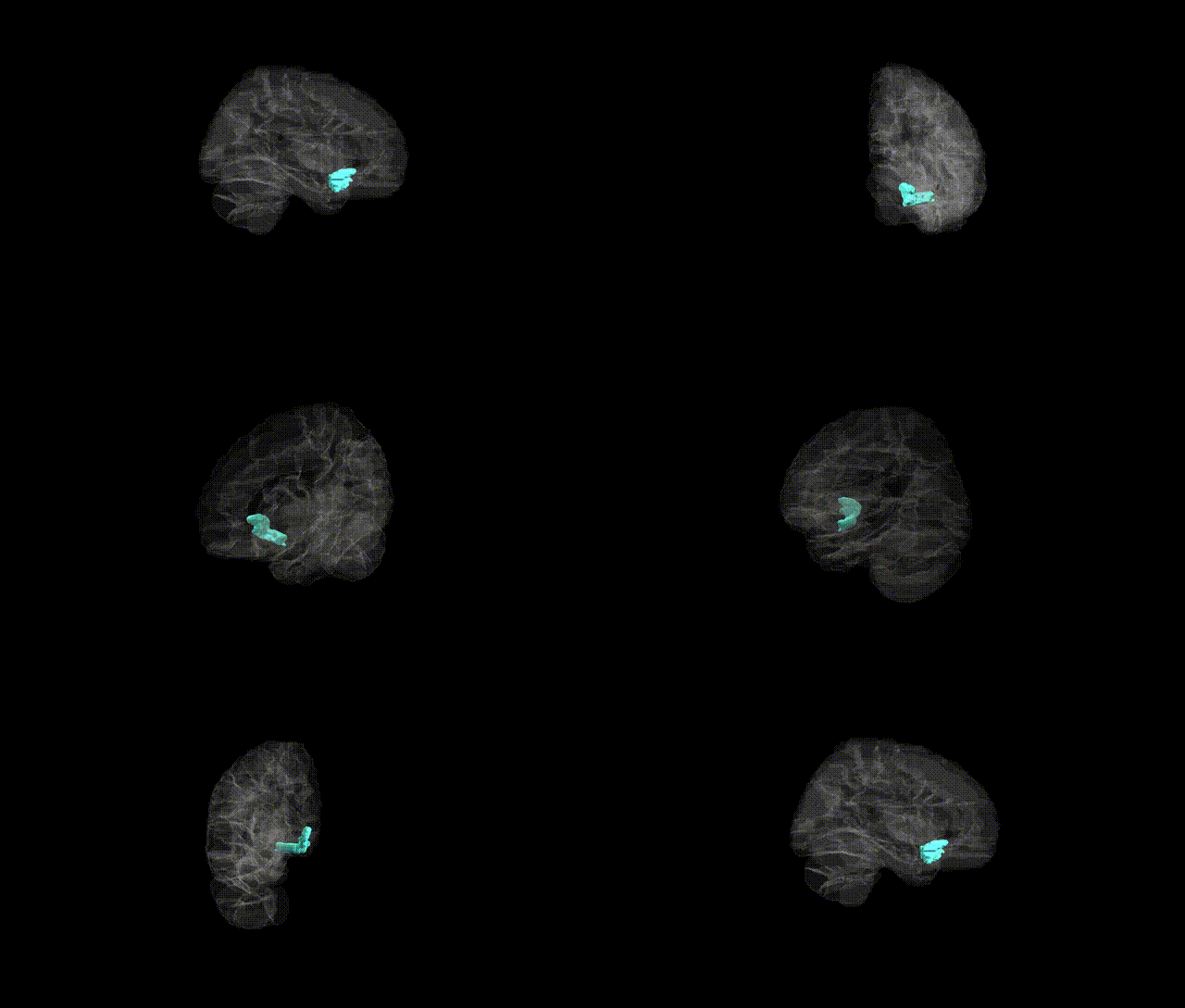
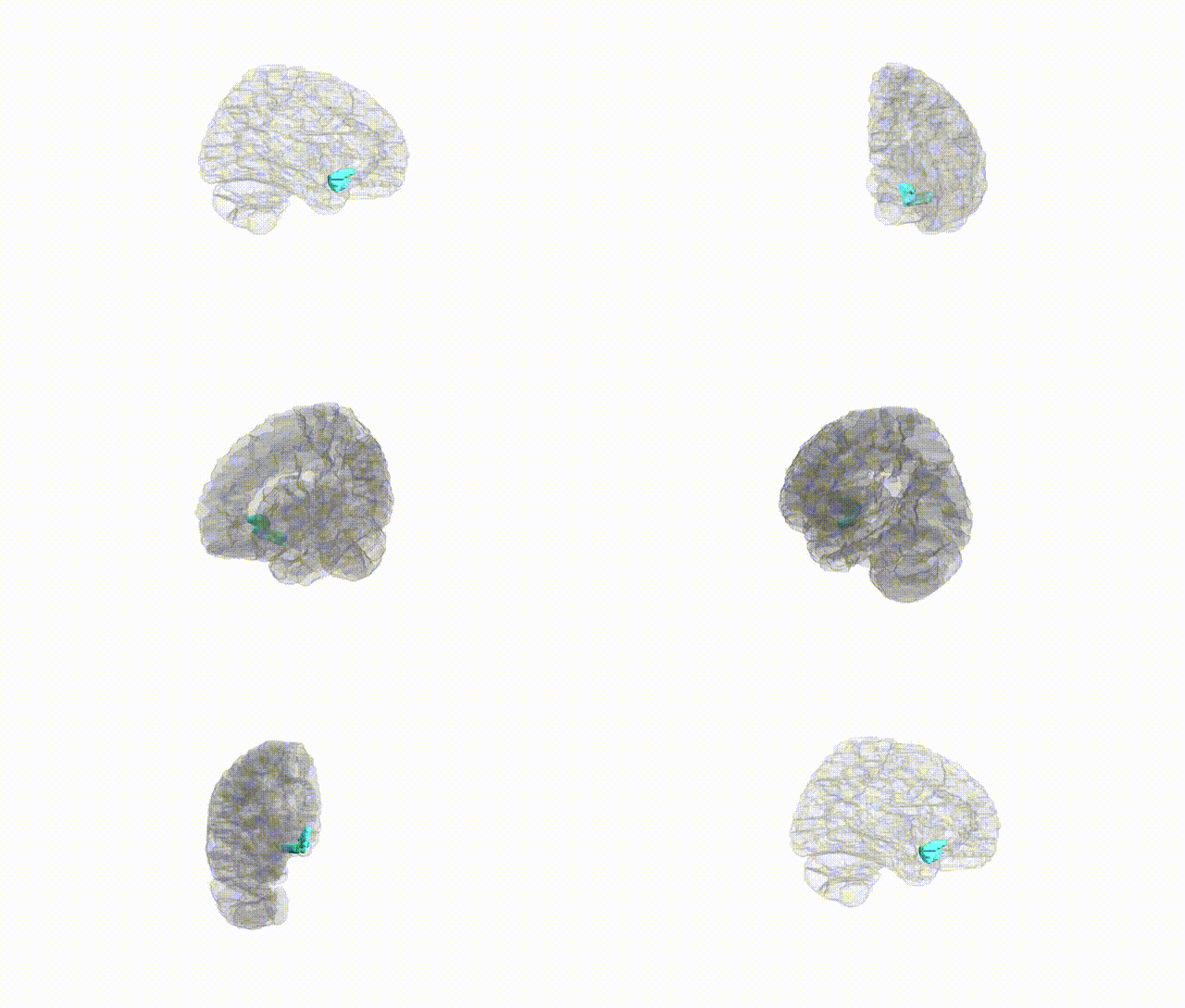
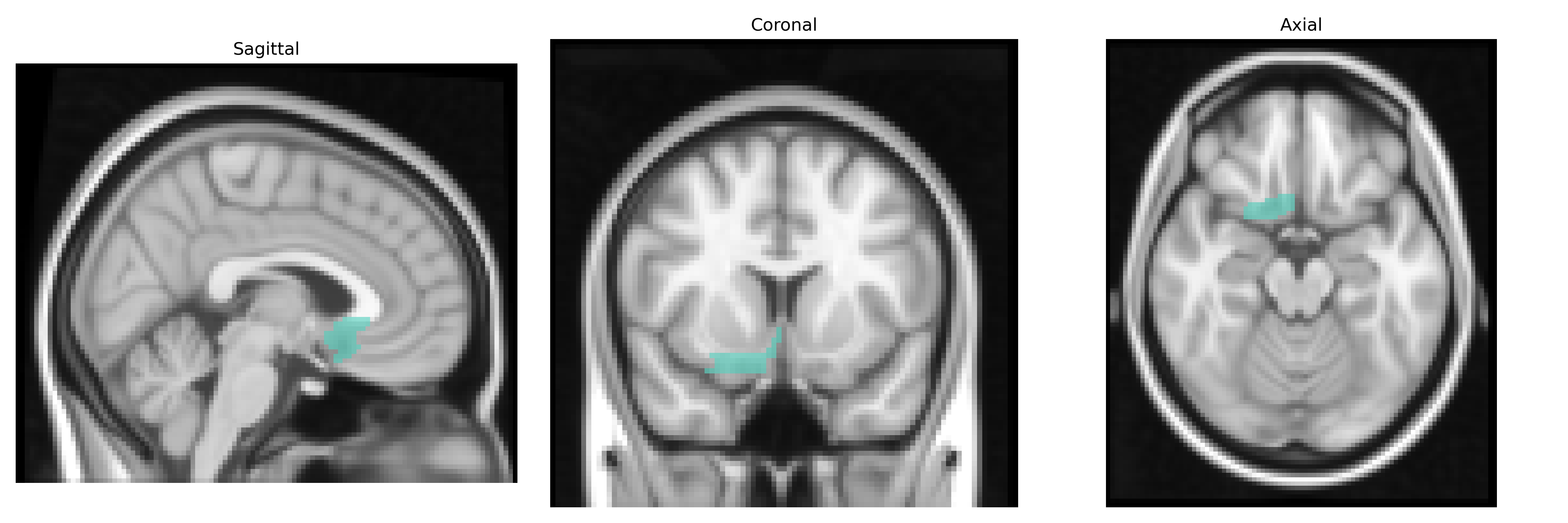
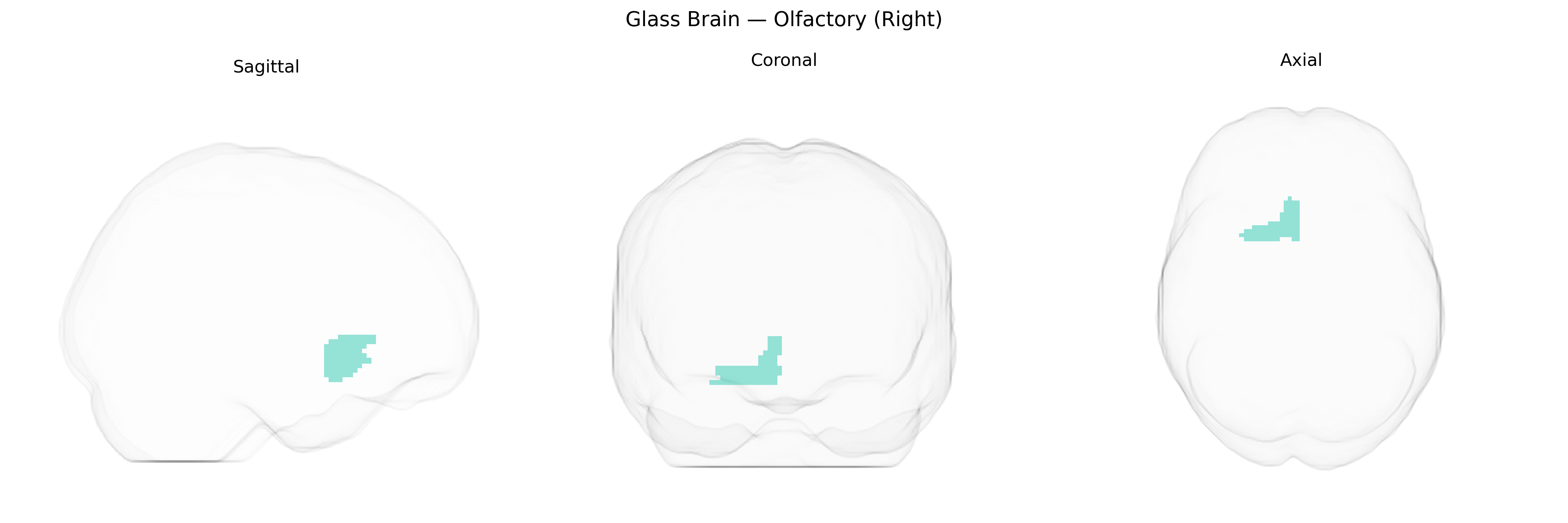
The right olfactory region in the AAL2 atlas corresponds primarily to the right olfactory cortex, encompassing parts of the piriform cortex and adjacent ventral frontal areas that receive direct projections from the olfactory bulb. This area plays a central role in processing odor information, including odor detection, discrimination, and aspects of odor memory and emotional salience, via strong connections with the amygdala, entorhinal cortex, and other limbic structures. Functionally, the right olfactory cortex contributes to the integration of olfactory cues with affective and contextual information, supporting behaviors such as food selection, social communication, and hazard detection. Although there is no single dedicated Wikipedia page for “right olfactory cortex,” a closely related and encompassing structure is the Olfactory system.
The right olfactory cortex, as defined in the AAL2 atlas, has been implicated in a limited but growing set of genetic associations, often identified through imaging genetics and GWAS of brain structure and function rather than region-specific disease studies. Variants in genes involved in olfactory signaling and axon guidance (such as OR gene clusters, ROBO, and SLIT family genes) have been broadly linked to olfactory bulb and tract development, which can influence right olfactory cortical volume and activity, though most studies do not report hemisphere-specific effects. Large-scale GWAS of brain morphology (e.g., ENIGMA and UK Biobank–based studies) have identified polygenic influences on temporal and frontal regions incorporating olfactory areas, with notable contributions from genes related to neurodevelopment (e.g., BDNF, MAPT, and synaptic plasticity genes) that may indirectly affect olfactory cortex structure. Genetic risk for neurodegenerative and psychiatric disorders that feature olfactory deficits—such as Parkinson’s disease (LRRK2, GBA, SNCA), Alzheimer’s disease (APOE, BIN1, CLU), and schizophrenia (COMT, DISC1, glutamatergic pathway genes)—has been associated with altered olfactory function and, in some imaging cohorts, with changes in olfactory-related cortical thickness or activation, though these findings typically aggregate across bilateral olfactory regions. GWAS of olfactory performance and odor identification have revealed polygenic architectures with many small-effect loci, including variants near olfactory receptor gene clusters and neurodevelopmental genes, which have been linked to functional differences in olfactory networks that encompass the right olfactory cortex, but precise, consistent genetic associations specific to the AAL2 right olfactory region remain sparse and largely inferential from broader olfactory and temporal lobe imaging genetics findings.
Overview generated by GPT-4o (2026).
Region ID: 2502
Hemisphere: right
Atlas: AAL2
Full Quality Version: Download MP4
Full Quality Version: Download MP4
Full Quality Version: Download MP4
Full Quality Version: Download MP4
Wali Sidiqyar*, Gaurav Rudravaram*, Elyssa M. McMaster, Trent M. Schwartz, Adam M. Saunders, Kurt G. Schilling, Bennett A. Landman "Introducing SPINS: A Shared Public Visualization Library of Neuroanatomical Structures." Medical Imaging with Deep Learning- short paper
This resource is licensed under CC0 1.0 Universal (Public Domain).