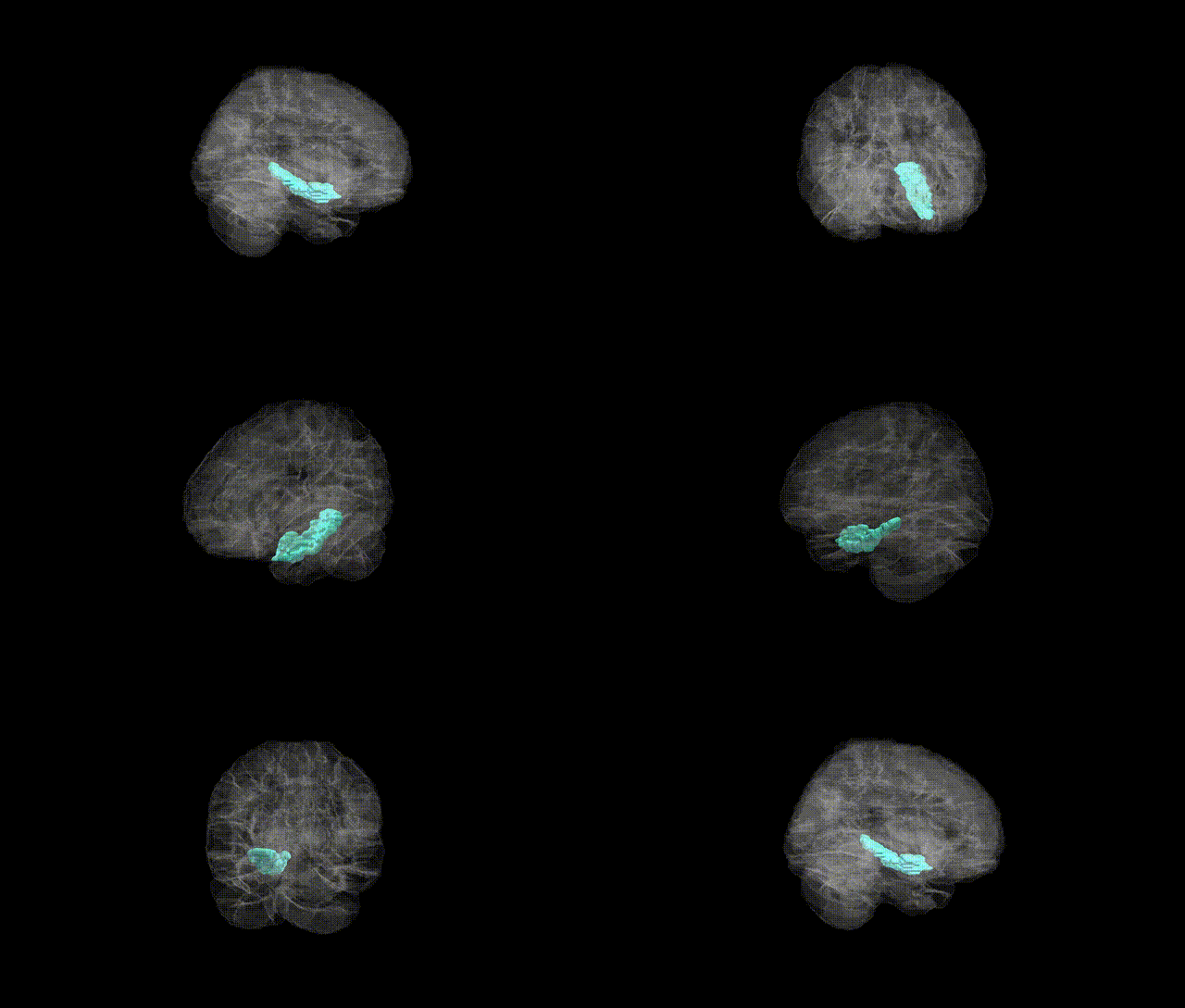
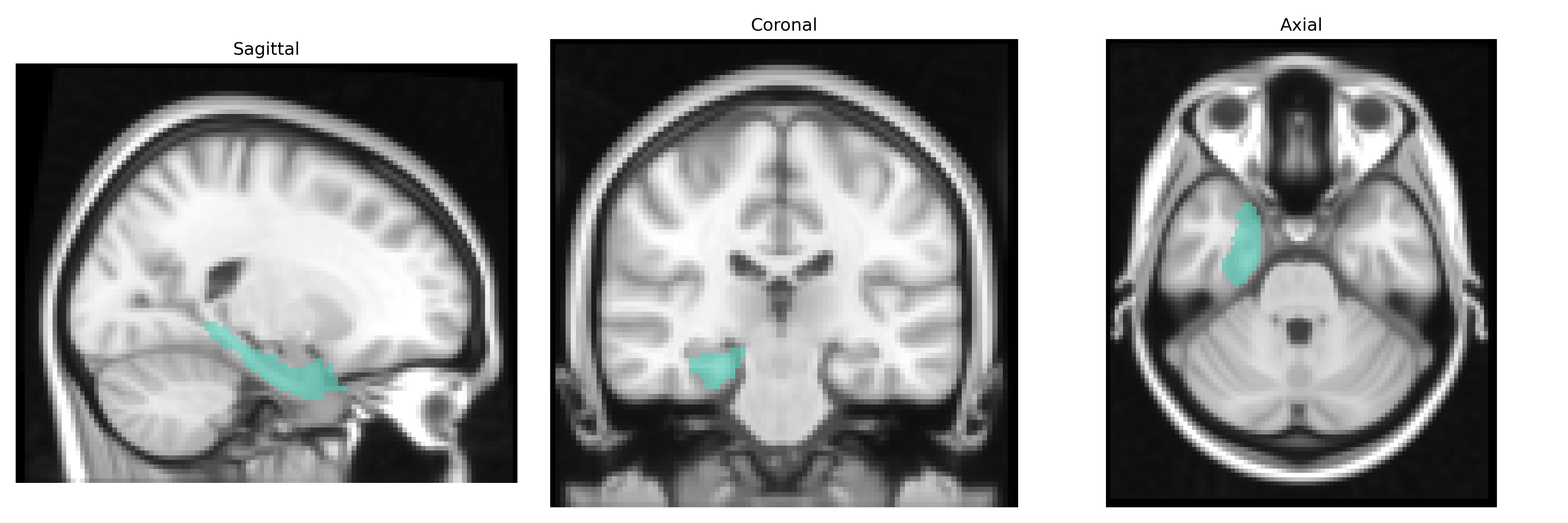
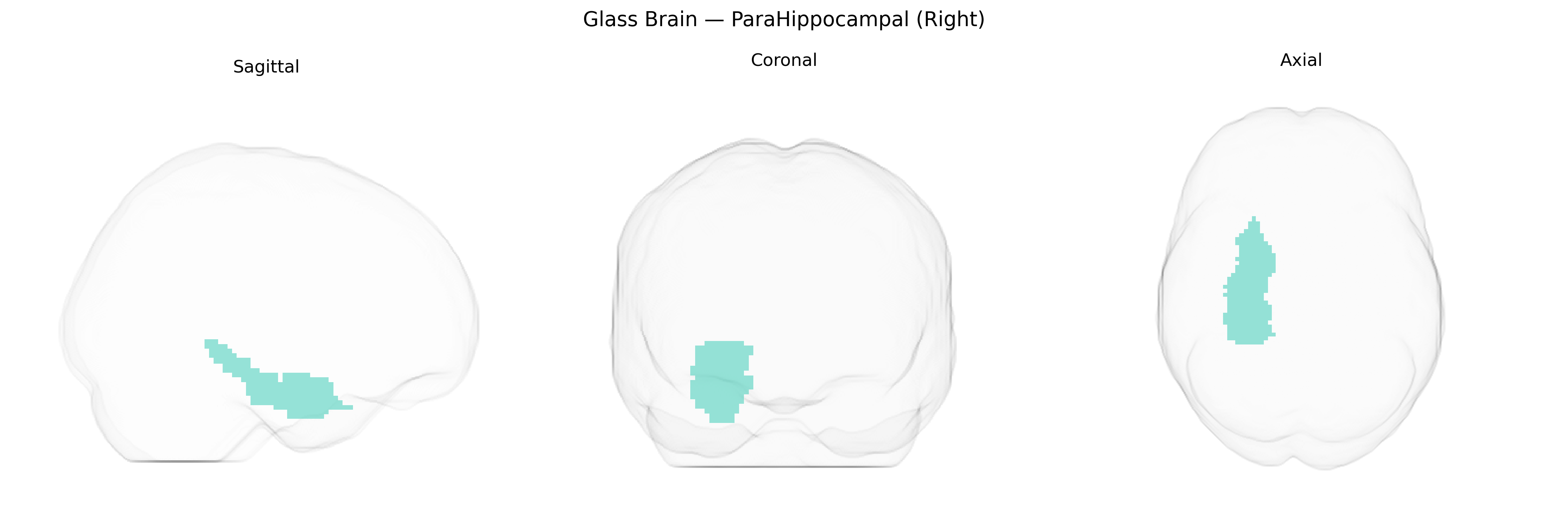
The right parahippocampal gyrus (Right ParaHippocampal) is a medial temporal lobe structure that forms part of the limbic system and lies adjacent to the hippocampus, extending from the entorhinal cortex anteriorly toward the fusiform gyrus posteriorly. It is heavily interconnected with the hippocampal formation, retrosplenial cortex, and association cortices, and plays a central role in episodic memory, contextual association, and scene and spatial processing, contributing to navigation and environmental layout representation. Cytoarchitectonically, it encompasses several cortical fields (including entorhinal and perirhinal components), receives multimodal sensory input, and channels information into hippocampal circuits critical for memory encoding and retrieval. There is no direct Wikipedia article specifically for the “right parahippocampal gyrus” as a separate entry; a related and encompassing structure is the Parahippocampal gyrus.
The right parahippocampal gyrus, as defined in the AAL2 atlas, has been implicated in genetic studies largely through its role in memory, spatial navigation, and emotional processing, with several GWAS and imaging genetics findings linking its structure and function to neuropsychiatric and cognitive traits. Common variants in APOE (especially ε4), CLU, PICALM, and CR1 associated with Alzheimer’s disease show downstream effects on medial temporal lobe structures including the parahippocampal region, influencing cortical thickness and volume and contributing to early neurodegenerative changes. Schizophrenia and major depression GWAS, involving large polygenic risk scores across synaptic and neurodevelopmental genes (such as CACNA1C, GRIN2A, and others), have been associated with altered right parahippocampal volume and connectivity, suggesting a genetically mediated vulnerability in limbic networks. Imaging genetics work using ENIGMA and related consortia has identified heritable variation in parahippocampal morphology linked to genes involved in axonal guidance, glutamatergic transmission, and neuroplasticity, although single-gene effects are generally small. Variants influencing general cognitive ability and episodic memory performance, including loci near KIBRA (WWC1) and BDNF, have been associated with activation and structural measures in parahippocampal and related medial temporal regions, supporting a genetic contribution to individual differences in contextual memory and scene processing.
Overview generated by GPT-4o (2026).
Region ID: 4112
Hemisphere: right
Atlas: AAL2
Full Quality Version: Download MP4
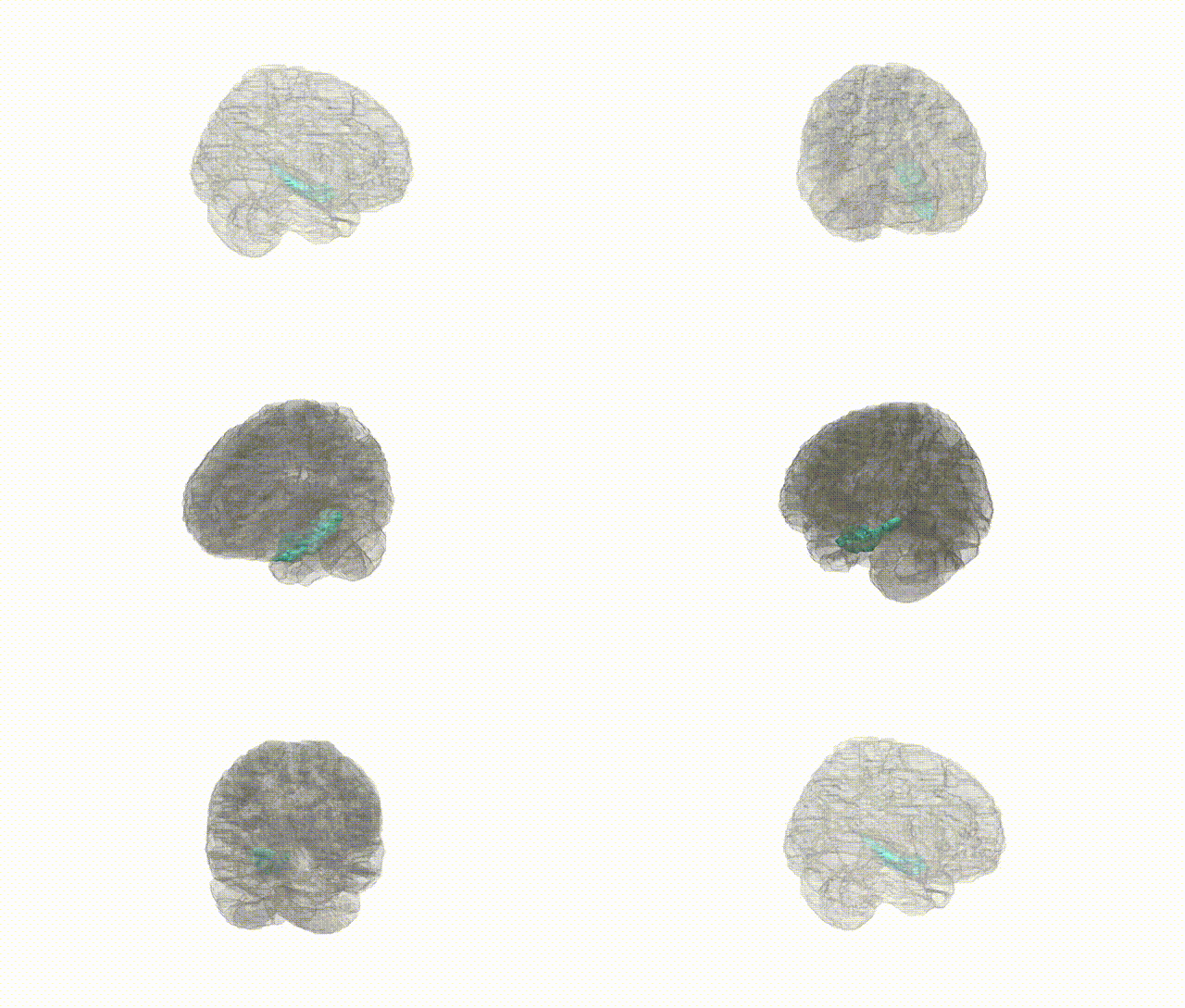
Full Quality Version: Download MP4
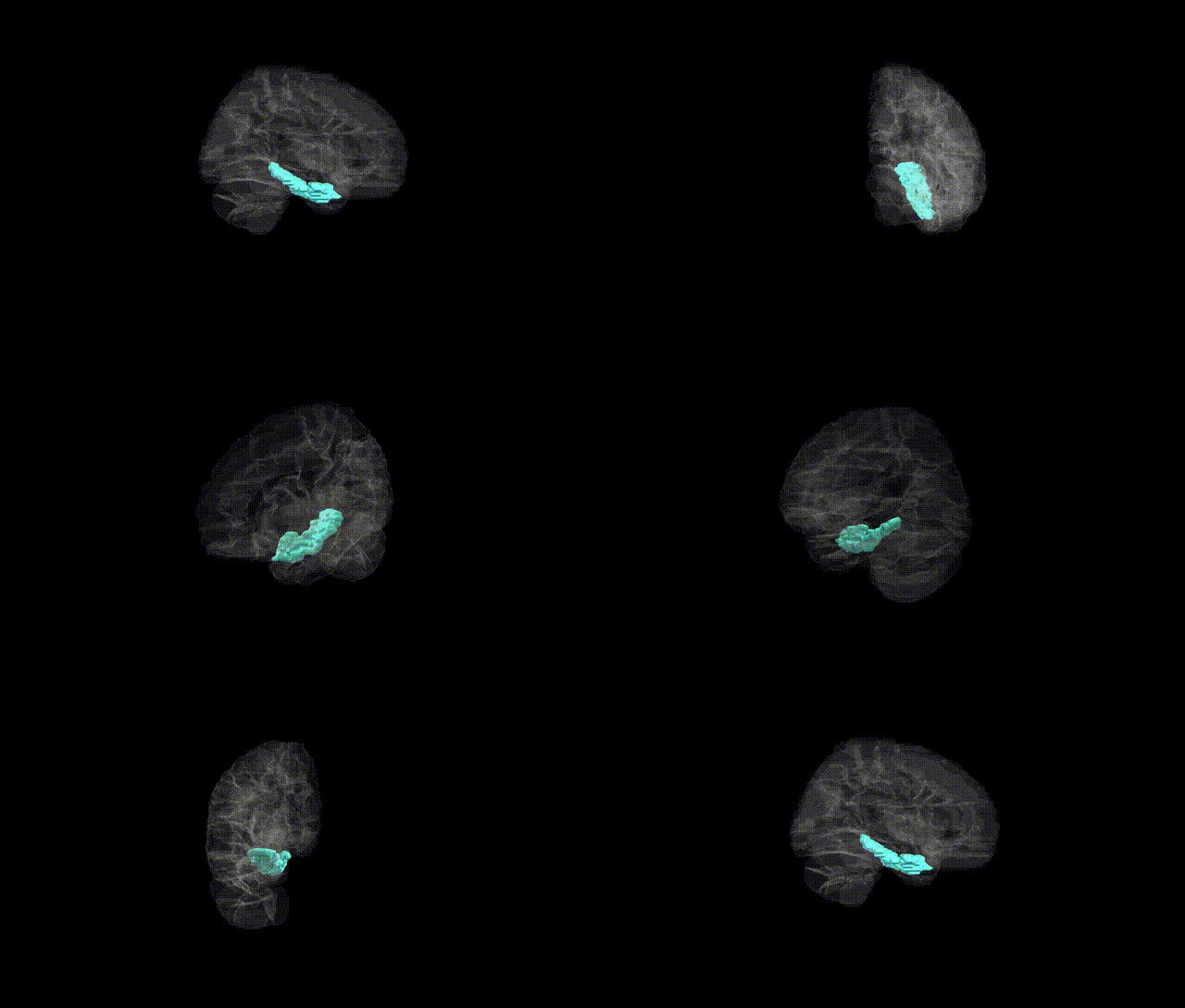
Full Quality Version: Download MP4
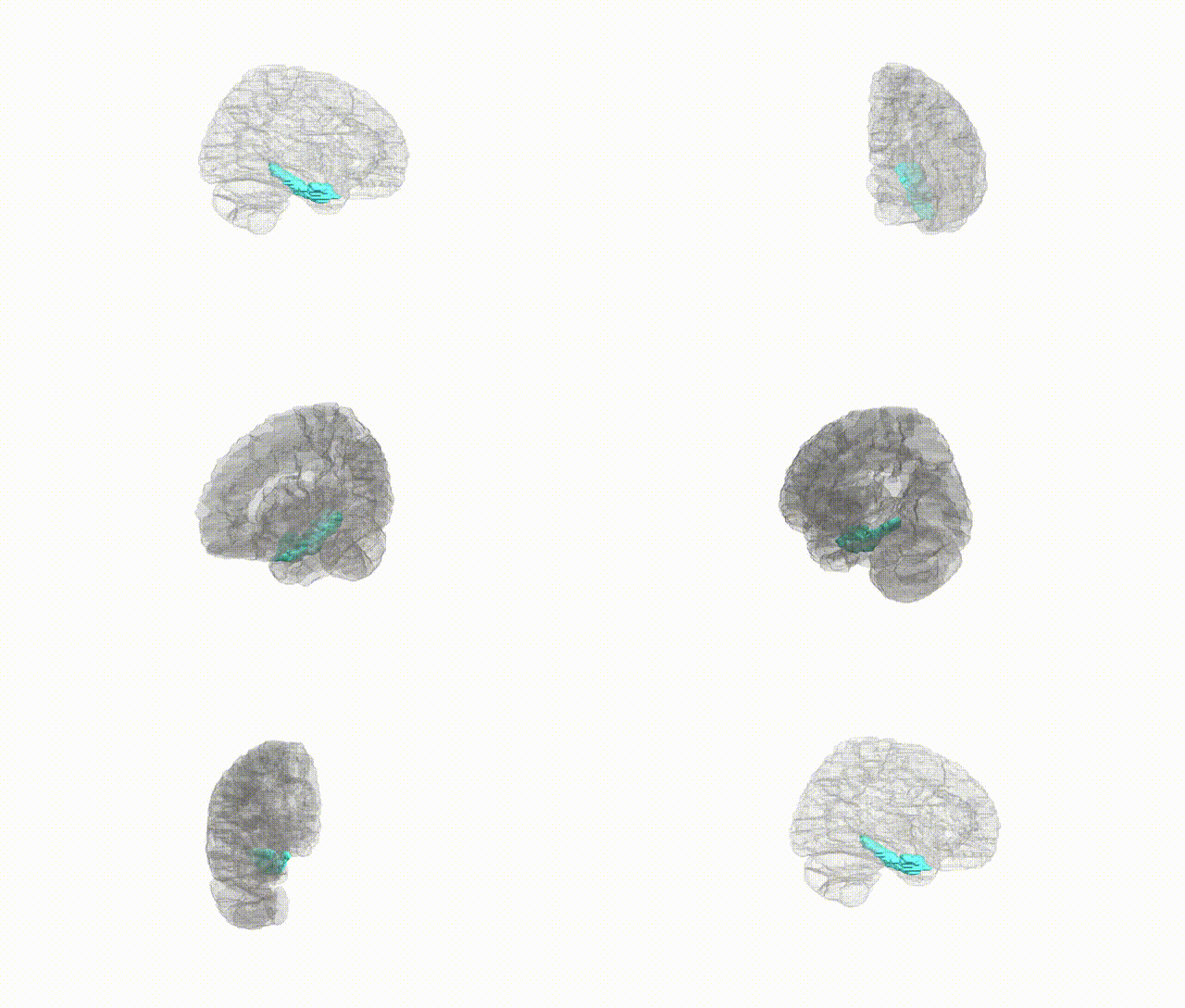
Full Quality Version: Download MP4
Wali Sidiqyar*, Gaurav Rudravaram*, Elyssa M. McMaster, Trent M. Schwartz, Adam M. Saunders, Kurt G. Schilling, Bennett A. Landman "Introducing SPINS: A Shared Public Visualization Library of Neuroanatomical Structures." Medical Imaging with Deep Learning- short paper
This resource is licensed under CC0 1.0 Universal (Public Domain).