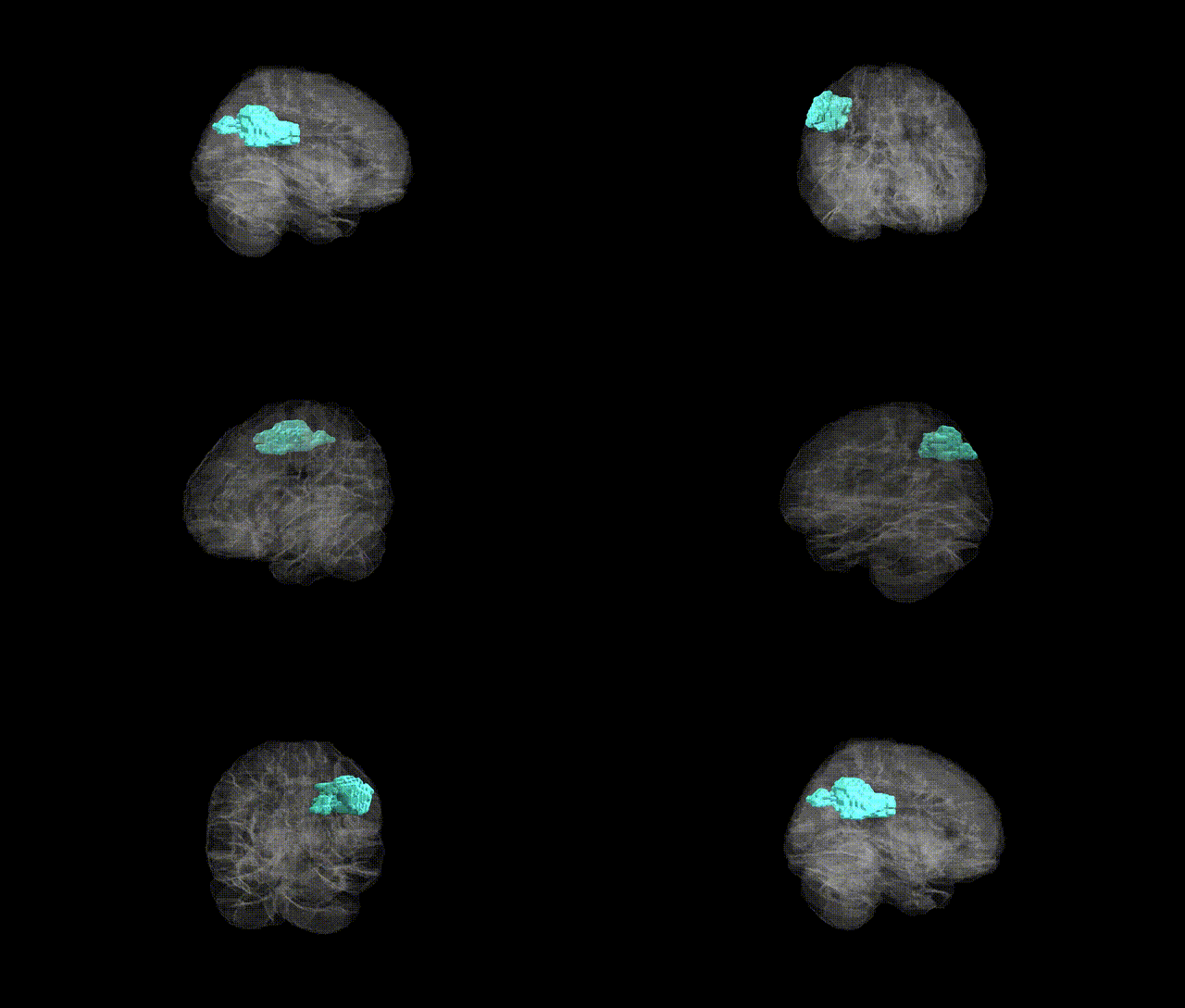
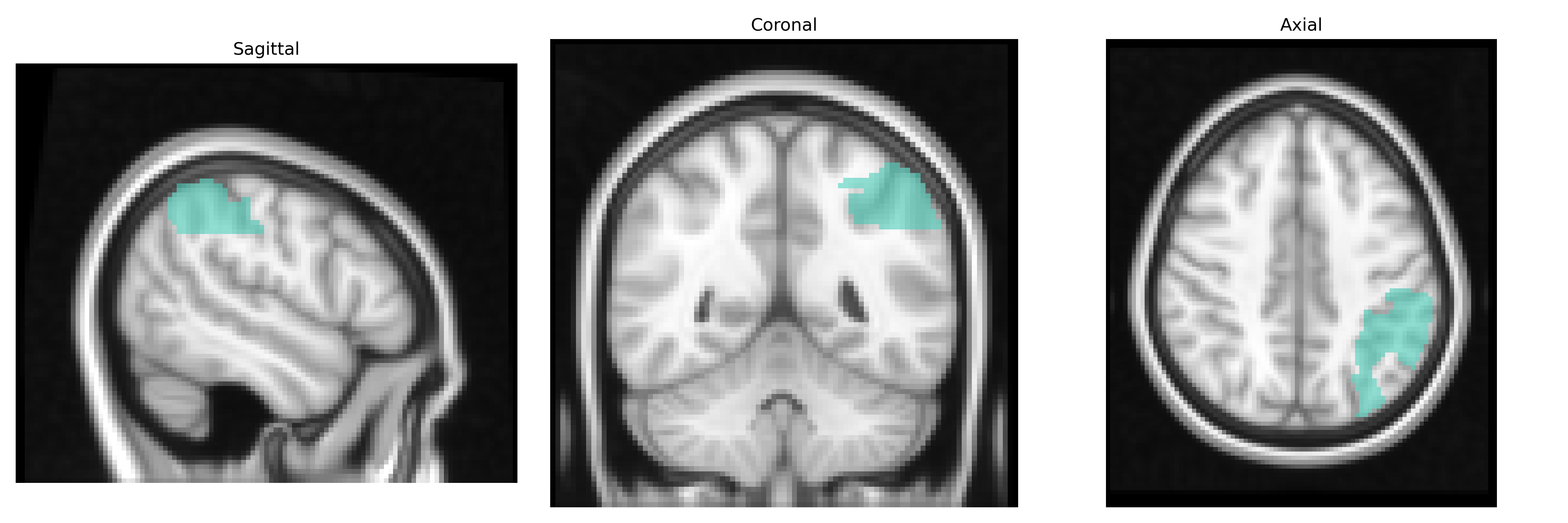
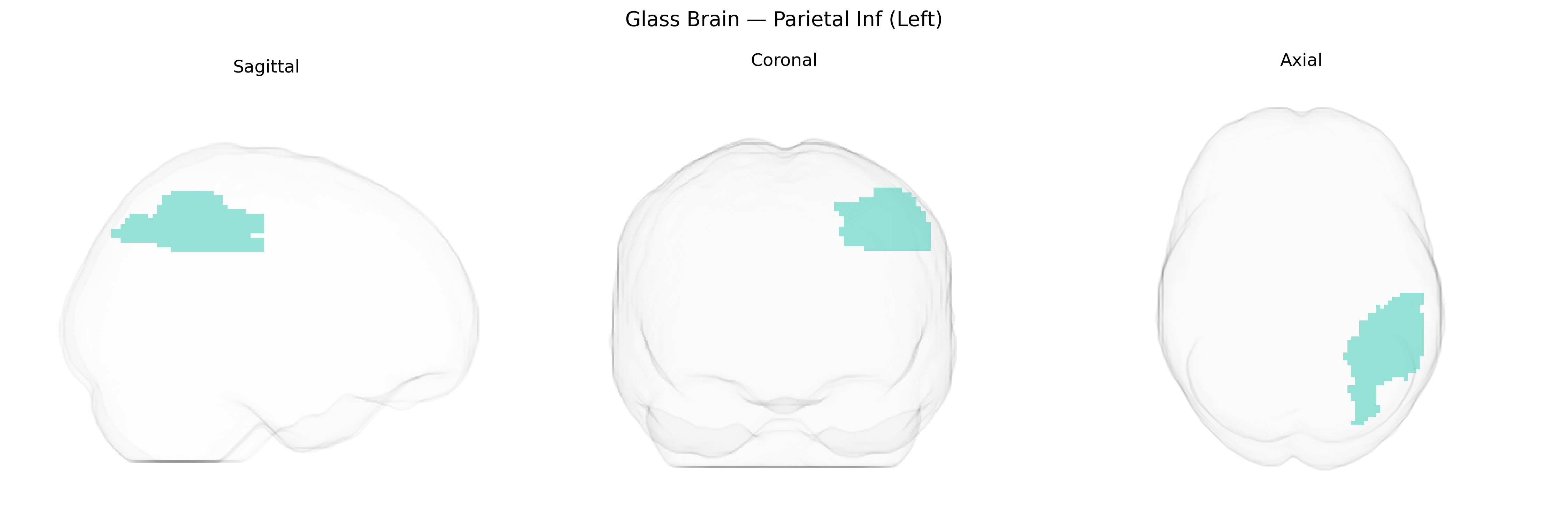
The left Parietal Inferior (Left) region in the AAL2 atlas corresponds to the left inferior parietal lobule, a heteromodal association area located on the lateral surface of the parietal lobe, bounded superiorly by the intraparietal sulcus and inferiorly by the lateral fissure. It predominantly includes the supramarginal and angular gyri, integrating multimodal sensory information (visual, auditory, somatosensory) and playing key roles in language-related processes (especially semantic and phonological aspects in the dominant hemisphere), spatial attention, body schema, numerical cognition, and higher-order reasoning. This region forms part of the dorsal and ventral attention networks and is strongly interconnected with frontal, temporal, and occipital association cortices, supporting complex functions such as praxis, reading, and working memory. There is no direct article for “Parietal Inf” in Wikipedia; a closely related structure is the Inferior parietal lobule.
The left inferior parietal lobule (Parietal Inf L) in the AAL2 atlas corresponds to a multimodal association area implicated in language, numerical cognition, attention, and social processing, and GWAS and imaging–genetics studies have linked its structure and function to several genetic pathways and traits. Large-scale brain MRI GWAS (e.g., ENIGMA, UK Biobank) show that cortical thickness and surface area in inferior parietal regions are moderately heritable and associated with variants near genes involved in neurodevelopment, synaptic plasticity, and axon guidance (such as DCC and MECP2-related networks), although findings are typically reported at the lobar or parcel level rather than the specific AAL2 label. Polygenic risk for schizophrenia, major depressive disorder, bipolar disorder, and autism spectrum disorder has been associated with altered parietal morphology and connectivity, including inferior parietal regions, with some studies identifying parietal-mediated genetic effects on default-mode and language networks. GWAS of cognitive traits such as general intelligence, working memory, and educational attainment have linked risk alleles to volumetric and functional variation in parietal association cortex, suggesting that part of the genetic architecture of cognitive ability is expressed through inferior parietal structure. Additionally, variants in genes related to Alzheimer’s disease risk (e.g., APOE) and tau pathology have been associated with cortical thinning and hypometabolism in parietal regions, including inferior parietal areas, in neurodegeneration cohorts. However, most genetic associations remain relatively coarse in spatial resolution, typically describing “inferior parietal,” “parietal association,” or network-level phenotypes rather than the precise left Parietal Inf (AAL2) region, so current evidence supports a role for this region as a genetically influenced hub in neurodevelopmental, psychiatric, cognitive, and neurodegenerative processes rather than a uniquely and specifically mapped genetic locus.
Overview generated by GPT-4o (2026).
Region ID: 6201
Hemisphere: left
Atlas: AAL2
Full Quality Version: Download MP4
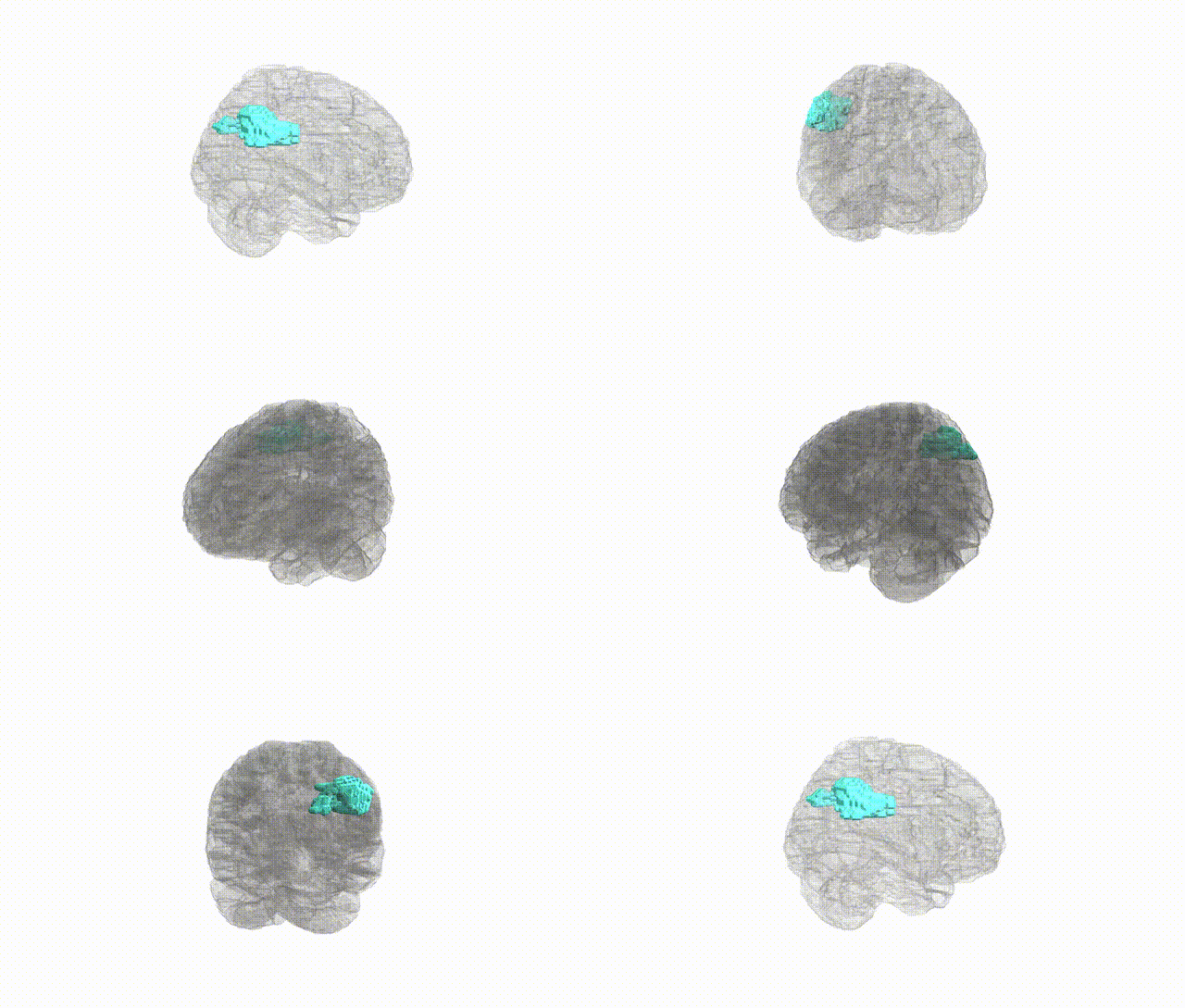
Full Quality Version: Download MP4
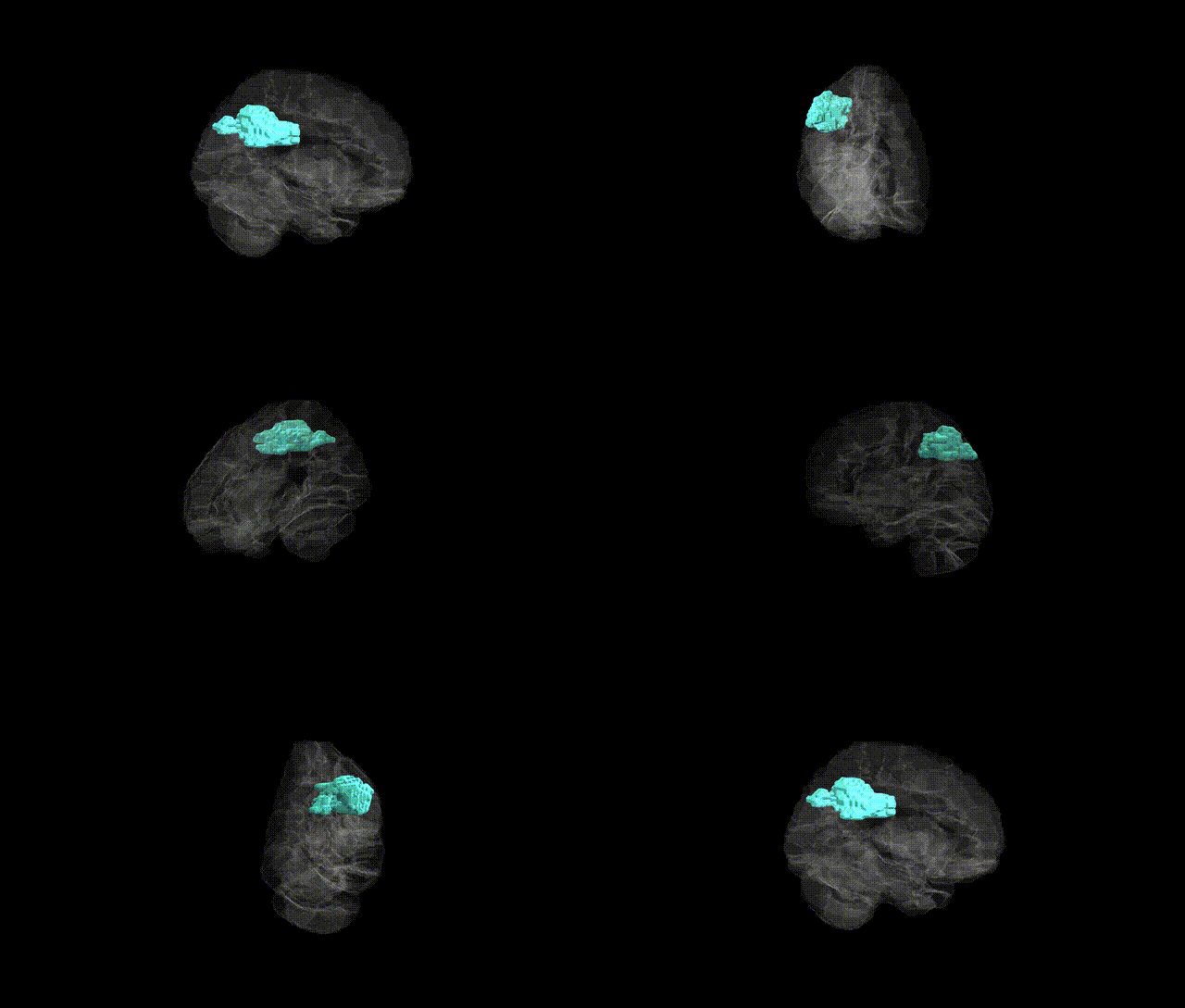
Full Quality Version: Download MP4
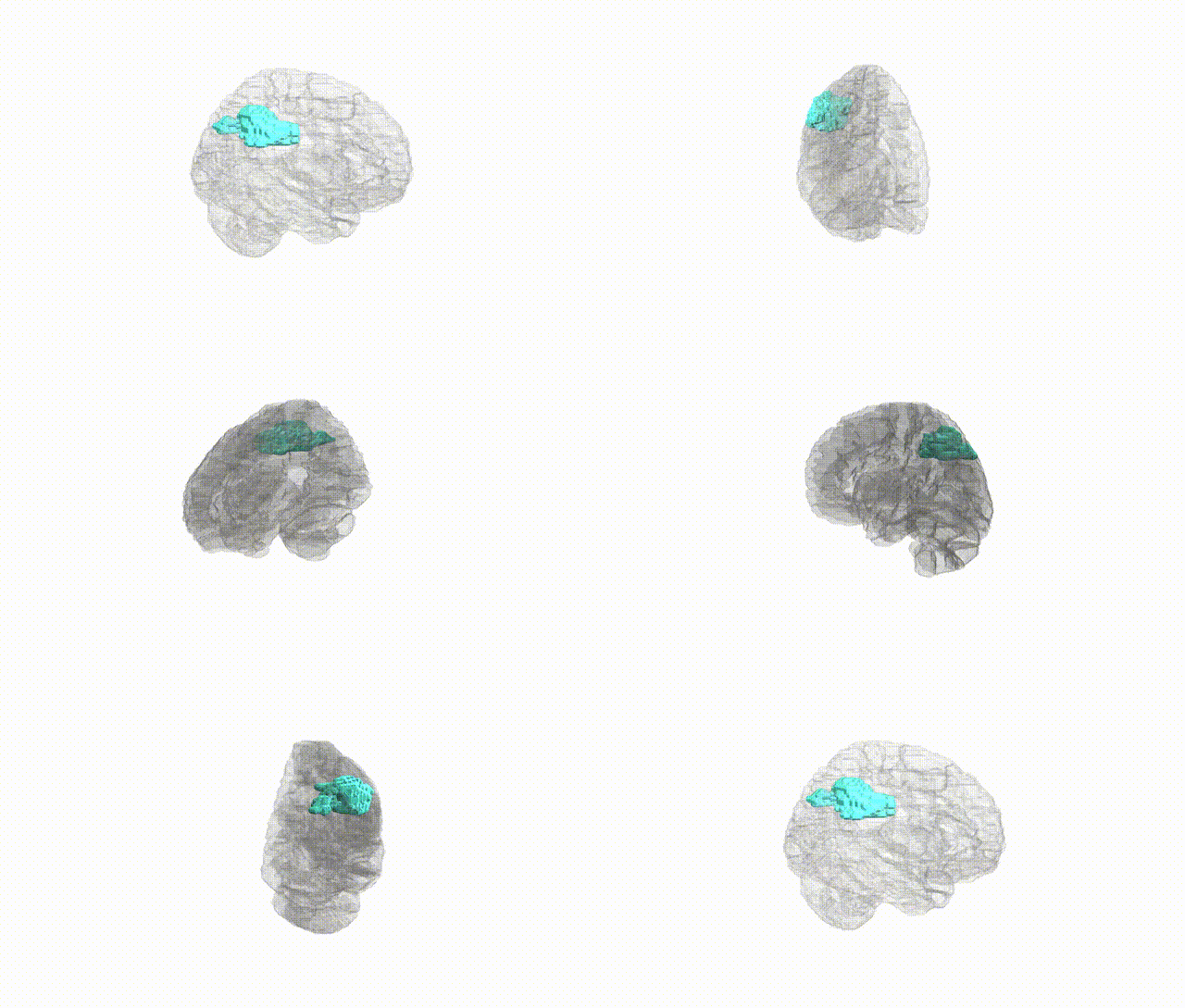
Full Quality Version: Download MP4
Wali Sidiqyar*, Gaurav Rudravaram*, Elyssa M. McMaster, Trent M. Schwartz, Adam M. Saunders, Kurt G. Schilling, Bennett A. Landman "Introducing SPINS: A Shared Public Visualization Library of Neuroanatomical Structures." Medical Imaging with Deep Learning- short paper
This resource is licensed under CC0 1.0 Universal (Public Domain).