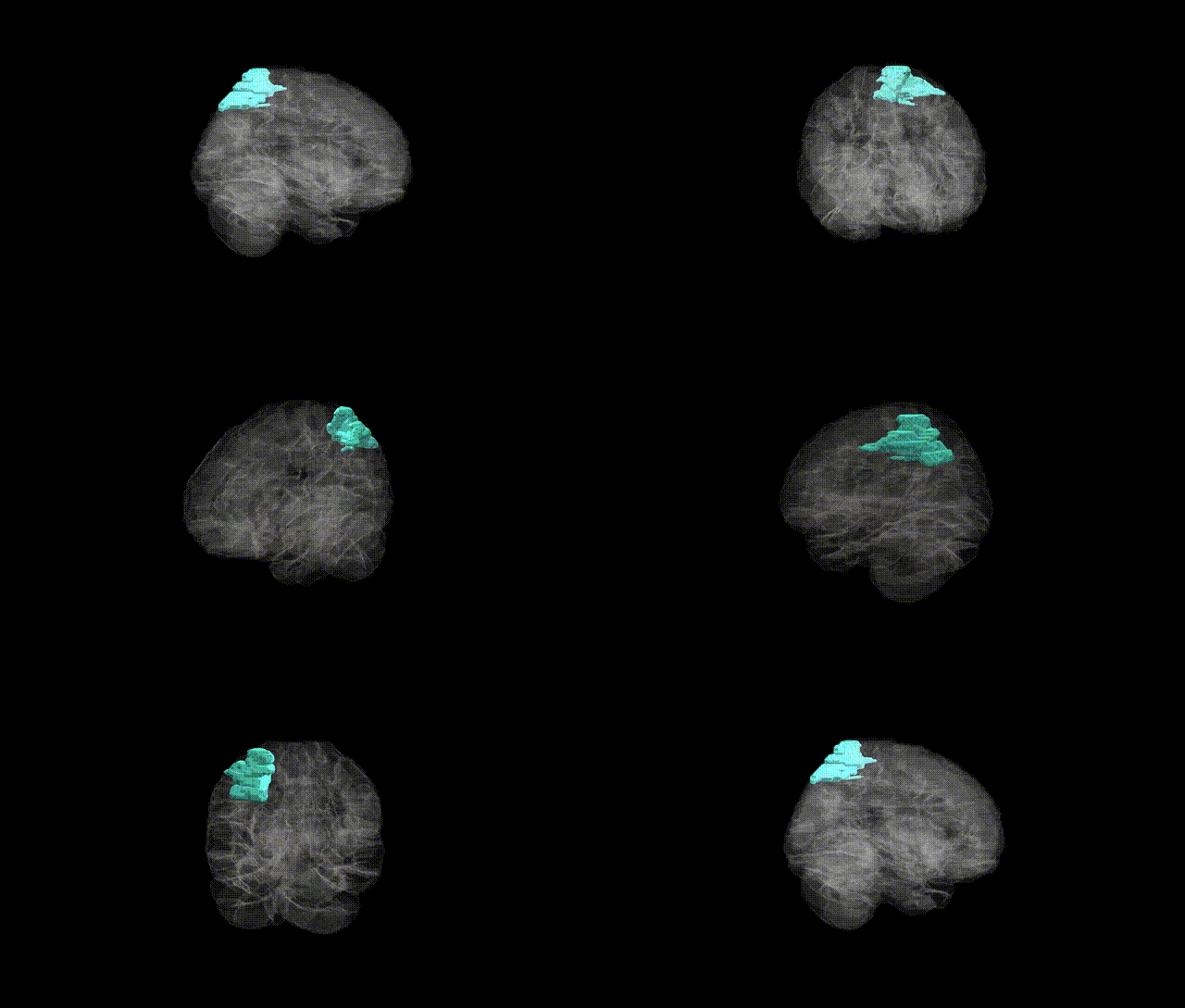
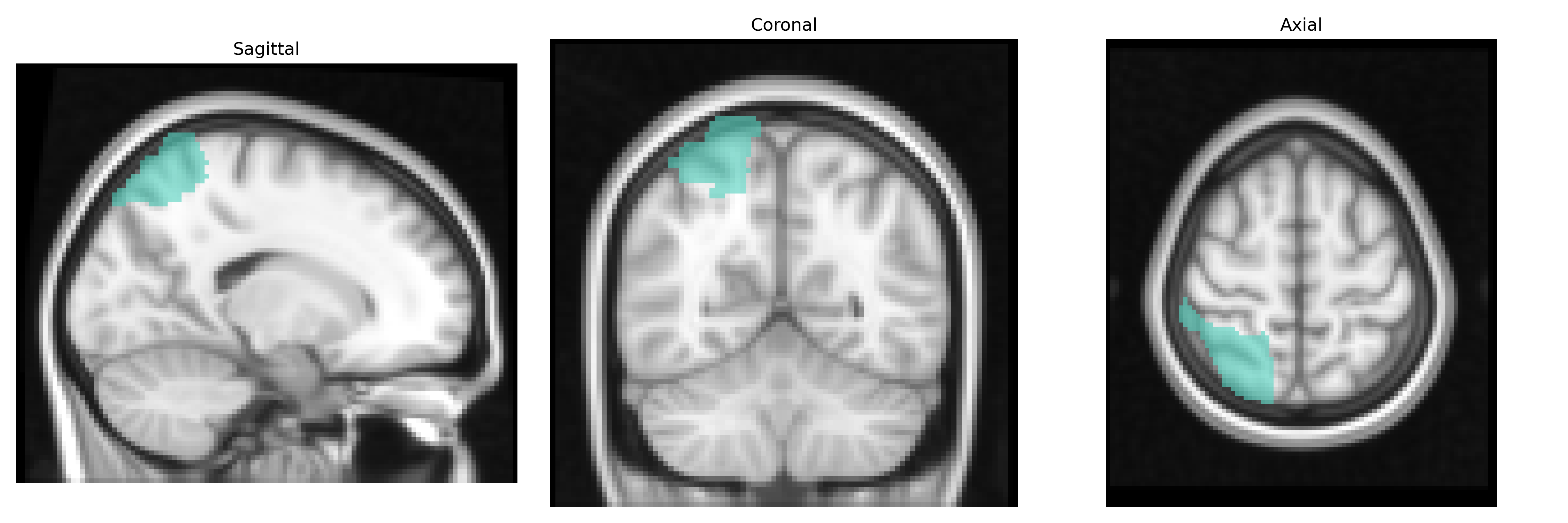
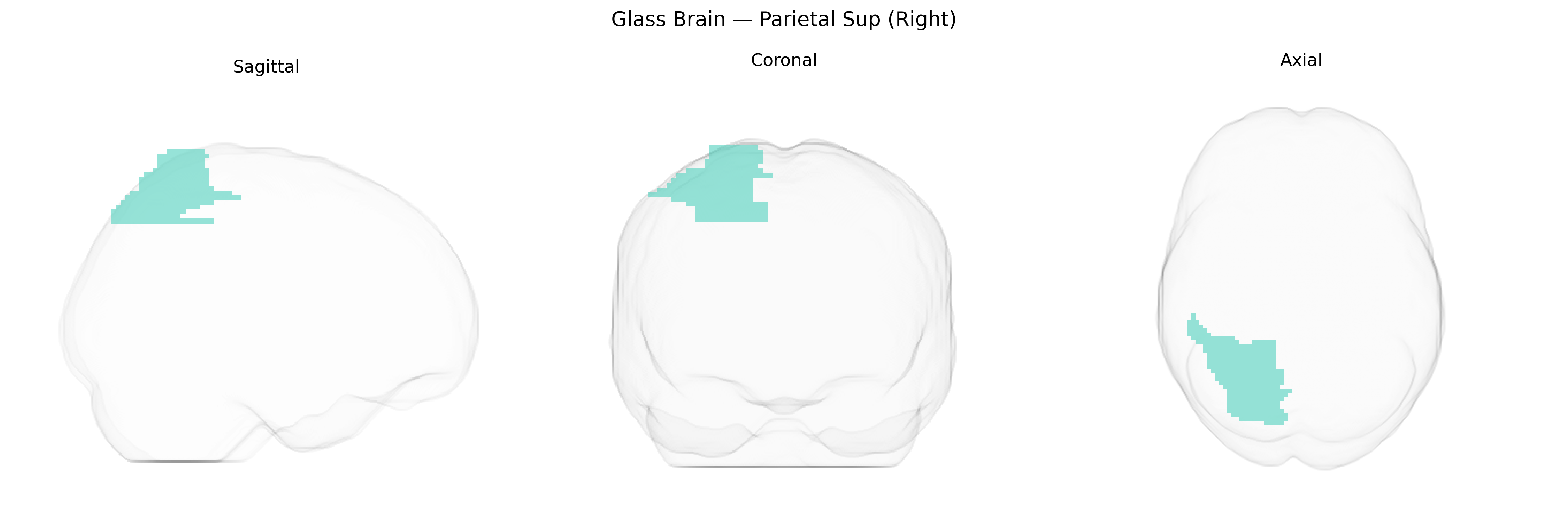
The right superior parietal lobule (Parietal Sup Right) is a dorsal parietal cortex region involved in higher-order somatosensory integration, spatial orientation, and the coordination of attention and visuomotor transformations. It receives convergent input from primary and secondary somatosensory areas, visual association cortices, and premotor regions, supporting functions such as proprioception, mental rotation, and the guidance of reaching and grasping movements in egocentric and allocentric space. Neuronal populations within this region contribute to the construction of internal body and space representations, and lesions can lead to deficits such as hemispatial neglect, impairments in visuomotor coordination, and disorders of body schema. In the AAL2 atlas, this region is defined anatomically within the superior portion of the parietal lobe, bordering the intraparietal sulcus and extending toward the precuneus. Superior parietal lobule
The right superior parietal lobule (Parietal Sup Right in the AAL2 atlas) has been implicated in several imaging genetics and GWAS findings, although most associations derive from broader parietal or cortical measures rather than this parcel alone. Large neuroimaging GWAS consortia (e.g., ENIGMA, UK Biobank) have identified common variants in genes related to synaptic function and neurodevelopment (such as HMGA2, PAX6, KCNK2, and RSPO3) that influence parietal cortical thickness, surface area, or volume, with some loci showing lateralized or region-specific effects including superior parietal lobule. Structural and functional characteristics of this region have been linked to genetic risk for neurodevelopmental and psychiatric conditions: polygenic risk for schizophrenia and autism spectrum disorder has been associated with altered parietal connectivity and morphology, and ADHD-related variants (e.g., in DRD4 and DAT1) have been related to attentional networks involving the superior parietal cortex. GWAS of cognitive traits, particularly general intelligence, working memory, and visuospatial ability, have also highlighted parietal regions, with variants in genes such as MAPT and MEF2C contributing to individual differences in parietal structure that correlate with cognitive performance. In addition, genetic liability for Alzheimer’s disease (including APOE ε4) has been tied to early functional and structural changes in parietal association cortex, and parietal lobule measures are heritable endophenotypes in twin and family studies. Overall, the right superior parietal lobule emerges in genetic studies as a heritable, polygenically influenced association area involved in visuospatial, attentional, and higher cognitive networks, with alterations linked to multiple neuropsychiatric and neurodegenerative disorders.
Overview generated by GPT-4o (2026).
Region ID: 6102
Hemisphere: right
Atlas: AAL2
Full Quality Version: Download MP4
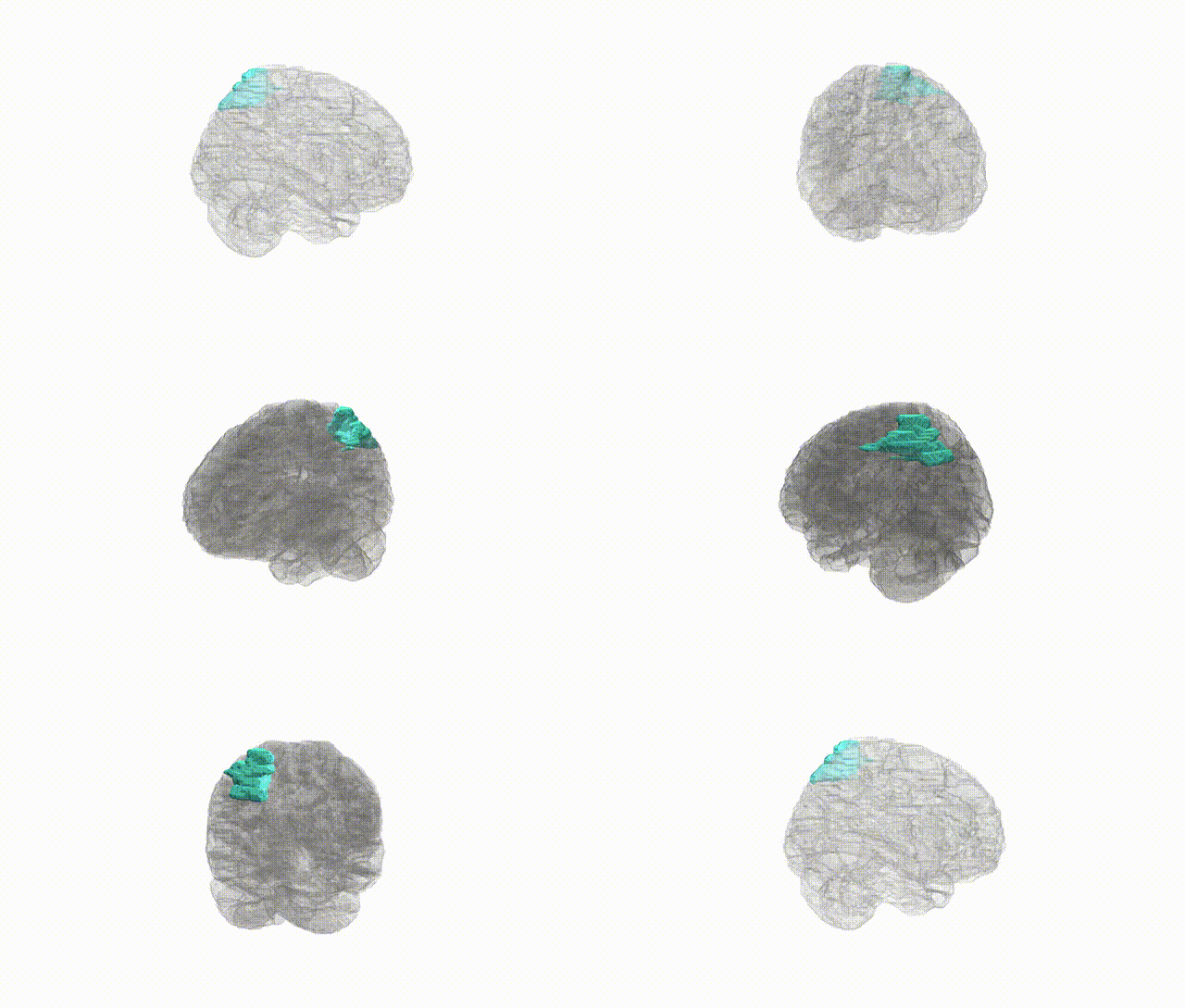
Full Quality Version: Download MP4
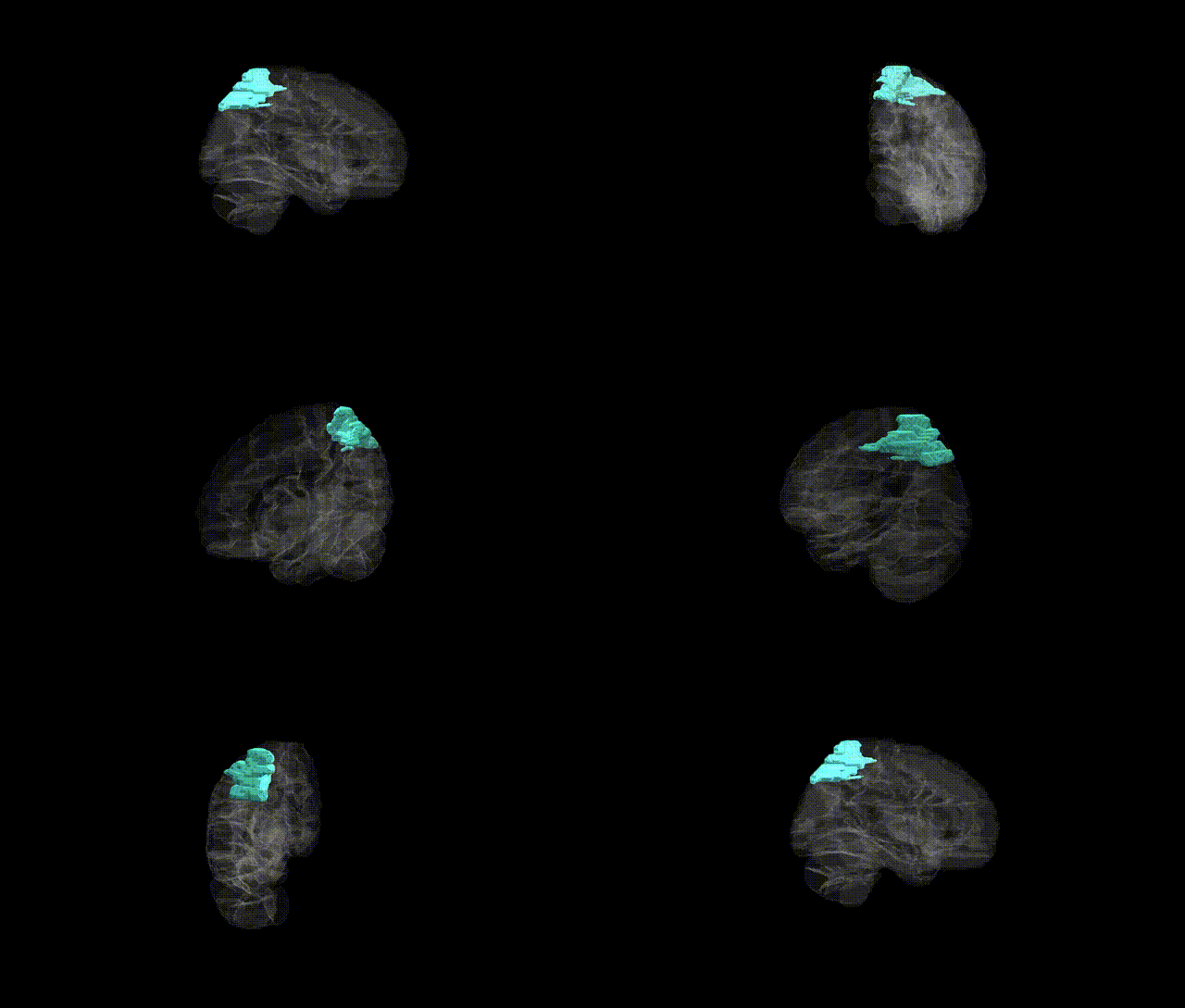
Full Quality Version: Download MP4
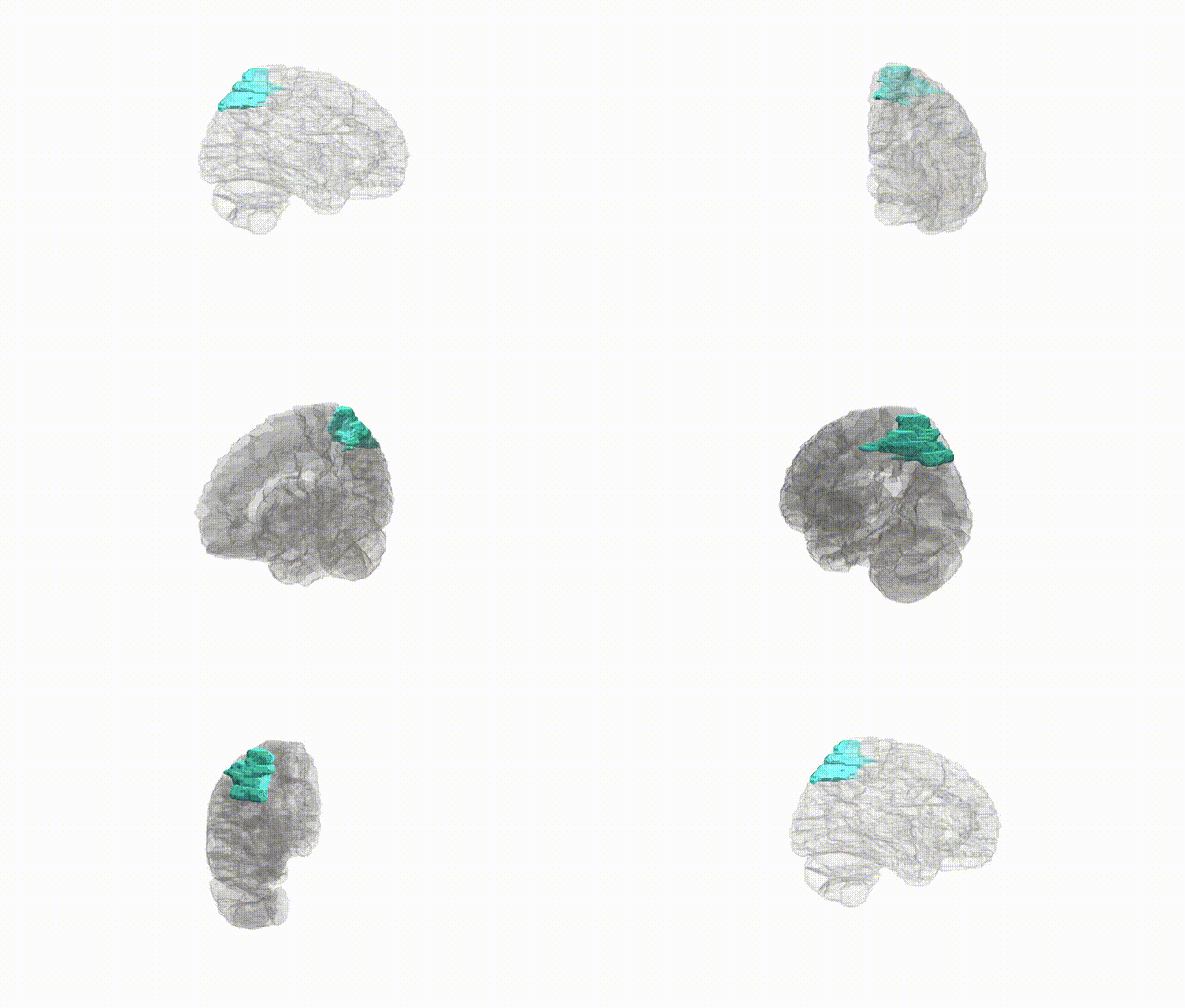
Full Quality Version: Download MP4
Wali Sidiqyar*, Gaurav Rudravaram*, Elyssa M. McMaster, Trent M. Schwartz, Adam M. Saunders, Kurt G. Schilling, Bennett A. Landman "Introducing SPINS: A Shared Public Visualization Library of Neuroanatomical Structures." Medical Imaging with Deep Learning- short paper
This resource is licensed under CC0 1.0 Universal (Public Domain).