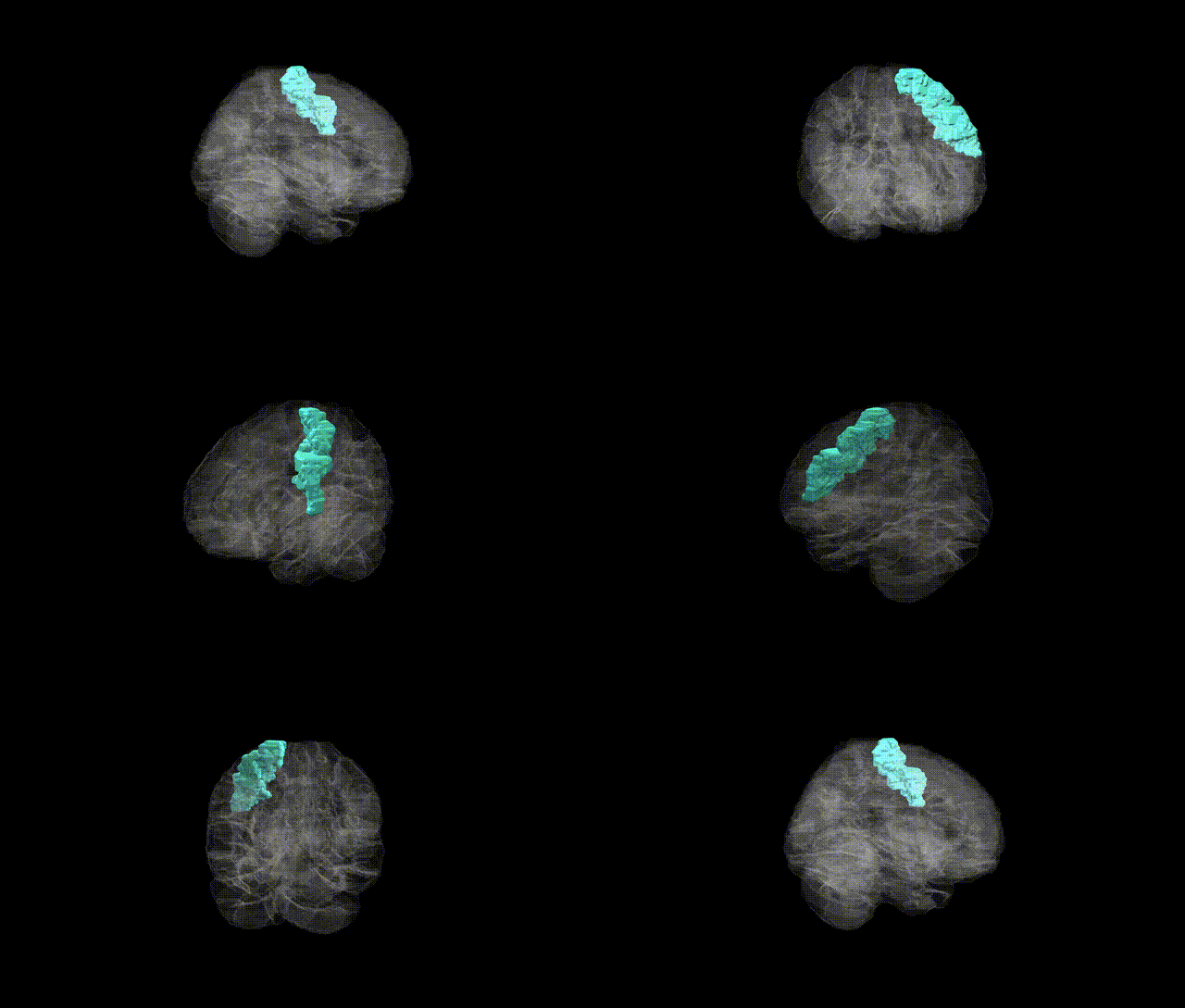
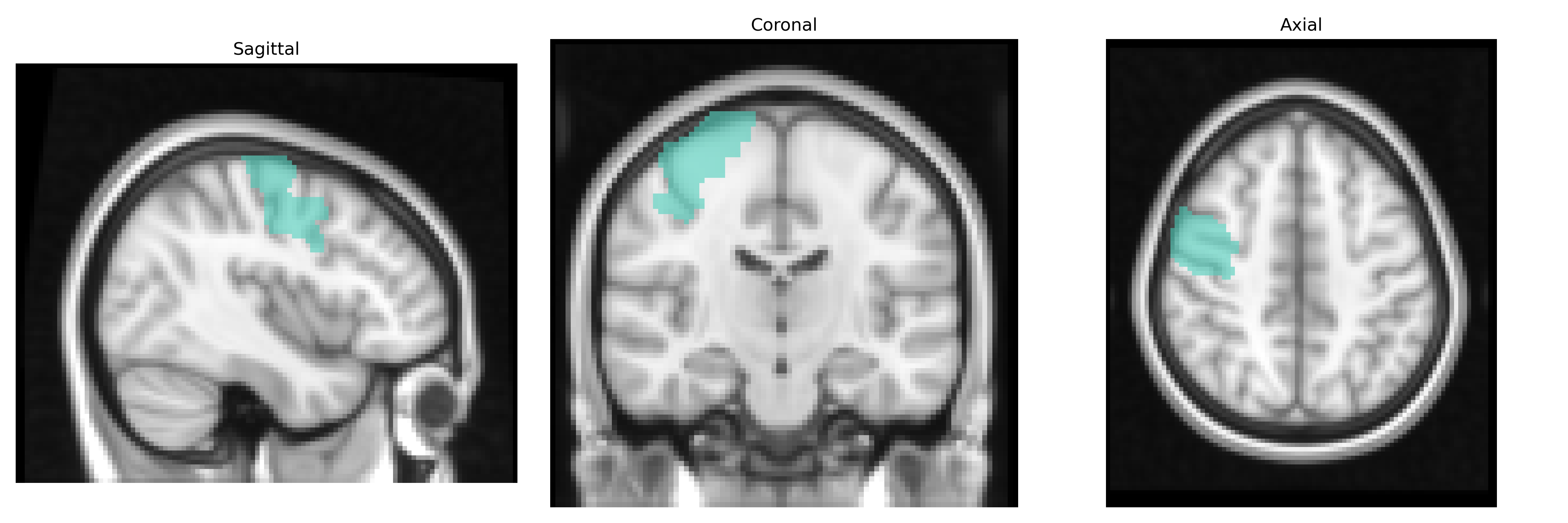
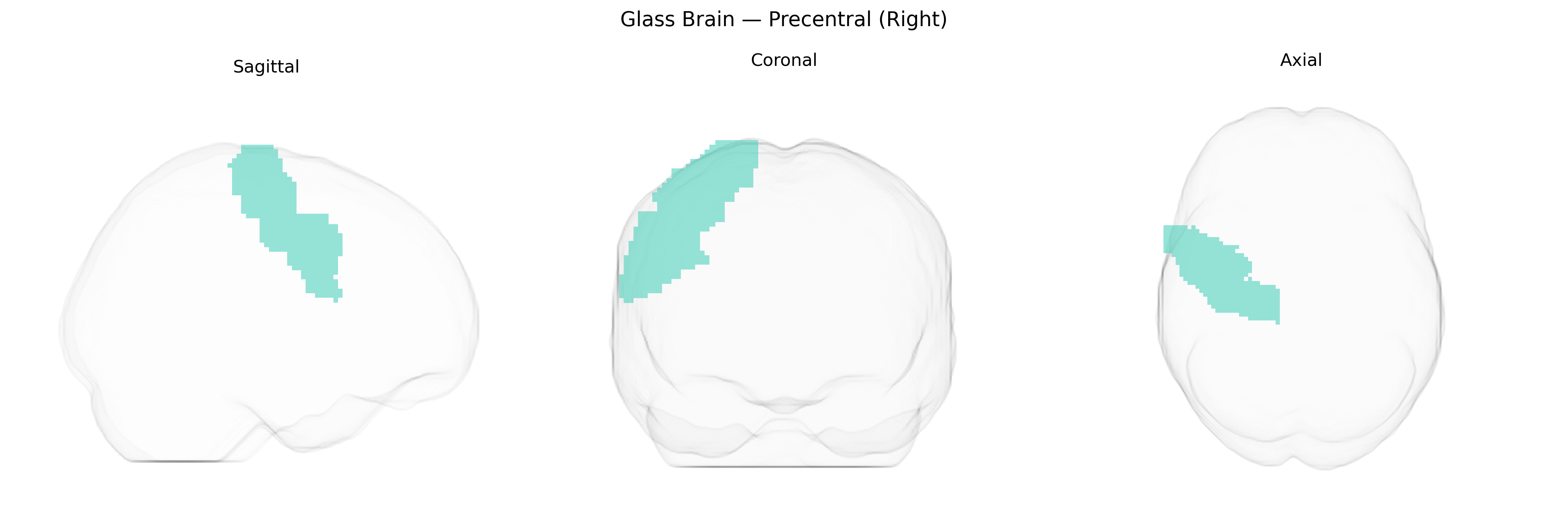
The right precentral gyrus (Right Precentral) in the AAL2 atlas corresponds primarily to the primary motor cortex (Brodmann area 4) on the lateral surface of the frontal lobe, immediately anterior to the central sulcus. It is organized somatotopically, forming part of the motor homunculus that controls voluntary movements of the contralateral (left) side of the body, including fine motor control of the face, hand, and upper limb, with more medial portions contributing to lower limb representation. Neurons in this region integrate inputs from premotor and supplementary motor areas, as well as somatosensory cortices, to generate precise motor commands that are transmitted via corticospinal and corticobulbar tracts to spinal and brainstem motor neurons. Lesions of the right precentral gyrus can result in contralateral weakness or paralysis, altered muscle tone, and deficits in fine motor coordination, often with relative preservation of sensory function. Precentral gyrus
The right precentral gyrus (primary motor cortex) in the AAL2 atlas has been implicated in several genetic and GWAS-based associations, largely through imaging-genetics studies that link common variants to cortical thickness, surface area, and functional activation. Multivariate GWAS of brain structure (e.g., ENIGMA, UK Biobank) have identified loci in and near genes such as MAPT, KCNK2, TBR1, and several neurodevelopmental regulators whose variants modestly influence precentral morphology and motor-related networks, though effects are typically distributed and polygenic rather than region-specific. Functional imaging genetics has associated dopaminergic (COMT), glutamatergic (GRIN2A), and neuroplasticity-related (BDNF Val66Met) variants with altered motor cortex activation and plasticity, particularly in motor learning and transcranial magnetic stimulation paradigms. Clinically, GWAS and candidate gene studies in motor-related disorders such as amyotrophic lateral sclerosis, dystonia, and some forms of cerebral palsy have linked risk variants in genes like C9orf72, SOD1, ATXN2, and KIF1B to structural or functional changes involving the precentral gyri, including the right hemisphere, although these findings usually reflect broader motor-system involvement rather than isolated right precentral effects. Large psychiatric GWAS for schizophrenia, bipolar disorder, ADHD, and autism spectrum disorder, combined with imaging-genetics, have also suggested polygenic influences on right precentral morphology and connectivity, but specific gene–region associations remain modest and non-exclusive, underscoring that genetic effects on this motor area are highly polygenic, small in effect size, and embedded in widespread cortical and network-level architecture.
Overview generated by GPT-4o (2026).
Region ID: 2002
Hemisphere: right
Atlas: AAL2
Full Quality Version: Download MP4
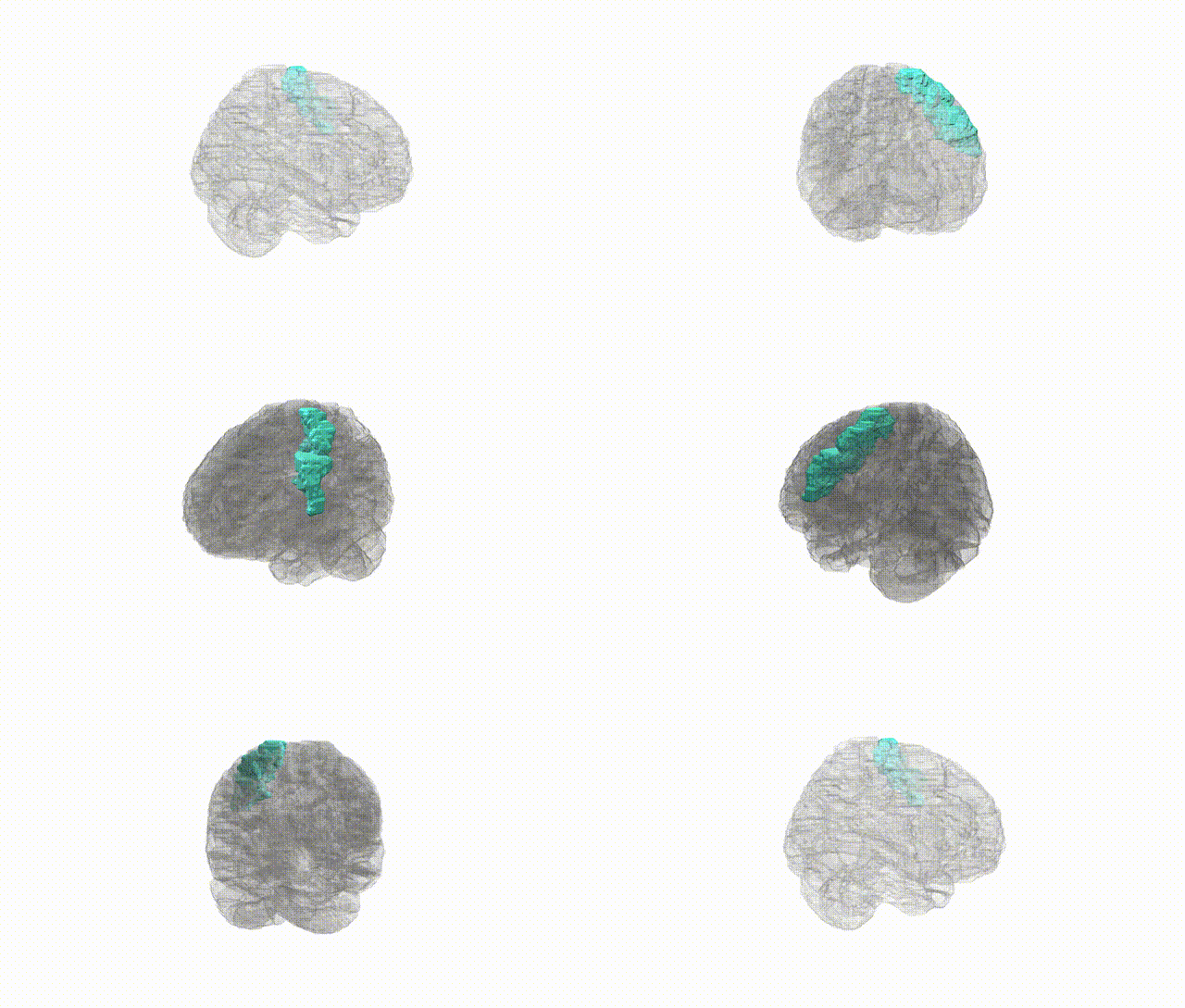
Full Quality Version: Download MP4
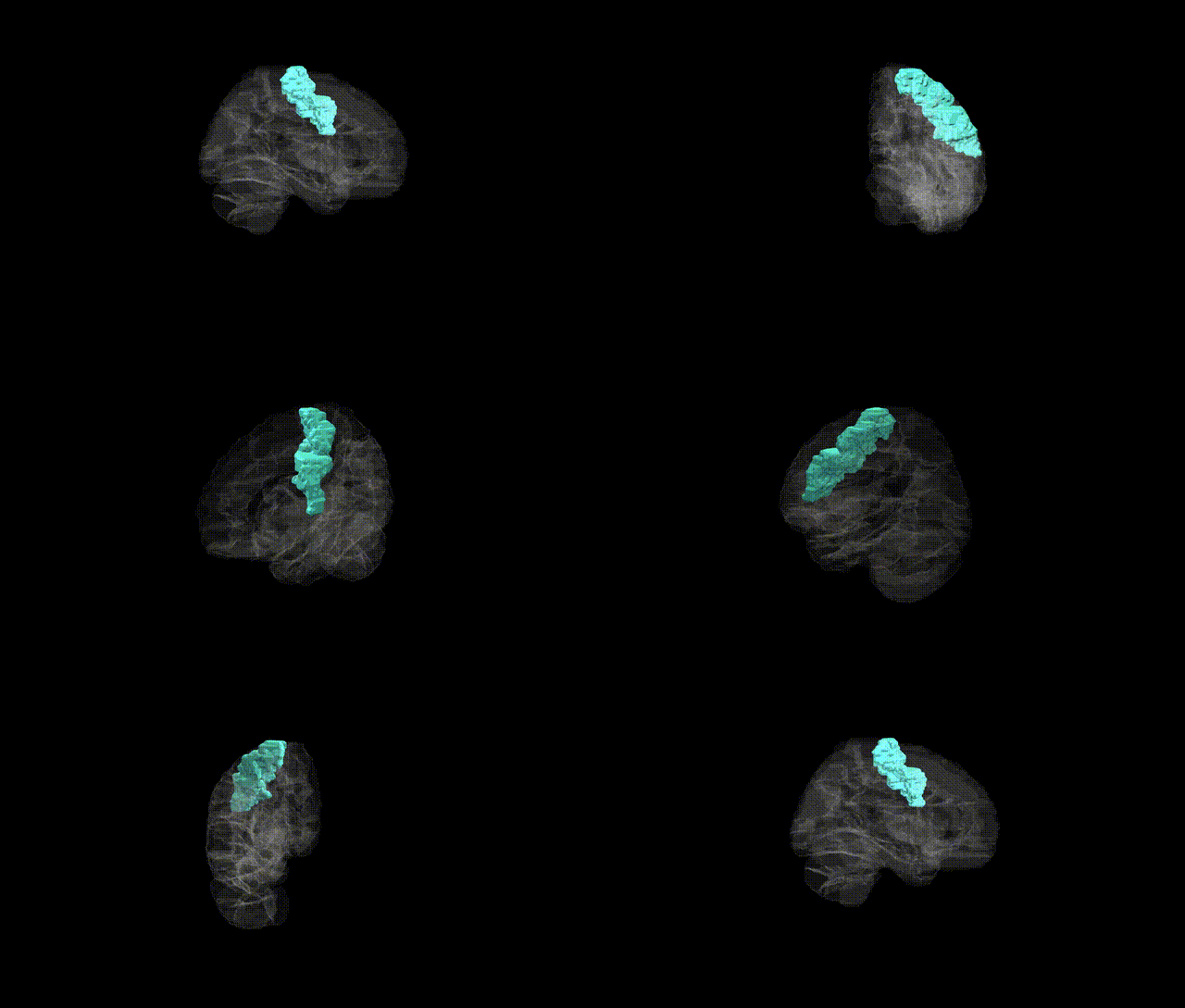
Full Quality Version: Download MP4
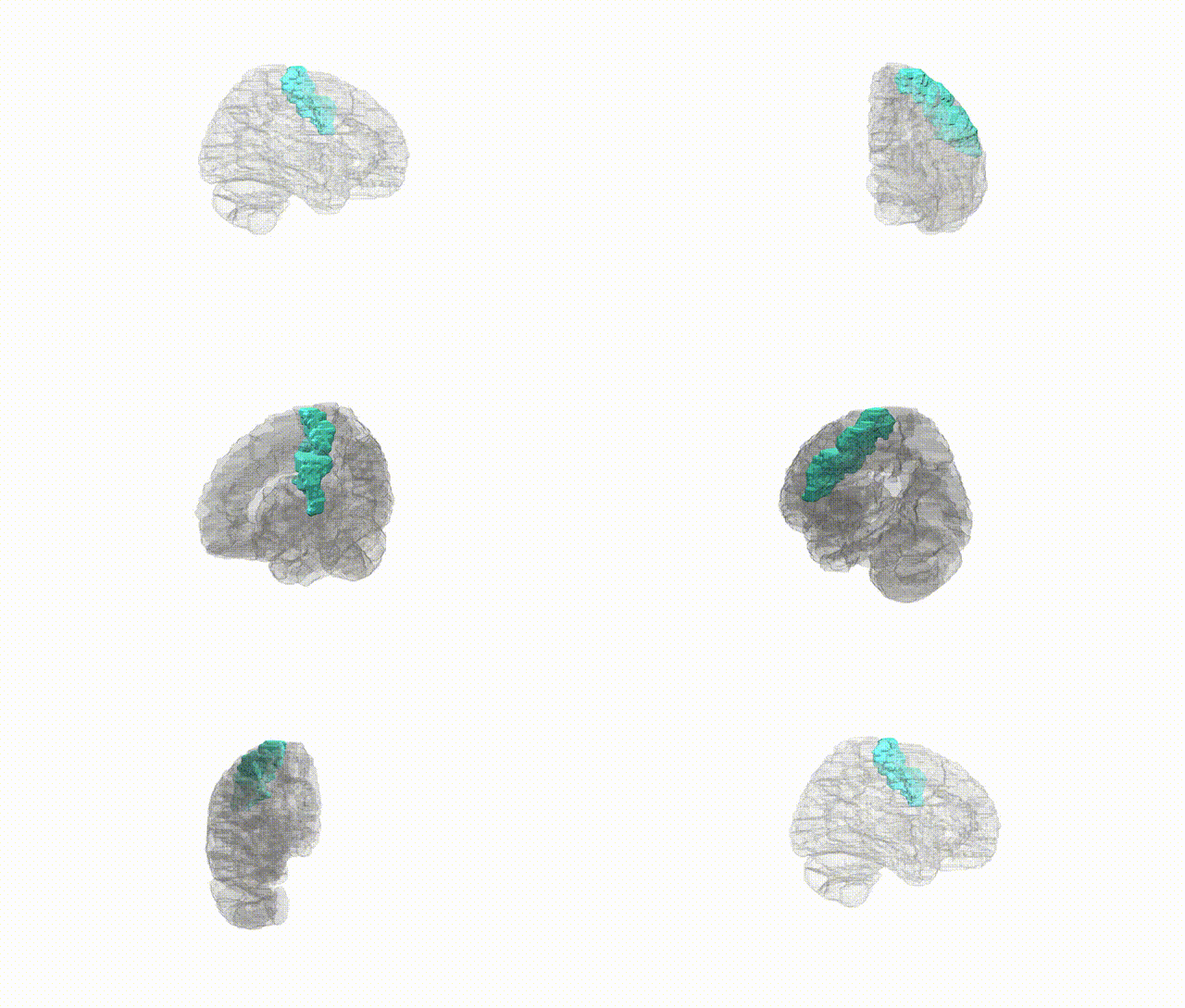
Full Quality Version: Download MP4
Wali Sidiqyar*, Gaurav Rudravaram*, Elyssa M. McMaster, Trent M. Schwartz, Adam M. Saunders, Kurt G. Schilling, Bennett A. Landman "Introducing SPINS: A Shared Public Visualization Library of Neuroanatomical Structures." Medical Imaging with Deep Learning- short paper
This resource is licensed under CC0 1.0 Universal (Public Domain).