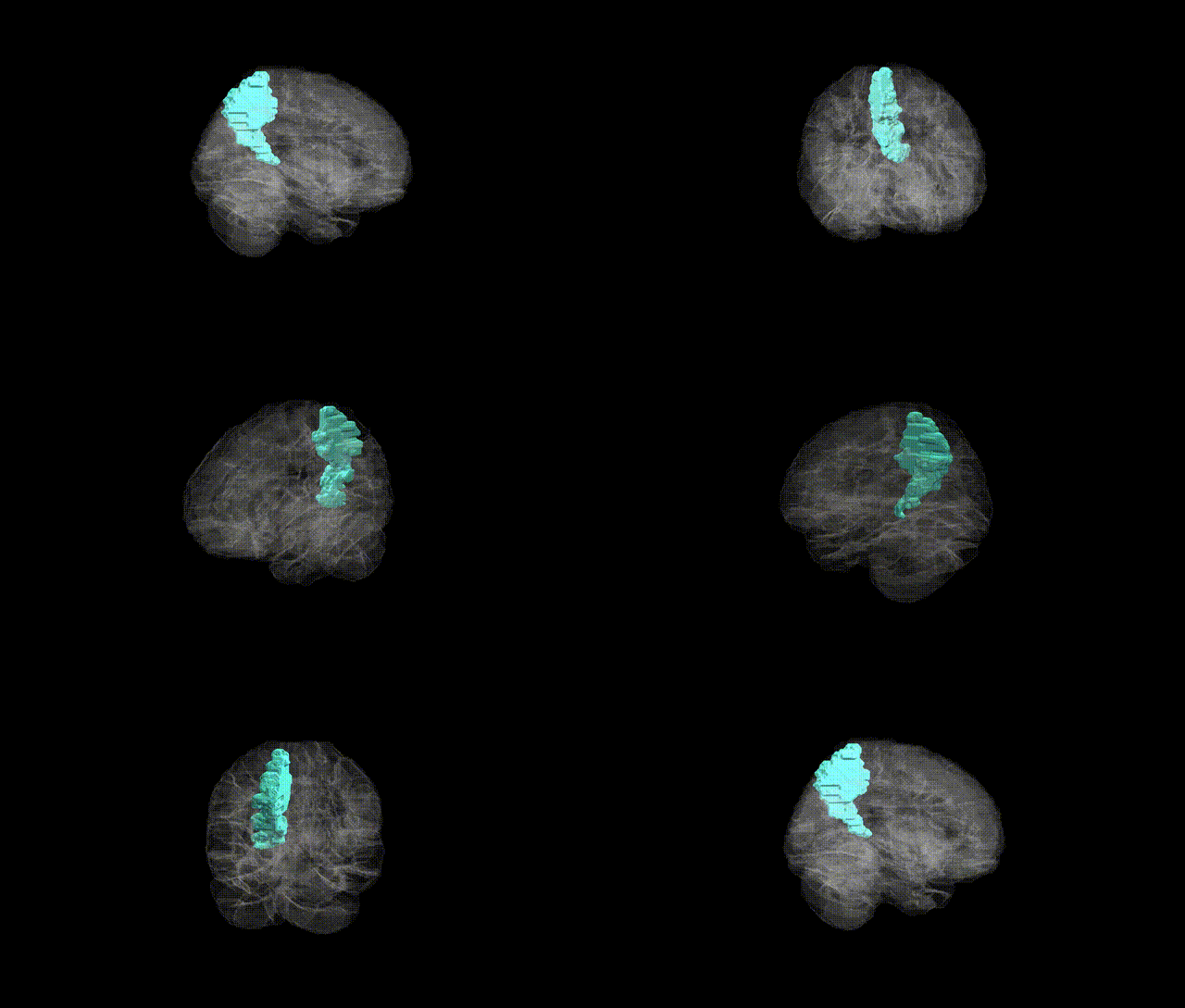
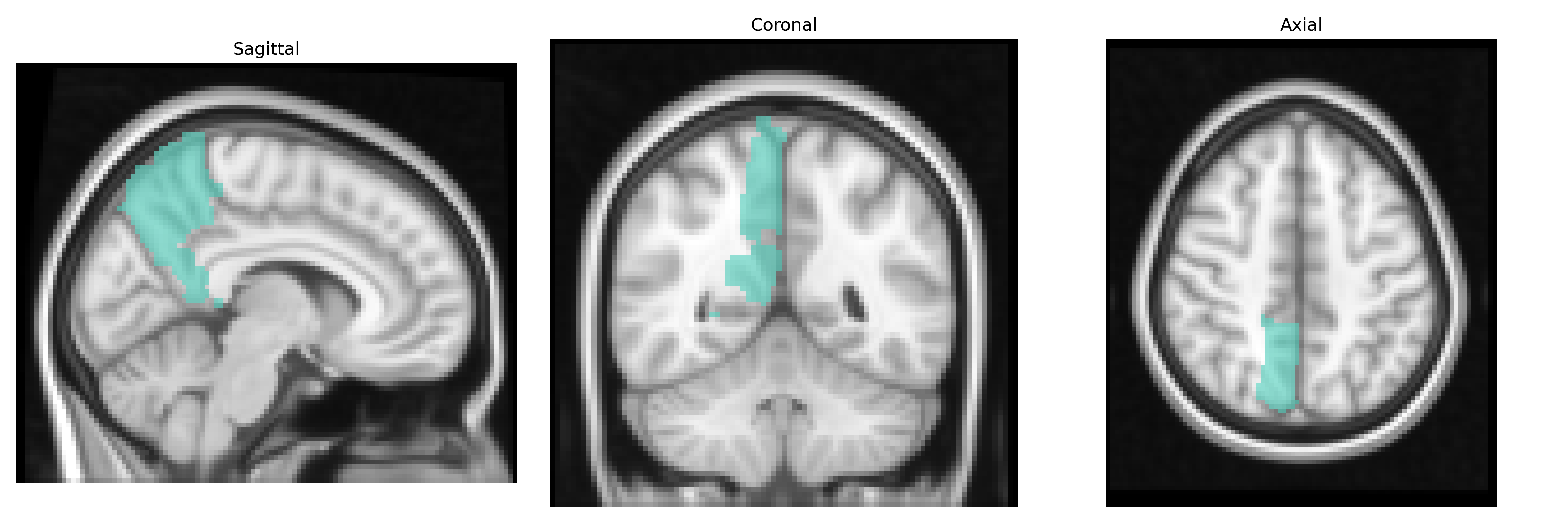
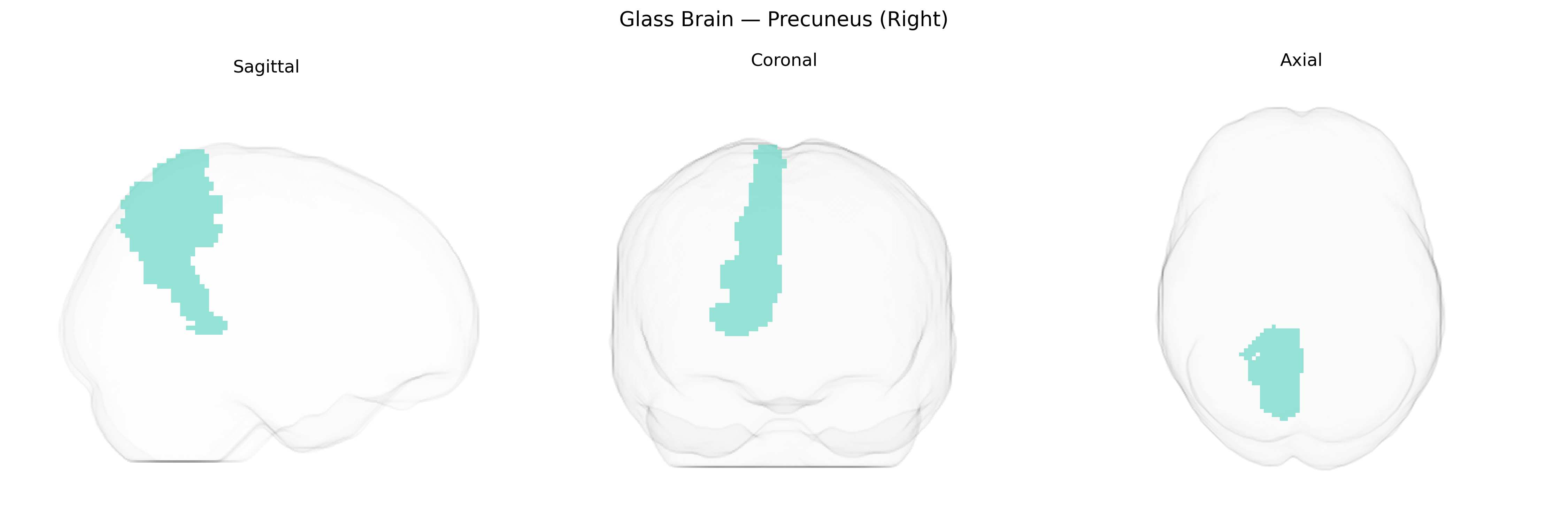
The right precuneus is a medial parietal lobe structure located on the medial surface of the cerebral hemisphere, bordered anteriorly by the marginal branch of the cingulate sulcus and posteriorly by the parieto‑occipital sulcus, and corresponding to Brodmann areas primarily 7 and parts of 31. It is a key hub within the default mode network, exhibiting dense structural and functional connectivity with frontal, parietal, and limbic regions. Functionally, the right precuneus is implicated in visuospatial processing, self-referential cognition, episodic memory retrieval, mental imagery, consciousness, and aspects of internal mentation and perspective taking. It also participates in sensorimotor integration and plays a role in coordinating internally directed attention and awareness across distributed cortical networks. Precuneus
Genetic associations involving the right precuneus (AAL2) largely emerge from imaging-genetics and GWAS of cortical structure, functional connectivity, and disease risk, rather than region-specific gene effects. Common variants in genes related to synaptic plasticity, neurodevelopment, and myelination (for example, BDNF, APOE, and genes in glutamatergic and GABAergic pathways) have been linked to individual differences in precuneus cortical thickness, volume, and default mode network connectivity in large MRI cohorts such as ENIGMA and UK Biobank, though effects are typically small and distributed. Polygenic risk scores for Alzheimer’s disease, schizophrenia, major depressive disorder, and autism spectrum disorder show associations with altered structure or activity of the right precuneus, consistent with its role in self-referential processing, episodic memory, and social cognition; in particular, APOE ε4 and broader AD polygenic risk relate to precuneus atrophy and hypometabolism, while schizophrenia and depression risk scores correlate with abnormal default mode connectivity involving this region. Variants in genes implicated in attention, consciousness, and pain modulation (for example, dopaminergic and opioid system genes) have been associated with functional activation of the precuneus in task-based fMRI, and GWAS of traits such as intelligence, mind-wandering, and sleep patterns report enrichment of genetic effects in networks that prominently include the precuneus, although specific, replicated, right-lateralized precuneus gene associations remain sparse and are typically inferred from network-level rather than region-unique analyses.
Overview generated by GPT-4o (2026).
Region ID: 6302
Hemisphere: right
Atlas: AAL2
Full Quality Version: Download MP4
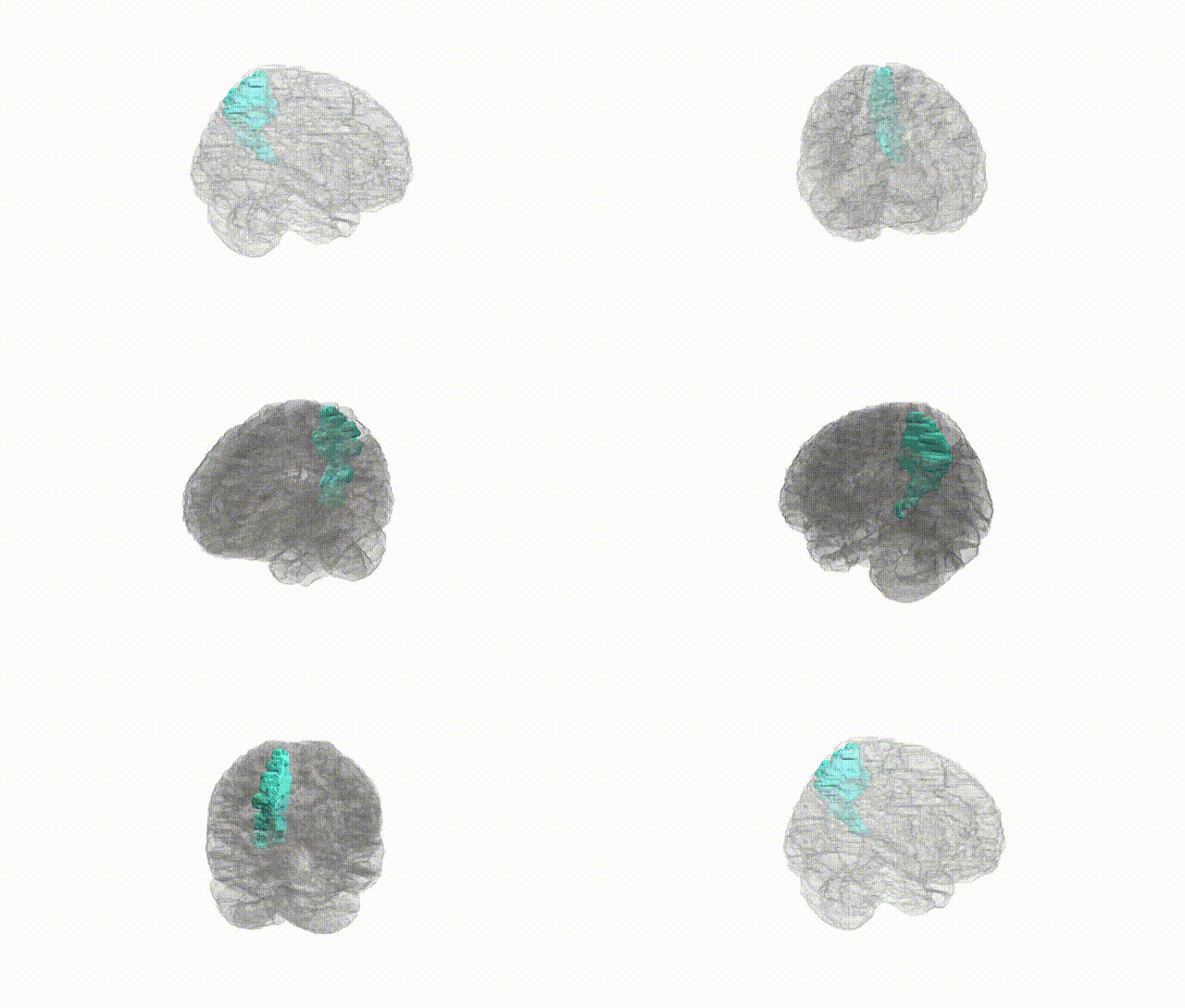
Full Quality Version: Download MP4
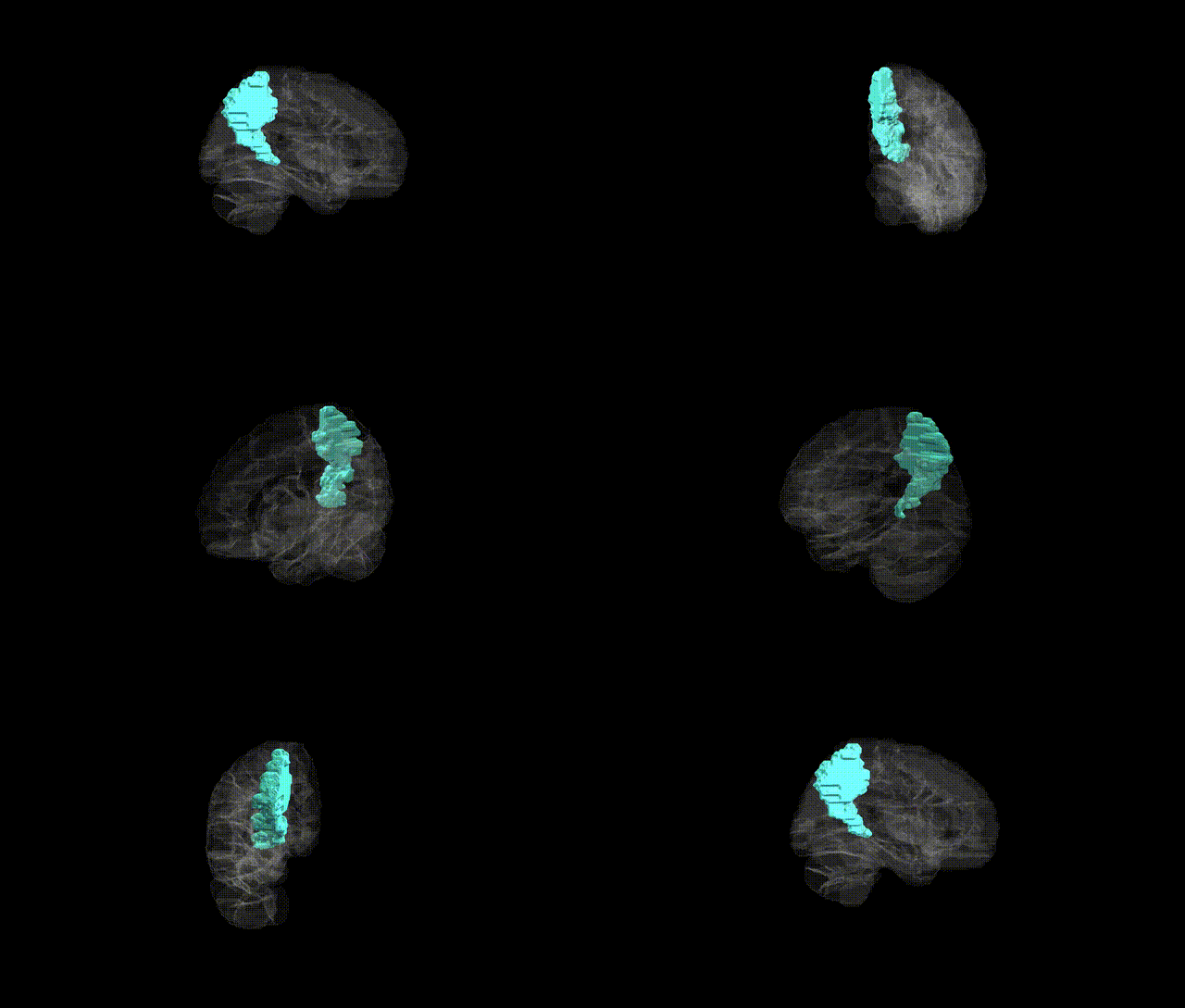
Full Quality Version: Download MP4
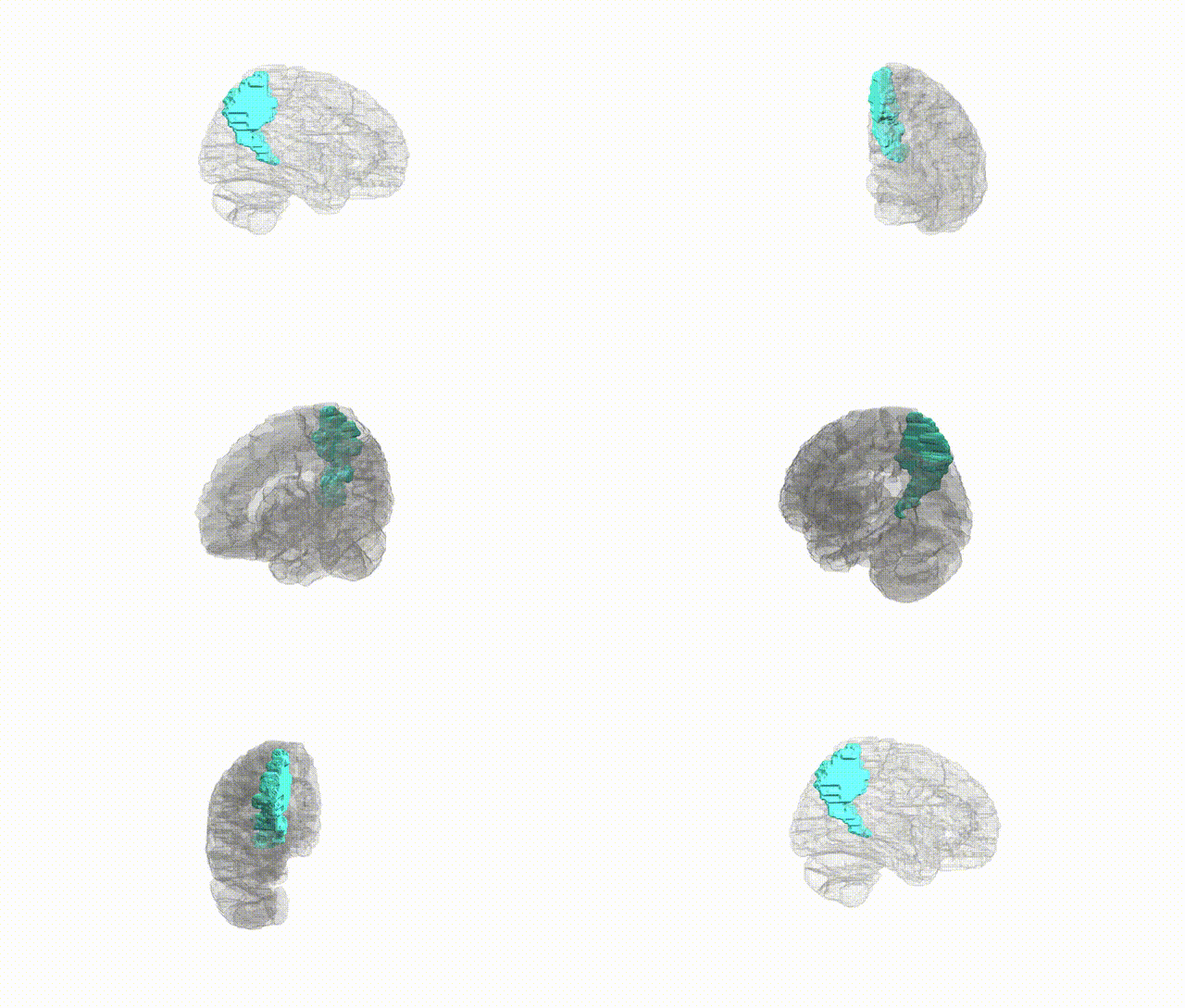
Full Quality Version: Download MP4
Wali Sidiqyar*, Gaurav Rudravaram*, Elyssa M. McMaster, Trent M. Schwartz, Adam M. Saunders, Kurt G. Schilling, Bennett A. Landman "Introducing SPINS: A Shared Public Visualization Library of Neuroanatomical Structures." Medical Imaging with Deep Learning- short paper
This resource is licensed under CC0 1.0 Universal (Public Domain).