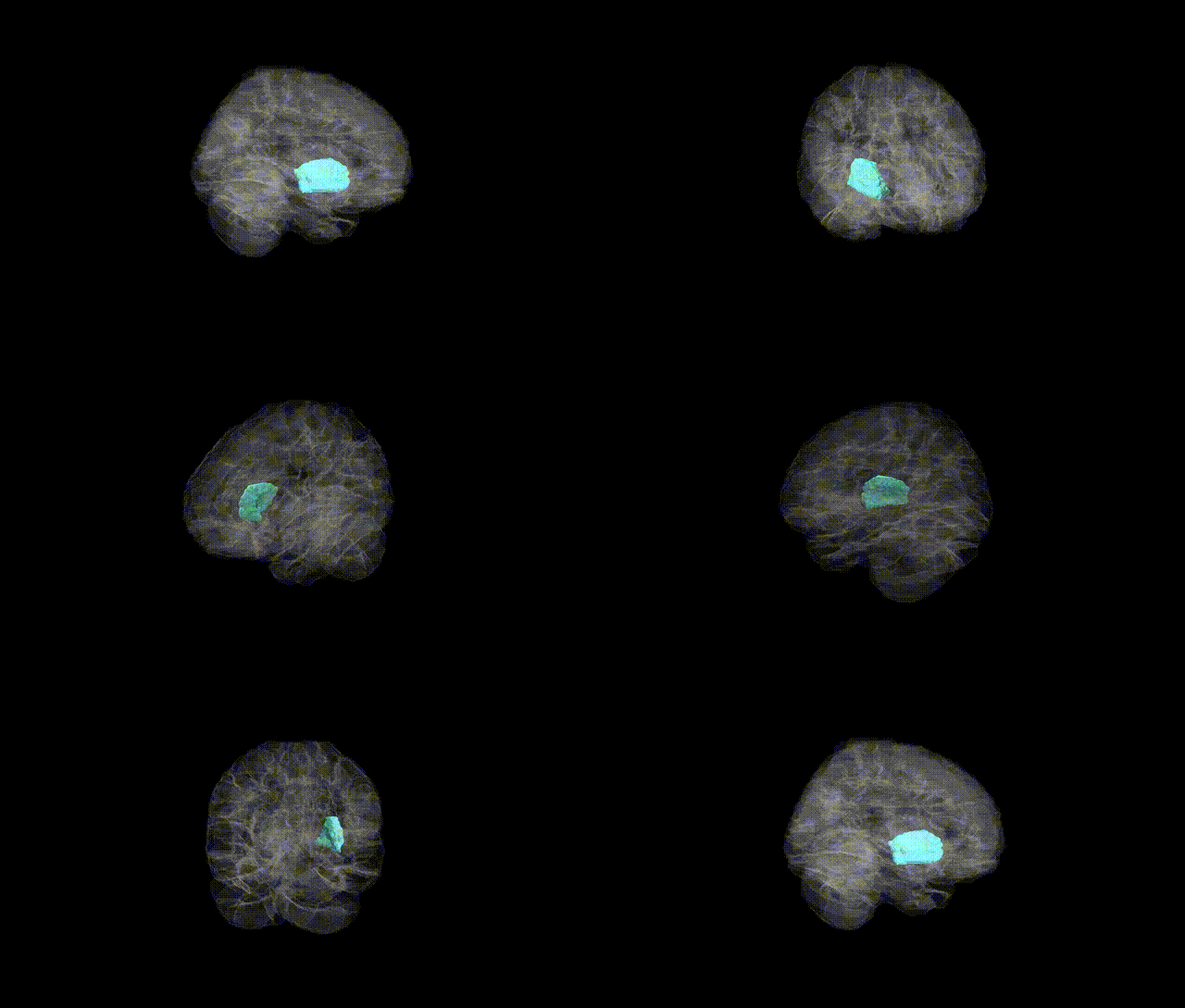
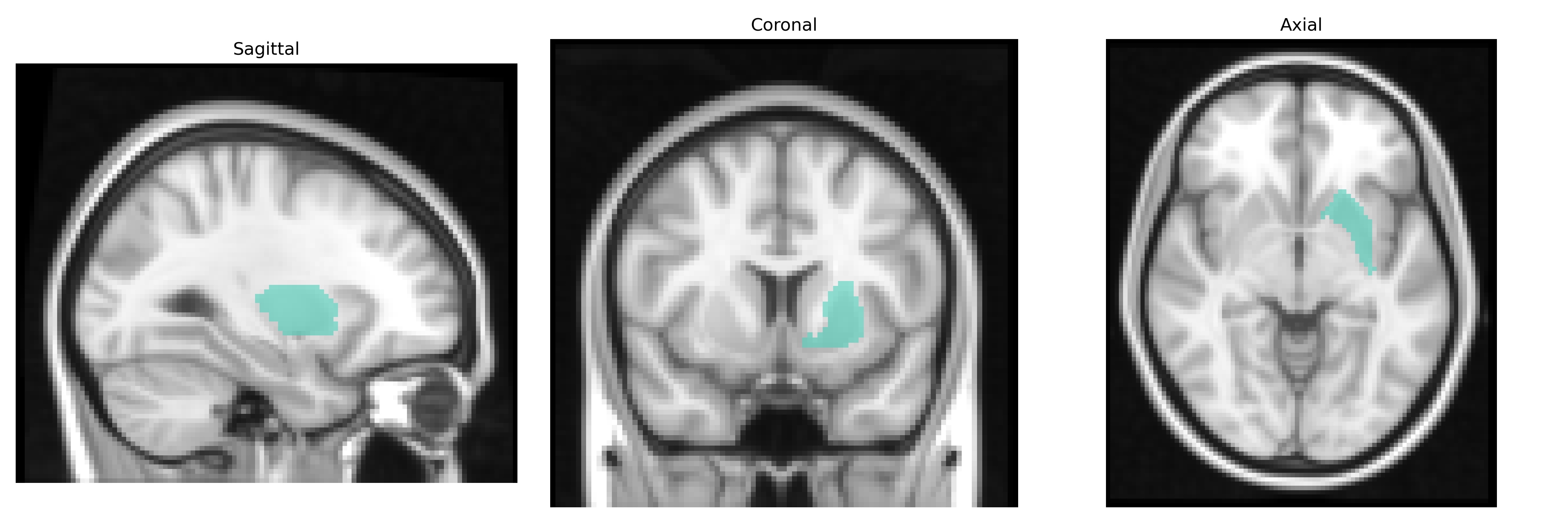
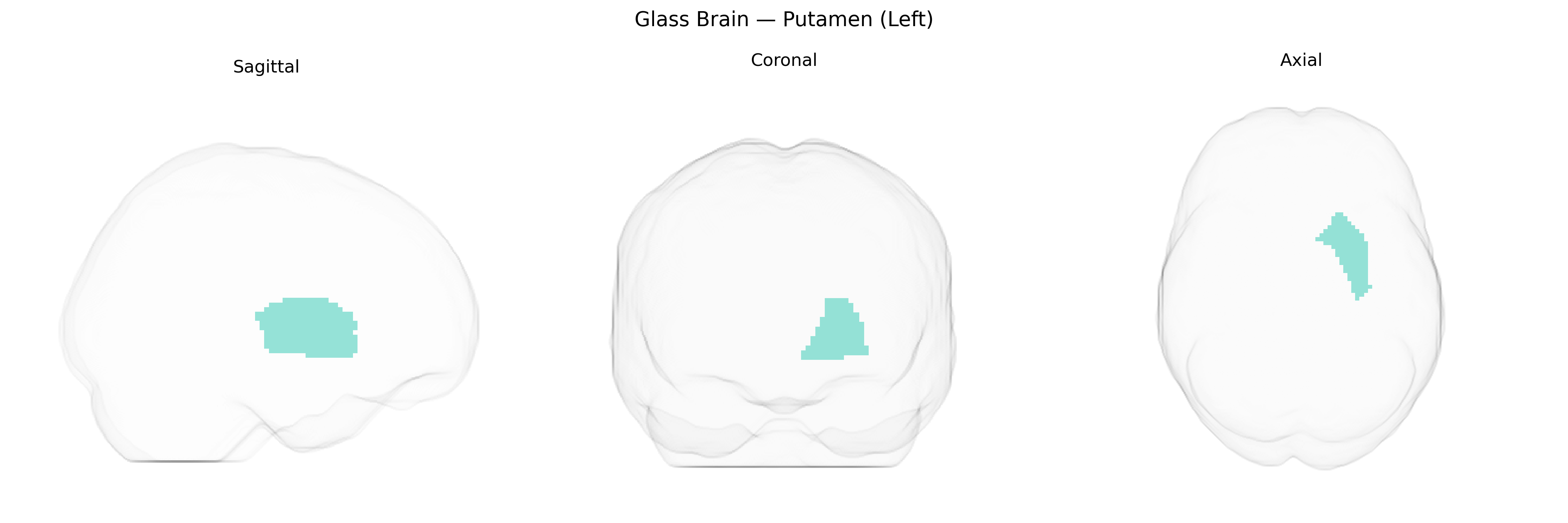
The left putamen is a subcortical gray matter structure within the basal ganglia, located lateral to the globus pallidus and medial to the insular cortex in the left hemisphere. It plays a central role in motor control, particularly in the planning and execution of learned, automatic movements, and is heavily interconnected with the motor and premotor cortices via corticostriatal pathways. The putamen receives dense dopaminergic input from the substantia nigra pars compacta, contributing to modulation of movement, habit formation, and certain aspects of procedural learning. It is also involved in cognitive and affective processes through its participation in cortico-striato-thalamo-cortical loops. Dysfunction or degeneration of the putamen is implicated in movement disorders such as Parkinson’s disease and Huntington’s disease, as well as in some neuropsychiatric conditions. Putamen
Genetic associations involving the left putamen in the AAL2 atlas primarily emerge from imaging genetics and GWAS of subcortical volumes, neuropsychiatric disorders, and motor traits. Large-scale GWAS (e.g., ENIGMA and UK Biobank) have identified loci near or within genes such as KTN1, DCC, CCDC101, and variants in dopaminergic and glutamatergic pathway genes that influence putamen volume and structure bilaterally, often without strict laterality but applicable to the left region. Dopamine-related genes including DRD2, DRD3, and those affecting synaptic plasticity (e.g., BDNF) have been linked to putaminal morphology and activity, consistent with the putamen’s role in motor control and reward processing. Genetic risk for Parkinson’s disease (e.g., SNCA, LRRK2, GBA variants) and Huntington’s disease (HTT CAG expansion) is associated with putaminal degeneration and functional changes, while schizophrenia and bipolar disorder GWAS implicate polygenic risk scores that correlate with altered putamen volume and connectivity, reflecting basal ganglia involvement in psychosis and mood regulation. ADHD and obsessive-compulsive disorder show genetic overlap in corticostriatal circuitry, with risk variants contributing to structural and functional differences in the left putamen, and substance use traits (including alcohol and nicotine dependence) display genetic correlations with putaminal activation patterns in reward and habit-forming networks.
Overview generated by GPT-4o (2026).
Region ID: 7011
Hemisphere: left
Atlas: AAL2
Full Quality Version: Download MP4
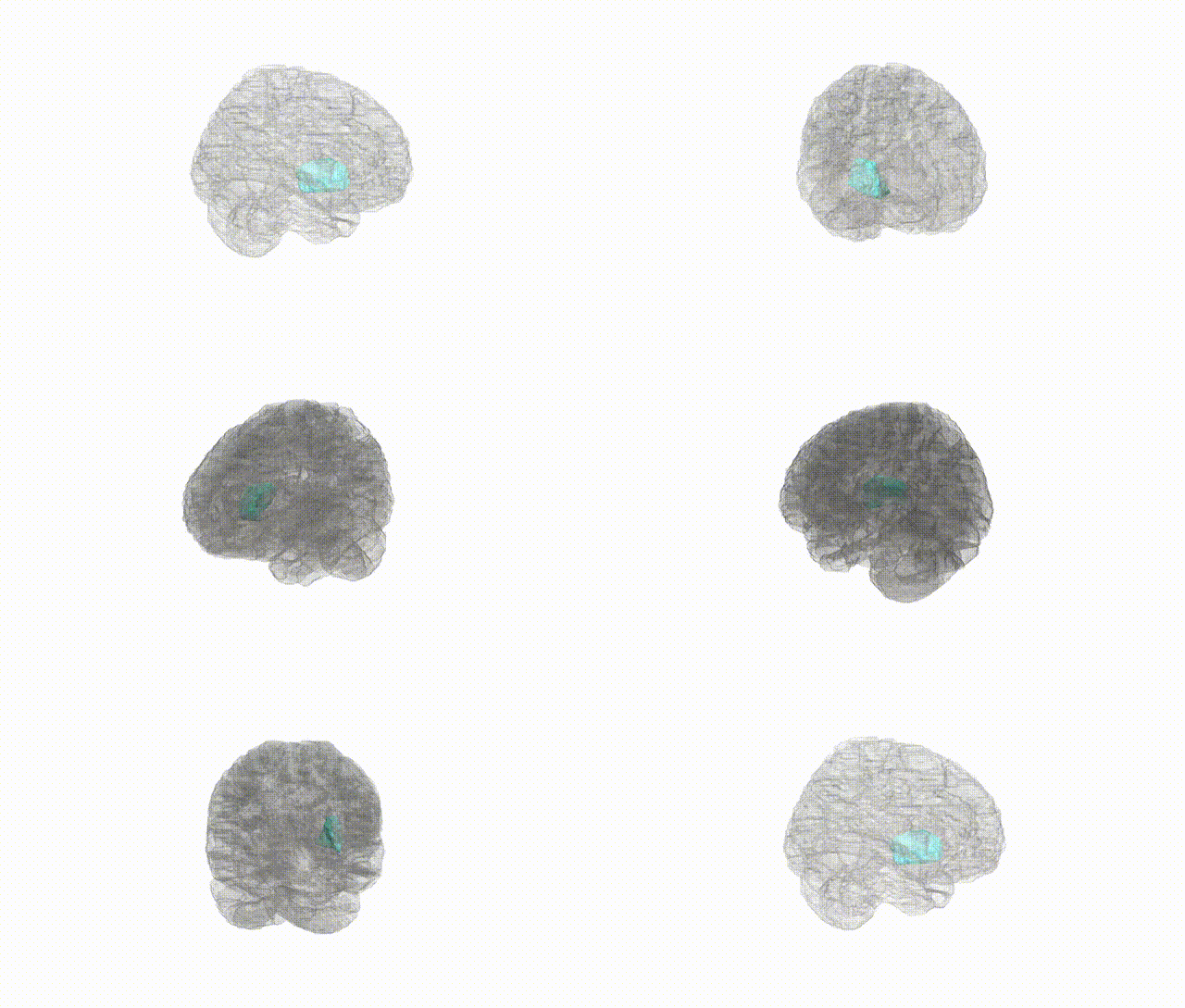
Full Quality Version: Download MP4
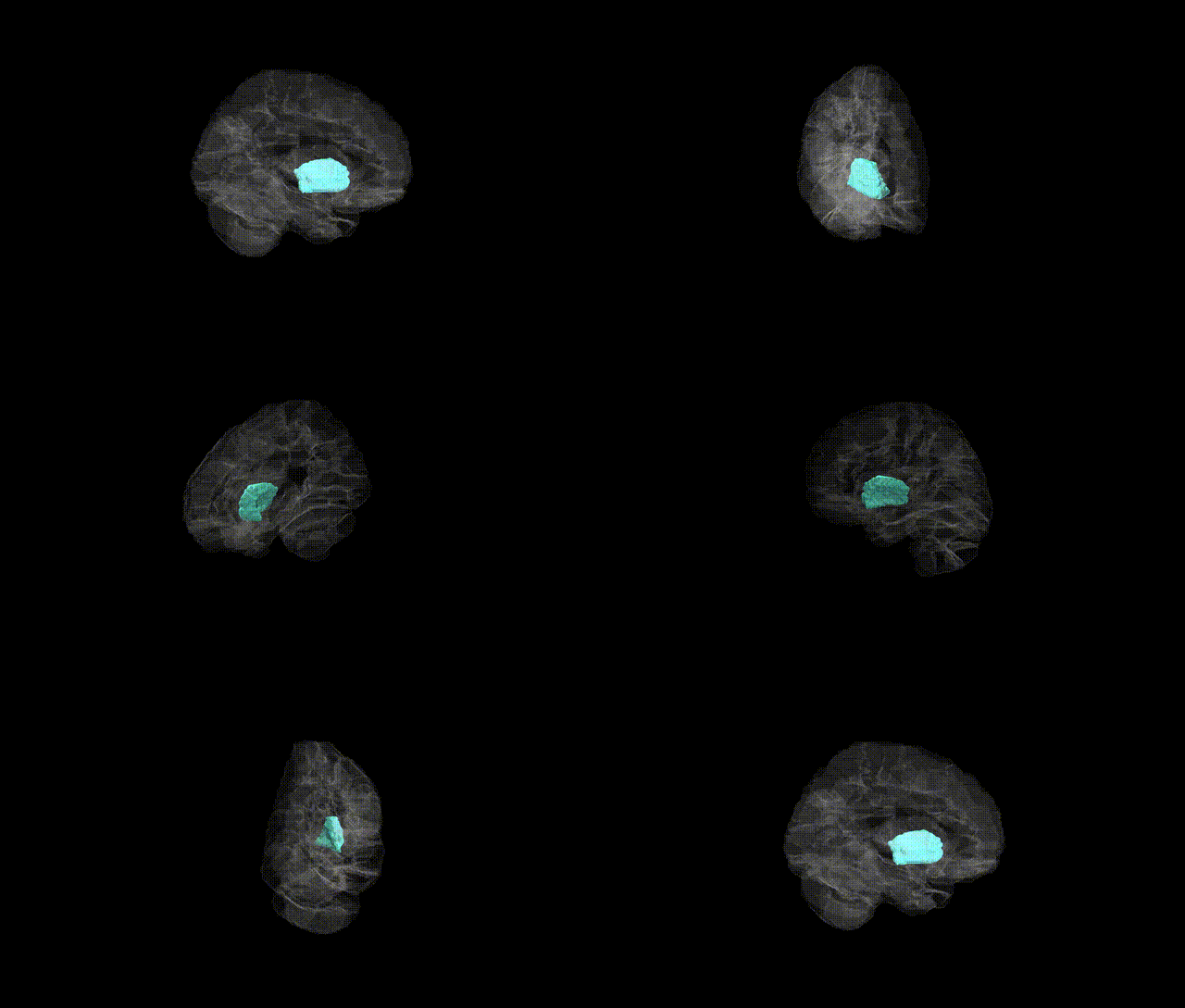
Full Quality Version: Download MP4
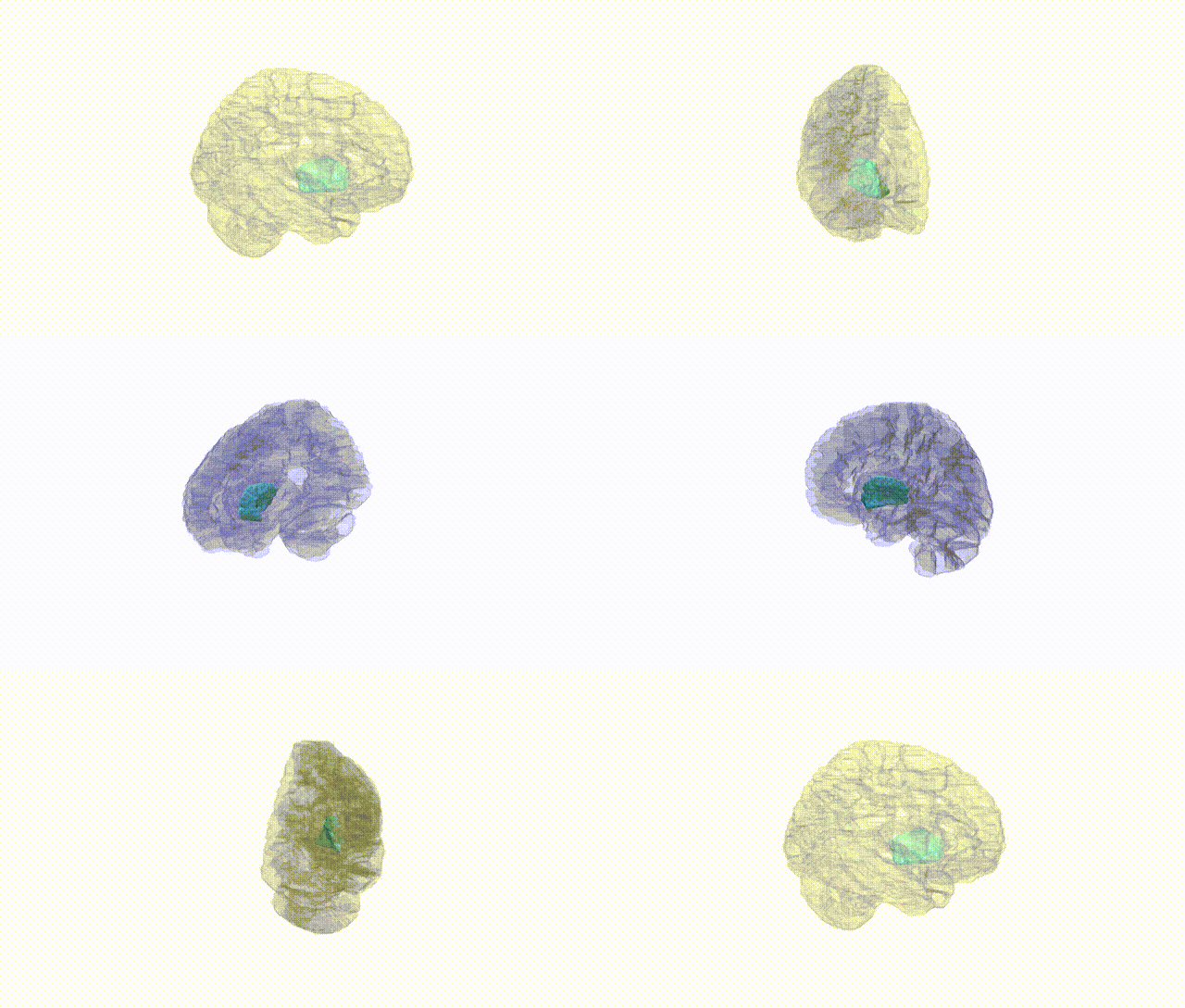
Full Quality Version: Download MP4
Wali Sidiqyar*, Gaurav Rudravaram*, Elyssa M. McMaster, Trent M. Schwartz, Adam M. Saunders, Kurt G. Schilling, Bennett A. Landman "Introducing SPINS: A Shared Public Visualization Library of Neuroanatomical Structures." Medical Imaging with Deep Learning- short paper
This resource is licensed under CC0 1.0 Universal (Public Domain).