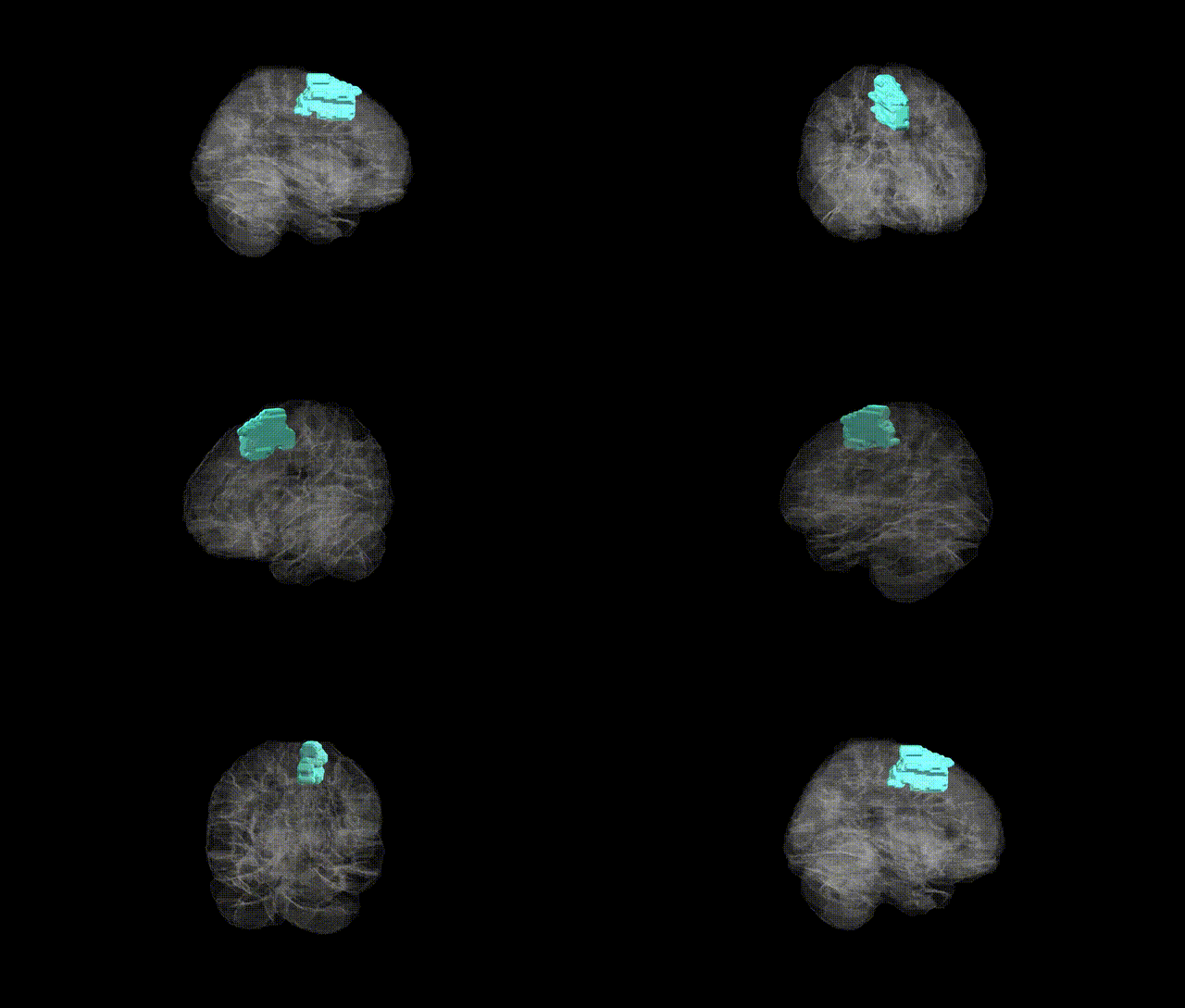
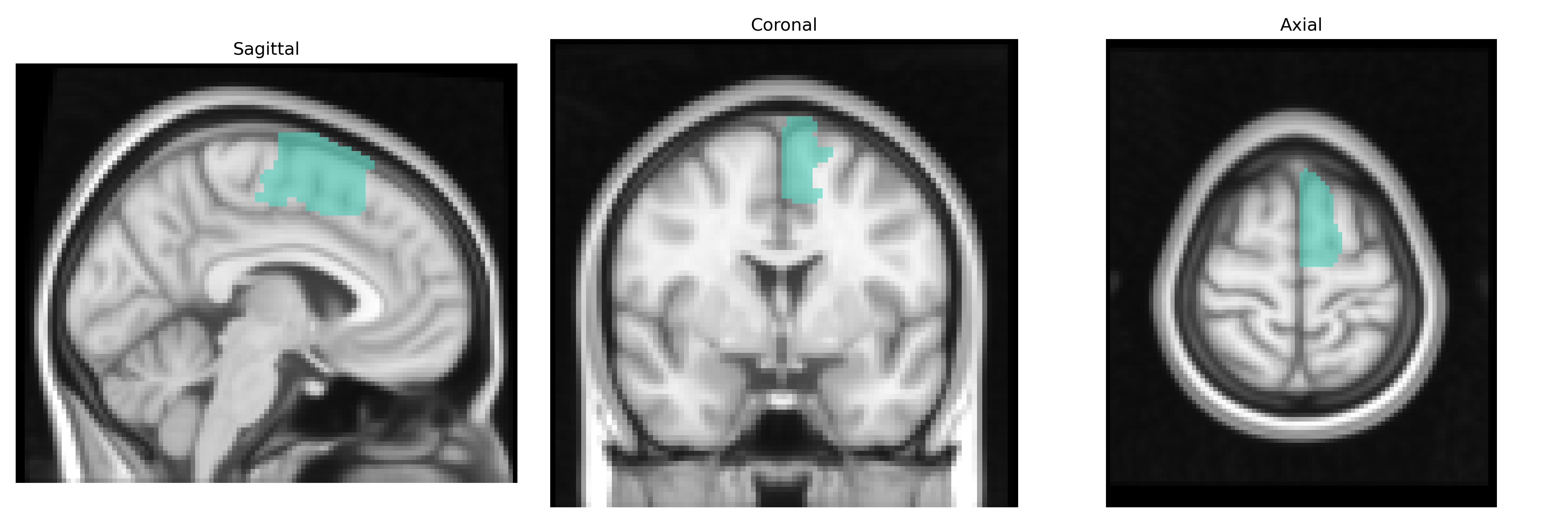
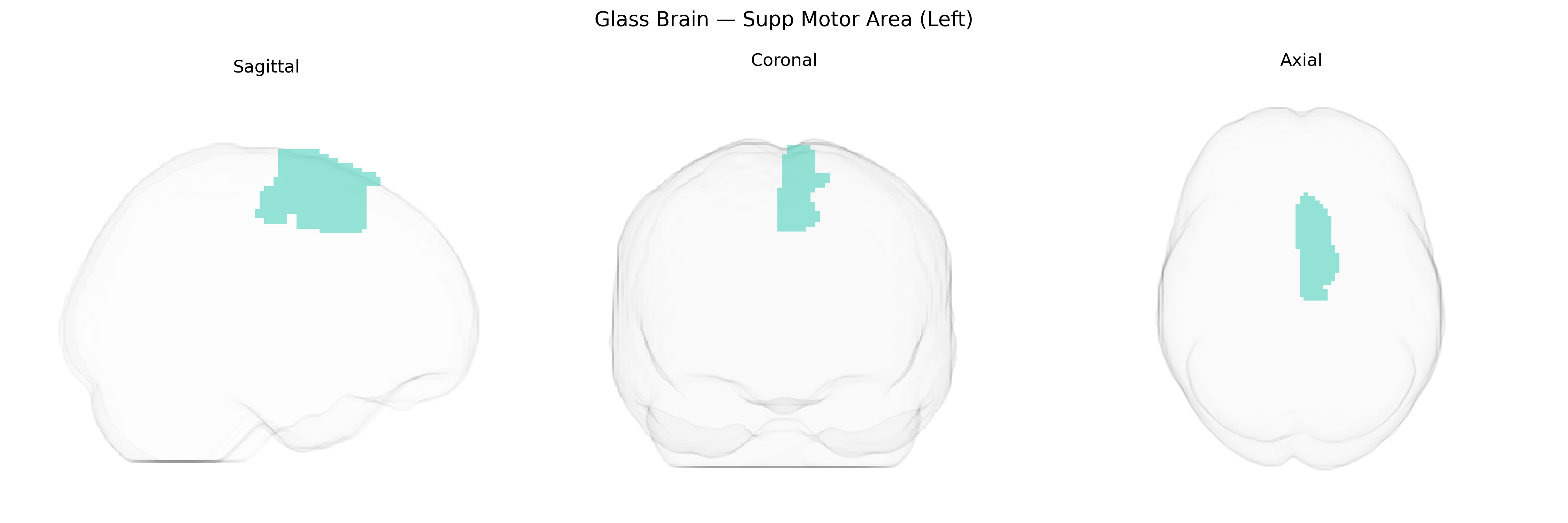
The left Supplementary Motor Area (SMA; AAL2 “Supp Motor Area (Left)”) is a medial frontal lobe region located on the superior frontal gyrus, anterior to the primary motor cortex and extending onto the medial surface of the hemisphere. It forms part of the premotor network and is classically divided into pre-SMA (rostral, more cognitive/associative) and SMA proper (caudal, more motor-executive). The left SMA contributes critically to the initiation, planning, and temporal sequencing of voluntary movements, bimanual coordination, internally generated actions, and aspects of speech motor control, with strong connections to primary motor cortex, basal ganglia, thalamus, and spinal motor pathways. Lesions in this region can produce the “SMA syndrome,” characterized by transient akinesia, mutism or speech reduction, and impaired initiation of contralateral movements, often followed by gradual recovery. There is no direct Wikipedia page for the AAL2 label, but the region corresponds closely to the Supplementary motor area.
The left supplementary motor area (SMA), as defined in the AAL2 atlas, has been implicated in multiple genetic and GWAS-based associations, largely through studies of motor control, language, and higher-order cognition that identify this region in imaging–genetics or imaging–GWAS frameworks. Polygenic risk for Parkinson’s disease, ALS, and other motor neuron or movement disorders has been associated with altered structure, connectivity, or activity in the SMA, consistent with its role in motor planning and execution. Imaging–genetics studies show that common variants in dopaminergic and glutamatergic genes (for example, COMT, DRD2, and GRIN family genes) modulate SMA activation during tasks involving motor preparation, response inhibition, and cognitive control, while schizophrenia and ADHD polygenic risk scores have been linked to differences in SMA volume or functional recruitment during such tasks. Large-scale GWAS of cortical structure and functional connectivity also report that widespread polygenic influences shape left SMA thickness and surface area, with variants near genes involved in neurodevelopment (e.g., microtubule and synaptic genes) contributing modest but significant effects. Additionally, genetic liability for stuttering and developmental speech or language disorders has been associated with altered SMA engagement, reflecting its role in speech motor sequencing. Overall, the genetic architecture influencing the left SMA is highly polygenic and pleiotropic, with many variants contributing small effects that collectively impact motor, cognitive, and language-related phenotypes rather than a few region-specific “SMA genes.”
Overview generated by GPT-4o (2026).
Region ID: 2401
Hemisphere: left
Atlas: AAL2
Full Quality Version: Download MP4
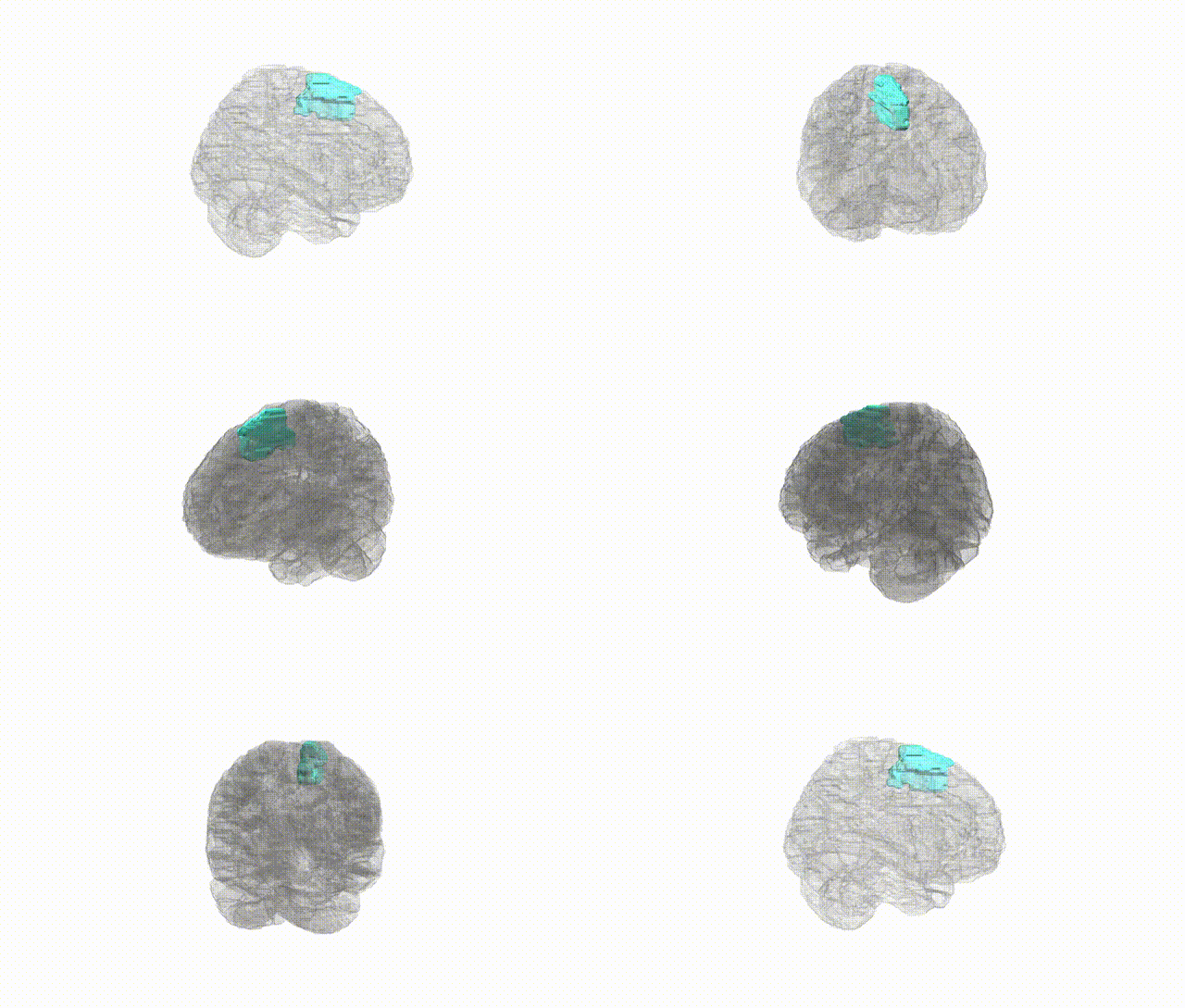
Full Quality Version: Download MP4
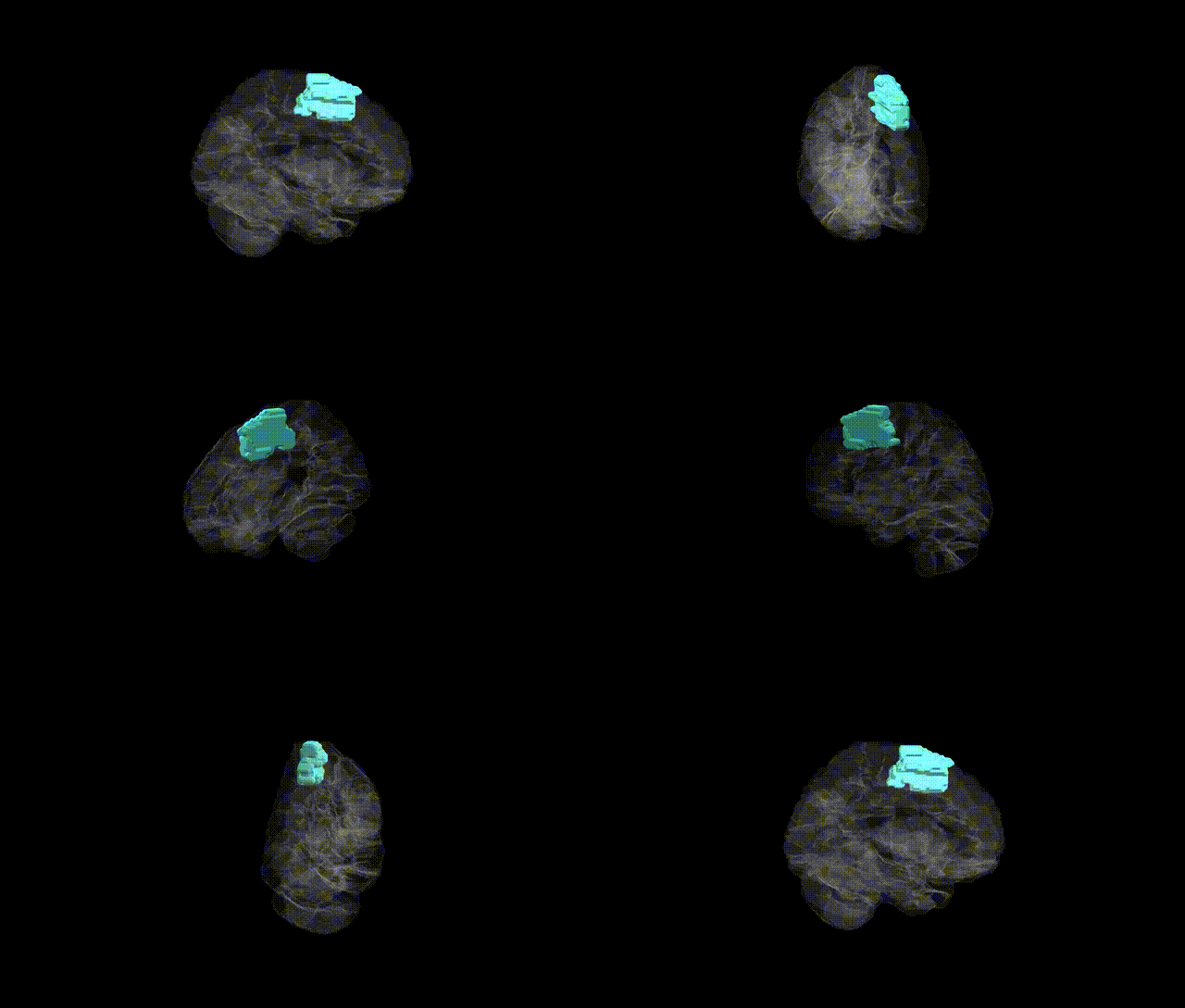
Full Quality Version: Download MP4
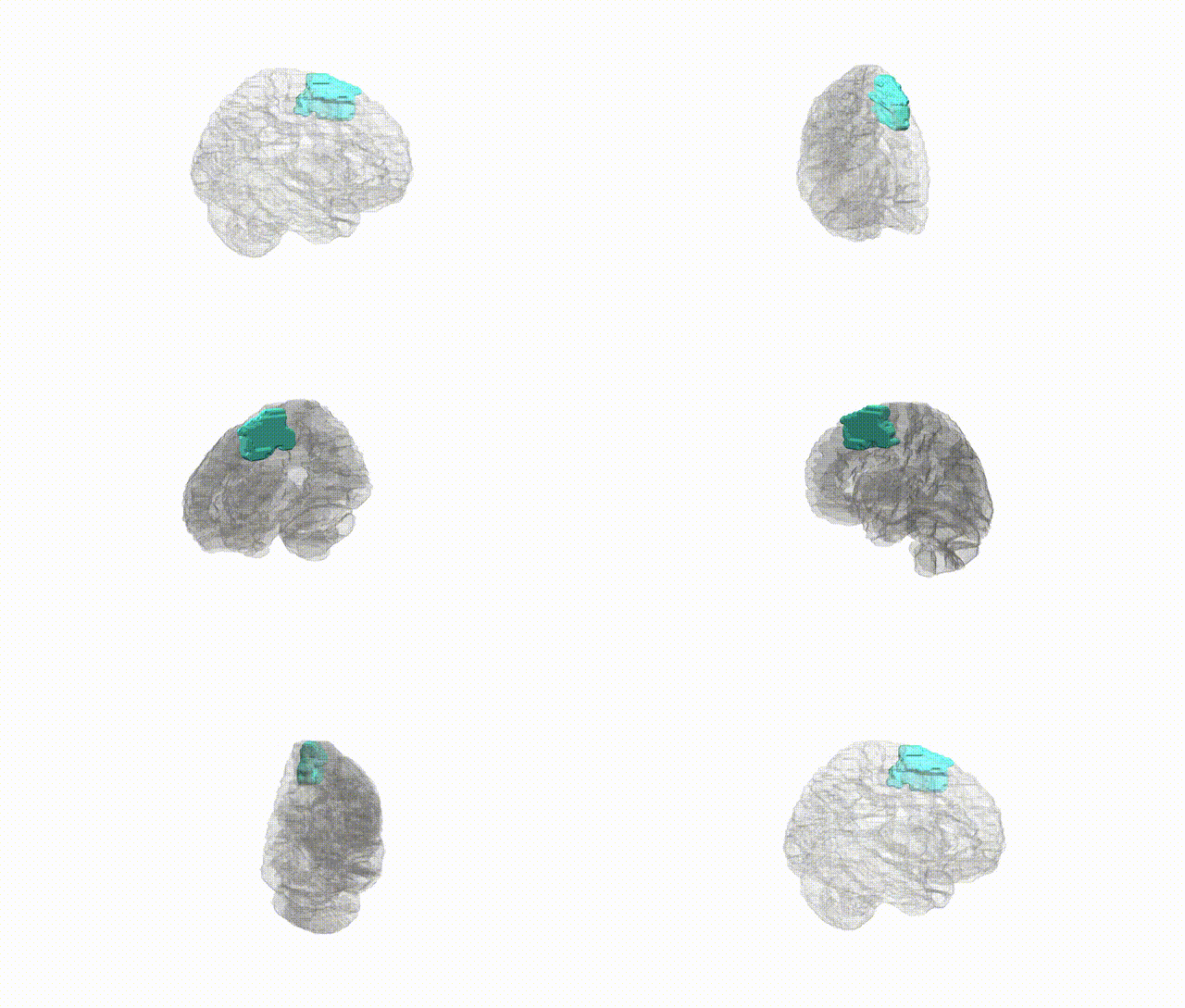
Full Quality Version: Download MP4
Wali Sidiqyar*, Gaurav Rudravaram*, Elyssa M. McMaster, Trent M. Schwartz, Adam M. Saunders, Kurt G. Schilling, Bennett A. Landman "Introducing SPINS: A Shared Public Visualization Library of Neuroanatomical Structures." Medical Imaging with Deep Learning- short paper
This resource is licensed under CC0 1.0 Universal (Public Domain).