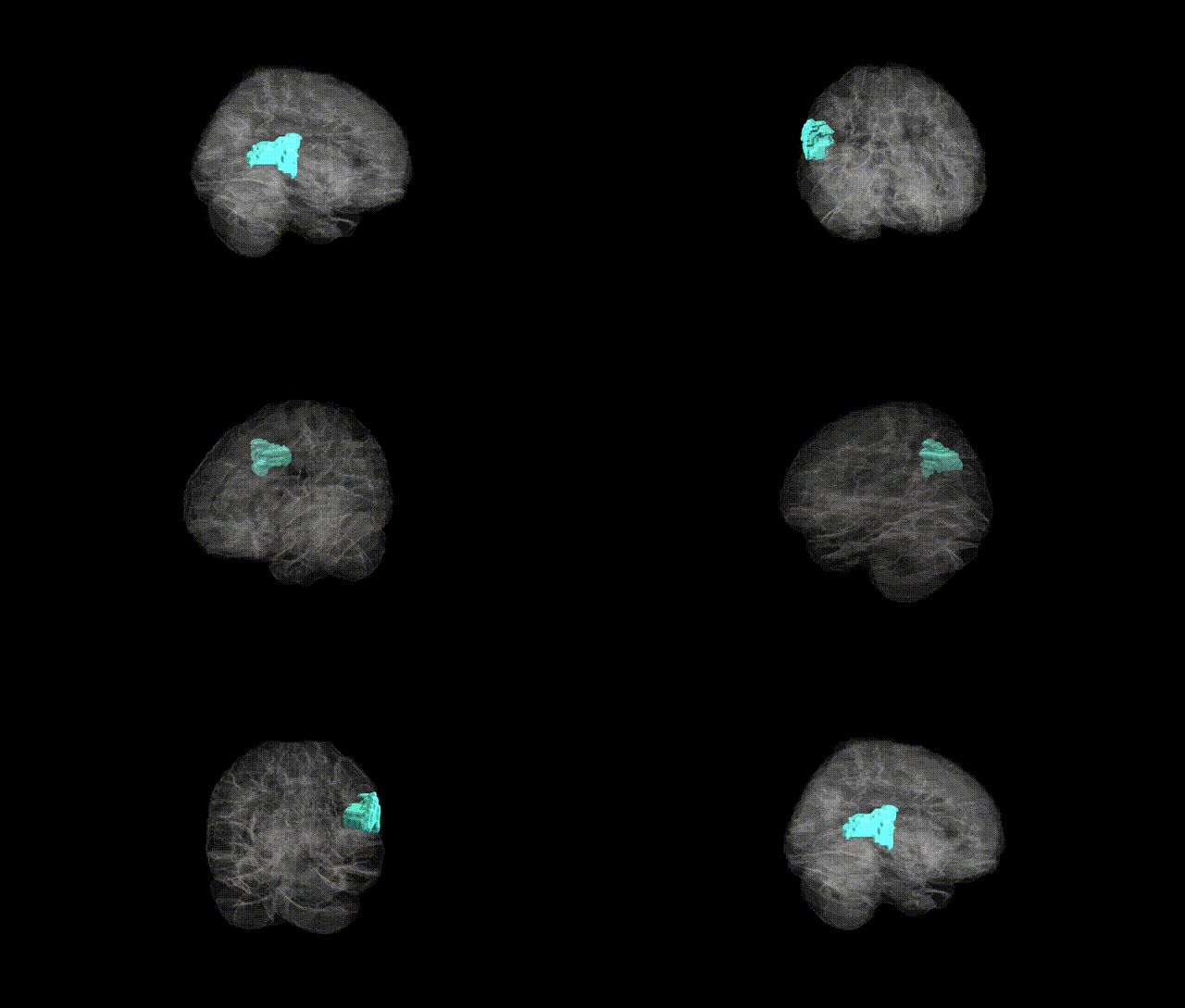
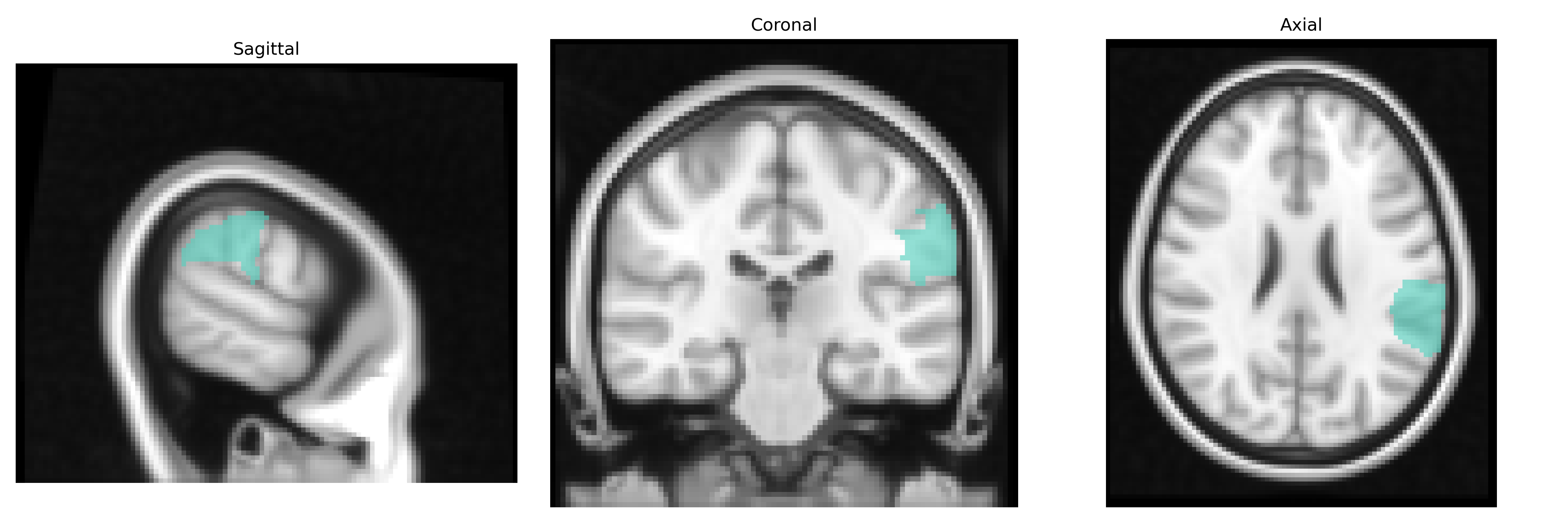
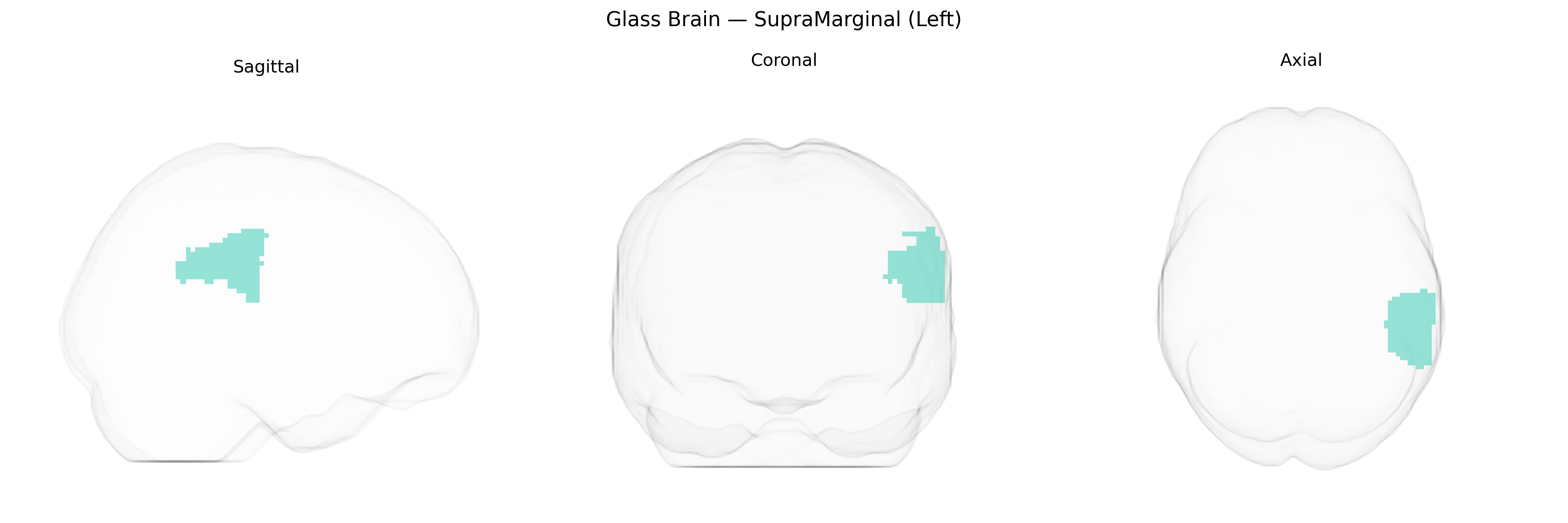
The left supramarginal gyrus, as defined in the AAL2 atlas, is a cortical region located in the inferior parietal lobule, wrapping around the posterior end of the lateral fissure and bordering the superior temporal gyrus and angular gyrus. It is supplied primarily by branches of the middle cerebral artery and is composed of association cortex involved in multimodal integration of somatosensory, auditory, and visual information. Functionally, this region contributes to phonological processing, articulation, and aspects of language comprehension, as well as to working memory, spatial attention, and the interpretation of others’ actions and emotions. Lesions in the left supramarginal gyrus have been associated with deficits such as conduction aphasia, disorders of reading and writing, and impairments in praxis and body schema, reflecting its role in integrating sensory input with motor and symbolic representations. Supramarginal gyrus
Genetic associations specifically implicating the left supramarginal gyrus (AAL2: SupraMarginal_L) largely arise from imaging genetics and GWAS of brain structure and function rather than direct region-specific gene studies. Large neuroimaging GWAS consortia (e.g., ENIGMA, UK Biobank) have identified loci near genes involved in neurodevelopment, synaptic function, and cell adhesion—such as microtubule-associated and axon guidance genes—that correlate with cortical thickness, surface area, and gyrification in inferior parietal regions that include the supramarginal gyrus. Functionally, polygenic risk for reading and language-related traits (e.g., developmental dyslexia) shows associations with structural and functional measures in perisylvian language regions encompassing the supramarginal gyrus, consistent with its role in phonological processing and verbal working memory. In psychiatric GWAS, schizophrenia, bipolar disorder, and major depressive disorder polygenic scores have been linked to altered supramarginal and inferior parietal morphology or connectivity, suggesting that distributed genetic risk factors for these conditions partially manifest through this region’s structure and networks. Similarly, autism spectrum disorder and ADHD genetic risk have been associated with atypical activation and connectivity in supramarginal–temporoparietal circuits during social cognition, attention, and language tasks. Although no single gene is uniquely tied to the left supramarginal gyrus, convergent evidence indicates that common genetic variants affecting cortical development, synaptic signaling, and neurocognitive traits contribute to interindividual differences in this region’s anatomy and function, which in turn relate to vulnerability for language, reading, and several neuropsychiatric disorders.
Overview generated by GPT-4o (2026).
Region ID: 6211
Hemisphere: left
Atlas: AAL2
Full Quality Version: Download MP4
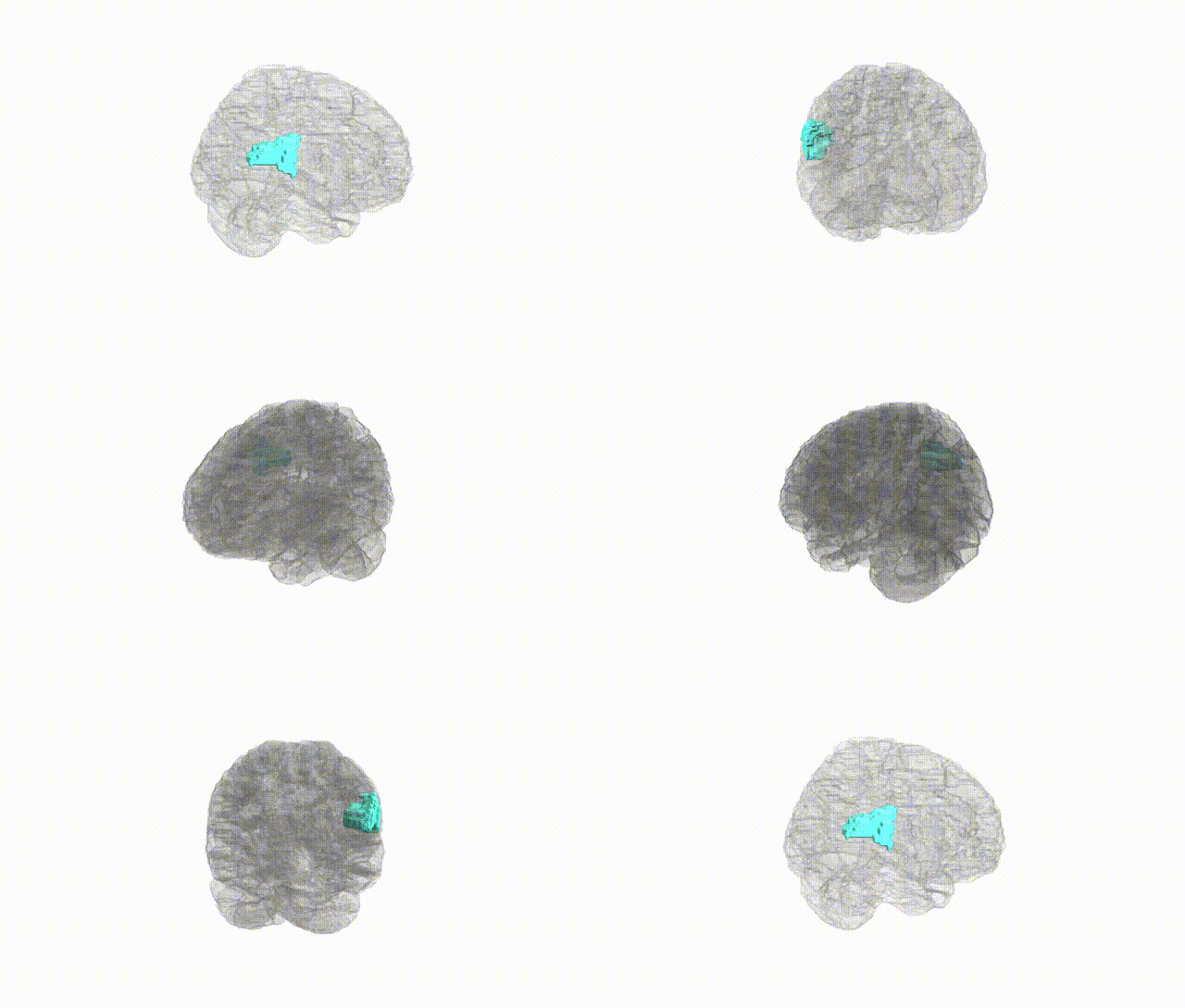
Full Quality Version: Download MP4
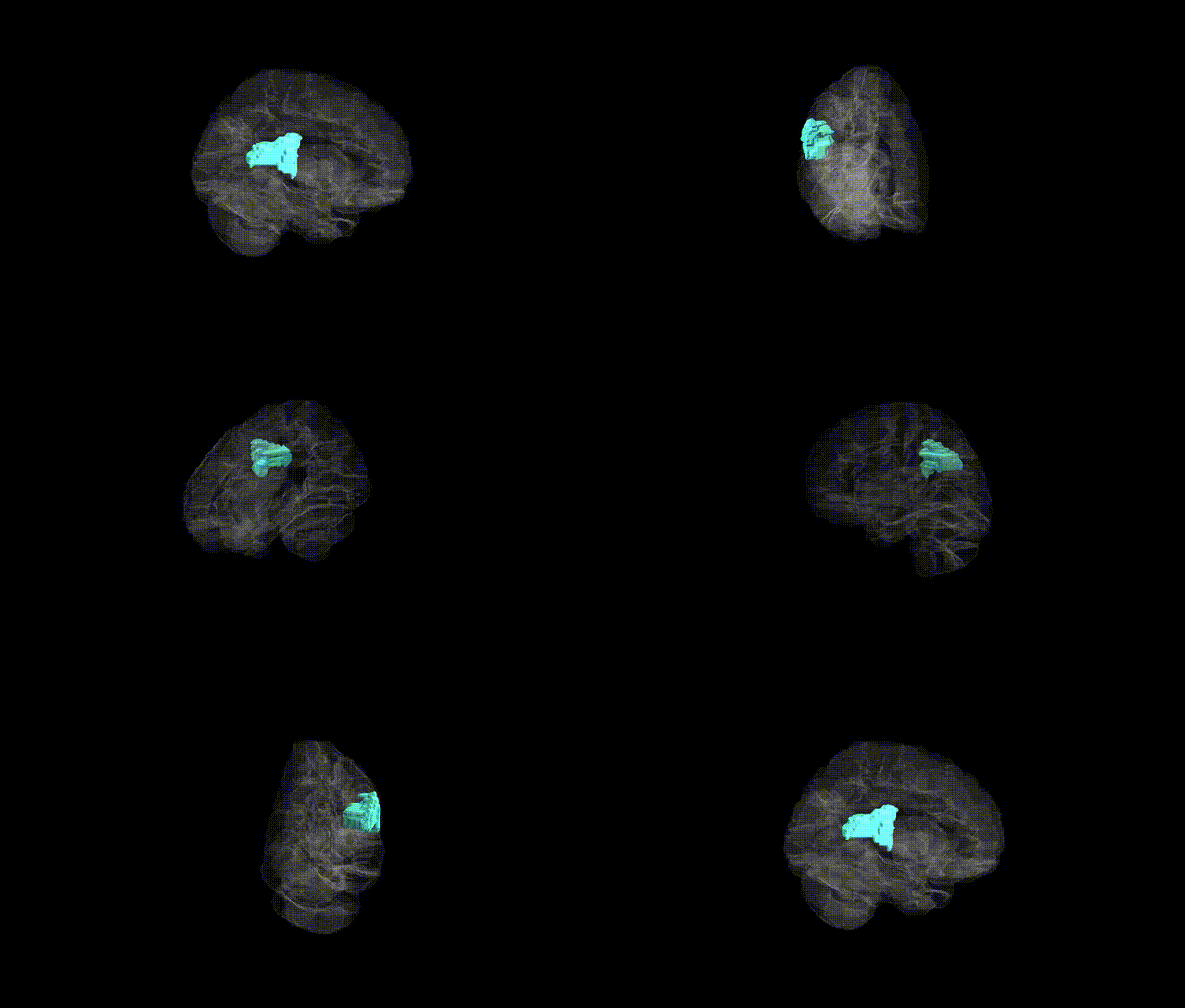
Full Quality Version: Download MP4
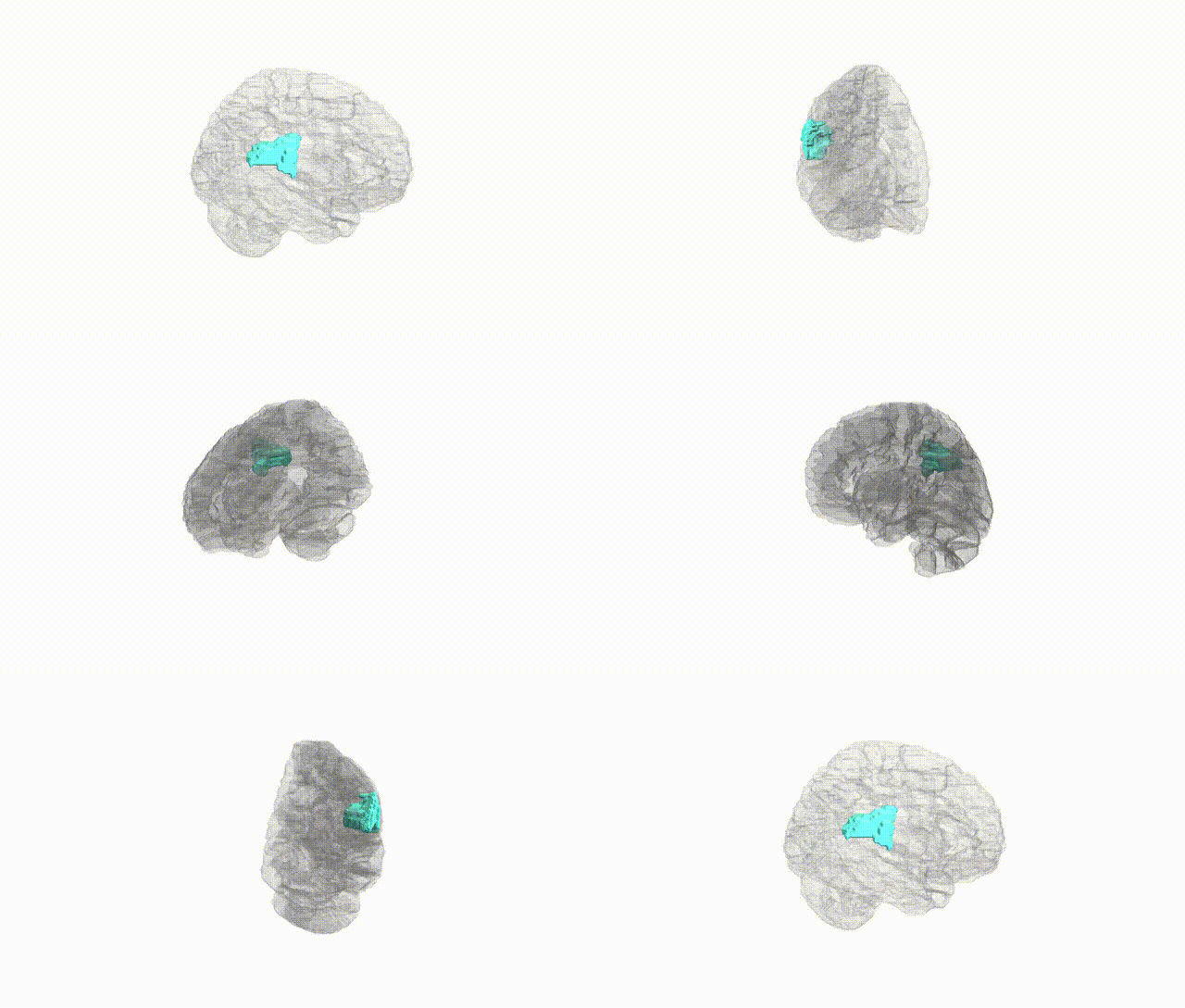
Full Quality Version: Download MP4
Wali Sidiqyar*, Gaurav Rudravaram*, Elyssa M. McMaster, Trent M. Schwartz, Adam M. Saunders, Kurt G. Schilling, Bennett A. Landman "Introducing SPINS: A Shared Public Visualization Library of Neuroanatomical Structures." Medical Imaging with Deep Learning- short paper
This resource is licensed under CC0 1.0 Universal (Public Domain).