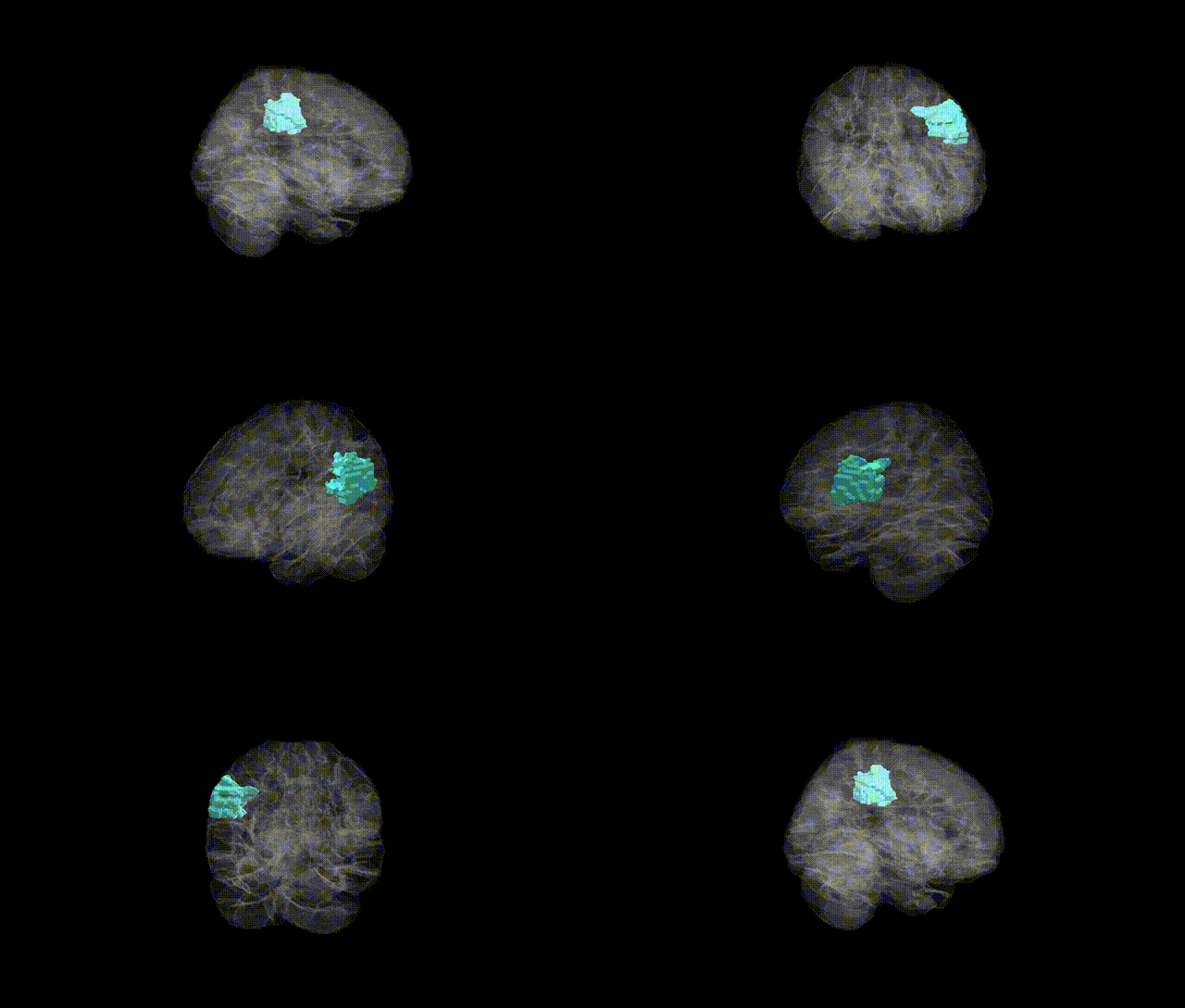
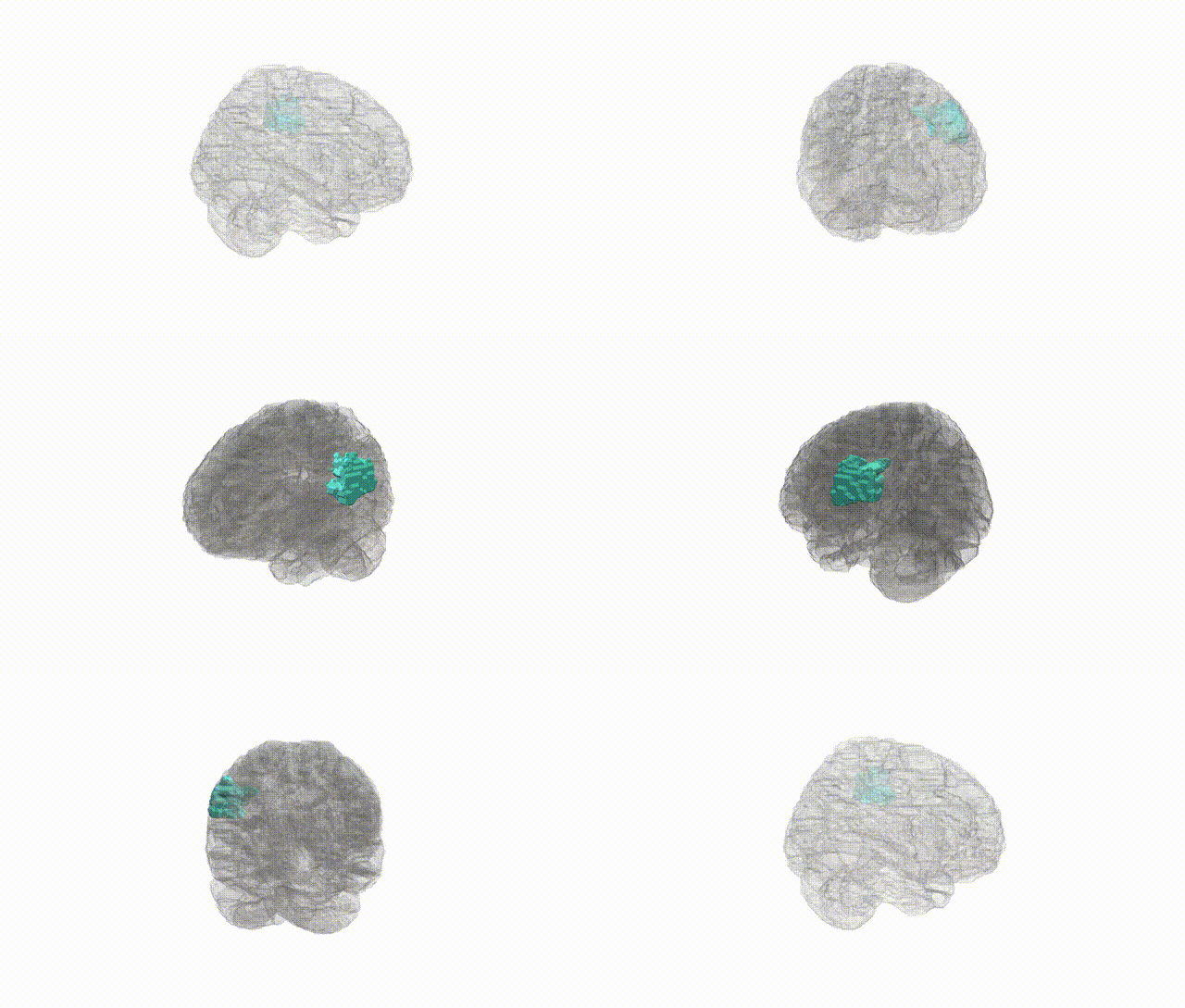
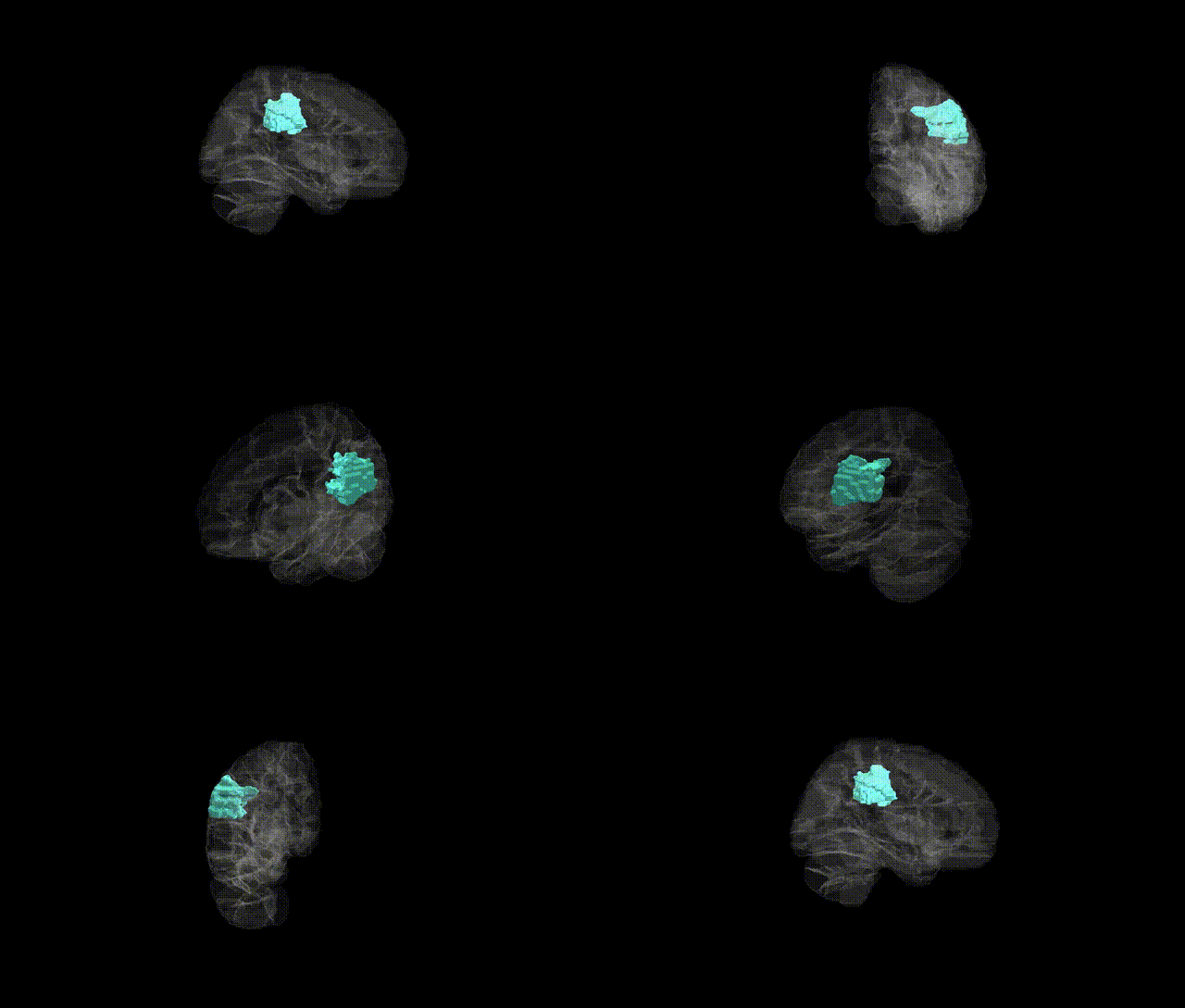
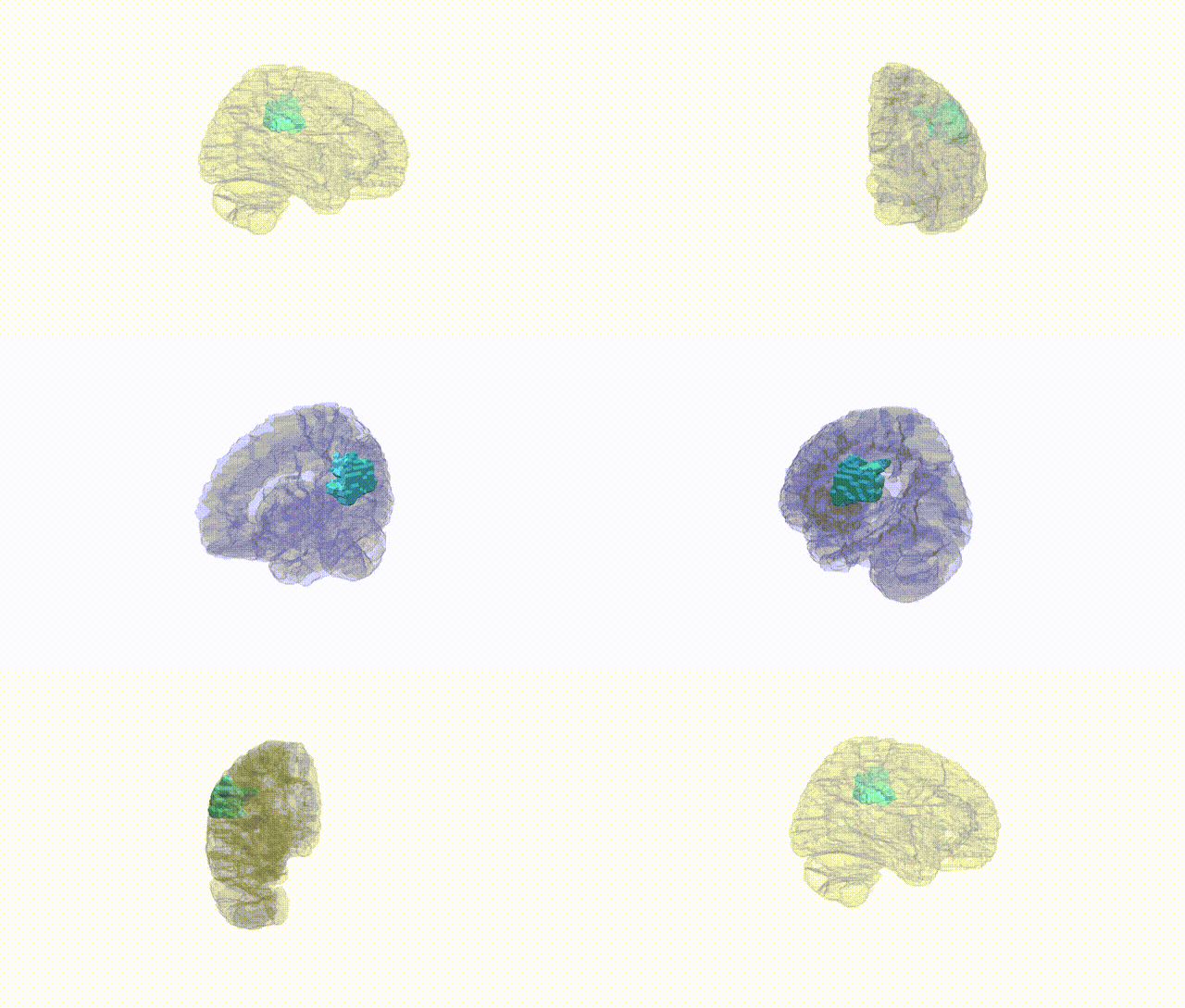
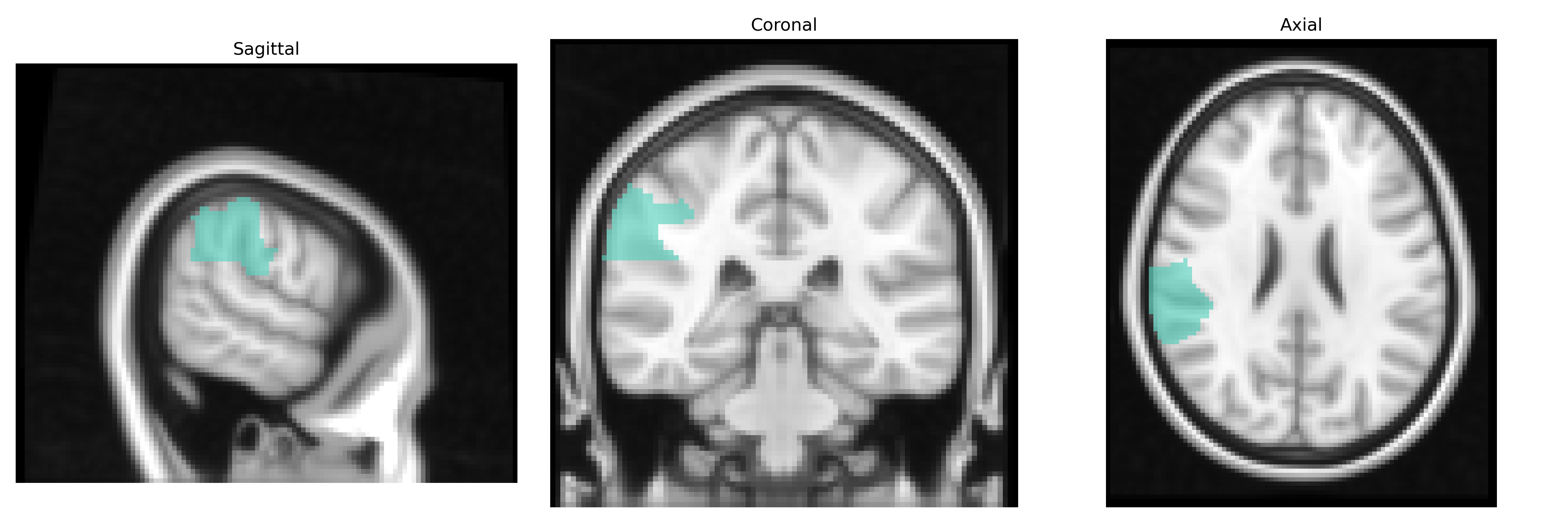
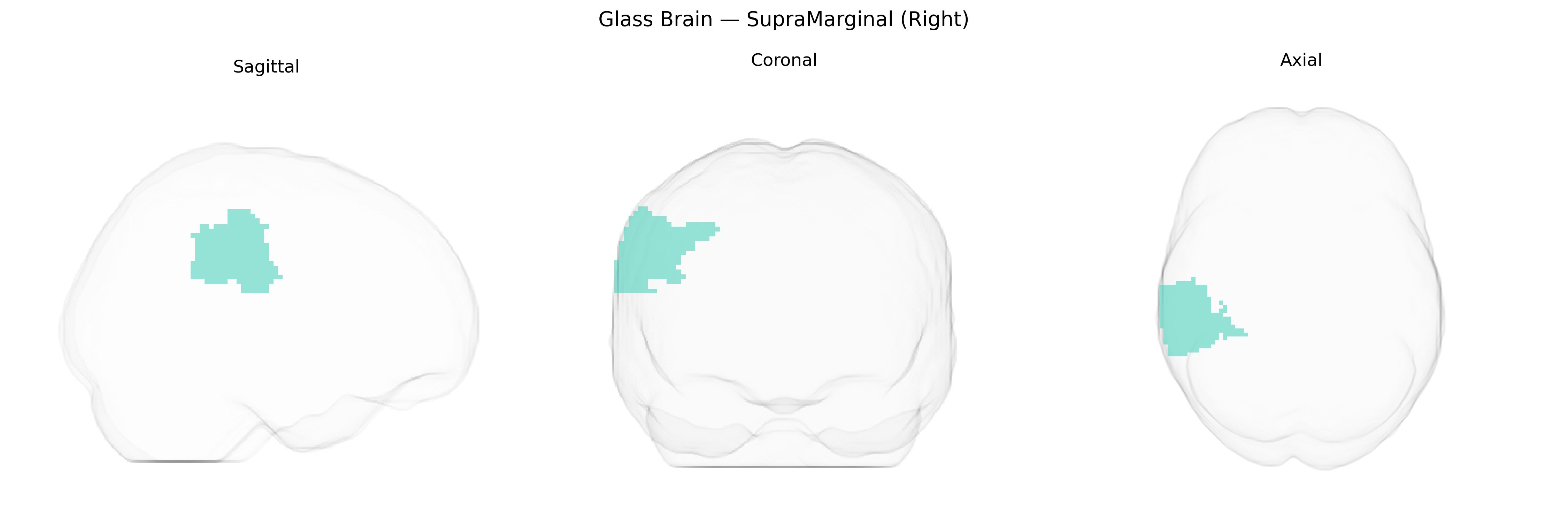
The right supramarginal gyrus, as defined in the AAL2 atlas, is a cortical region of the inferior parietal lobule that curves around the posterior end of the lateral (Sylvian) fissure, situated dorsal to the superior temporal gyrus and posterior to the postcentral gyrus. It is implicated in multimodal integration of somatosensory, auditory, and visual information, and plays key roles in phonological processing, language comprehension, proprioception, spatial attention, and aspects of social cognition such as empathy and perspective taking, with notable hemispheric specialization: the right supramarginal gyrus is particularly associated with spatial and attentional functions and emotional processing. Structurally, it is interconnected with frontal, temporal, and other parietal regions via association fiber pathways including segments of the superior longitudinal fasciculus, supporting its role as a hub in fronto-parietal and temporo-parietal networks. There is no direct link for the “supramarginal (right)” AAL2 label; a related structure is the supramarginal gyrus: Supramarginal gyrus.
The right supramarginal gyrus (AAL2: SupraMarginal_R), a key component of the inferior parietal lobule implicated in language, social cognition, and sensorimotor integration, features prominently in imaging genetics literature where regional volume, cortical thickness, and activation patterns have been tied to common genetic variants. Large-scale GWAS of brain morphology (e.g., ENIGMA and UK Biobank–based studies) have identified associations between right supramarginal structural measures and variants near genes involved in neurodevelopment and synaptic function, including loci adjacent to FOXO3, DLG2, and several glutamatergic and neuroplasticity-related genes, though individual effect sizes are small and often below genome-wide significance for this specific parcel. Polygenic risk scores for schizophrenia, autism spectrum disorder, attention-deficit/hyperactivity disorder, and major depressive disorder show correlations with altered structure or connectivity of supramarginal regions, and task-based fMRI GWAS link language and reading-related activation (including phonological processing and dyslexia risk) to variants in genes such as KIAA0319 and DCDC2 that influence temporo-parietal circuits encompassing the supramarginal gyrus. Additionally, genetic liability to Alzheimer’s disease (e.g., APOE ε4) and frontotemporal dementia has been associated with early structural and functional changes in inferior parietal and supramarginal areas, and GWAS of empathy, social cognition, and prosody-related traits implicate right supramarginal function as a mediator between polygenic architectures of social–emotional processing and observed behavior, though these links are generally indirect and region-level findings remain less specific than gene-level or network-based results.
Overview generated by GPT-4o (2026).
Region ID: 6212
Hemisphere: right
Atlas: AAL2
Full Quality Version: Download MP4
Full Quality Version: Download MP4
Full Quality Version: Download MP4
Full Quality Version: Download MP4
Wali Sidiqyar*, Gaurav Rudravaram*, Elyssa M. McMaster, Trent M. Schwartz, Adam M. Saunders, Kurt G. Schilling, Bennett A. Landman "Introducing SPINS: A Shared Public Visualization Library of Neuroanatomical Structures." Medical Imaging with Deep Learning- short paper
This resource is licensed under CC0 1.0 Universal (Public Domain).