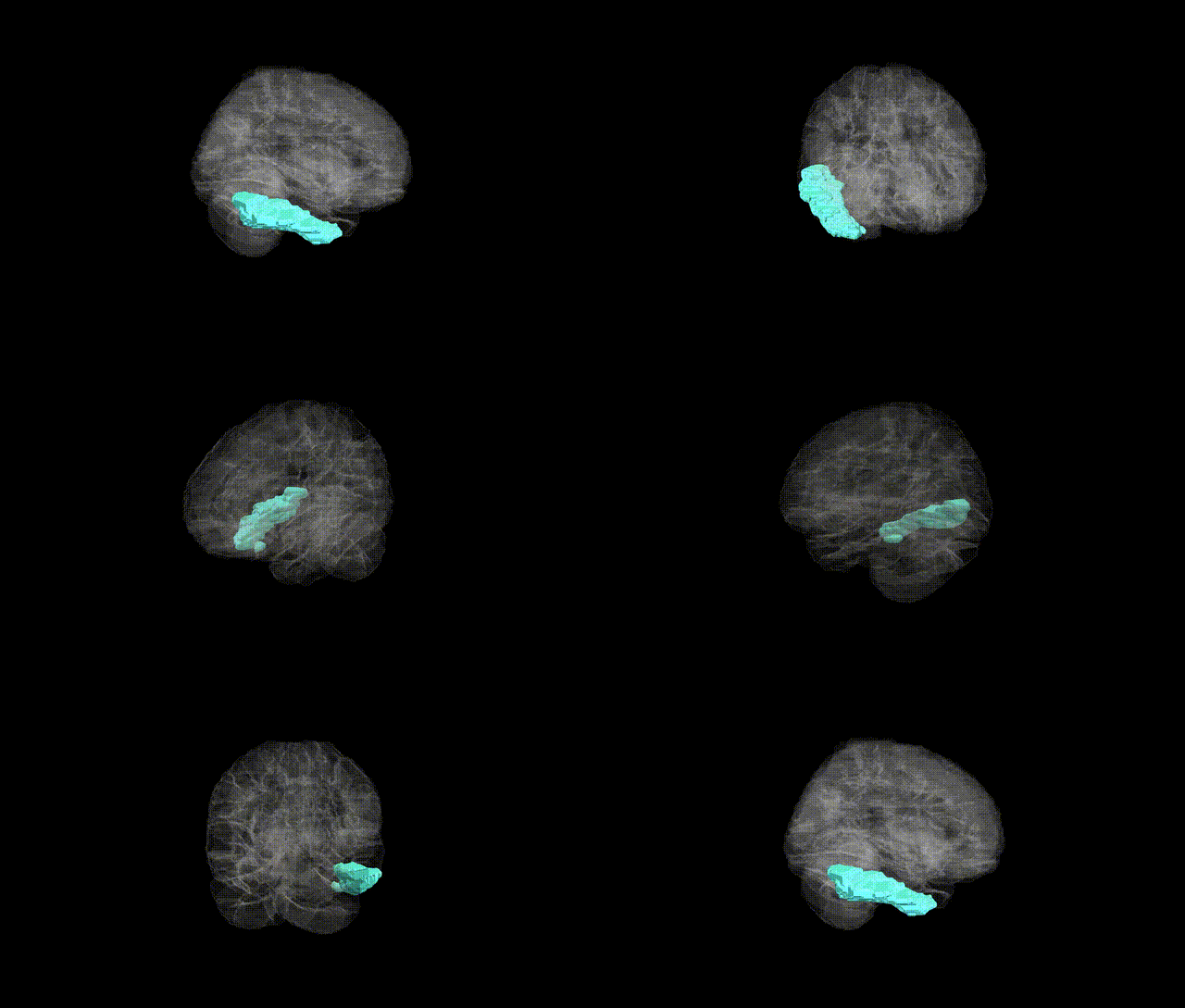
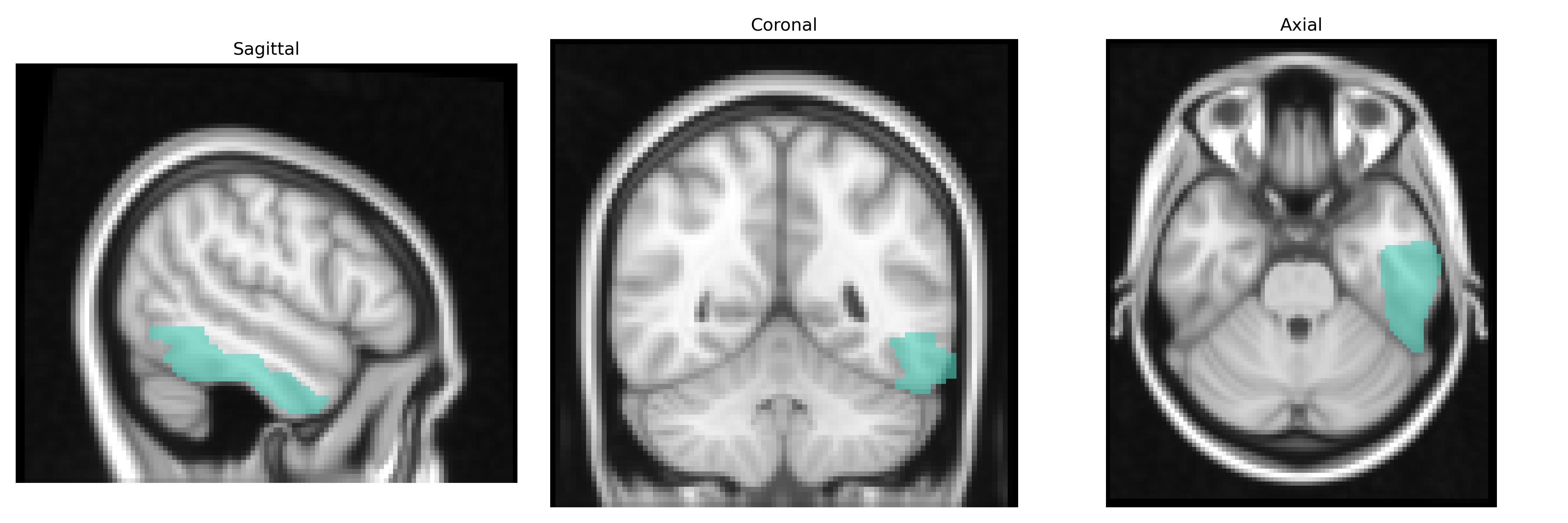
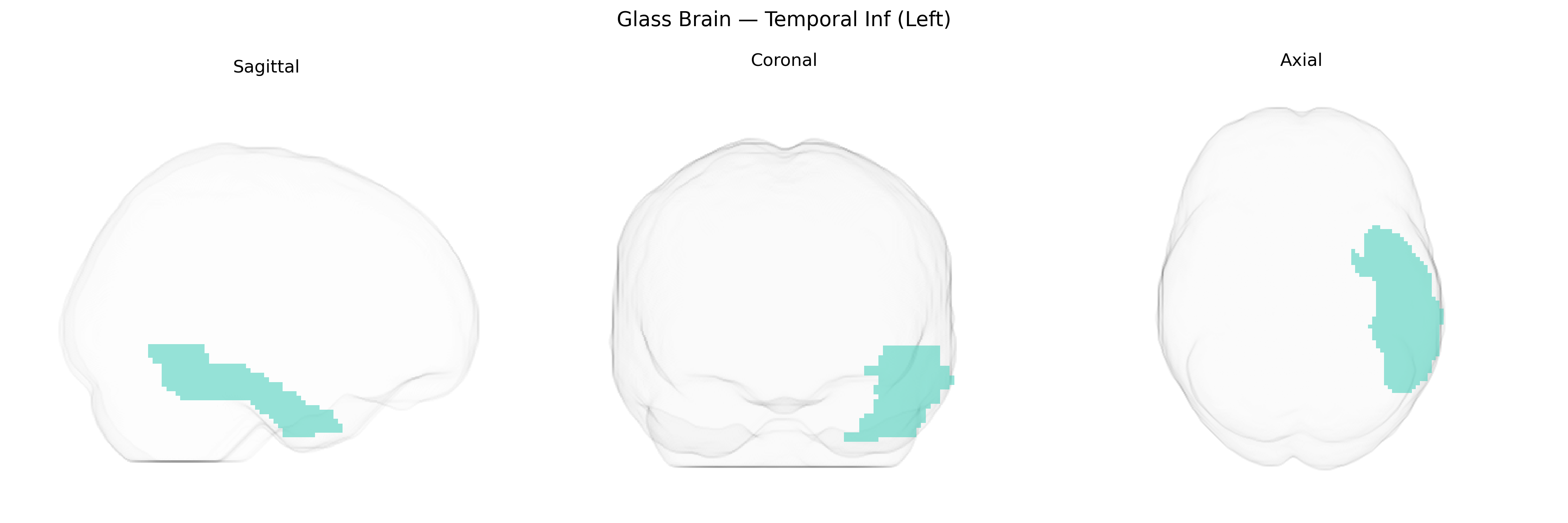
The left inferior temporal gyrus (Temporal Inf Left), as defined in the AAL2 atlas, is a ventral cortical region of the temporal lobe located along the inferior temporal surface between the middle temporal gyrus dorsally and the occipitotemporal (fusiform) region medially, extending from the temporal pole toward the occipital lobe. It is supplied primarily by branches of the middle cerebral artery and is composed of multimodal association cortex involved in high-level visual processing, including object recognition, complex shape and form analysis, and aspects of semantic processing related to visual stimuli. This region participates in distributed networks for visual perception, language comprehension, and memory, integrating inputs from early visual cortices and projecting to limbic and frontal association areas. There is no direct Wikipedia article for “inferior temporal gyrus (left)” as a separate entry; a closely related structure is described under Inferior temporal gyrus.
The left inferior temporal gyrus (Temporal Inf L in the AAL2 atlas) is genetically implicated in multiple neurocognitive and psychiatric dimensions, primarily through GWAS of cortical structure and function rather than region-specific disease studies. Large imaging-genetics consortia (e.g., ENIGMA, UK Biobank) have identified heritable variation in inferior temporal cortical thickness and surface area associated with SNPs near genes involved in neurodevelopment, synaptic organization, and axonal guidance, including loci near KIAA0586, WNT signaling components, and other cortical patterning genes, though these findings are generally reported at the level of “inferior temporal cortex” rather than AAL2-defined subregions. Polygenic risk scores for schizophrenia, bipolar disorder, and major depressive disorder show associations with altered temporal cortical morphology, including inferior temporal regions, and Alzheimer’s disease GWAS have linked APOE and other risk loci to atrophy patterns that encompass the inferior temporal cortex as part of broader temporal lobe degeneration. Language and reading-related traits, such as dyslexia and verbal memory, have also been tied to left temporal cortical genetics, with variants near DCDC2, KIAA0319, and other neurodevelopmental genes contributing to structural and functional differences in temporo-occipital areas supporting visual word form processing and semantic integration, which overlap with the inferior temporal gyrus. Overall, genetic associations involving Temporal Inf L emerge as part of distributed temporal and occipitotemporal networks implicated in higher-order visual, language, and memory functions, rather than as isolated region-specific loci.
Overview generated by GPT-4o (2026).
Region ID: 8301
Hemisphere: left
Atlas: AAL2
Full Quality Version: Download MP4
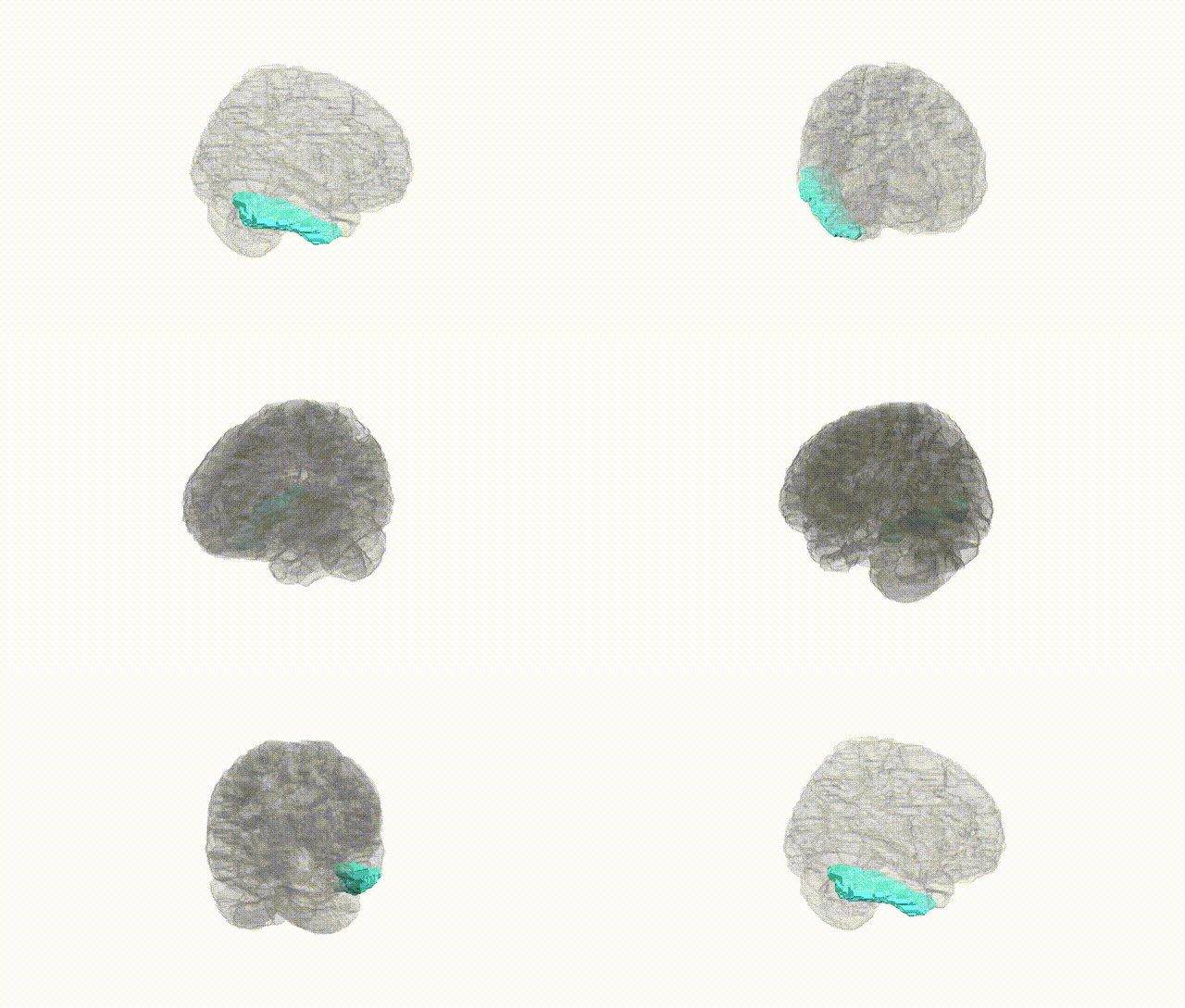
Full Quality Version: Download MP4
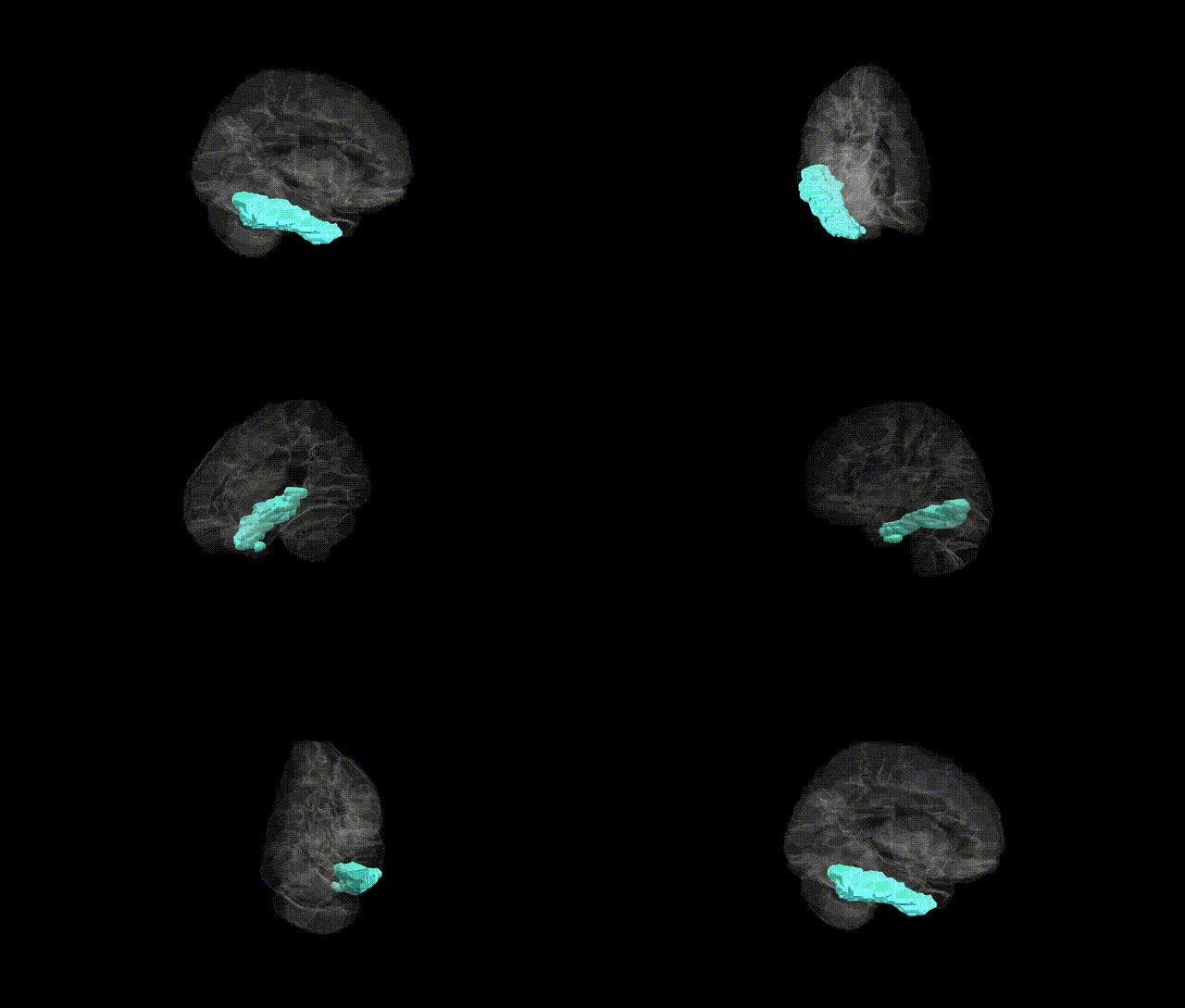
Full Quality Version: Download MP4
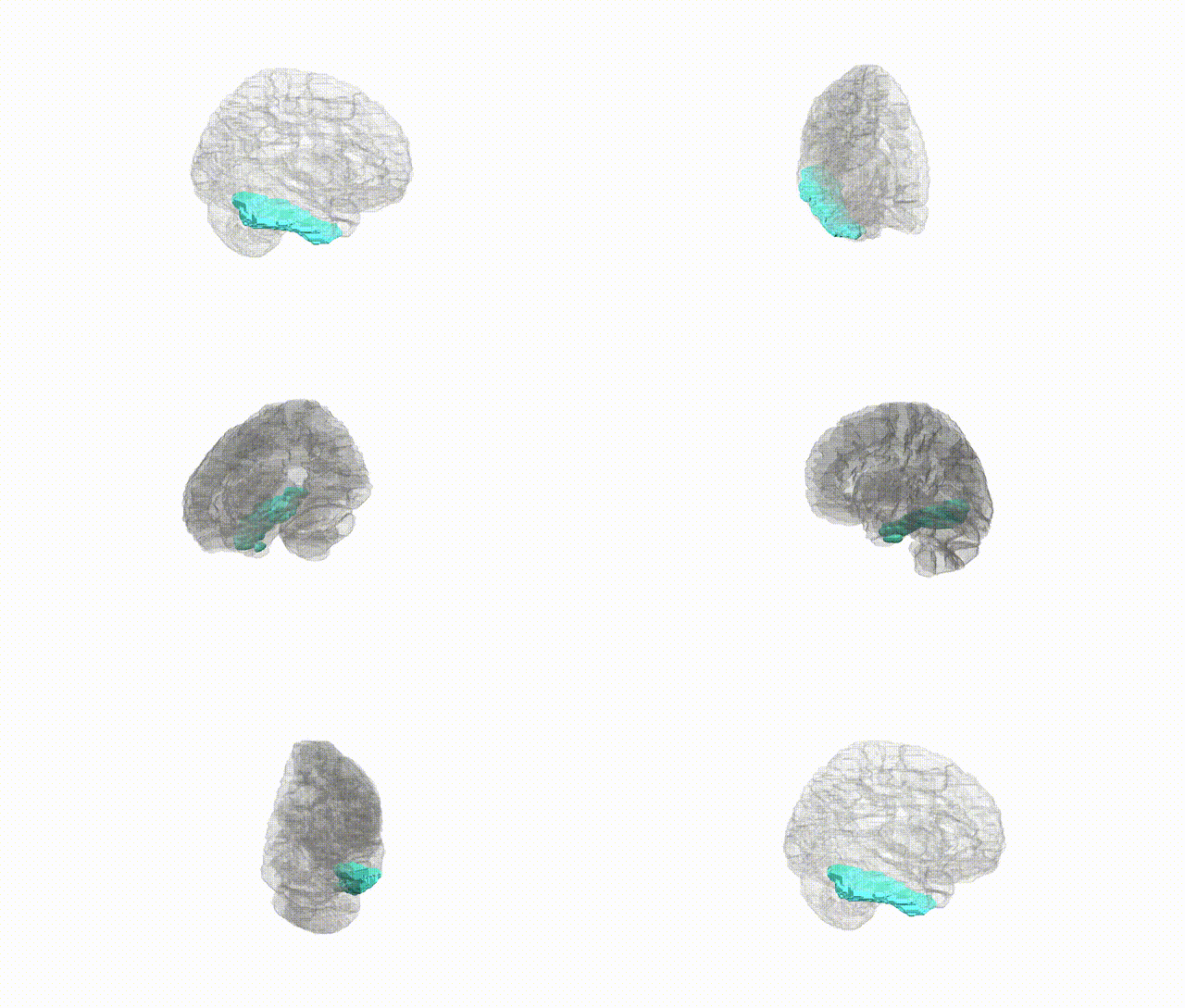
Full Quality Version: Download MP4
Wali Sidiqyar*, Gaurav Rudravaram*, Elyssa M. McMaster, Trent M. Schwartz, Adam M. Saunders, Kurt G. Schilling, Bennett A. Landman "Introducing SPINS: A Shared Public Visualization Library of Neuroanatomical Structures." Medical Imaging with Deep Learning- short paper
This resource is licensed under CC0 1.0 Universal (Public Domain).