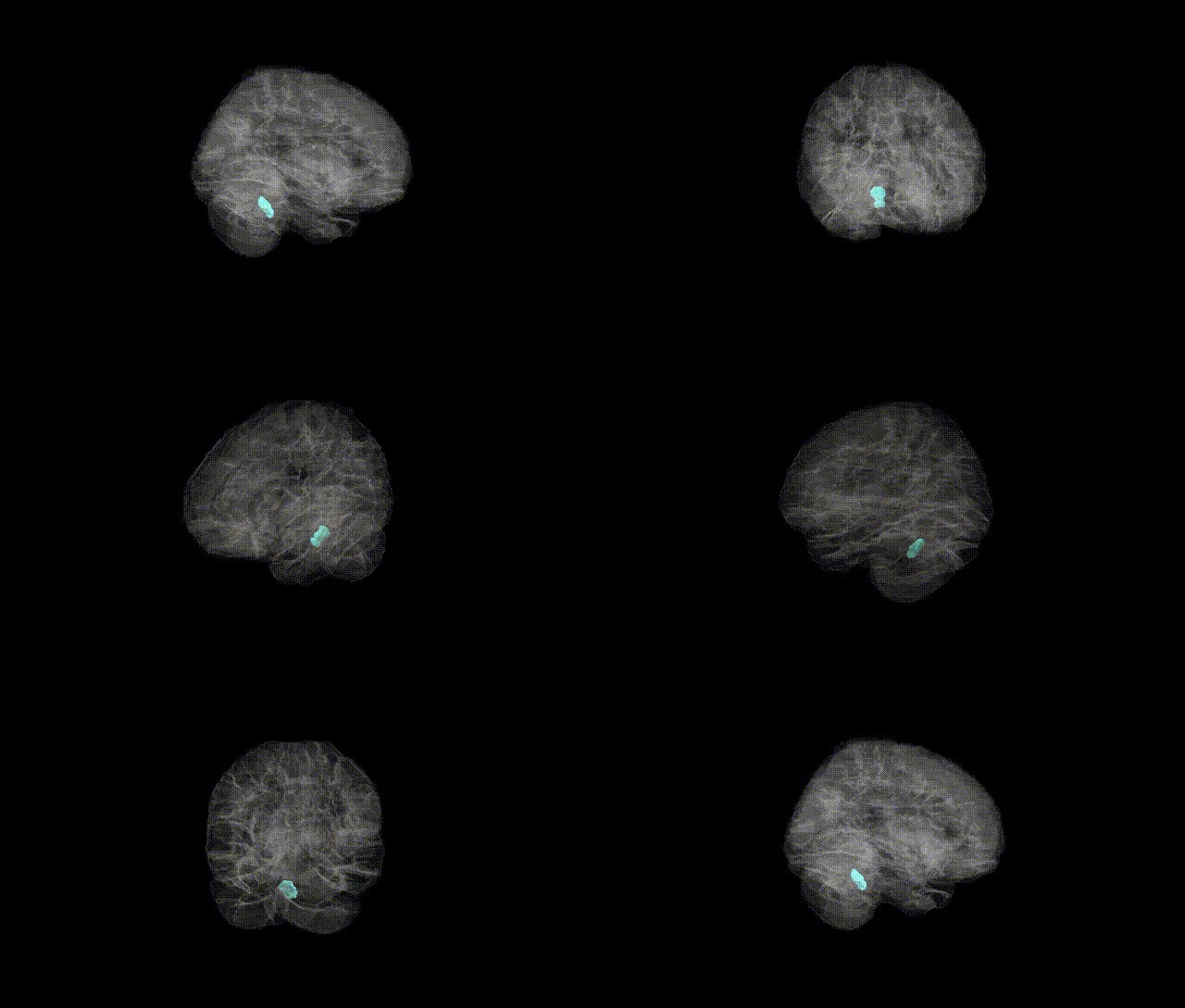
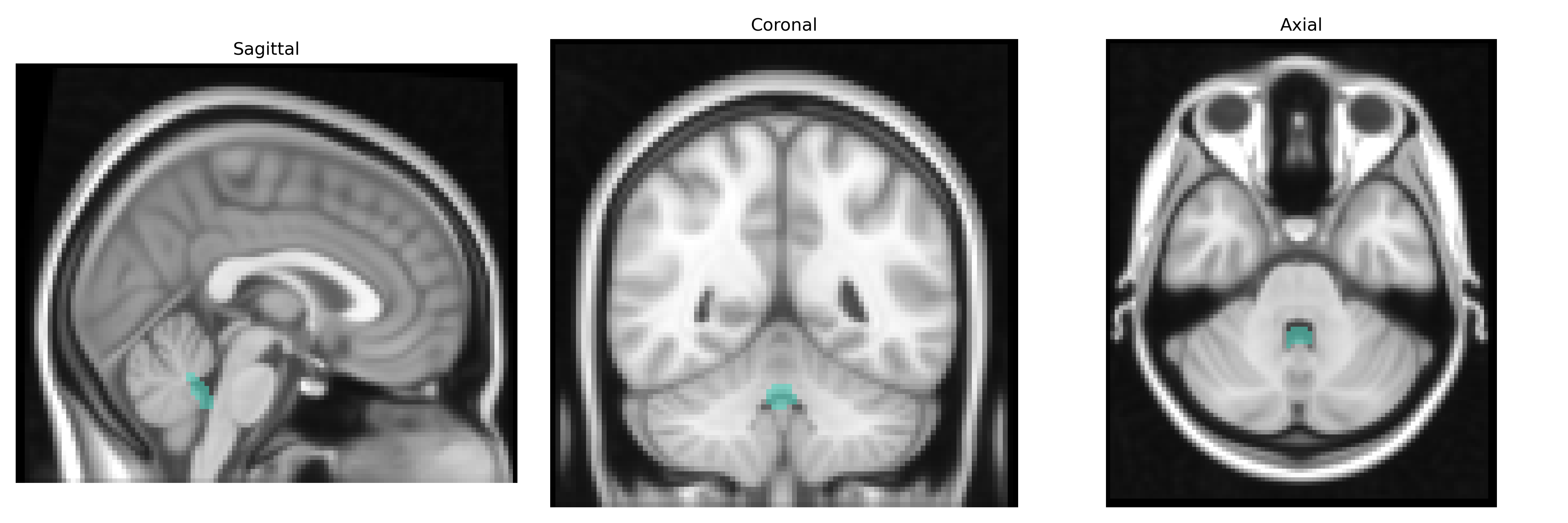
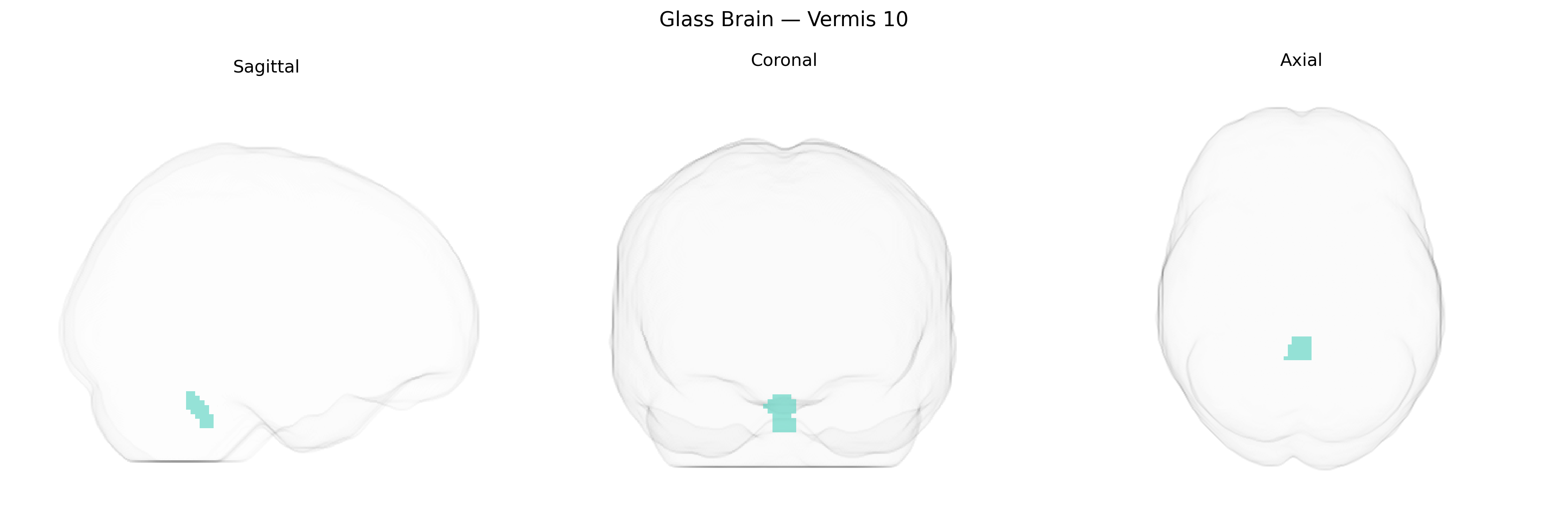
Vermis 10 (bilateral) in the AAL2 atlas corresponds to the nodular portion of the cerebellar vermis, located in the most caudal part of the cerebellum and forming a key component of the vestibulocerebellum. This region is particularly involved in the regulation of balance, posture, and eye movements through its strong connections with the vestibular nuclei and brainstem oculomotor structures. Functionally, Vermis 10 contributes to the integration of visual and vestibular information for stable gaze and coordinated head–eye movements, and lesions here are associated with nystagmus, gait ataxia, and impaired equilibrium. There is no direct Wikipedia article specifically for “Vermis 10”; a closely related and encompassing structure is the cerebellar vermis: Cerebellar vermis.
Genetic associations specific to the bilateral Vermis 10 (uvular lobule of the cerebellar vermis) in the AAL2 atlas are still sparse, but several GWAS and imaging genetics studies implicate nearby cerebellar vermis structures, including Vermis 10, in neurodevelopmental and psychiatric phenotypes. Large-scale brain morphology GWAS (e.g., ENIGMA-related and UK Biobank studies) have identified variants in genes involved in neural development, synaptic function, and cell adhesion (such as KIAA0586, DLG2, and CACNA1C) associated with cerebellar volume and vermis size, suggesting that polygenic influences on cerebellar structure extend to Vermis 10. Cerebellar vermis abnormalities, often encompassing posterior lobules including Vermis 10, have been reported in autism spectrum disorder, attention-deficit/hyperactivity disorder, bipolar disorder, and schizophrenia, with imaging genetics work linking disorder risk alleles (e.g., in CACNA1C, GRM3, and CNTNAP2) to altered cerebellar connectivity or morphology, although these findings usually do not isolate Vermis 10 specifically. In addition, GWAS of cognitive traits and brain functional networks have associated polygenic scores for intelligence, educational attainment, and neuroticism with variability in cerebellar network activity that includes the posterior vermis, implicating broad polygenic architectures rather than single locus effects. Overall, existing evidence supports a role for cerebellar vermis regions, including Vermis 10, in genetically influenced neurodevelopmental and psychiatric phenotypes, but precise, locus-specific GWAS hits mapped exclusively to Vermis 10 remain limited, and most genetic associations are inferred from broader cerebellar or vermis measures rather than this subregion alone.
Overview generated by GPT-4o (2026).
Region ID: 9170
Hemisphere: bilateral
Atlas: AAL2
Full Quality Version: Download MP4
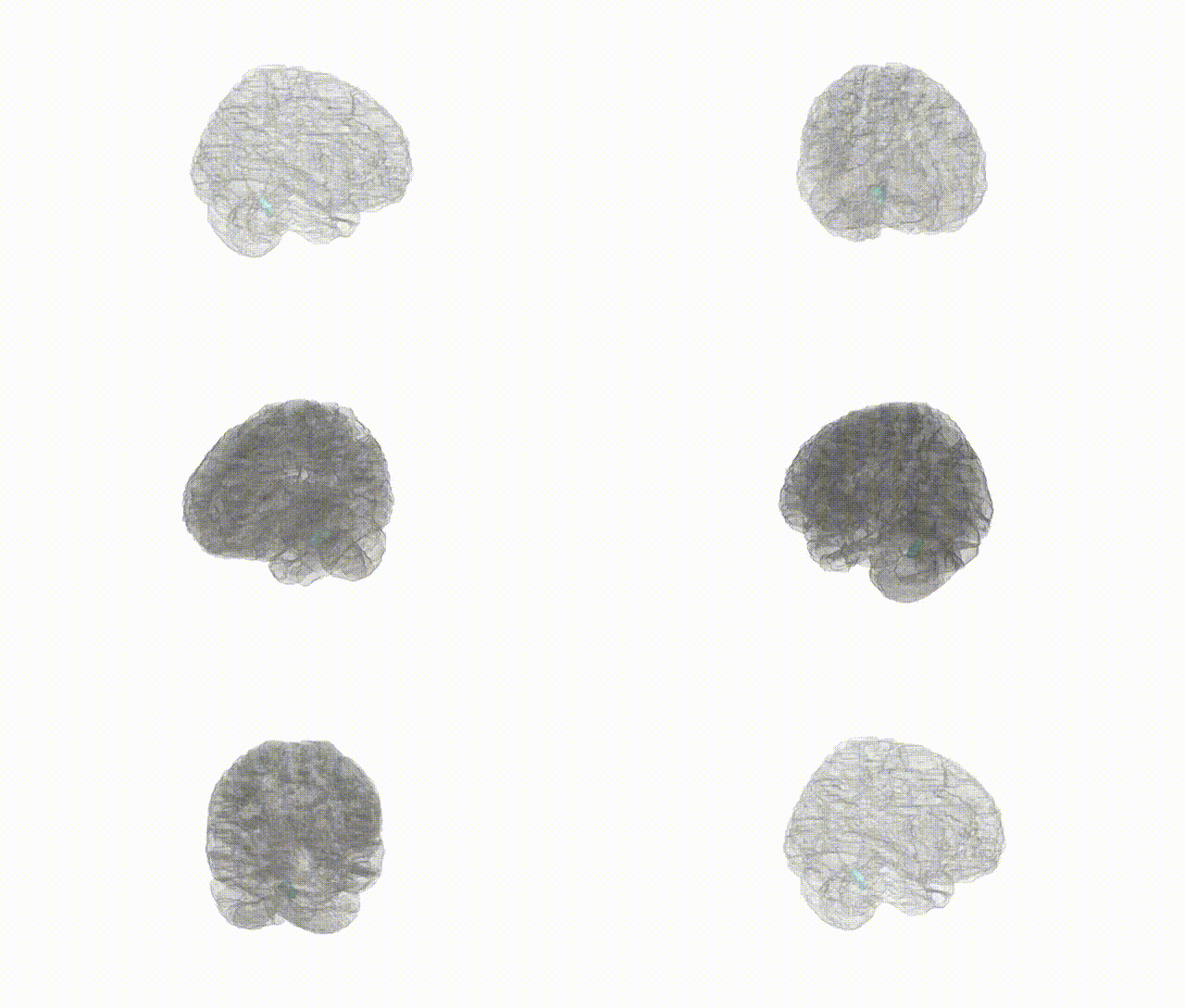
Full Quality Version: Download MP4
Wali Sidiqyar*, Gaurav Rudravaram*, Elyssa M. McMaster, Trent M. Schwartz, Adam M. Saunders, Kurt G. Schilling, Bennett A. Landman "Introducing SPINS: A Shared Public Visualization Library of Neuroanatomical Structures." Medical Imaging with Deep Learning- short paper
This resource is licensed under CC0 1.0 Universal (Public Domain).