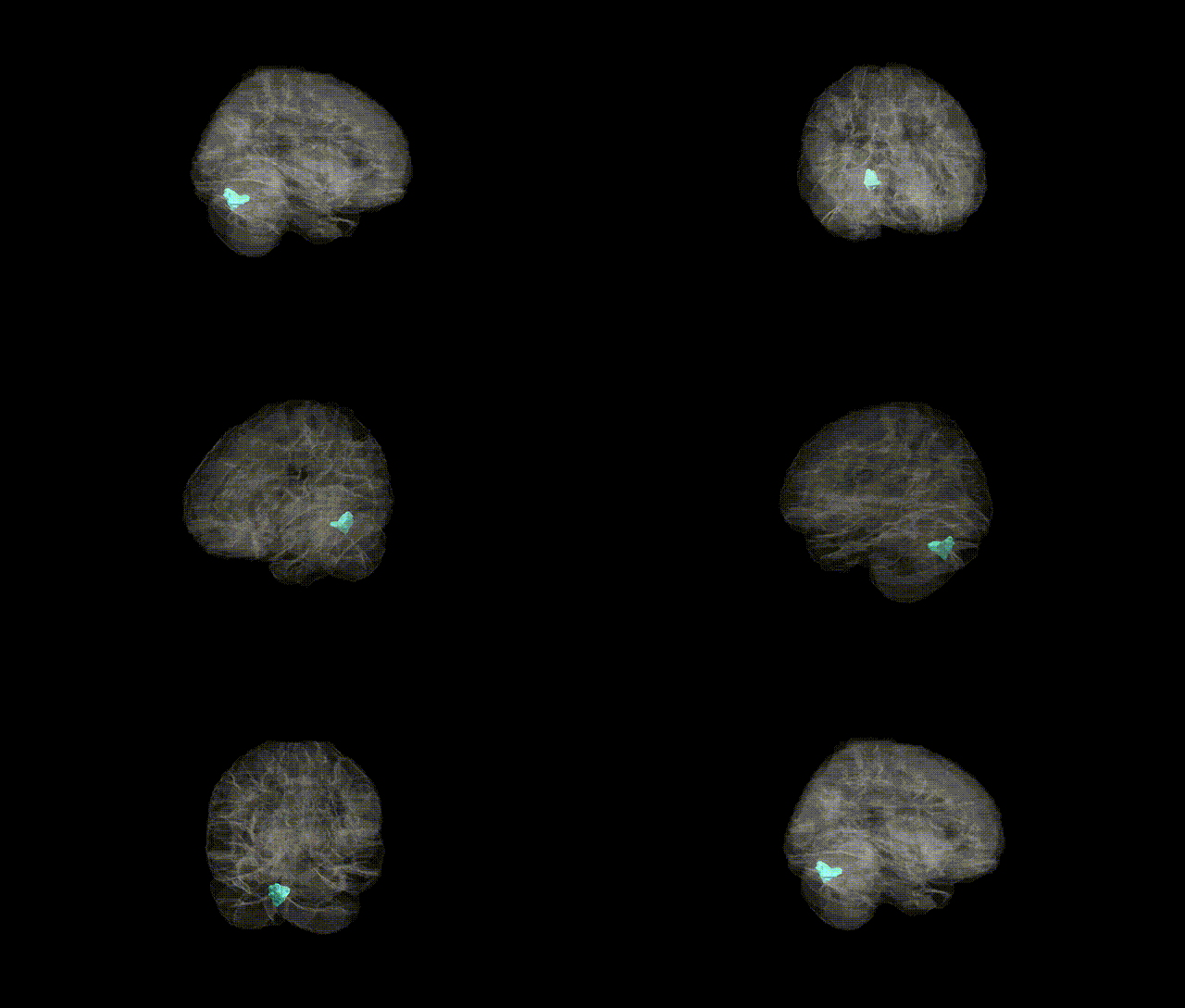
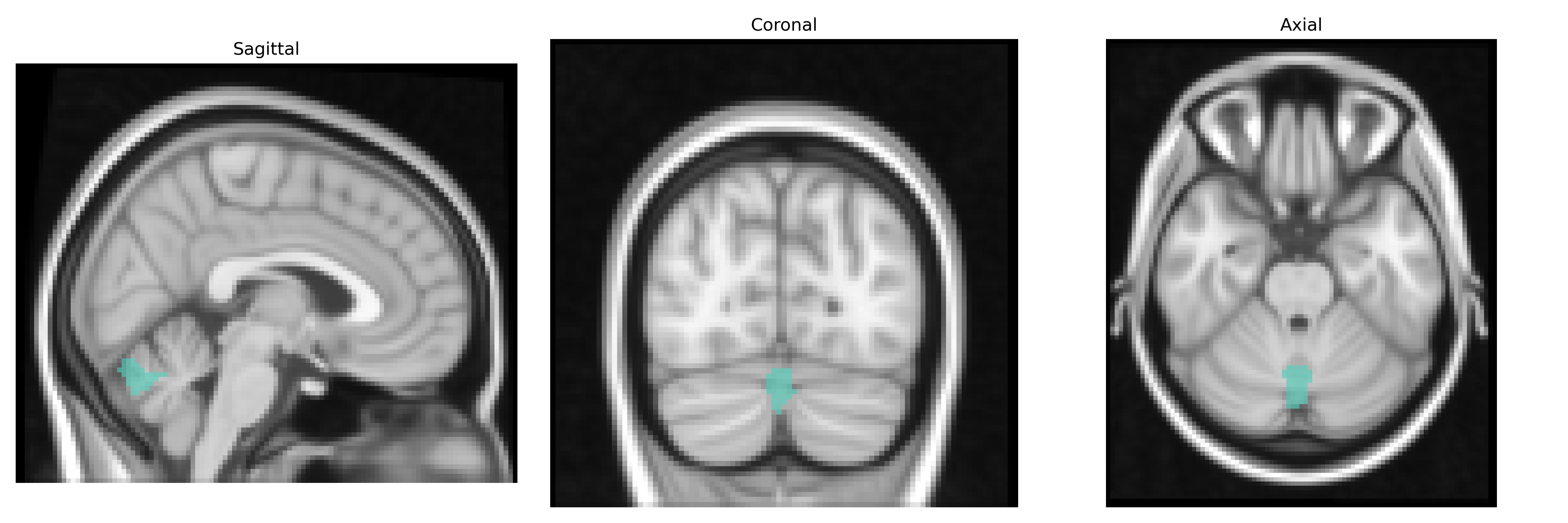
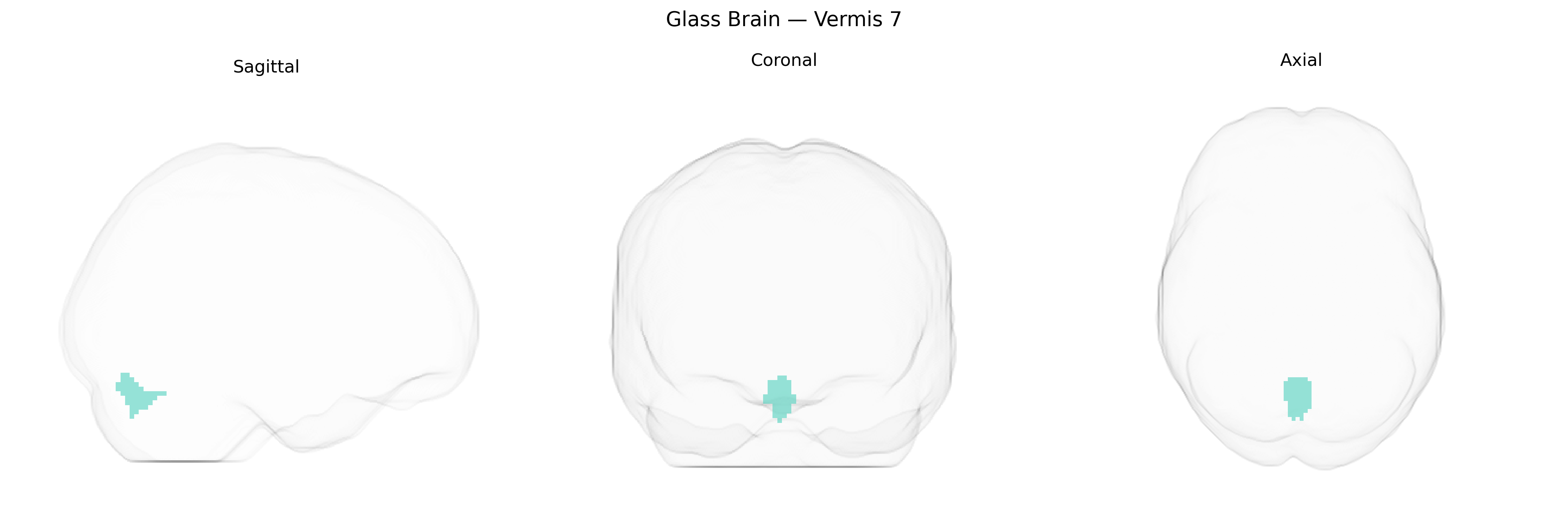
The bilateral Vermis 7 region in the AAL2 atlas corresponds to a midline segment of the posterior cerebellar vermis, generally aligned with lobule VII (including parts of lobules VIIA–VIIB), which is implicated in higher-order cognitive, affective, and oculomotor functions rather than purely motor coordination. Anatomically, Vermis 7 lies between the cerebellar hemispheres, posterior to the primary fissure and superior to more caudal vermal lobules, and is supplied by branches of the superior and posterior inferior cerebellar arteries, with output primarily relayed via deep cerebellar nuclei (notably the fastigial and interposed nuclei) to thalamic and brainstem targets. Functional imaging and lesion studies link this region to executive processes, working memory, emotional regulation, and aspects of social cognition, reflecting its integration into cerebro-cerebellar loops with prefrontal, parietal, and limbic cortices. There is no direct Wikipedia article for “Vermis 7”; a related structure is described under Cerebellar vermis.
The bilateral Vermis 7 region in the AAL2 atlas, located within the posterior cerebellar vermis, has been implicated in several genetic and neuropsychiatric contexts, though often at relatively coarse spatial resolution and typically grouped with neighboring cerebellar regions. Large-scale imaging–genetics GWAS (for example, UK Biobank–based studies of brain structure and functional connectivity) have identified associations between common variants in genes involved in neurodevelopment, synaptic signaling, and axon guidance (such as variants near or within genes like CACNA1C, GRIN2B, and genes within major neurodevelopmental loci) and variations in cerebellar vermis volume, thickness, or connectivity patterns that encompass Vermis 7. Genetic correlations and polygenic risk score analyses indicate that posterior vermis alterations share heritable liability with autism spectrum disorder, schizophrenia, bipolar disorder, major depressive disorder, and ADHD, consistent with the cerebellar vermis’s role in affective and cognitive regulation; some of these studies report specific vermis subregion effects, though not always isolating Vermis 7. Additional GWAS and candidate-gene work in neurodevelopmental and mood disorders, as well as traits such as intelligence, educational attainment, and neuroticism, have reported structural or functional abnormalities in the posterior vermis that overlap or likely include Vermis 7, but current genetic findings remain relatively nonspecific at the level of this exact AAL2-defined subregion, reflecting the broader limitation that most imaging–genetics analyses lack fine-grained parcellation capable of assigning robust genetic associations uniquely to Vermis 7.
Overview generated by GPT-4o (2026).
Region ID: 9140
Hemisphere: bilateral
Atlas: AAL2
Full Quality Version: Download MP4
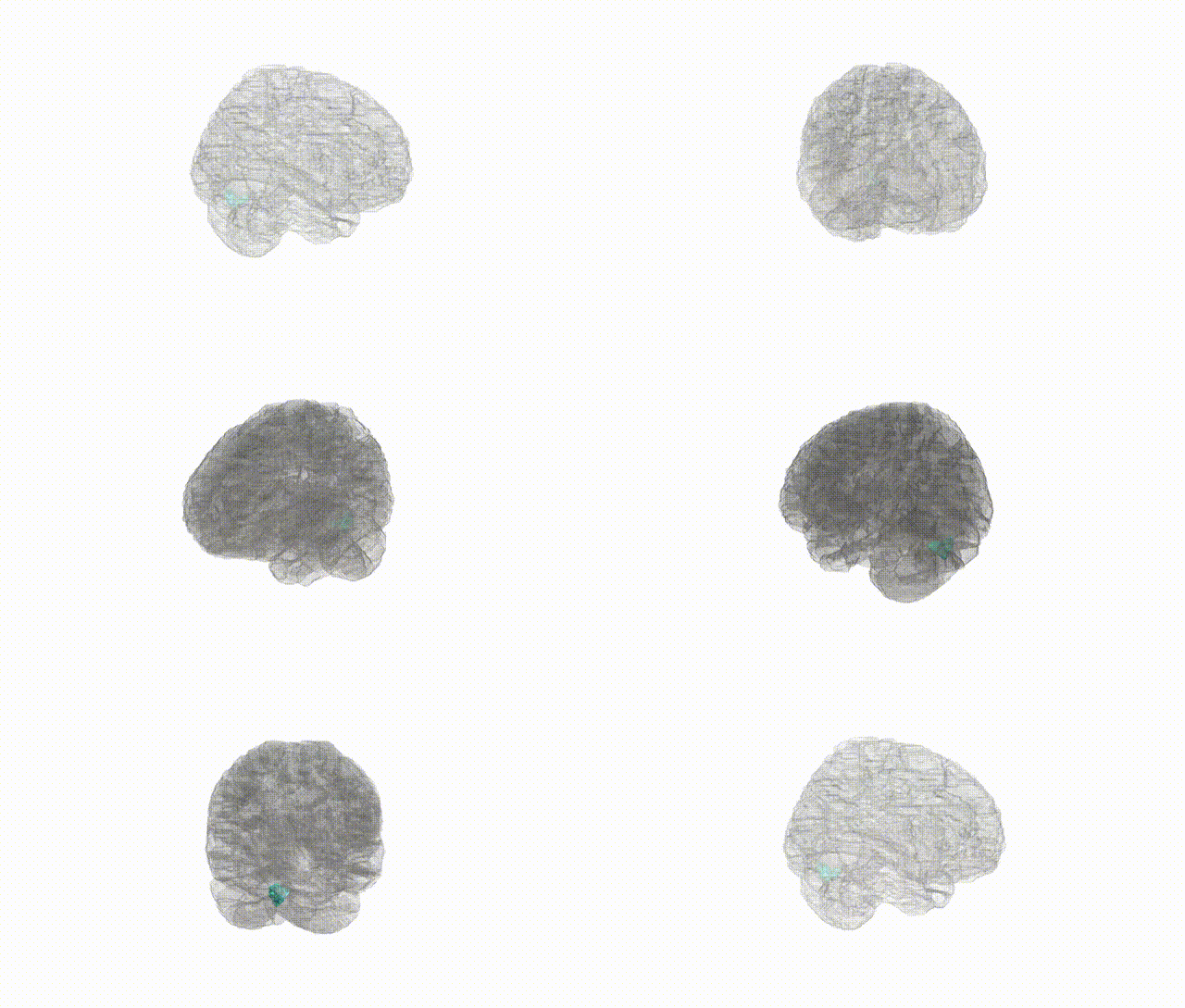
Full Quality Version: Download MP4
Wali Sidiqyar*, Gaurav Rudravaram*, Elyssa M. McMaster, Trent M. Schwartz, Adam M. Saunders, Kurt G. Schilling, Bennett A. Landman "Introducing SPINS: A Shared Public Visualization Library of Neuroanatomical Structures." Medical Imaging with Deep Learning- short paper
This resource is licensed under CC0 1.0 Universal (Public Domain).