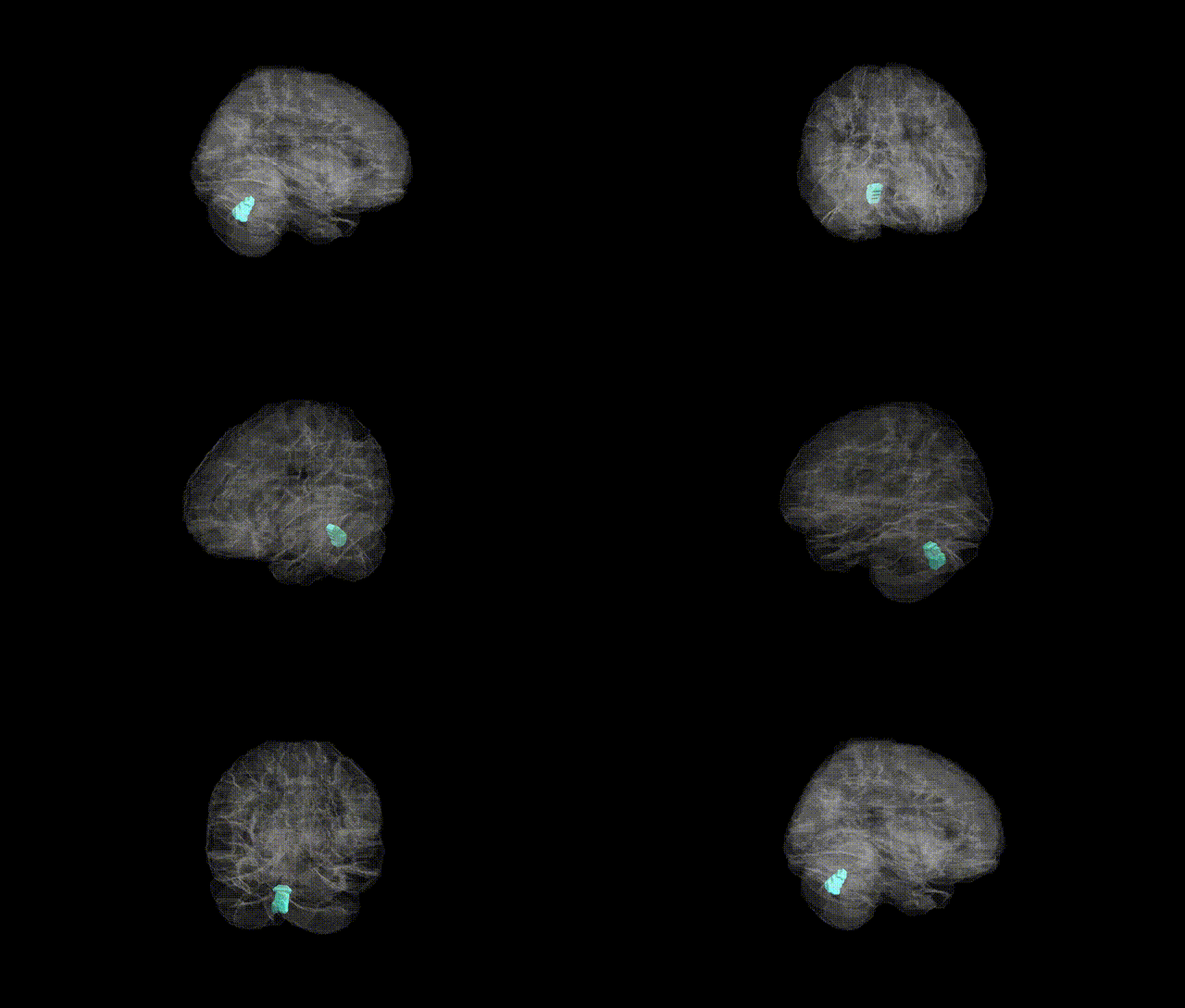
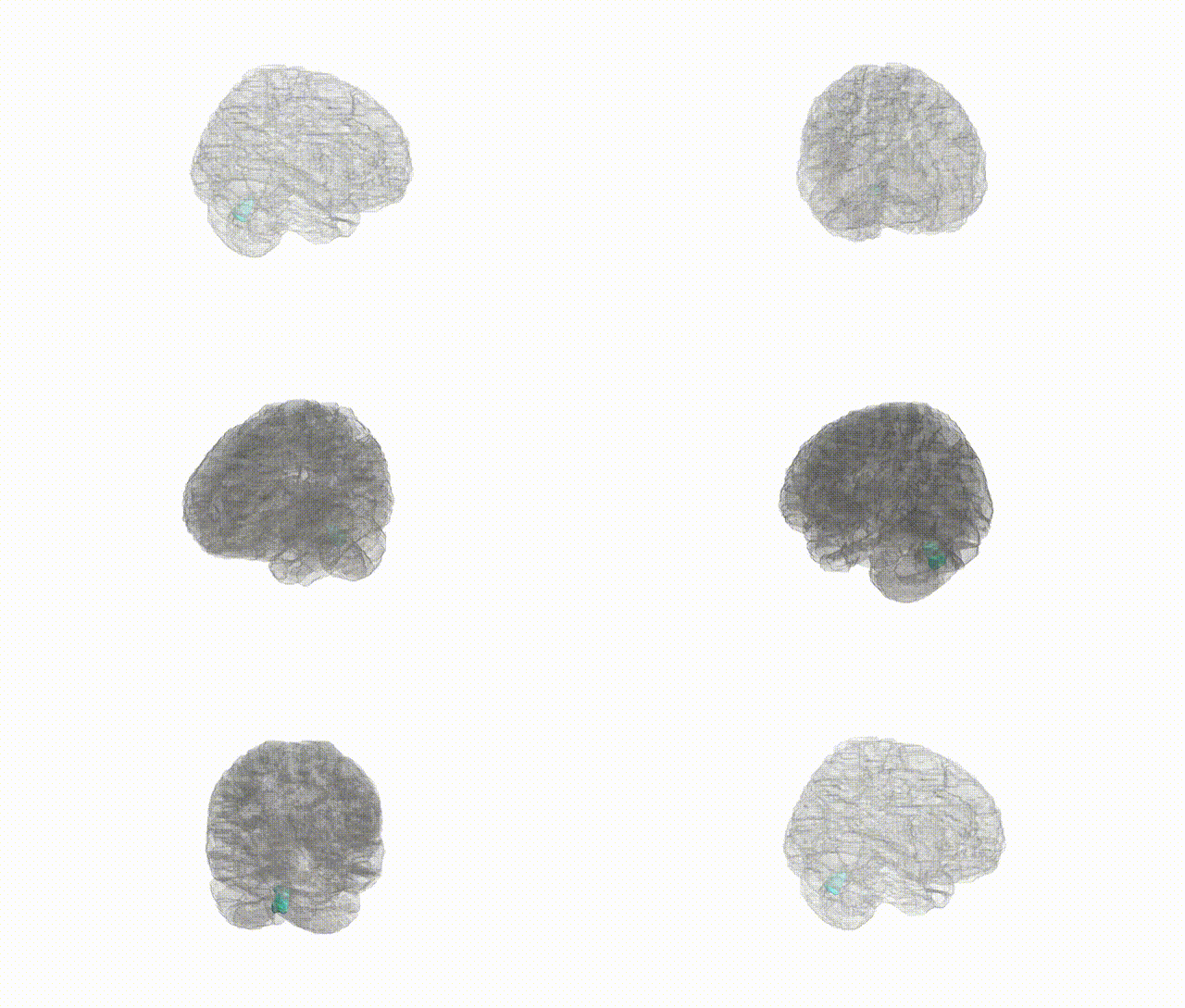
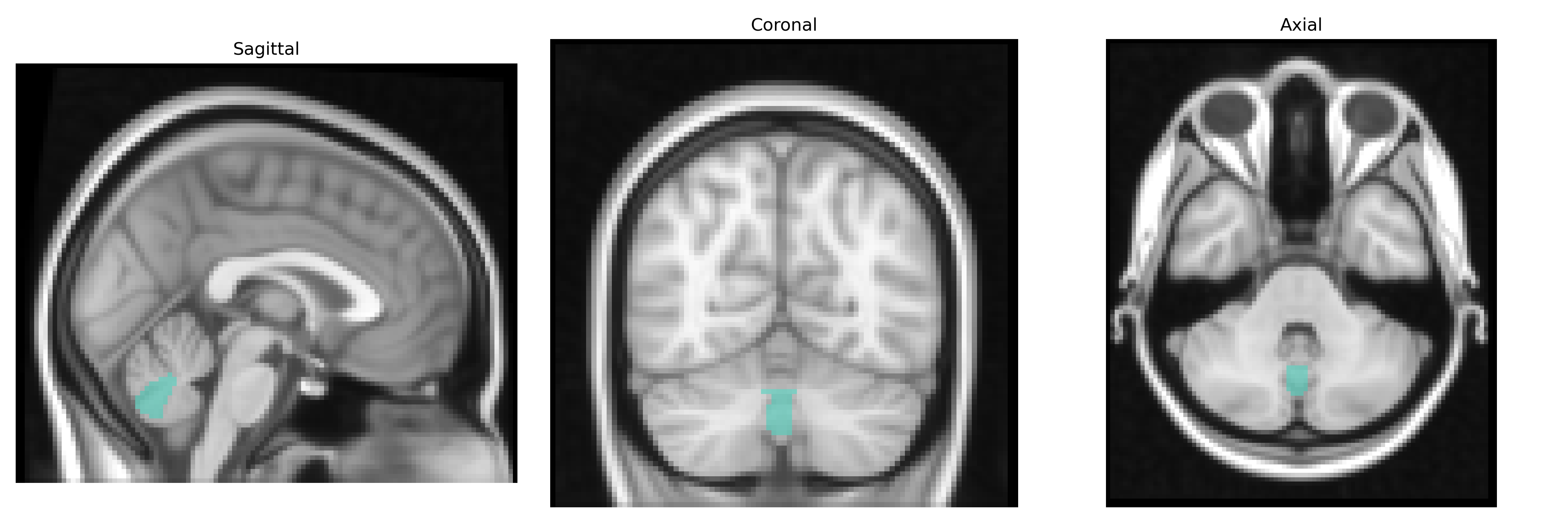
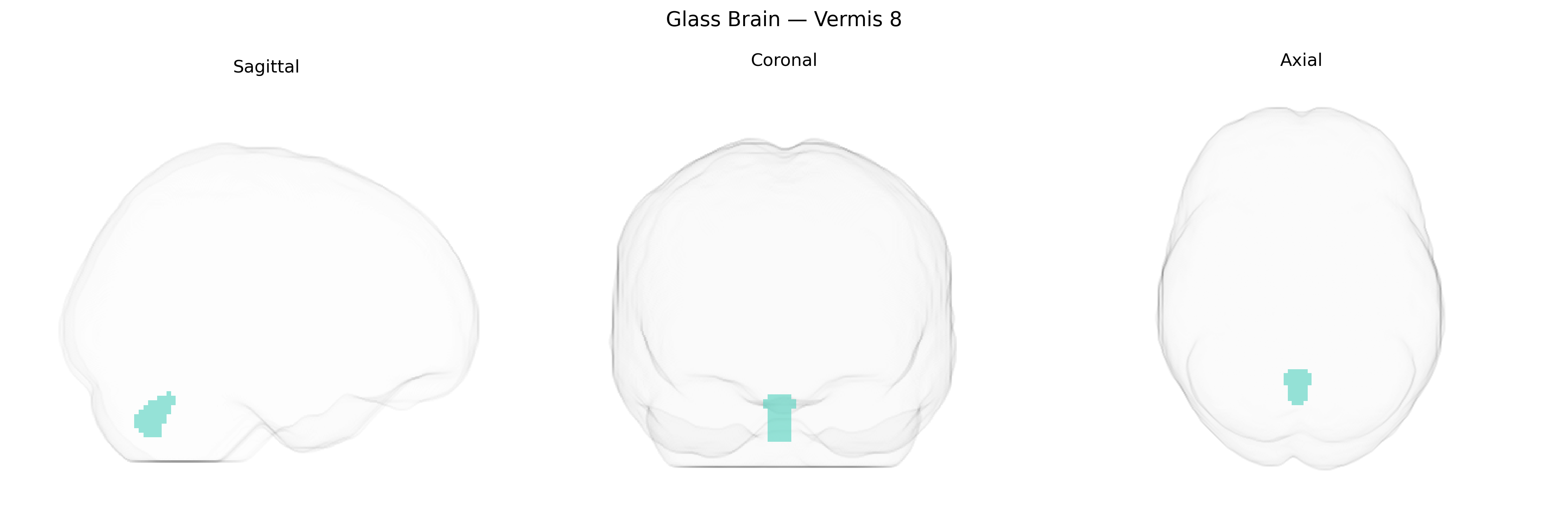
The bilateral Vermis 8 region in the AAL2 atlas corresponds to a midline segment of the cerebellar vermis within lobule VIII, located in the posterior lobe of the cerebellum. This region is primarily involved in sensorimotor integration and the fine-tuning of motor coordination, particularly in the regulation of posture, balance, and precise limb movements. It receives multimodal input from spinal, vestibular, and cortical pathways and projects via deep cerebellar nuclei to motor and premotor cortical areas, contributing to adaptive motor learning and error correction during movement. Vermis 8 has also been implicated in aspects of cognitive and affective processing through its connectivity with frontal and limbic circuits, reflecting the broader role of the cerebellar vermis in both motor and non-motor functions. There is no direct link for “Vermis 8”; a related structure is the cerebellar vermis: Cerebellar vermis.
Genetic associations specific to the AAL2 bilateral Vermis 8 region are limited, as most GWAS and imaging-genetics studies examine broader cerebellar or vermal volumes rather than sublobular parcellations. Variants in genes involved in neurodevelopment and synaptic function (such as CACNA1C, CNTNAP2, RELN, and FOXP2) have been implicated in cerebellar structure and function more generally, and are associated with disorders in which posterior vermis regions—including lobule VIII—show altered morphology, such as autism spectrum disorder, schizophrenia, bipolar disorder, and attention-deficit/hyperactivity disorder. Several large ENIGMA and UK Biobank imaging-GWAS analyses have identified loci (e.g., near KIAA0586, DLG2, and genes in neurodevelopmental pathways) associated with total cerebellar and vermis volume, which may indirectly involve Vermis 8, but these findings are typically reported at the level of total vermis or posterior cerebellar volume rather than AAL2-defined Vermis 8. In neurodegenerative and ataxia-related genetics, mutations in genes such as ATXN1–3, CACNA1A, and others causing hereditary spinocerebellar ataxias have been linked with preferential degeneration of midline cerebellar structures, including the posterior vermis; however, these associations are regionally coarse and do not distinguish Vermis 8 from neighboring lobules. Overall, current genetic literature supports a role for cerebellar vermis-involved pathways in psychiatric, developmental, and motor disorders, but precise GWAS-level or single-gene associations that map specifically and uniquely to bilateral Vermis 8 in the AAL2 atlas have not yet been clearly established.
Overview generated by GPT-4o (2026).
Region ID: 9150
Hemisphere: bilateral
Atlas: AAL2
Full Quality Version: Download MP4
Full Quality Version: Download MP4
Wali Sidiqyar*, Gaurav Rudravaram*, Elyssa M. McMaster, Trent M. Schwartz, Adam M. Saunders, Kurt G. Schilling, Bennett A. Landman "Introducing SPINS: A Shared Public Visualization Library of Neuroanatomical Structures." Medical Imaging with Deep Learning- short paper
This resource is licensed under CC0 1.0 Universal (Public Domain).