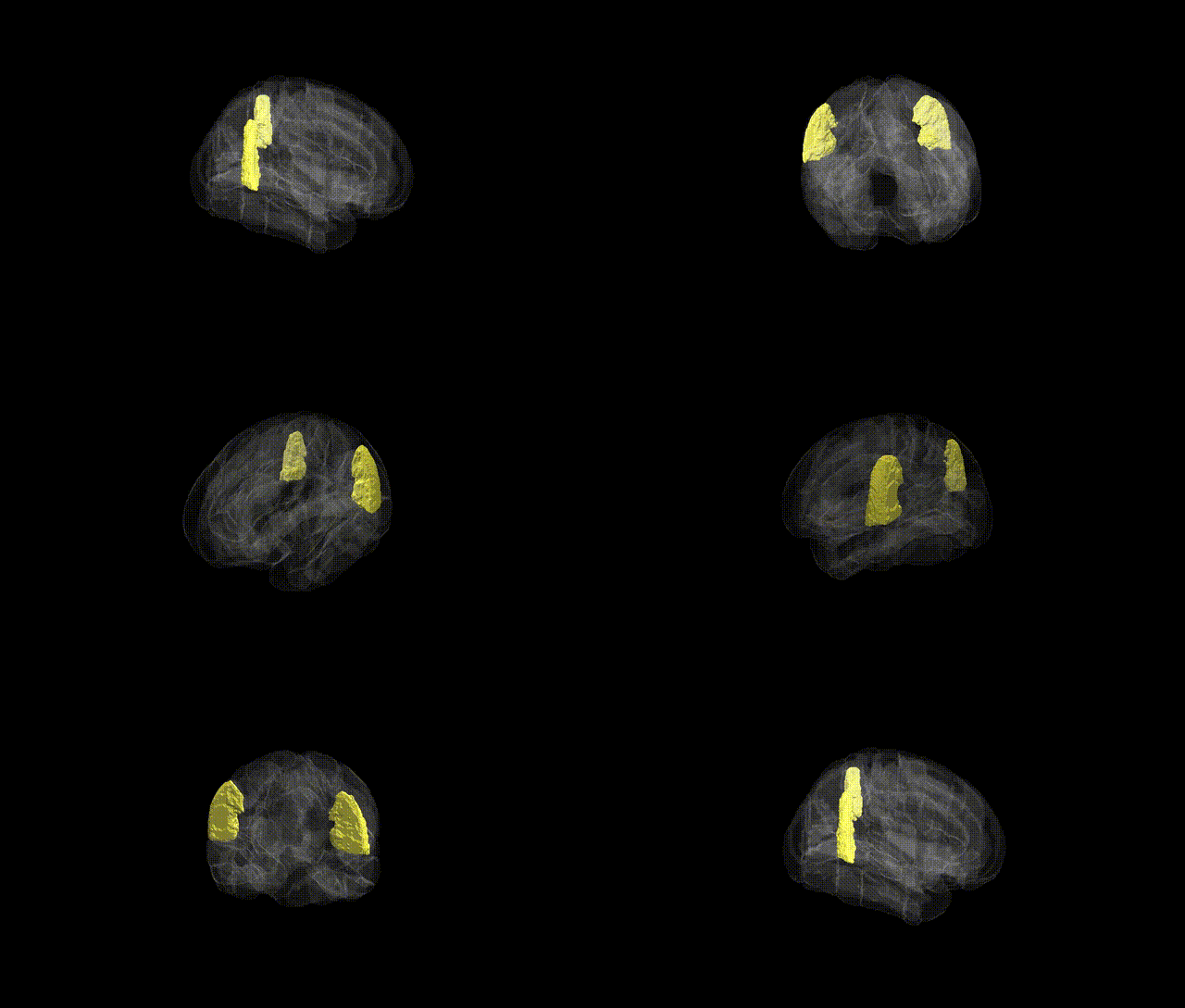
The bilateral Angular Gyrus, as defined in the Harvard-Oxford cortical maxprob thr25 1mm atlas, comprises a pair of heteromodal association cortices located in the posterior inferior parietal lobule, near the junction of the temporal, parietal, and occipital lobes. This region is implicated in high-level integrative functions, including semantic processing, language comprehension, number processing, spatial cognition, theory of mind, and aspects of episodic memory retrieval, reflecting its role in combining multimodal sensory and conceptual information. The Angular Gyrus is also involved in reading and writing, the comprehension of metaphors, and the integration of visual and auditory inputs, and it has been associated with default mode network activity during internally directed cognition. Angular gyrus
The bilateral angular gyrus, as defined in the Harvard–Oxford cortical atlas, has been implicated in multiple genetically informed neuroimaging and GWAS studies that link common variants to cortical structure and cognitive traits. Large-scale brain-wide GWAS (e.g., ENIGMA, UK Biobank) have shown that regional cortical thickness and surface area in inferior parietal territories overlapping the angular gyrus are heritable and associated with variants near genes involved in neurodevelopment, synaptic function, and cell adhesion, including loci in or near genes such as HMGA2, CENPW, and various glutamatergic and axon-guidance pathways, although most effects are polygenic and not specific to this single region. Polygenic scores for general cognitive ability, educational attainment, and reading/language skills correlate with structural measures and activation patterns in the angular gyrus, consistent with its role in semantic processing, number cognition, and default mode network function. GWAS of psychiatric and neurodevelopmental disorders—particularly schizophrenia, major depressive disorder, ADHD, and autism spectrum disorder—have identified risk variants that, in imaging–genetics and transcriptomic integration studies (e.g., using Allen Brain Atlas and gene expression–based parcellations), show enriched expression or functional impact in angular gyrus and adjacent posterior parietal cortex, paralleling disorder-related alterations in resting-state connectivity and task-evoked activity in this region. Additionally, genetic studies of Alzheimer’s disease and other dementias link risk alleles (such as APOE ε4 and polygenic burden across immune and lipid metabolism genes) to early default-mode network changes encompassing the angular gyrus, where atrophy and hypometabolism are commonly observed. Overall, current evidence supports a highly polygenic, network-level pattern in which many distributed variants, rather than single region-specific genes, contribute to the structural and functional phenotype of the bilateral angular gyrus and its involvement in cognitive and clinical traits.
Overview generated by GPT-4o (2026).
Region ID: 21
Hemisphere: bilateral
Atlas: HarvardOxford cort maxprob thr25 1mm
Full Quality Version: Download MP4
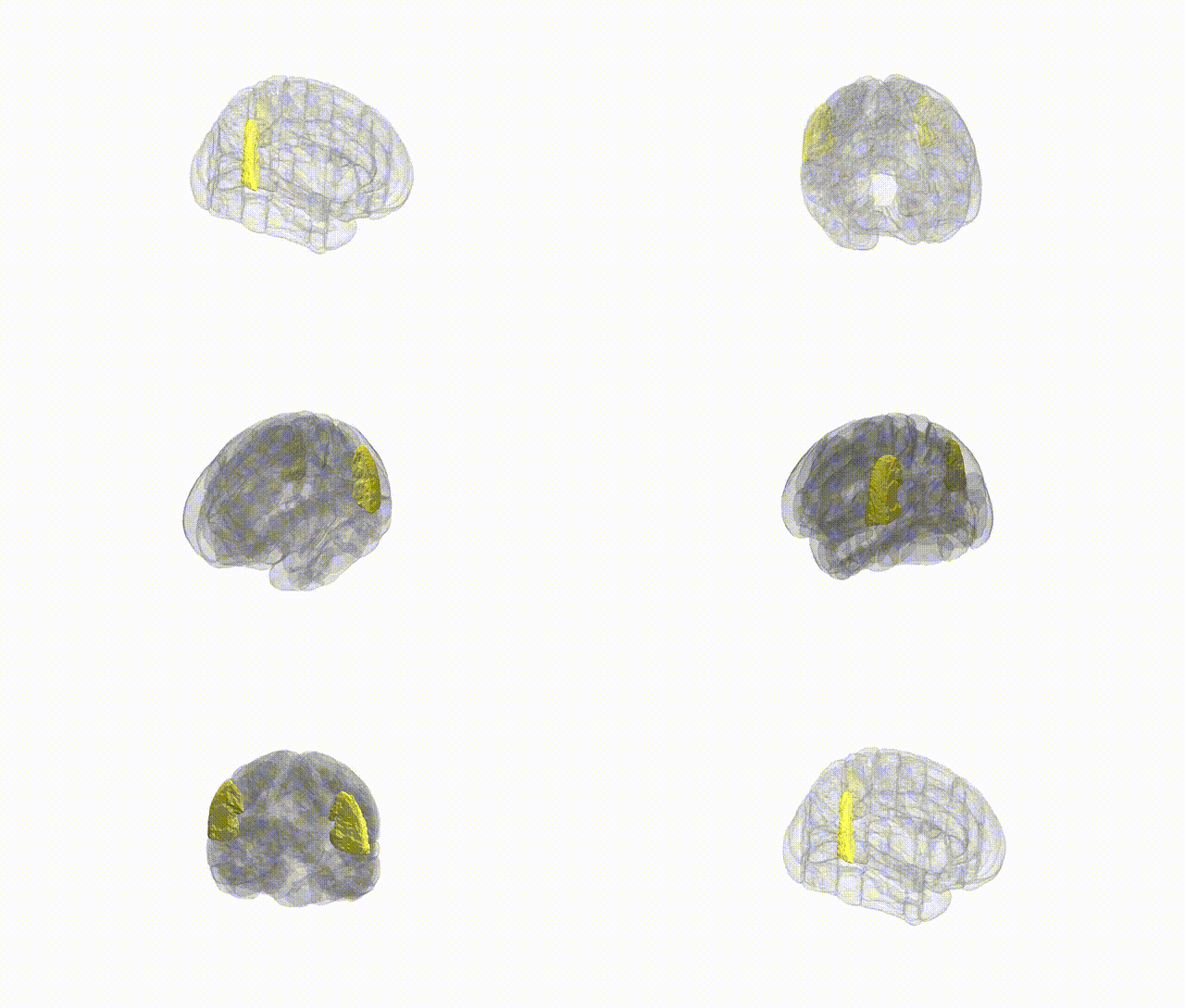
Full Quality Version: Download MP4
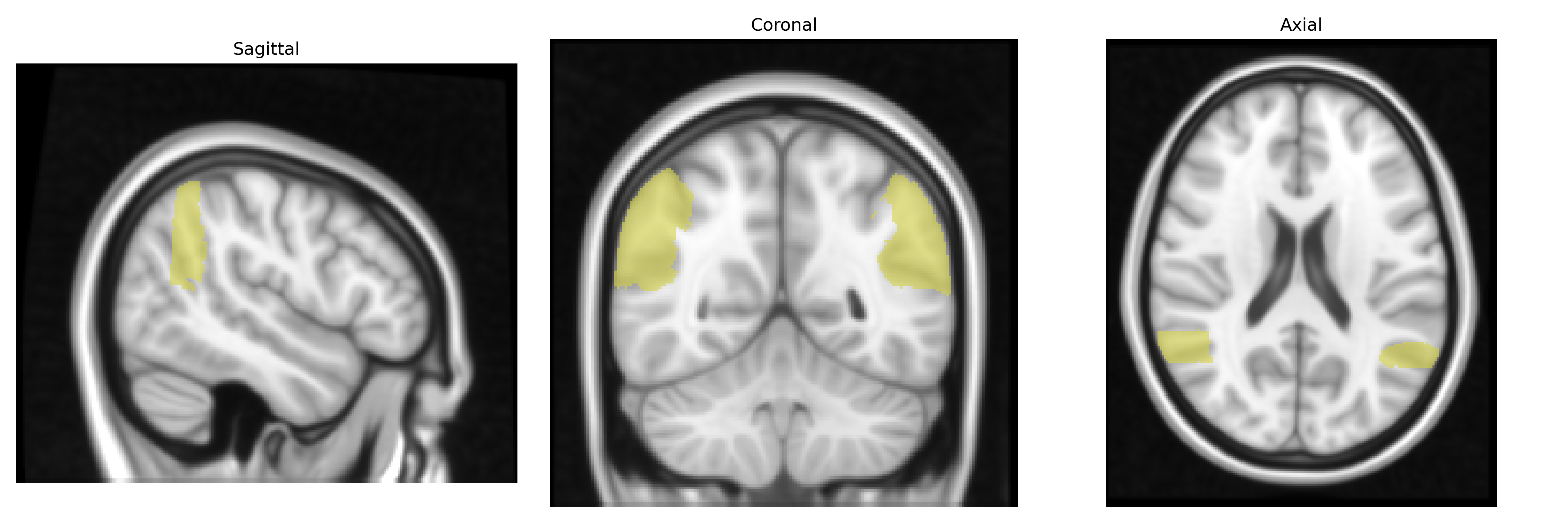
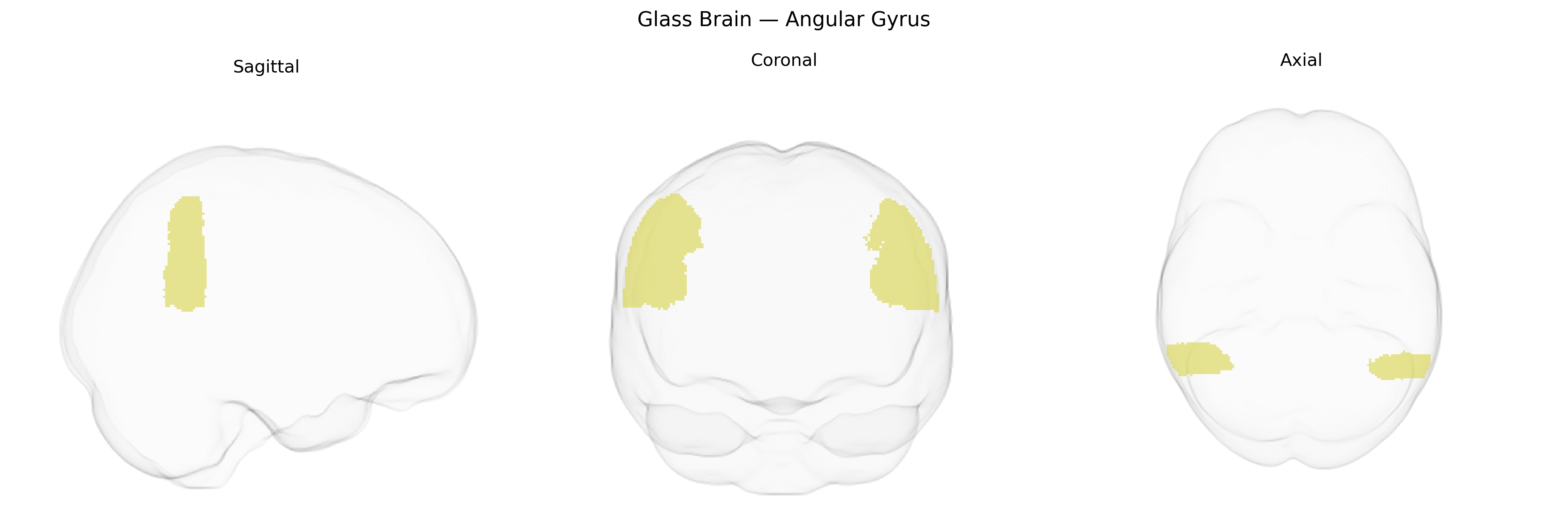
Wali Sidiqyar*, Gaurav Rudravaram*, Elyssa M. McMaster, Trent M. Schwartz, Adam M. Saunders, Kurt G. Schilling, Bennett A. Landman "Introducing SPINS: A Shared Public Visualization Library of Neuroanatomical Structures." Medical Imaging with Deep Learning- short paper
This resource is licensed under CC0 1.0 Universal (Public Domain).