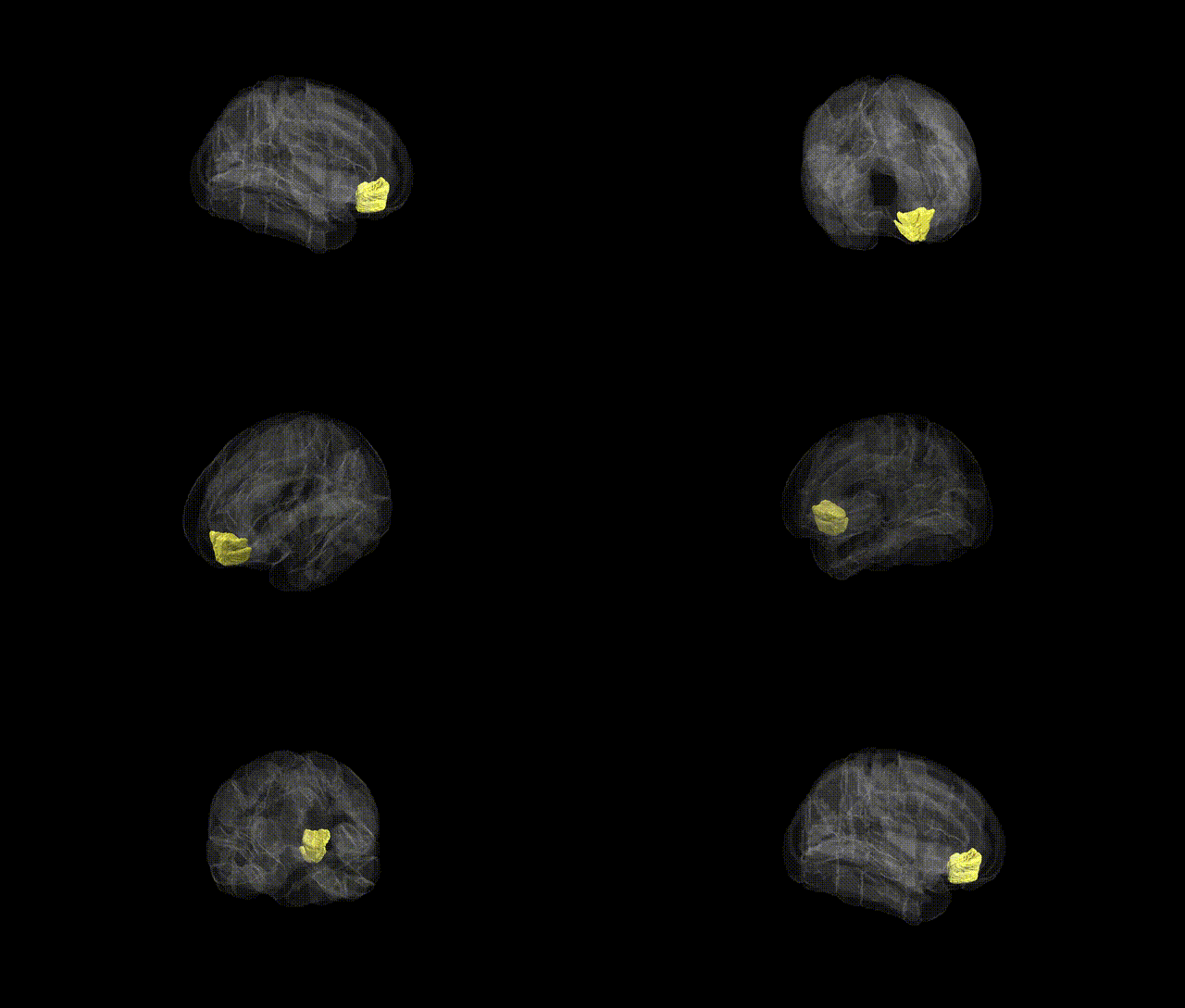
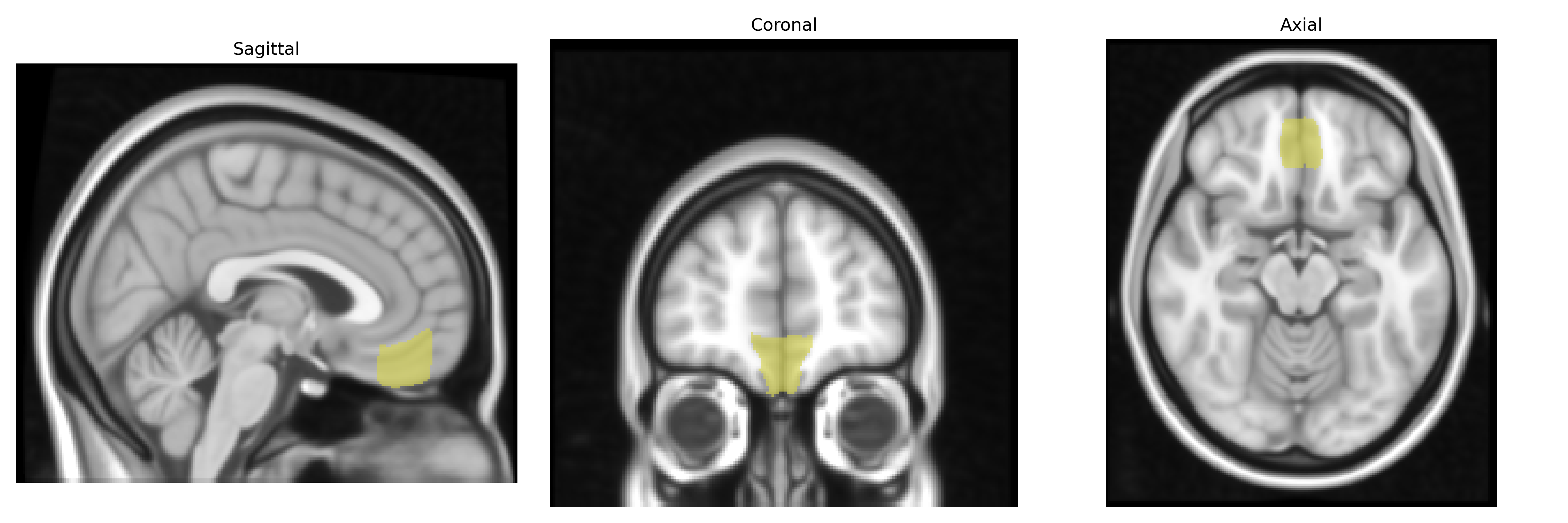
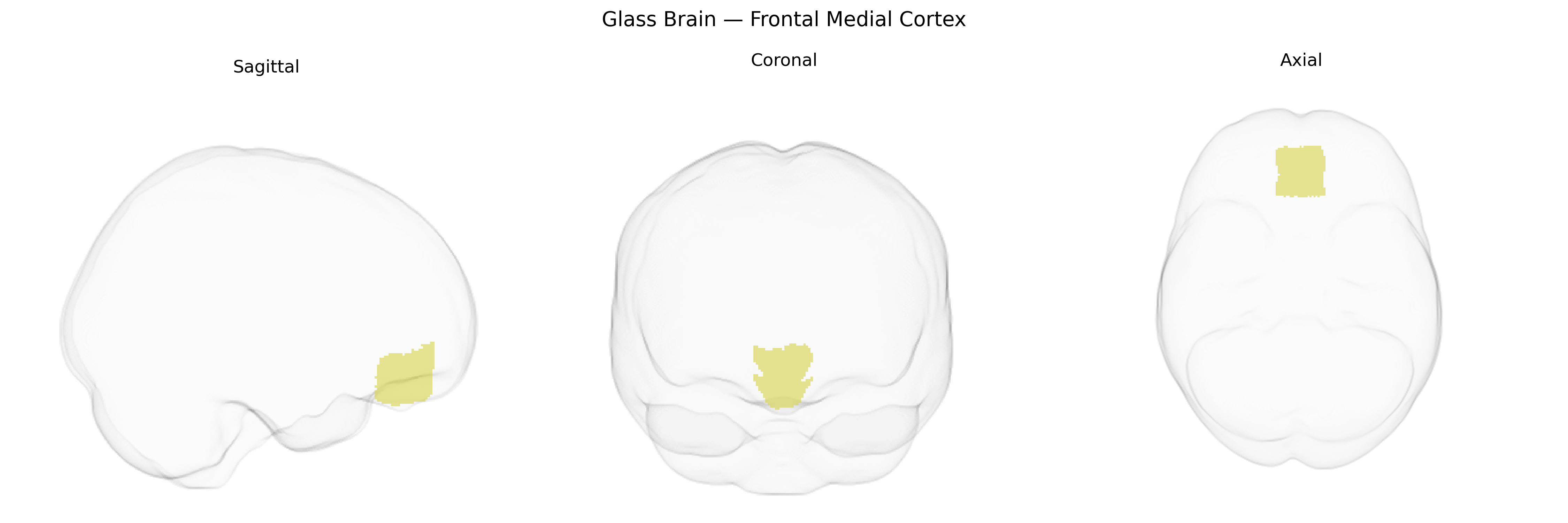
The bilateral Frontal Medial Cortex, as defined in the Harvard-Oxford cortical atlas, encompasses medial portions of the frontal lobe situated along the medial wall of the hemispheres, anterior to the cingulate cortex and extending toward the frontal pole. This region overlaps functionally and anatomically with parts of the medial prefrontal cortex and anterior cingulate territories, and is implicated in higher-order cognitive and affective processes, including valuation, decision-making, social cognition, self-referential thought, and regulation of emotion and autonomic responses. It receives and integrates inputs from limbic, sensory, and association areas and projects to subcortical structures involved in motivation and action selection, thereby contributing to the coordination of goal-directed behavior and internal state monitoring. No direct Wikipedia article exists for “Frontal Medial Cortex” in this atlas sense; a closely related structure is the Medial prefrontal cortex.
Genetic associations involving the bilateral frontal medial cortex (often encompassing medial prefrontal and anterior cingulate territories in the Harvard–Oxford atlas) largely emerge from imaging genetics and GWAS of brain structure, function, and related psychiatric or cognitive traits rather than region-specific candidate gene studies. Large-scale GWAS of cortical thickness, surface area, and folding (e.g., ENIGMA consortium) have identified multiple loci (including variants near genes such as CENPW, RSPO3, TCF4, FOXP1, and others) associated with medial frontal cortical morphology, which in turn show genetic correlations with general cognitive ability, educational attainment, and neuroticism. Polygenic risk scores for major depressive disorder, schizophrenia, bipolar disorder, and ADHD have been linked to altered medial frontal cortex volume, thickness, or activity in fMRI paradigms, with this region repeatedly implicated in emotion regulation, self-referential processing, and cognitive control. GWAS of resting-state networks and task-based activation have found common variants influencing activity within the default mode and salience networks, where medial frontal regions are key nodes, and these variants overlap with risk loci for depression, anxiety, and psychosis. Additionally, genetic studies of traits such as impulsivity, risk-taking, and substance use report associations between risk alleles (e.g., in DRD2/ANKK1, genes in glutamatergic and GABAergic pathways, and broader polygenic profiles) and structural or functional differences in medial frontal cortex, suggesting that the bilateral frontal medial cortex acts as an intermediate neural phenotype through which distributed genetic risk exerts effects on mood, cognition, and behavior.
Overview generated by GPT-4o (2026).
Region ID: 25
Hemisphere: bilateral
Atlas: HarvardOxford cort maxprob thr25 1mm
Full Quality Version: Download MP4
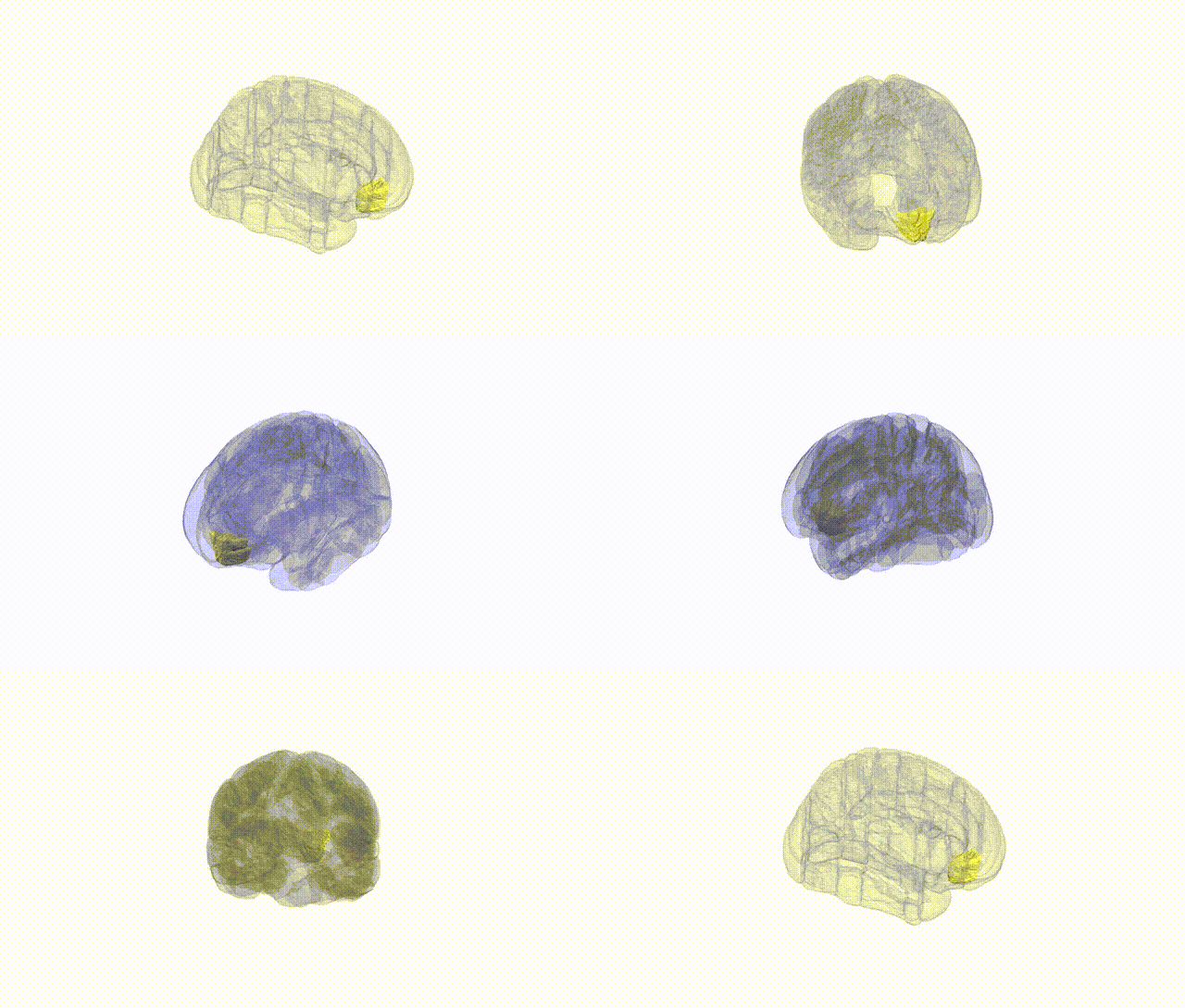
Full Quality Version: Download MP4
Wali Sidiqyar*, Gaurav Rudravaram*, Elyssa M. McMaster, Trent M. Schwartz, Adam M. Saunders, Kurt G. Schilling, Bennett A. Landman "Introducing SPINS: A Shared Public Visualization Library of Neuroanatomical Structures." Medical Imaging with Deep Learning- short paper
This resource is licensed under CC0 1.0 Universal (Public Domain).