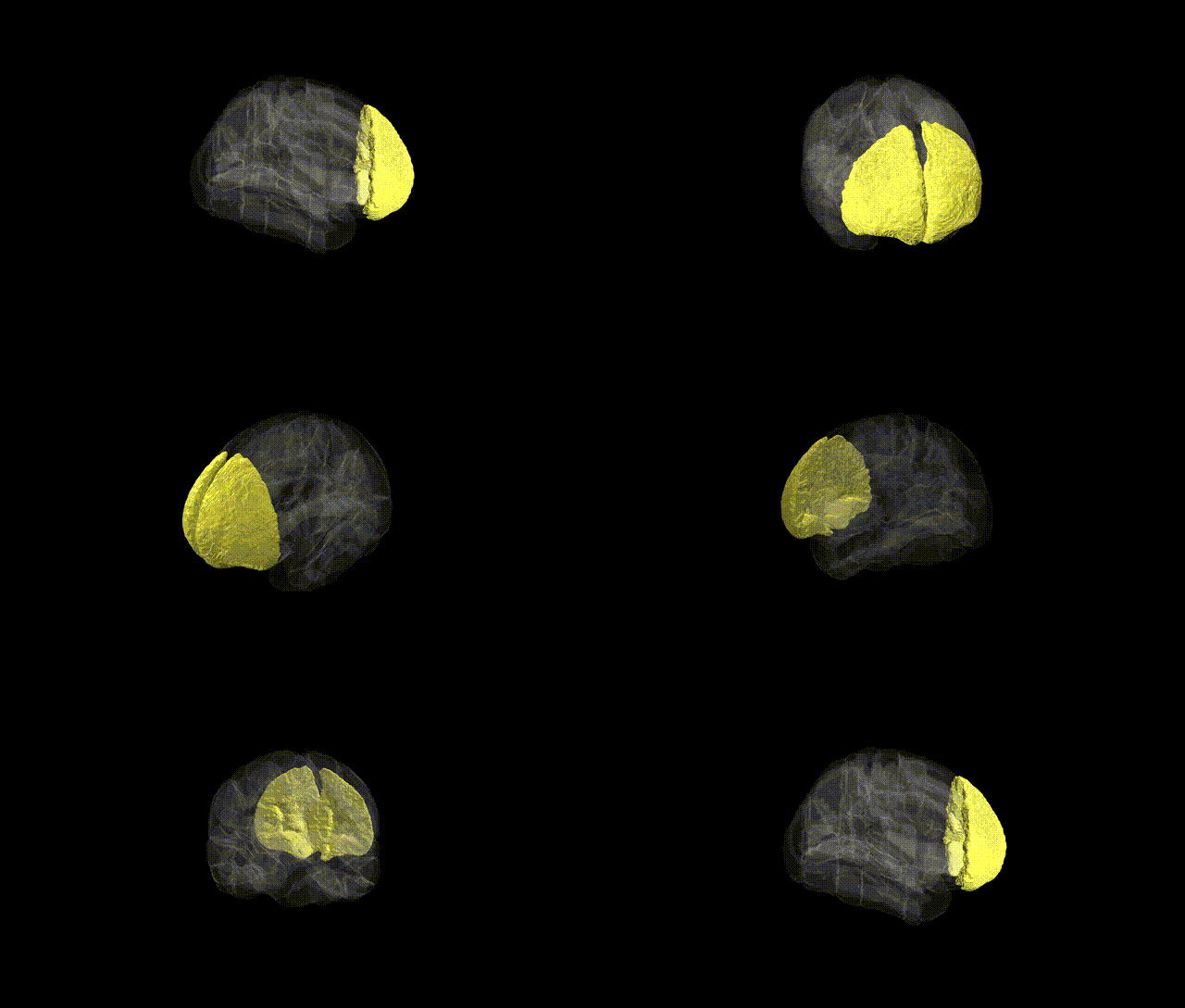
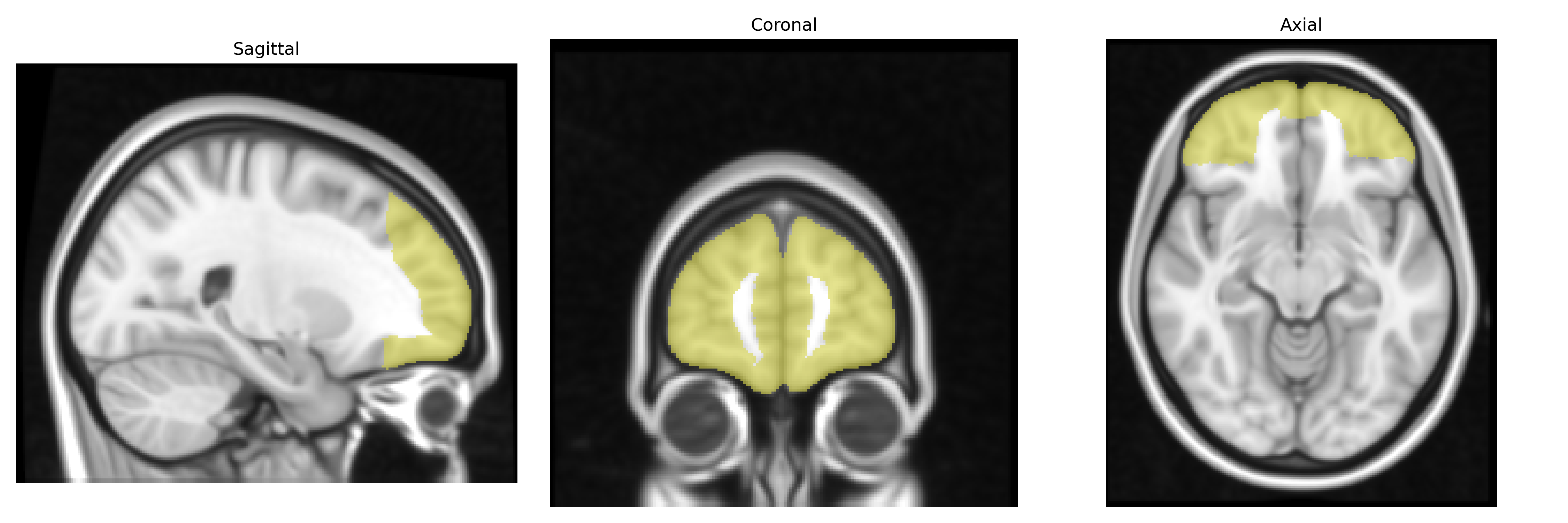
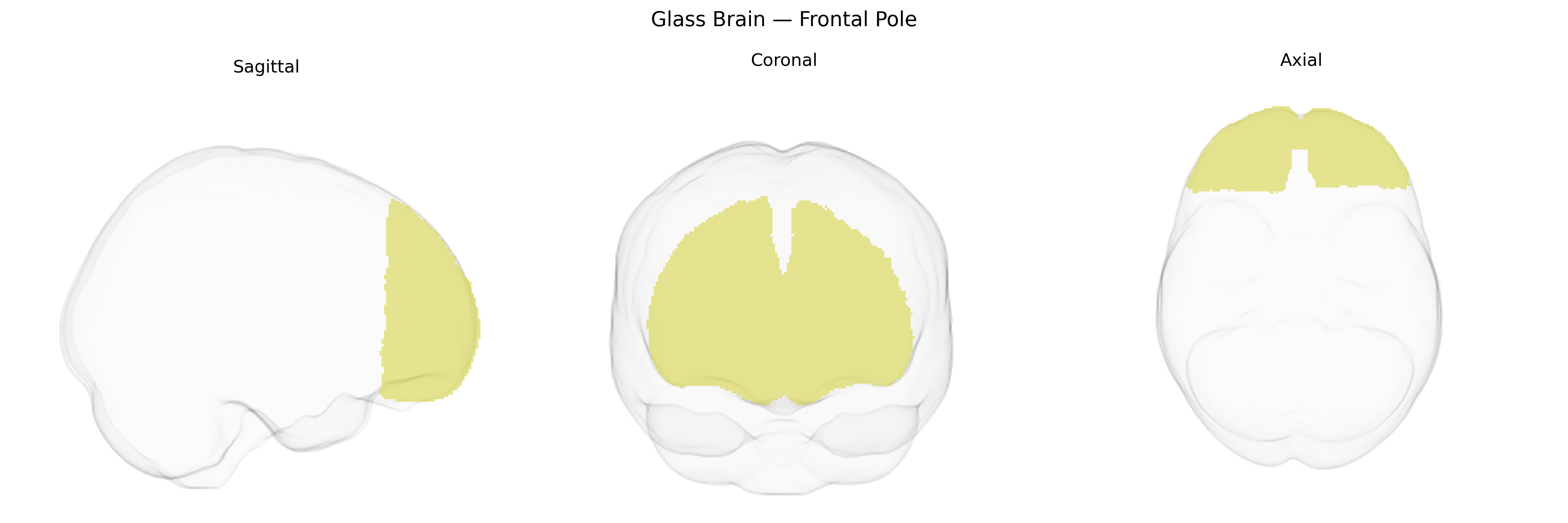
The bilateral Frontal Pole, corresponding approximately to Brodmann area 10, is the most anterior portion of the prefrontal cortex, situated at the rostral end of the frontal lobes and forming part of the heteromodal association cortex. It is strongly implicated in high-level executive functions, including prospective memory, multitasking, complex decision-making, abstract reasoning, and the integration of internal goals with external stimuli over extended time scales. The Frontal Pole contributes to metacognitive processes such as self-monitoring and evaluation of one’s own thoughts and actions, and is involved in the regulation of social cognition and emotional control through its extensive reciprocal connections with other prefrontal regions, limbic structures, and association cortices. There is no direct Wikipedia article for the Frontal Pole as defined in this atlas; a closely related and encompassing region is the Prefrontal Cortex.
The bilateral frontal pole, corresponding to the most anterior segment of the prefrontal cortex in the Harvard-Oxford cortical atlas, has been implicated in multiple genetic and GWAS findings through its role in higher-order cognition, decision-making, and affective processing. Large-scale neuroimaging genetics consortia (e.g., ENIGMA, UK Biobank) have identified numerous common variants associated with cortical thickness, surface area, and volume in anterior prefrontal regions, including the frontal pole, with robust signals in genes related to neurodevelopment and synaptic plasticity such as those involved in glutamatergic signaling (e.g., GRIN and GRIA family genes), axon guidance, and neuronal proliferation. Polygenic scores for cognitive performance and educational attainment strongly correlate with structural and functional variation in the frontal pole, reflecting its contribution to complex cognition; conversely, GWASs of major depressive disorder, bipolar disorder, schizophrenia, and anxiety-related traits have linked risk alleles in genes such as CACNA1C, DRD2, and others to altered morphology or activation in this region, often in the context of fronto-limbic circuitry. Variants associated with impulsivity, risk-taking, and substance use (including alcohol and nicotine dependence) show convergent evidence of involvement of the frontal pole through imaging genetics studies that relate risk alleles to diminished anterior prefrontal control over subcortical reward systems. Although many findings are regionally coarse-grained and not always specific to the frontal pole alone, converging GWAS and imaging-genetic data support this region as a key anatomical locus where polygenic influences on cognition, affect regulation, and psychiatric vulnerability are expressed.
Overview generated by GPT-4o (2026).
Region ID: 1
Hemisphere: bilateral
Atlas: HarvardOxford cort maxprob thr25 1mm
Full Quality Version: Download MP4
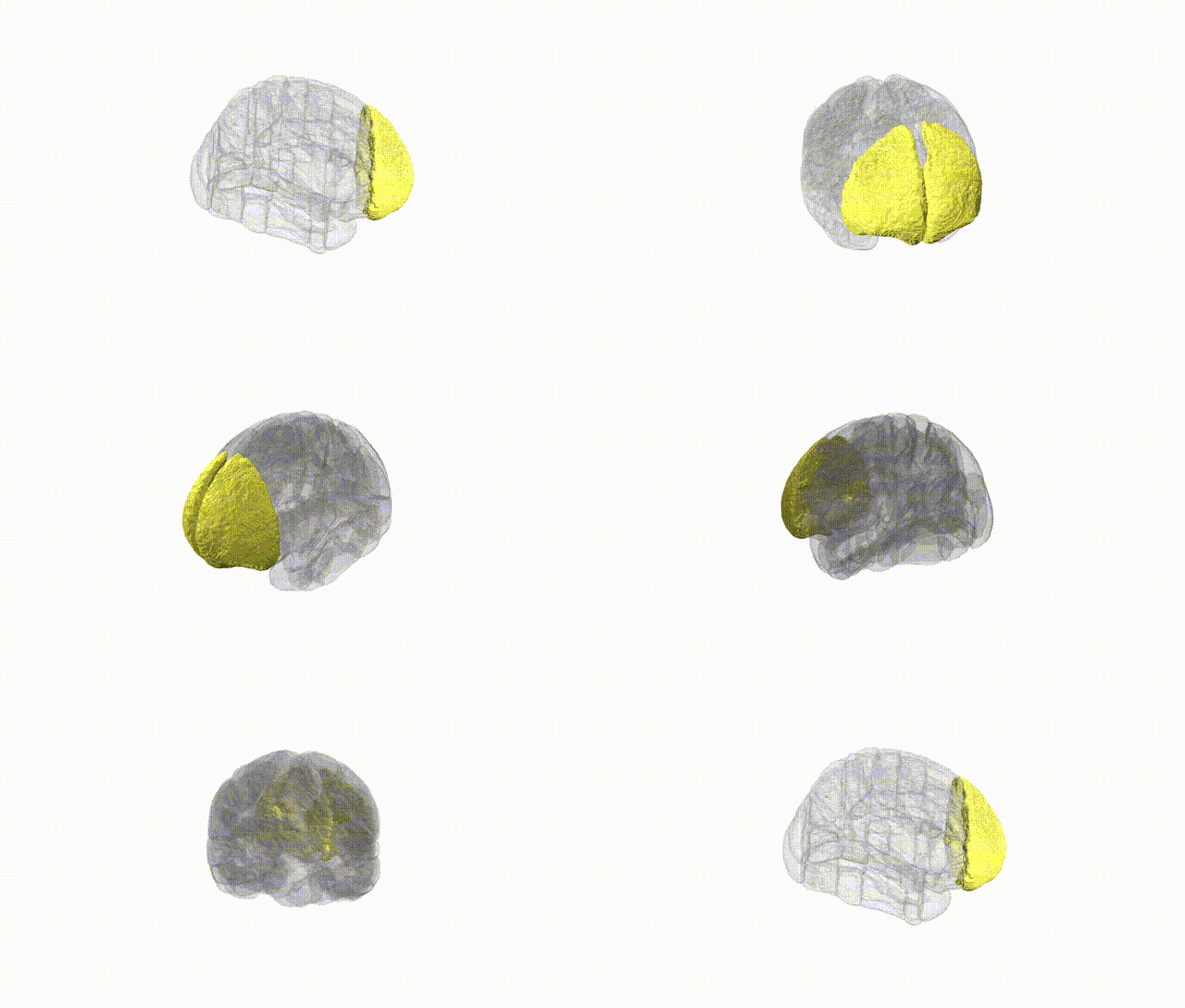
Full Quality Version: Download MP4
Wali Sidiqyar*, Gaurav Rudravaram*, Elyssa M. McMaster, Trent M. Schwartz, Adam M. Saunders, Kurt G. Schilling, Bennett A. Landman "Introducing SPINS: A Shared Public Visualization Library of Neuroanatomical Structures." Medical Imaging with Deep Learning- short paper
This resource is licensed under CC0 1.0 Universal (Public Domain).