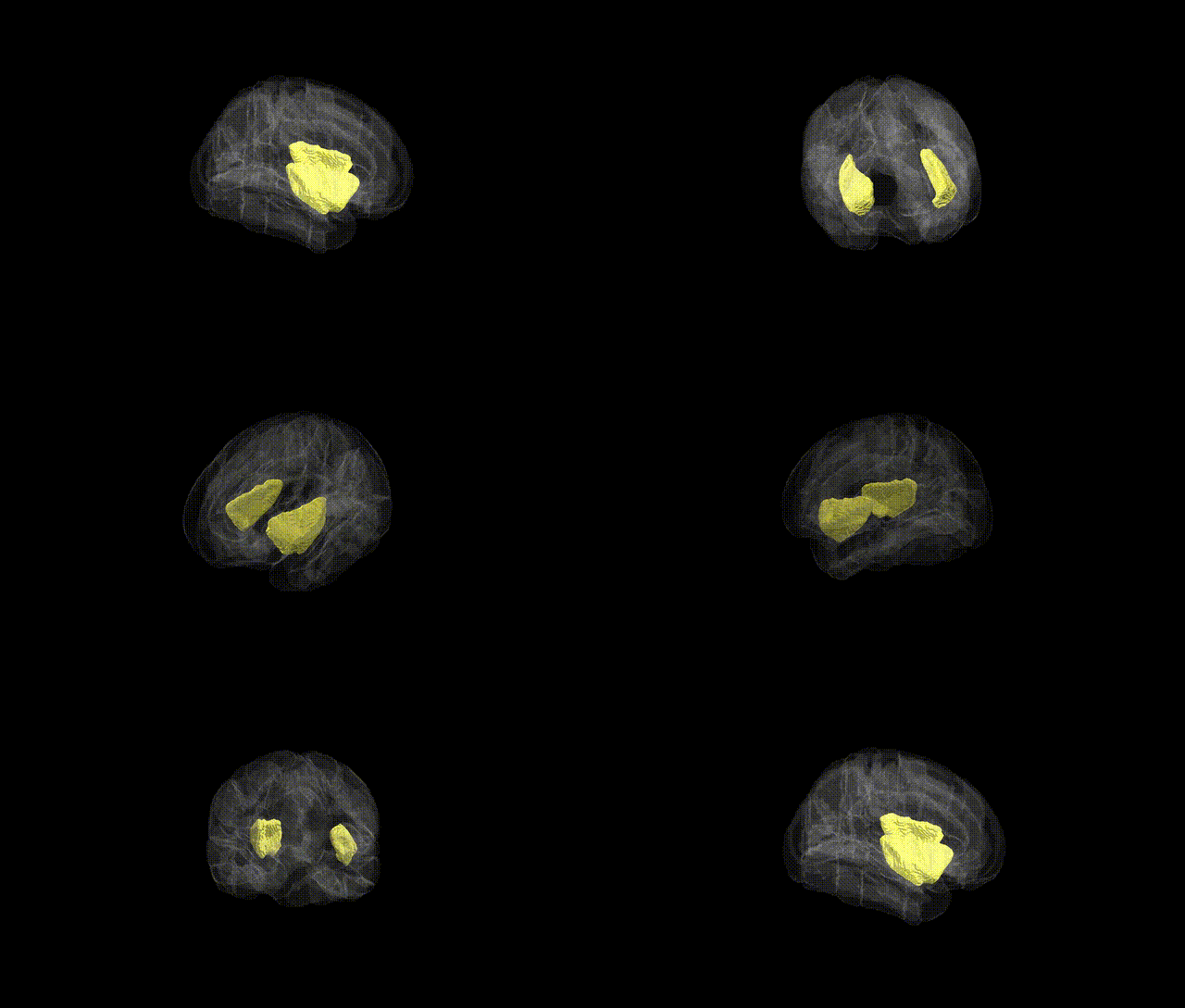
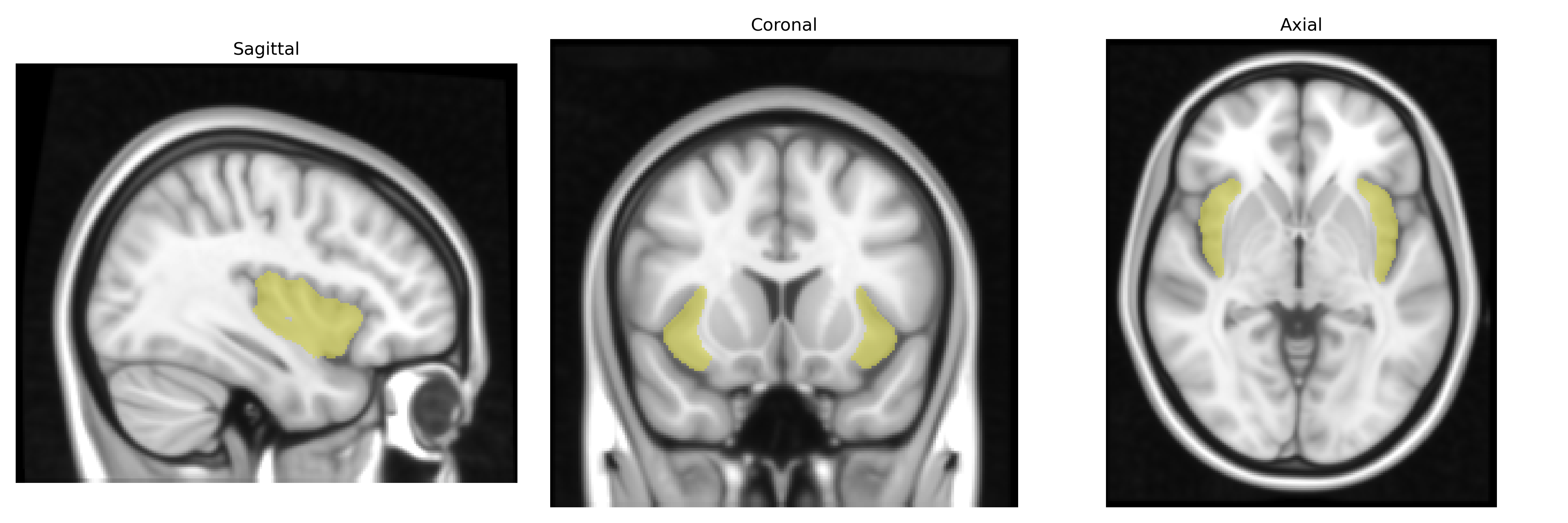
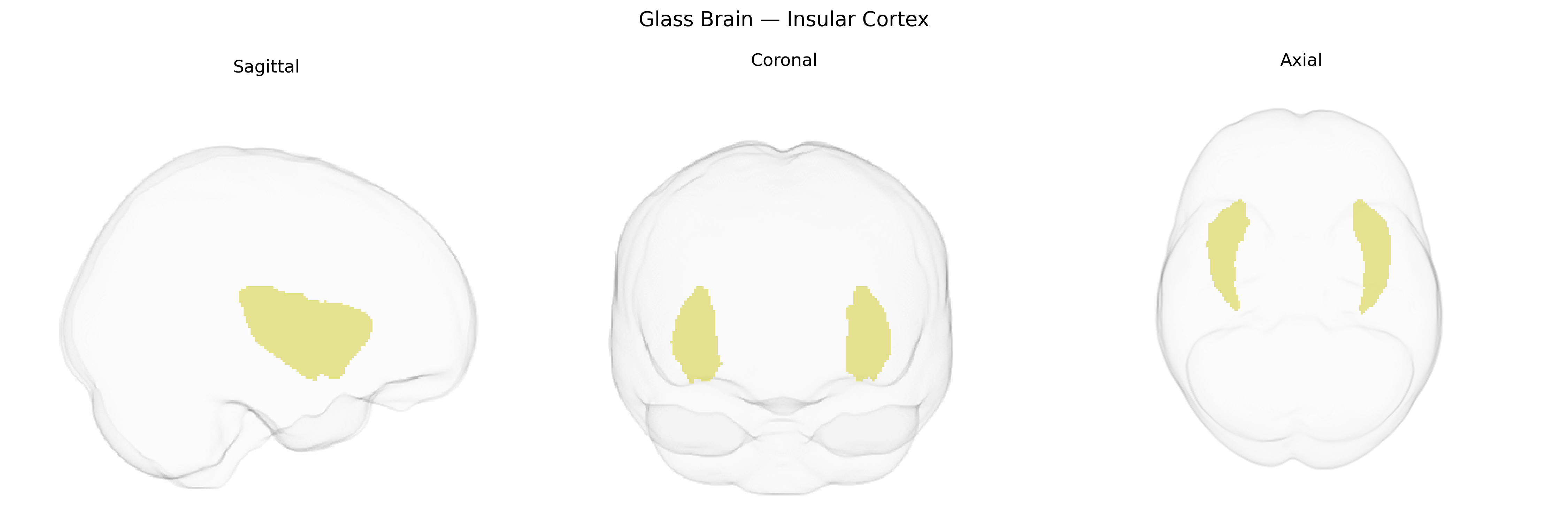
The bilateral insular cortex is a paired cortical region located deep within the lateral sulcus, covered by the frontal, parietal, and temporal opercula, and forms part of the paralimbic system. It is structurally divided into anterior and posterior insula, which differ in cytoarchitecture and connectivity: the anterior insula is more agranular and heavily interconnected with limbic, prefrontal, and orbitofrontal areas, supporting functions such as interoceptive awareness, emotional processing, salience detection, and autonomic regulation; the posterior insula is more granular and connected with somatosensory, auditory, and vestibular regions, contributing to nociception, visceral and somatic sensory integration, and sensorimotor processing. The insula receives multimodal sensory input (including visceral, gustatory, and nociceptive signals) and is involved in integrating bodily states with cognitive and affective processes, making it critical for homeostatic regulation, subjective feeling states, and the coordination of autonomic and endocrine responses. Insular cortex
The bilateral insular cortex, as defined in the Harvard-Oxford cortical maxprob atlas, shows broad polygenic influences rather than single-gene effects, with large-scale imaging–genetics studies (e.g., UK Biobank) implicating common variants in genes related to neurodevelopment, synaptic function, and cortical morphology (such as microtubule-, axon-guidance-, and cell-adhesion-related loci) in insular volume and thickness. Genome-wide association studies have linked insular structure and function to risk variants for major psychiatric and neurological conditions, including schizophrenia (e.g., CACNA1C, MIR137 regions), major depressive disorder, bipolar disorder, autism spectrum disorder, and anxiety-related traits, where altered insular morphology or connectivity often mediates genetic risk for emotional regulation, interoception, and salience processing. Additional GWAS findings connect insular measures to substance use (alcohol and nicotine dependence), pain sensitivity and chronic pain syndromes, and cardiometabolic traits (such as blood pressure and obesity), suggesting that genetic variation affecting insular circuits contributes to the integration of visceral, affective, and cognitive signals. Overall, current evidence supports a highly polygenic architecture in which overlapping sets of risk alleles for psychiatric, pain, addiction, and cardiometabolic traits converge on insular structure and function, rather than a small number of region-specific genes.
Overview generated by GPT-4o (2026).
Region ID: 2
Hemisphere: bilateral
Atlas: HarvardOxford cort maxprob thr25 1mm
Full Quality Version: Download MP4
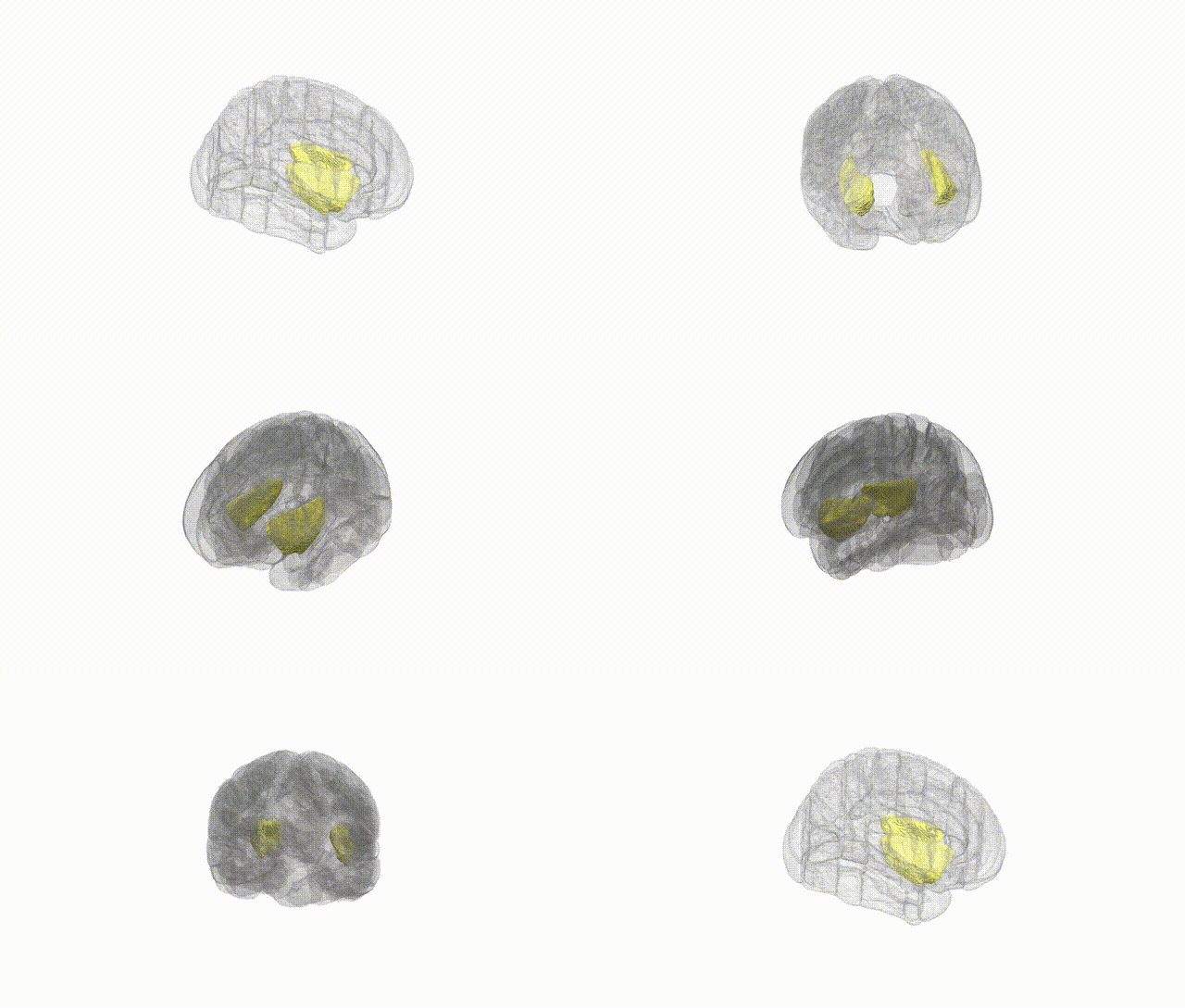
Full Quality Version: Download MP4
Wali Sidiqyar*, Gaurav Rudravaram*, Elyssa M. McMaster, Trent M. Schwartz, Adam M. Saunders, Kurt G. Schilling, Bennett A. Landman "Introducing SPINS: A Shared Public Visualization Library of Neuroanatomical Structures." Medical Imaging with Deep Learning- short paper
This resource is licensed under CC0 1.0 Universal (Public Domain).