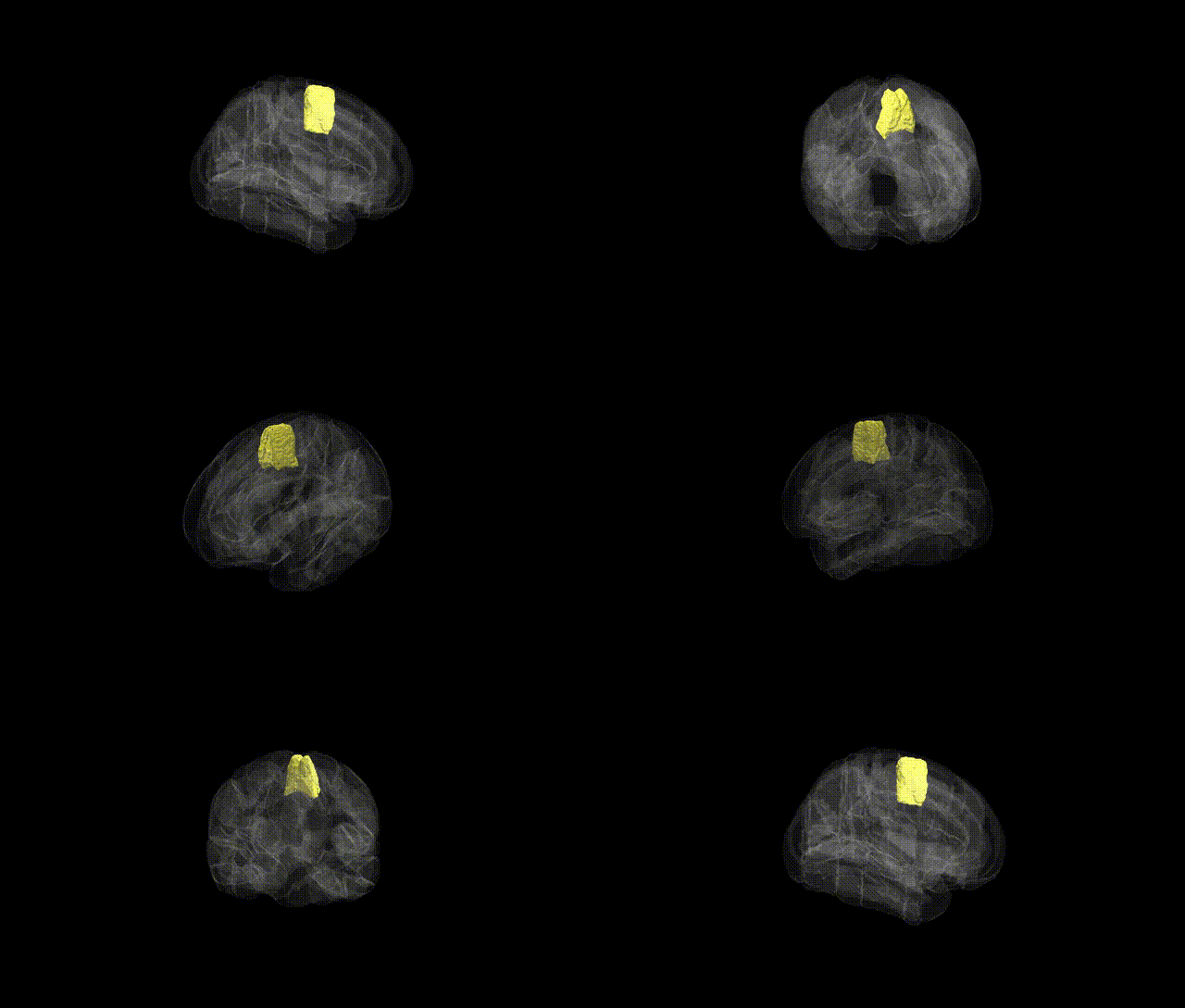
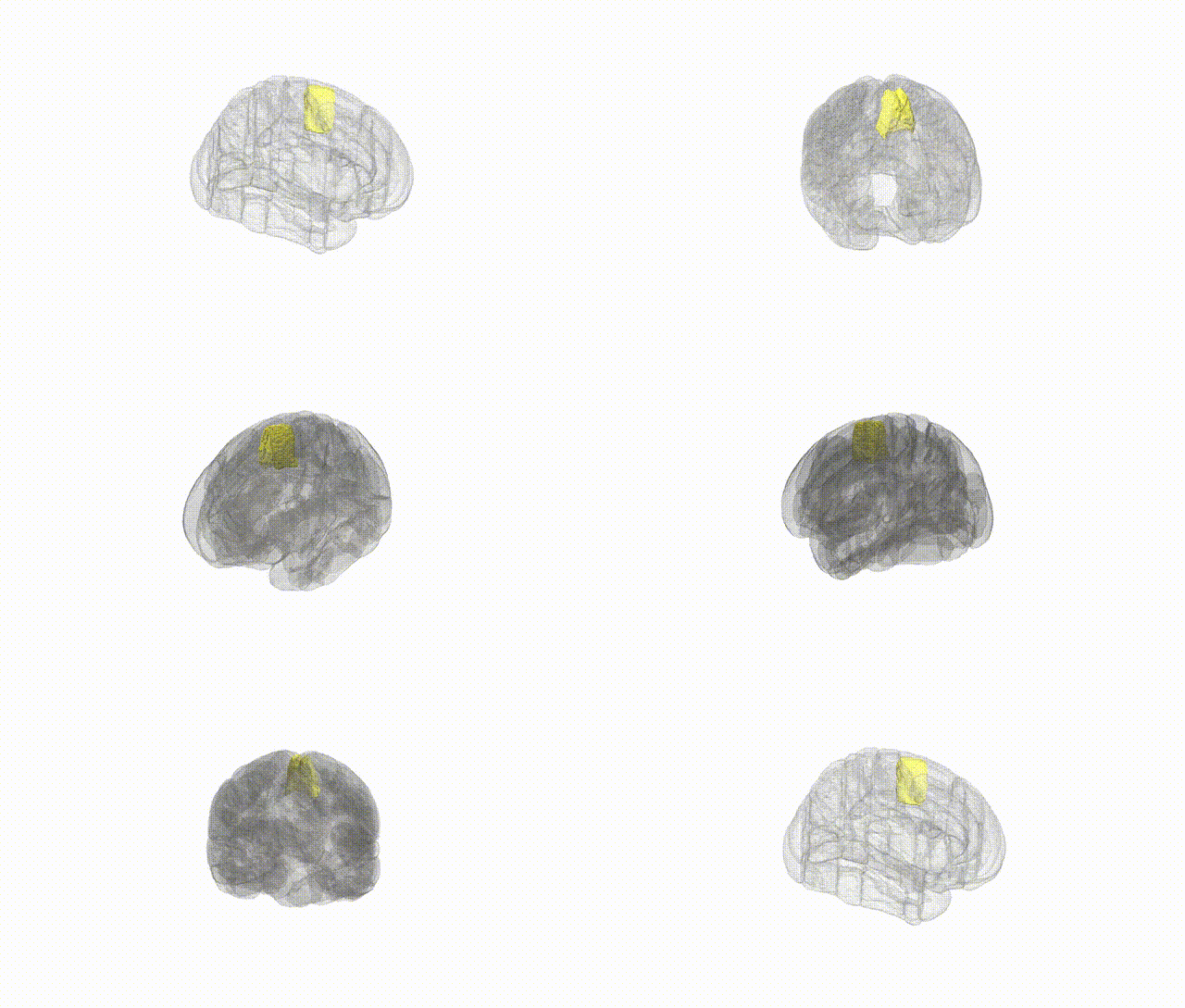
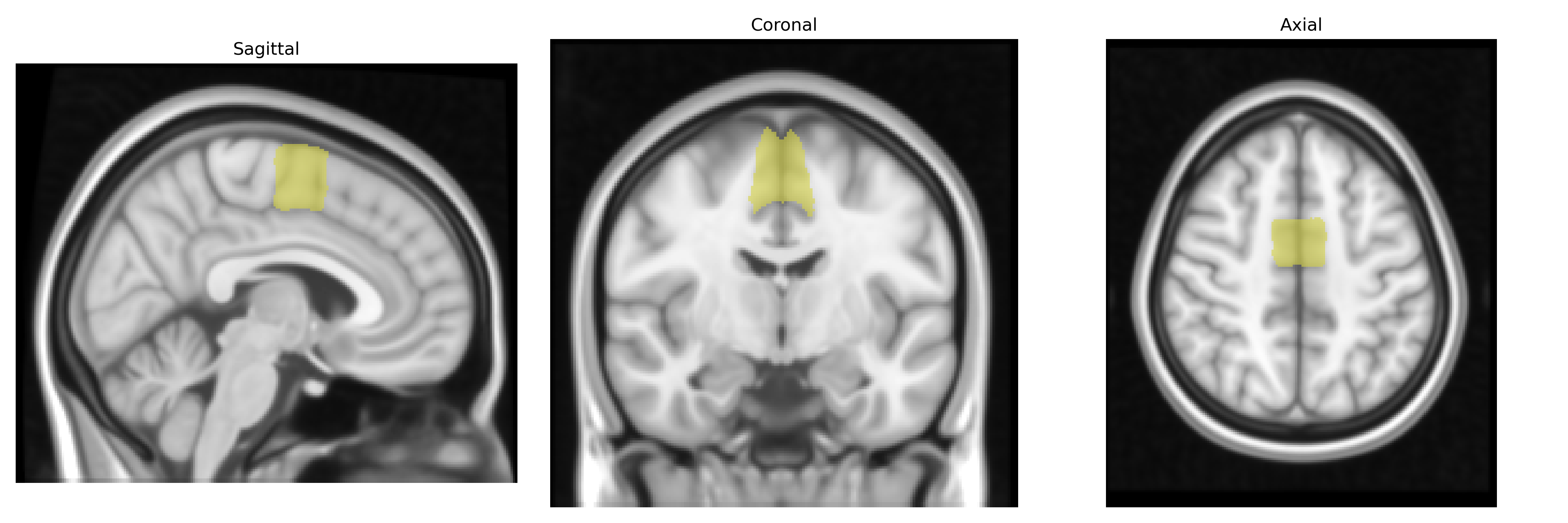
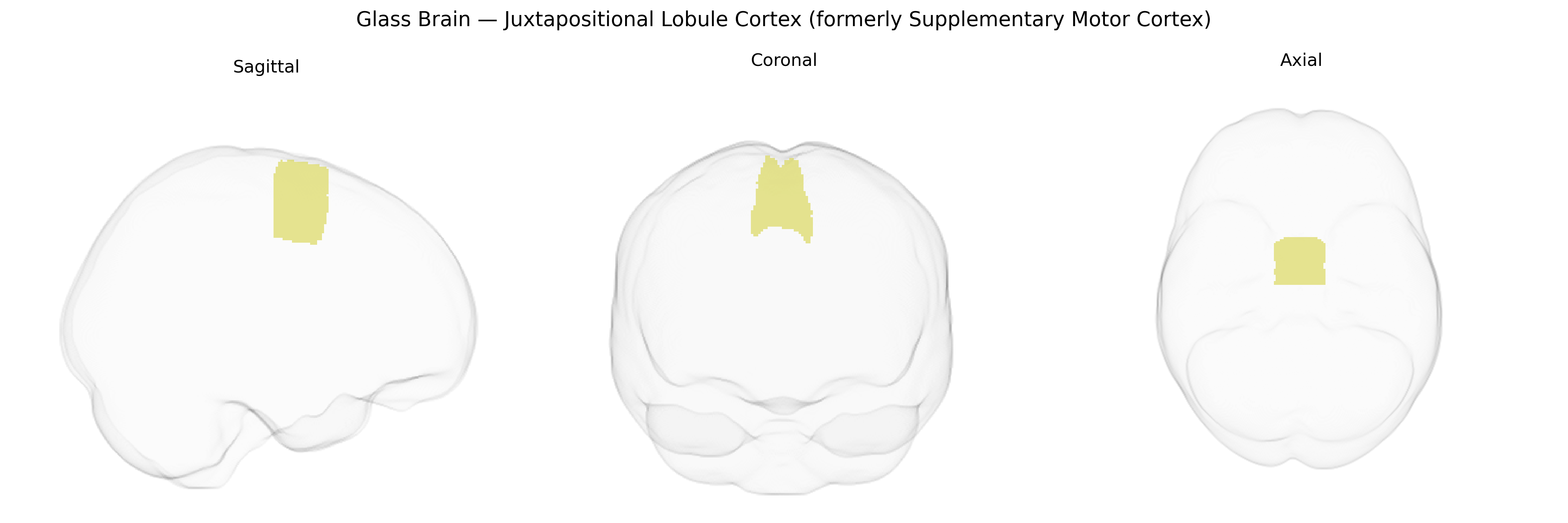
The bilateral Juxtapositional Lobule Cortex (formerly Supplementary Motor Cortex) is a medial frontal lobe region located anterior to the primary motor cortex and superior to the cingulate sulcus, corresponding largely to the supplementary motor area (SMA) and adjacent pre-SMA within the superior frontal gyrus. It is supplied by branches of the anterior cerebral artery and is characterized cytoarchitectonically as part of the medial premotor network. Functionally, this region is implicated in internally generated movement planning, motor sequence organization, bimanual coordination, motor imagery, and the initiation and inhibition of voluntary actions, with strong connectivity to primary motor cortex, basal ganglia, and spinal motor pathways. Lesions can result in deficits such as impaired initiation of movement, disrupted motor sequencing, and SMA syndrome, reflecting its key role in higher-order motor control and coordination. Supplementary motor area
The bilateral Juxtapositional Lobule Cortex (formerly Supplementary Motor Cortex) has been implicated in several genetic and GWAS-based associations, largely through imaging-genetics and neuropsychiatric studies that link variants to structural or functional differences in this medial frontal motor area. Common polymorphisms in dopaminergic, glutamatergic, and GABAergic genes (for example, COMT, DRD2, GRIN-family genes) have been repeatedly associated with altered activation or connectivity within the supplementary motor region during tasks involving motor preparation, response inhibition, and cognitive control, and polygenic risk scores for schizophrenia, bipolar disorder, and major depression show correlations with cortical thickness and functional responses in this area. Large-scale brain MRI GWAS from consortia such as ENIGMA and UK Biobank have reported genome-wide significant loci influencing cortical thickness and surface area in medial frontal regions that encompass or closely approximate the Juxtapositional Lobule Cortex, linking genes involved in neurodevelopment, axon guidance, and synaptic plasticity (e.g., MIR137-related loci, CACNA1C-region variants, and other neuronal development genes) to interindividual variation in this region’s morphology. Functionally, genetic risk for neurodevelopmental and movement-related conditions—including attention-deficit/hyperactivity disorder, Tourette syndrome, and dystonia—has been associated with altered activity or connectivity in supplementary motor territories, and some Parkinson’s disease and essential tremor risk loci show downstream effects on supplementary motor circuitry, although these often emerge in network-level rather than region-specific analyses. Collectively, current evidence indicates that the Juxtapositional Lobule Cortex is a convergent node where polygenic influences on motor control, cognitive control, and psychiatric liability manifest as structural and functional variability, but no single gene has yet been identified as uniquely or specifically associated with this exact atlas-defined region.
Overview generated by GPT-4o (2026).
Region ID: 26
Hemisphere: bilateral
Atlas: HarvardOxford cort maxprob thr25 1mm
Full Quality Version: Download MP4
Full Quality Version: Download MP4
Wali Sidiqyar*, Gaurav Rudravaram*, Elyssa M. McMaster, Trent M. Schwartz, Adam M. Saunders, Kurt G. Schilling, Bennett A. Landman "Introducing SPINS: A Shared Public Visualization Library of Neuroanatomical Structures." Medical Imaging with Deep Learning- short paper
This resource is licensed under CC0 1.0 Universal (Public Domain).