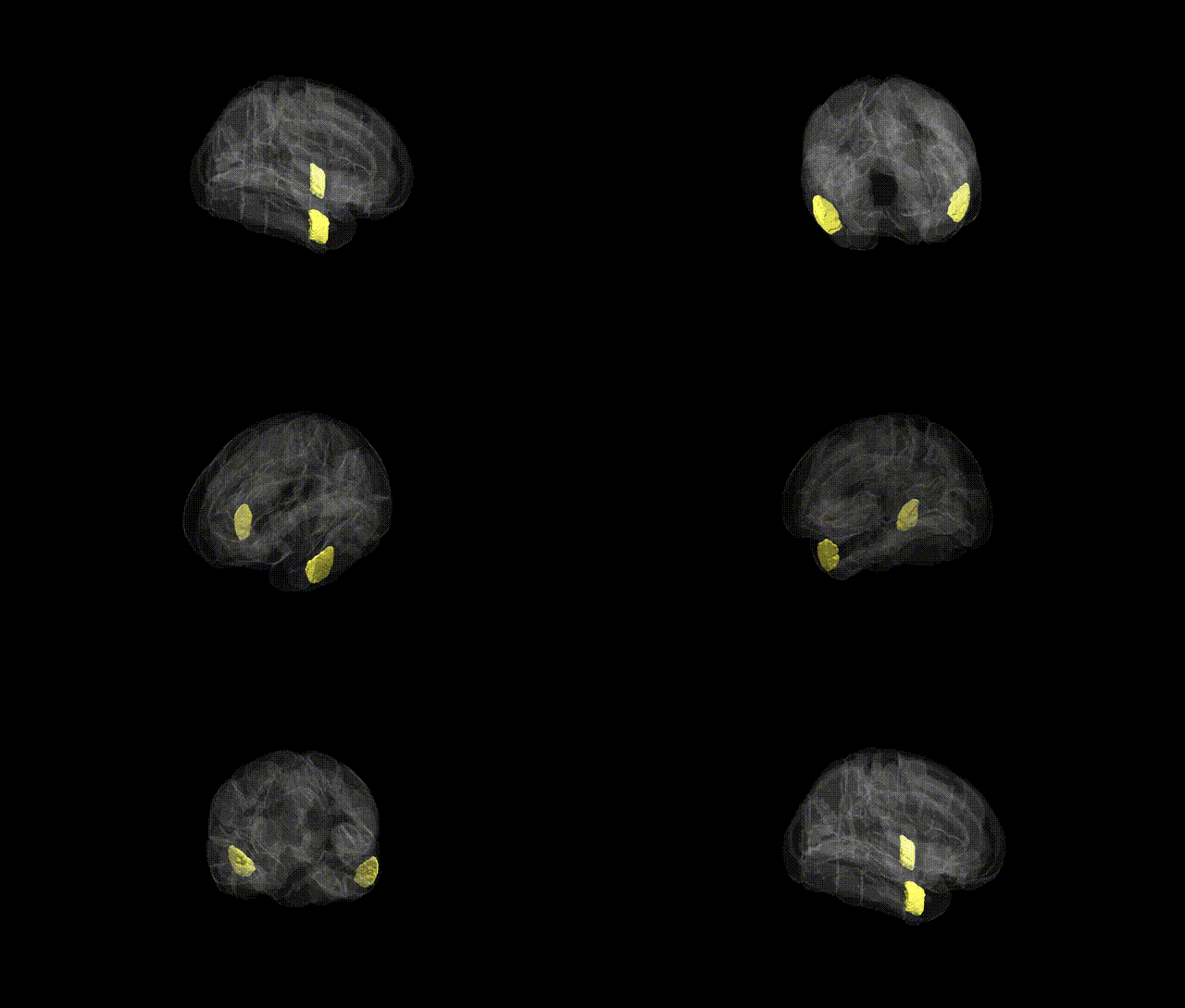
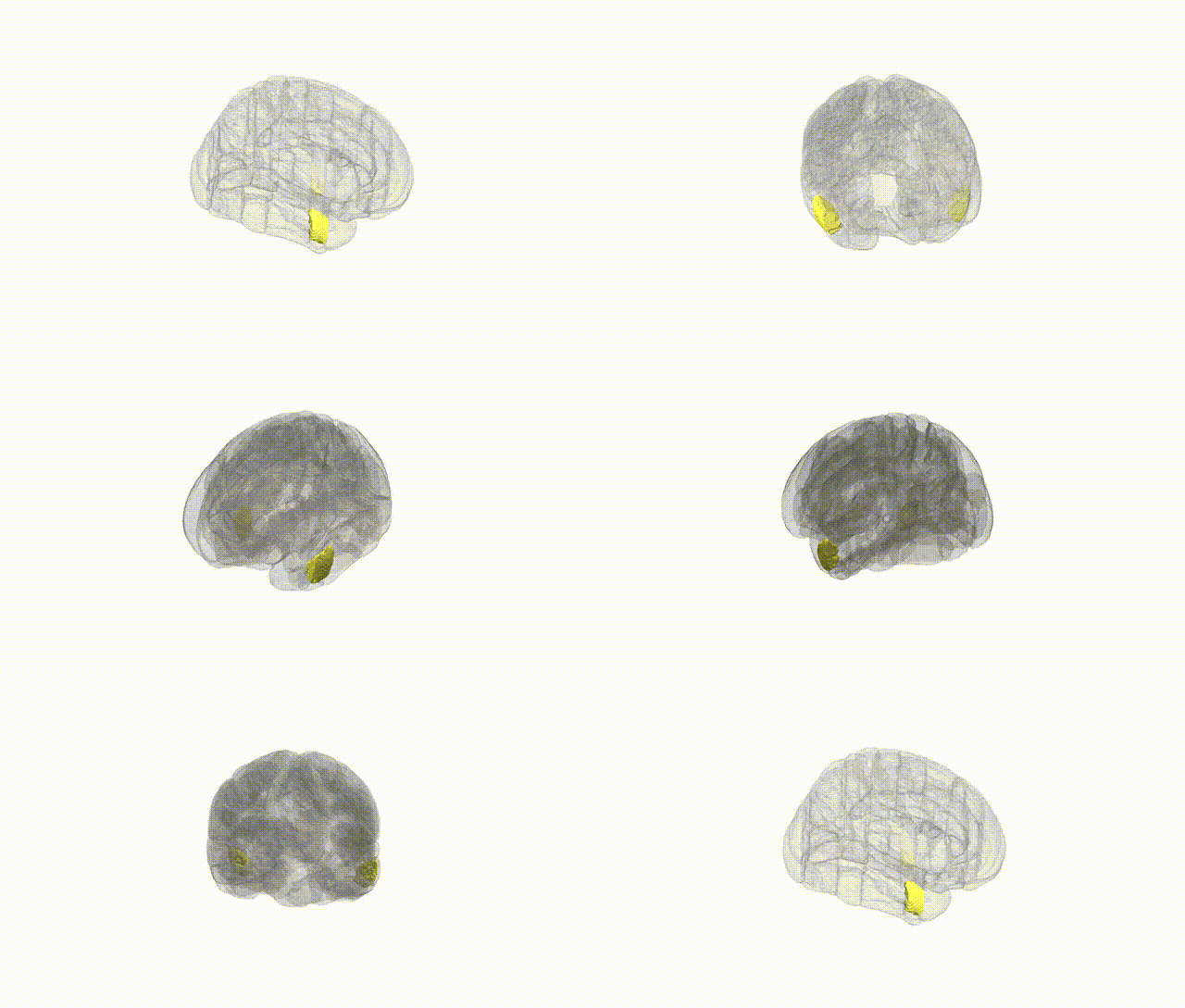
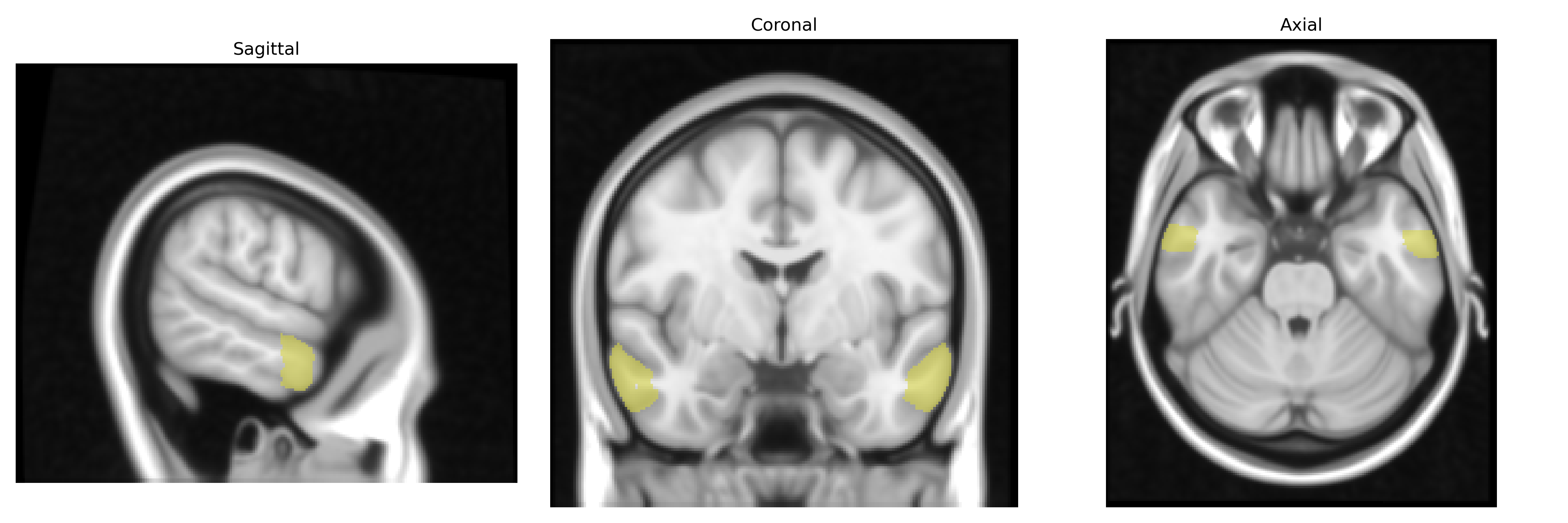
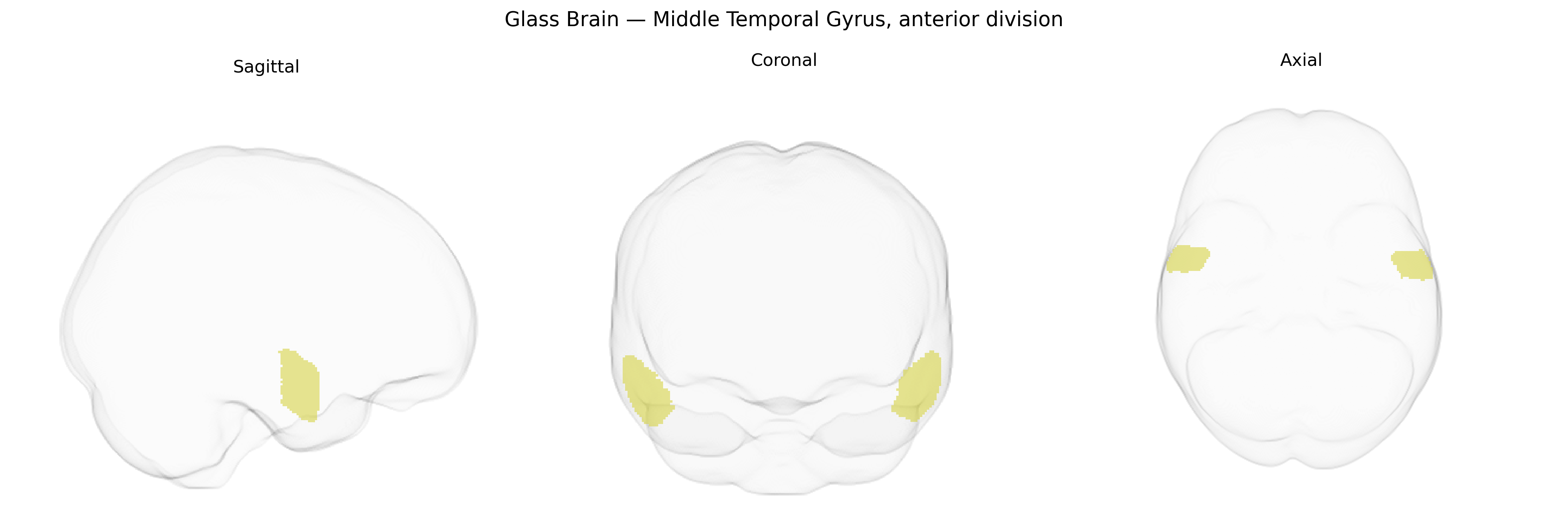
The bilateral Middle Temporal Gyrus, anterior division, as defined in the Harvard–Oxford cortical structural atlas (maxprob, thr25, 1 mm), encompasses the rostral segment of the middle temporal gyrus on the lateral surface of the temporal lobe in both hemispheres. This region lies anterior to the mid-portion of the gyrus, bordered superiorly by the superior temporal gyrus and inferiorly by the inferior temporal gyrus, and is supplied primarily by branches of the middle cerebral artery. Cytoarchitectonically, it corresponds largely to anterior portions of association cortex involved in higher-order auditory processing, semantic memory, language comprehension, and aspects of social cognition, with strong connectivity to frontal, parietal, and limbic regions via the superior longitudinal fasciculus and uncinate fasciculus. There is no direct link for this specific atlas-defined subdivision; a related structure is the broader Middle Temporal Gyrus.
The bilateral anterior division of the Middle Temporal Gyrus (MTG) is implicated by genetic studies primarily through its roles in language, semantic processing, and social cognition, with several GWAS and imaging-genetics analyses linking common variants to structural and functional variation in this region. Variants near or within genes such as FOXP2, CNTNAP2, DCDC2, KIAA0319, and ROBO1, known for involvement in speech/language and reading abilities, have been associated with cortical thickness, volume, or activation in temporal language networks that include anterior MTG. Large-scale neuroimaging GWAS (e.g., ENIGMA and UK Biobank studies) have identified polygenic influences on temporal lobe morphology, with loci related to synaptic function, neurodevelopment, and axon guidance contributing to inter-individual differences; these often overlap with genes implicated in neurodevelopmental disorders such as autism spectrum disorder and schizophrenia, which show altered activation or connectivity in anterior MTG during language and social-cognitive tasks. GWAS of educational attainment, general cognitive ability, and reading/language performance also report enrichment of associated variants in genes expressed in temporal cortical regions, including MTG, supporting a polygenic architecture for linguistic and cognitive traits. Additionally, risk alleles for psychiatric conditions (schizophrenia, major depression, bipolar disorder) and neurodegenerative diseases (Alzheimer’s disease) have been associated with aberrant temporal lobe structure or connectivity, with some studies reporting disease-related cortical thinning or hypometabolism in MTG regions that co-localize with genetically influenced networks, although specific, unique genetic associations confined strictly to the HarvardOxford “anterior MTG” parcel remain limited and are typically inferred through broader temporal lobe or language-network analyses rather than region-exclusive GWAS hits.
Overview generated by GPT-4o (2026).
Region ID: 11
Hemisphere: bilateral
Atlas: HarvardOxford cort maxprob thr25 1mm
Full Quality Version: Download MP4
Full Quality Version: Download MP4
Wali Sidiqyar*, Gaurav Rudravaram*, Elyssa M. McMaster, Trent M. Schwartz, Adam M. Saunders, Kurt G. Schilling, Bennett A. Landman "Introducing SPINS: A Shared Public Visualization Library of Neuroanatomical Structures." Medical Imaging with Deep Learning- short paper
This resource is licensed under CC0 1.0 Universal (Public Domain).