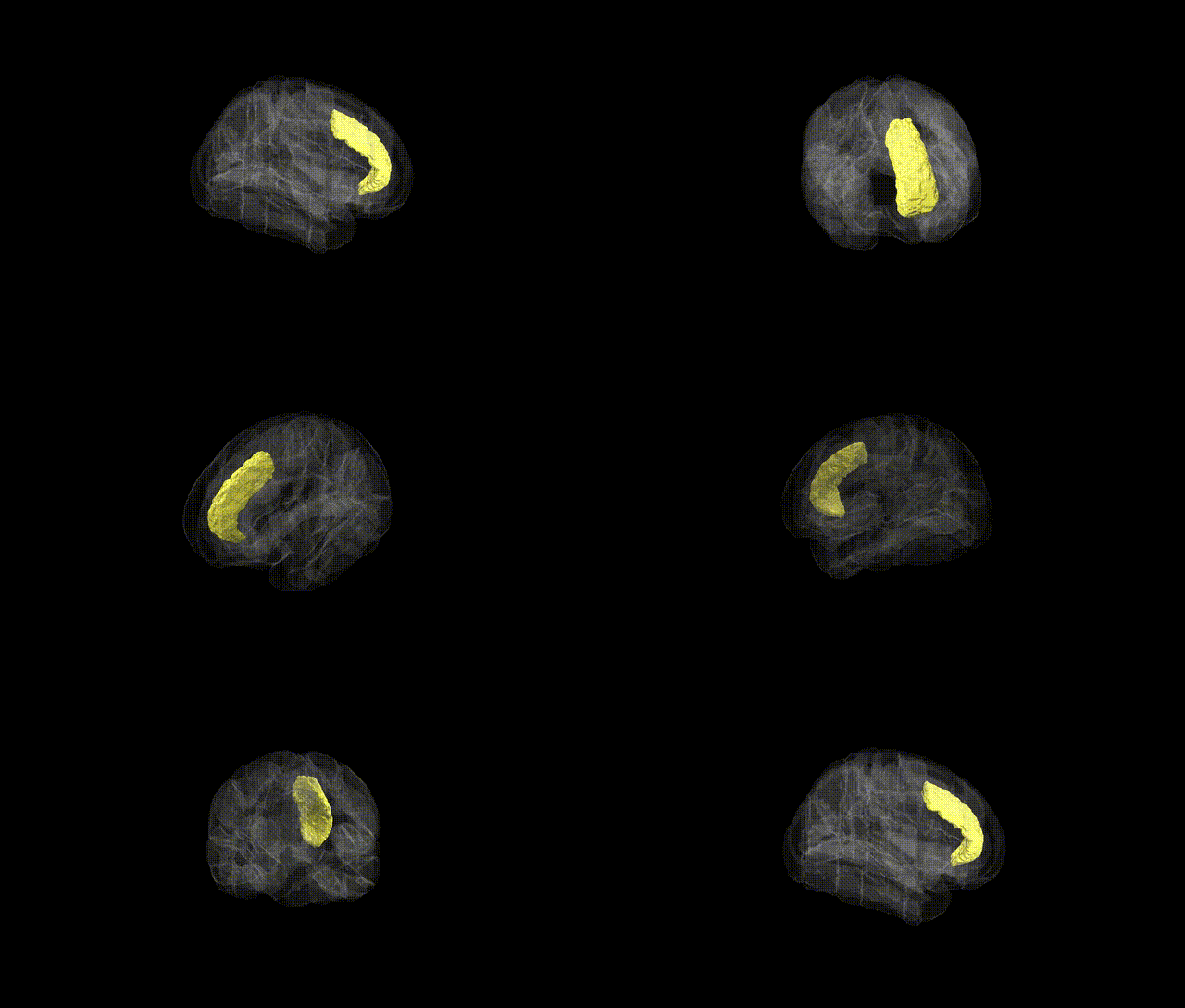
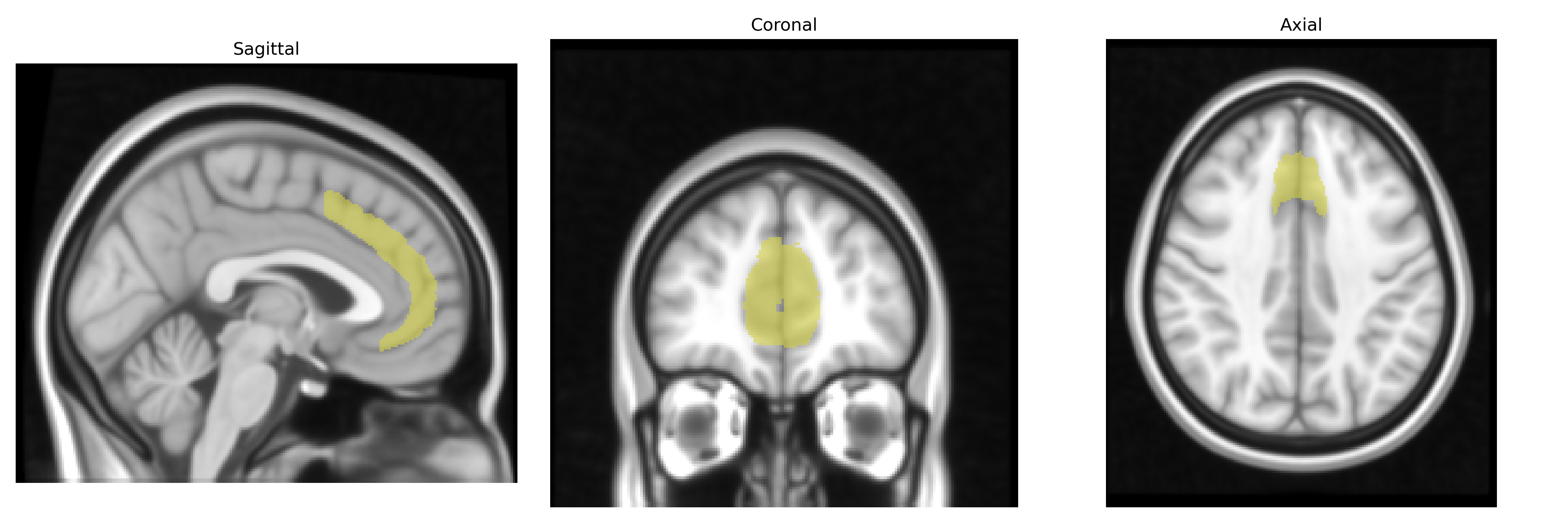
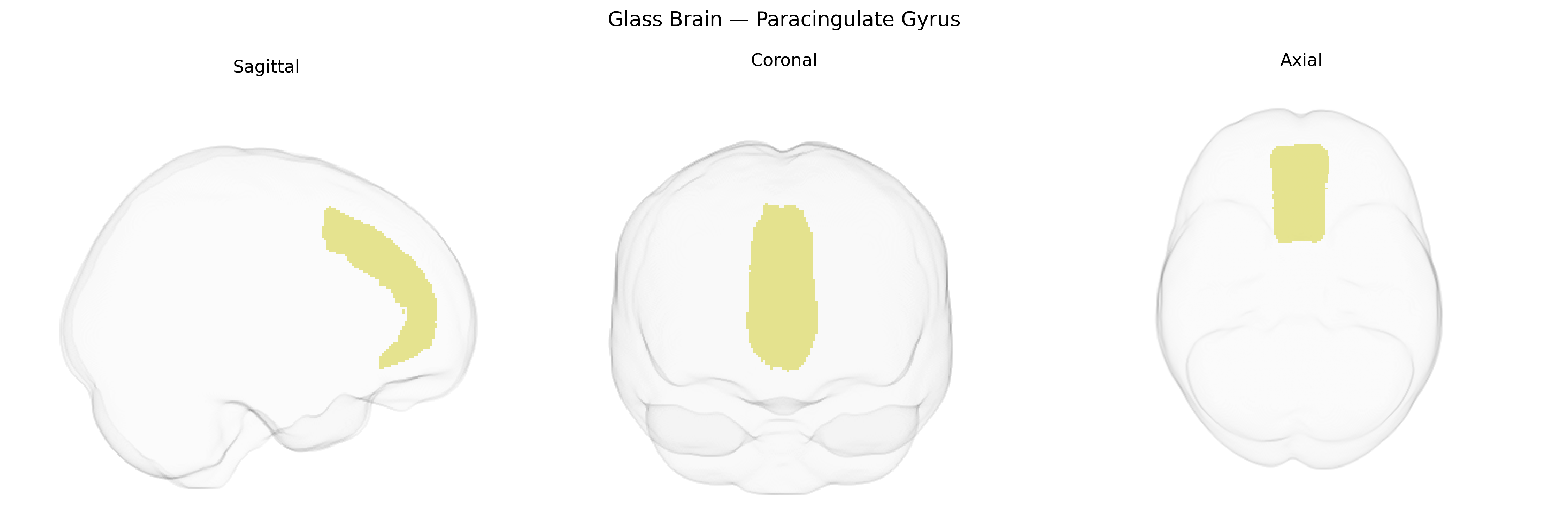
The bilateral Paracingulate Gyrus, as defined in the Harvard–Oxford Cortical Structural Atlas (maxprob thr25 1 mm), is a medial frontal cortical region located dorsal to the cingulate gyrus, often considered part of the medial prefrontal cortex and closely associated with the dorsal anterior cingulate cortex. It shows considerable inter-individual variability in presence and extent and is implicated in higher-order cognitive and socio-affective functions, including error monitoring, conflict processing, mentalizing, and aspects of self-referential thought. Functionally, it contributes to the broader cingulo-frontal network involved in attention, decision-making, and cognitive control. There is no direct Wikipedia article specifically on the Paracingulate Gyrus; a closely related structure and functional neighbor is the Anterior cingulate cortex.
The bilateral paracingulate gyrus, a medial prefrontal region implicated in cognitive control, self-referential processing, and error monitoring, has been linked to several genetic influences and GWAS findings through its overlap with anterior cingulate and medial prefrontal circuitry rather than through atlas-specific studies. Common variants in genes related to synaptic function and neurodevelopment (e.g., COMT, DISC1, CACNA1C, GRM3) have been associated with structural and functional measures in this region, including cortical thickness and activation during executive and emotion-processing tasks. Large neuroimaging GWAS consortia (such as ENIGMA and UK Biobank–based studies) have identified associations between polygenic scores for schizophrenia, major depressive disorder, bipolar disorder, ADHD, and autism spectrum disorder and altered morphology or activation in medial prefrontal/anterior cingulate areas encompassing the paracingulate gyrus. In addition, genetic risk for traits including neuroticism, cognitive performance, and risk-taking behavior shows correlations with structural and functional variation in this region, suggesting that polygenic influences on higher-order cognition and affect regulation partly converge on the paracingulate gyrus and its broader cingulo-frontal networks.
Overview generated by GPT-4o (2026).
Region ID: 28
Hemisphere: bilateral
Atlas: HarvardOxford cort maxprob thr25 1mm
Full Quality Version: Download MP4
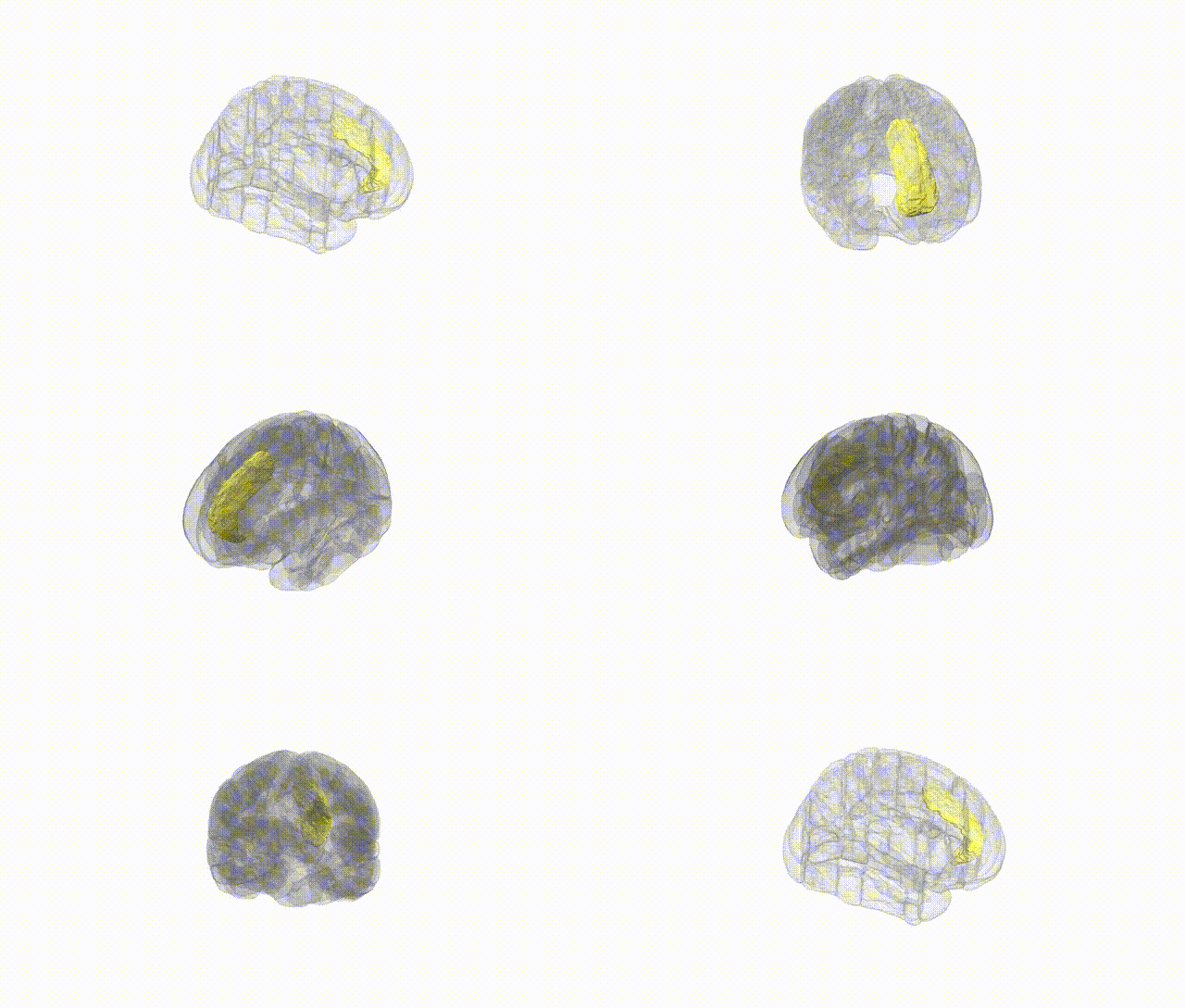
Full Quality Version: Download MP4
Wali Sidiqyar*, Gaurav Rudravaram*, Elyssa M. McMaster, Trent M. Schwartz, Adam M. Saunders, Kurt G. Schilling, Bennett A. Landman "Introducing SPINS: A Shared Public Visualization Library of Neuroanatomical Structures." Medical Imaging with Deep Learning- short paper
This resource is licensed under CC0 1.0 Universal (Public Domain).