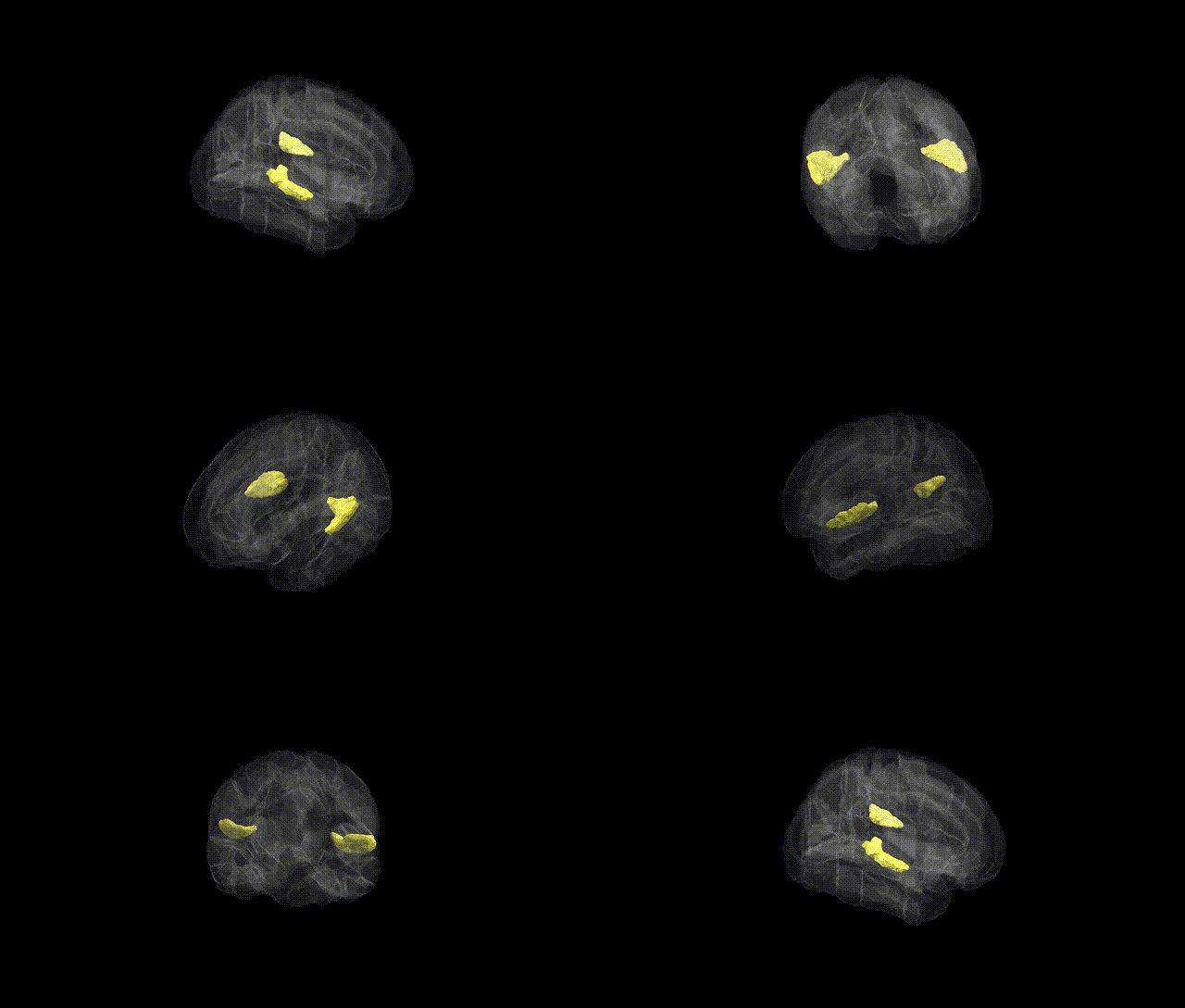
The bilateral Planum Temporale is a cortical region located on the superior temporal plane, posterior to Heschl’s gyrus, forming part of the superior temporal lobe and classically associated with auditory processing and language-related functions. It is typically larger in the left hemisphere in most individuals, a structural asymmetry thought to underlie hemispheric specialization for language. Functionally, the Planum Temporale contributes to phonological processing, speech perception, and integration of complex auditory information, and is often implicated in studies of language dominance, dyslexia, and auditory scene analysis. There is no dedicated Wikipedia article specifically for the “Planum Temporale,” but it is commonly discussed as part of the superior temporal lobe and auditory cortex: Superior temporal gyrus.
The bilateral Planum Temporale, a key auditory and language-related region, has been repeatedly implicated in genetic studies of brain structure, lateralization, and cognitive traits. Large-scale GWAS of cortical anatomy (e.g., ENIGMA, UK Biobank) have linked planum temporale volume and asymmetry to variants near genes involved in neuronal development and synaptic function, including loci near DCDC2, KIAA0319, and ROBO1 that have also been associated with dyslexia and language impairment. Altered planum temporale structure shows partial heritability and has been connected to polygenic risk for reading and spelling abilities, phonological processing, and broader educational attainment. Genetic correlations have further tied planum temporale morphology to schizophrenia risk, autism spectrum conditions, and psychosis-related language disturbances, with overlapping signals in genes related to axon guidance, cortical patterning, and glutamatergic transmission. Although specific atlas-defined labels such as the HarvardOxford “Planum Temporale” region are not always distinguished in GWAS, convergent imaging-genetics evidence supports a genetically influenced contribution of this bilateral region to language, reading, auditory processing, and susceptibility to neurodevelopmental and psychiatric disorders.
Overview generated by GPT-4o (2026).
Region ID: 46
Hemisphere: bilateral
Atlas: HarvardOxford cort maxprob thr25 1mm
Full Quality Version: Download MP4
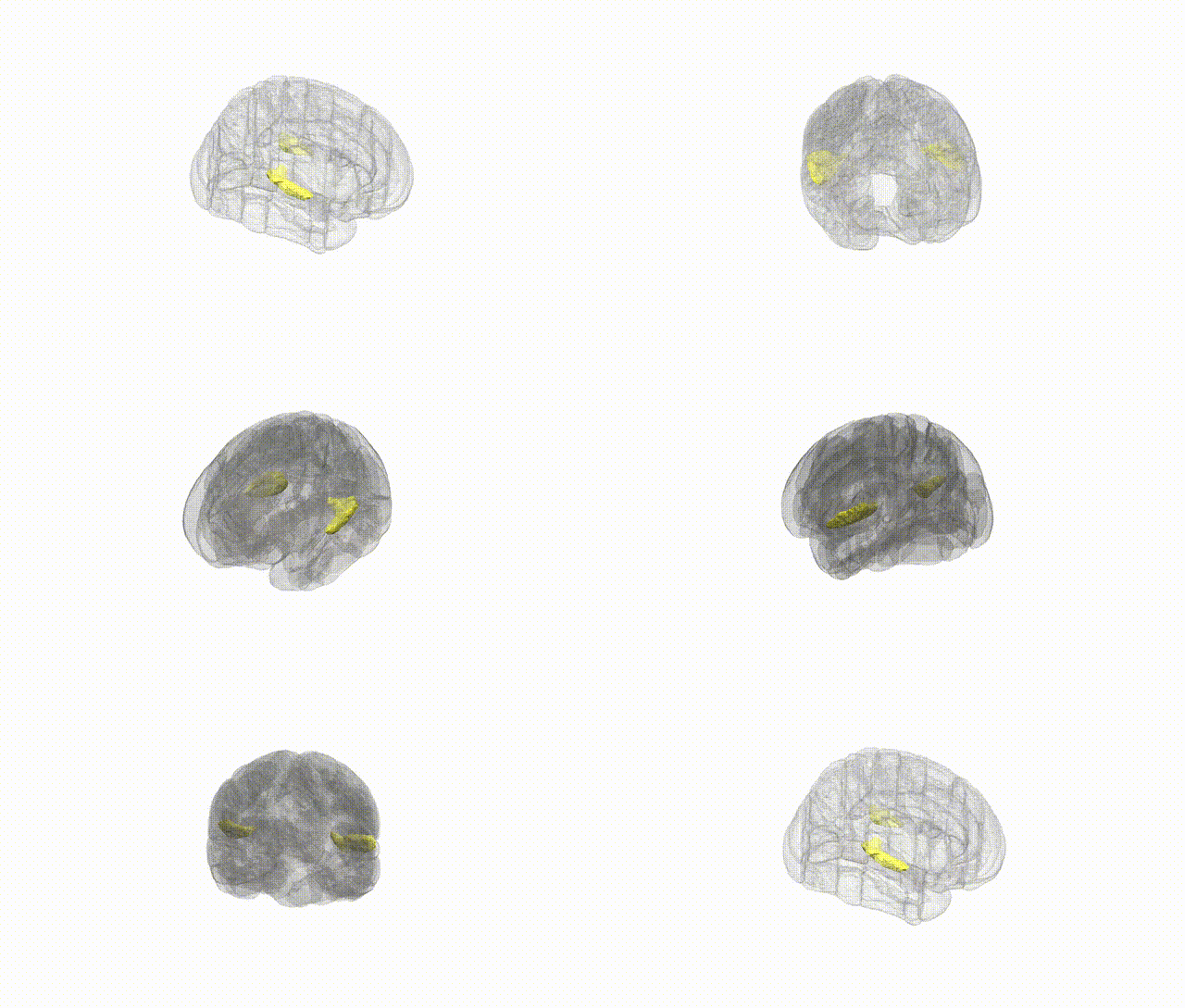
Full Quality Version: Download MP4
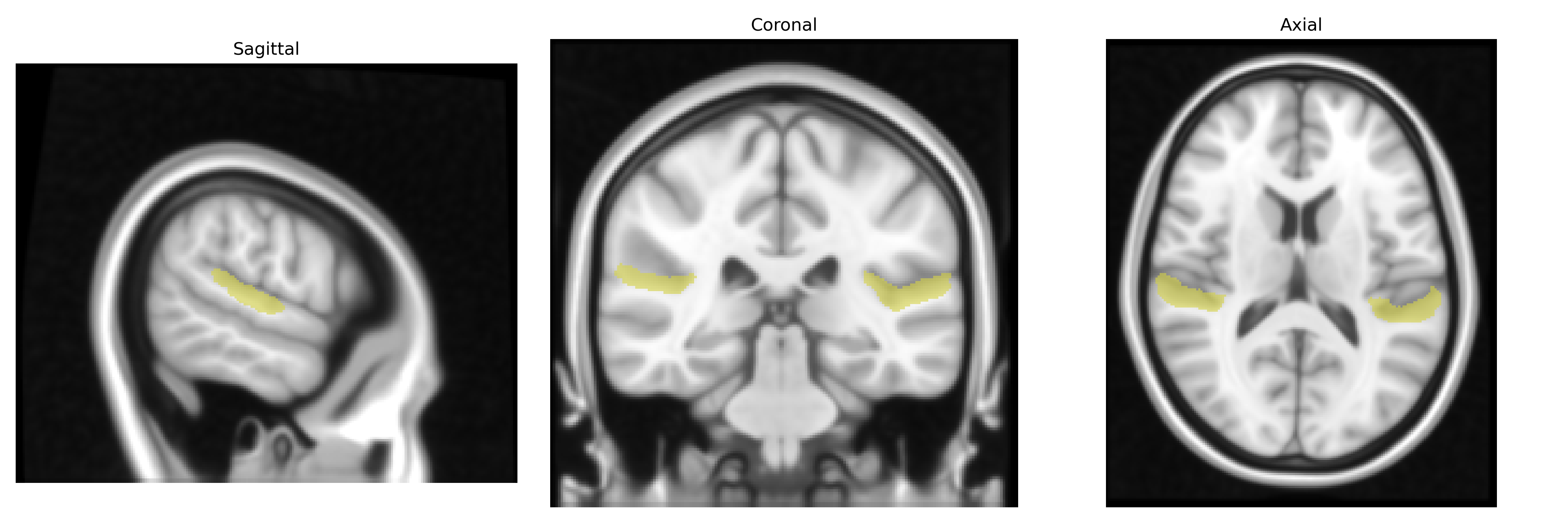
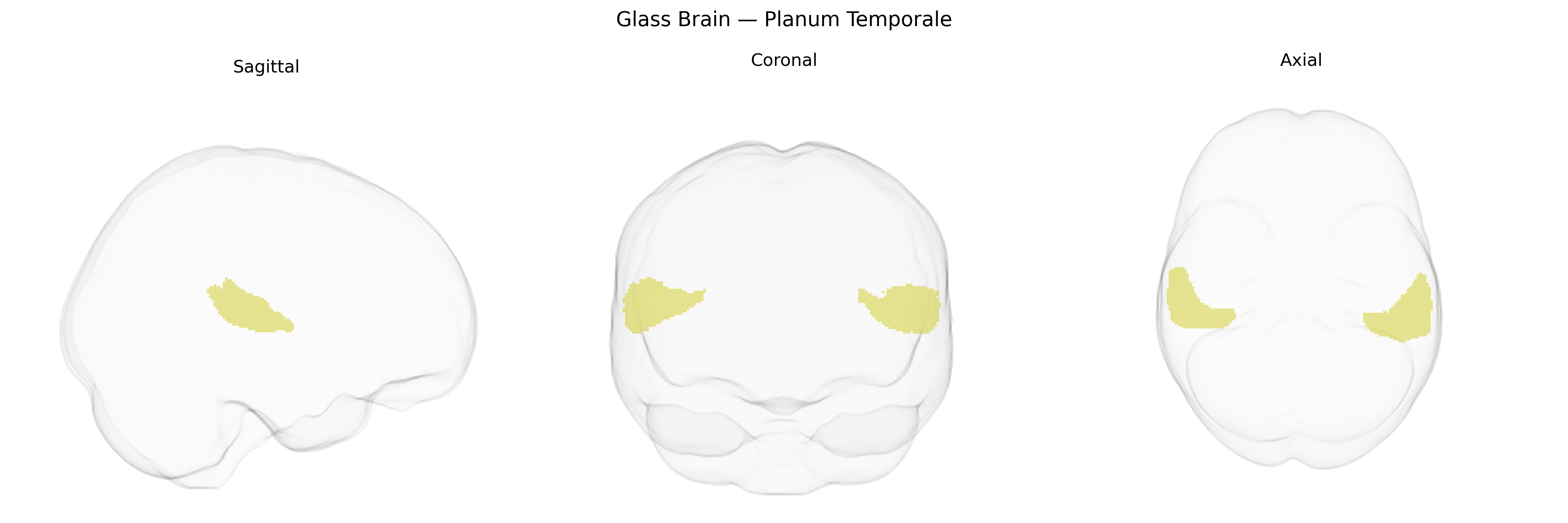
Wali Sidiqyar*, Gaurav Rudravaram*, Elyssa M. McMaster, Trent M. Schwartz, Adam M. Saunders, Kurt G. Schilling, Bennett A. Landman "Introducing SPINS: A Shared Public Visualization Library of Neuroanatomical Structures." Medical Imaging with Deep Learning- short paper
This resource is licensed under CC0 1.0 Universal (Public Domain).