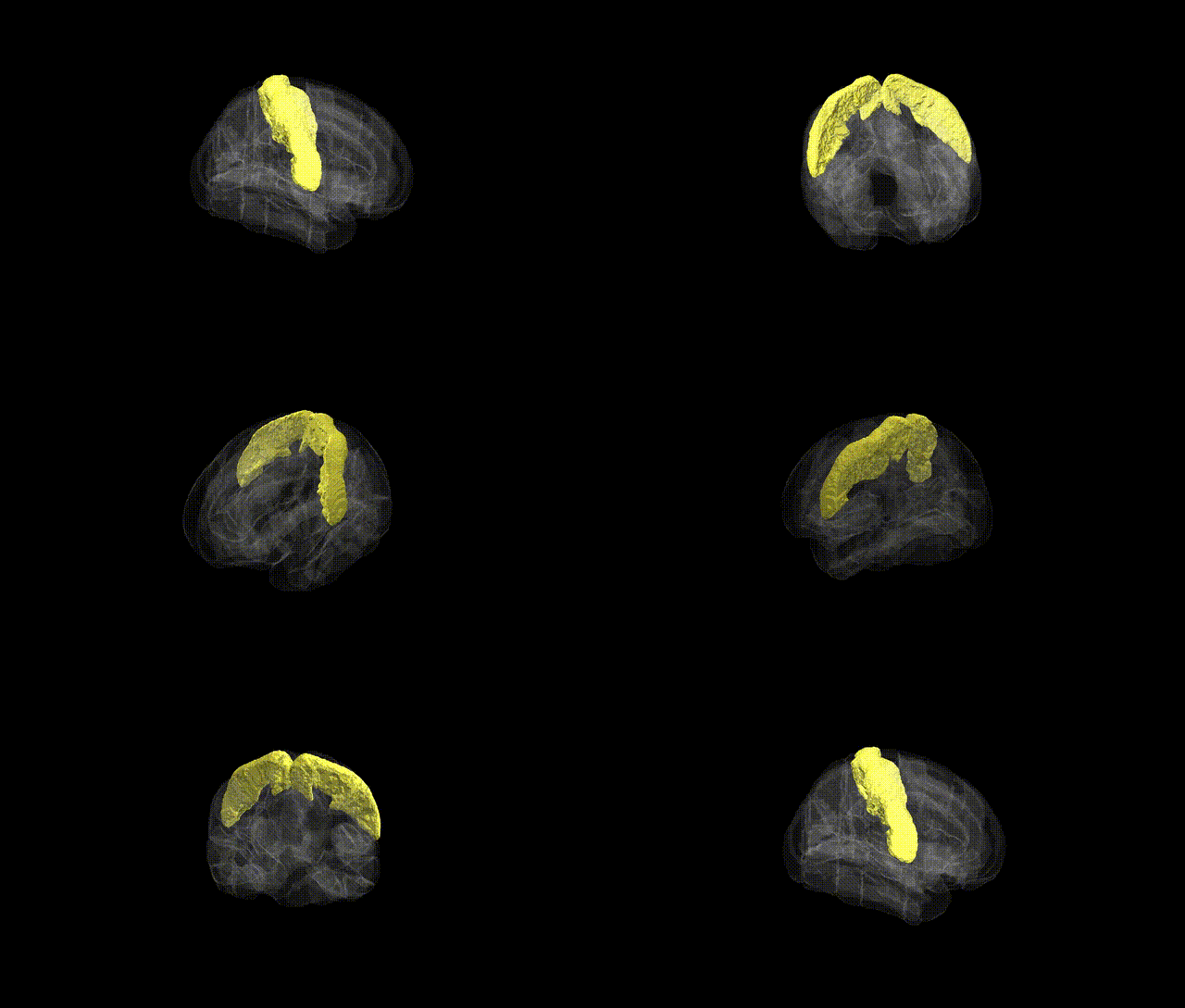
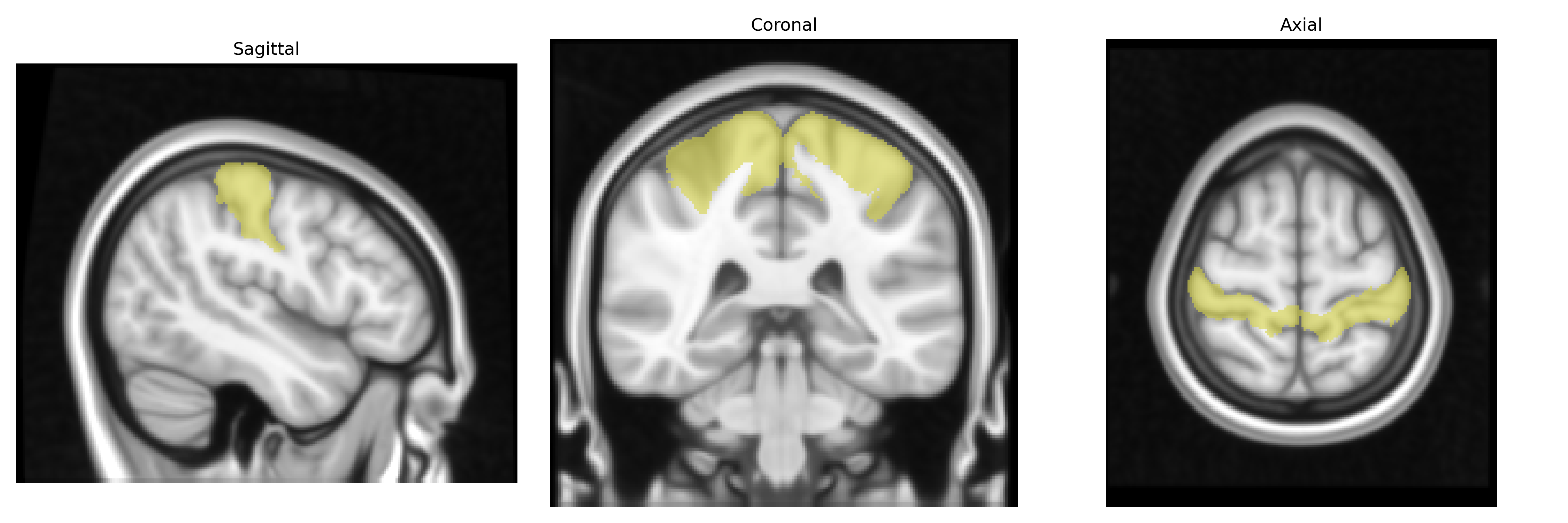
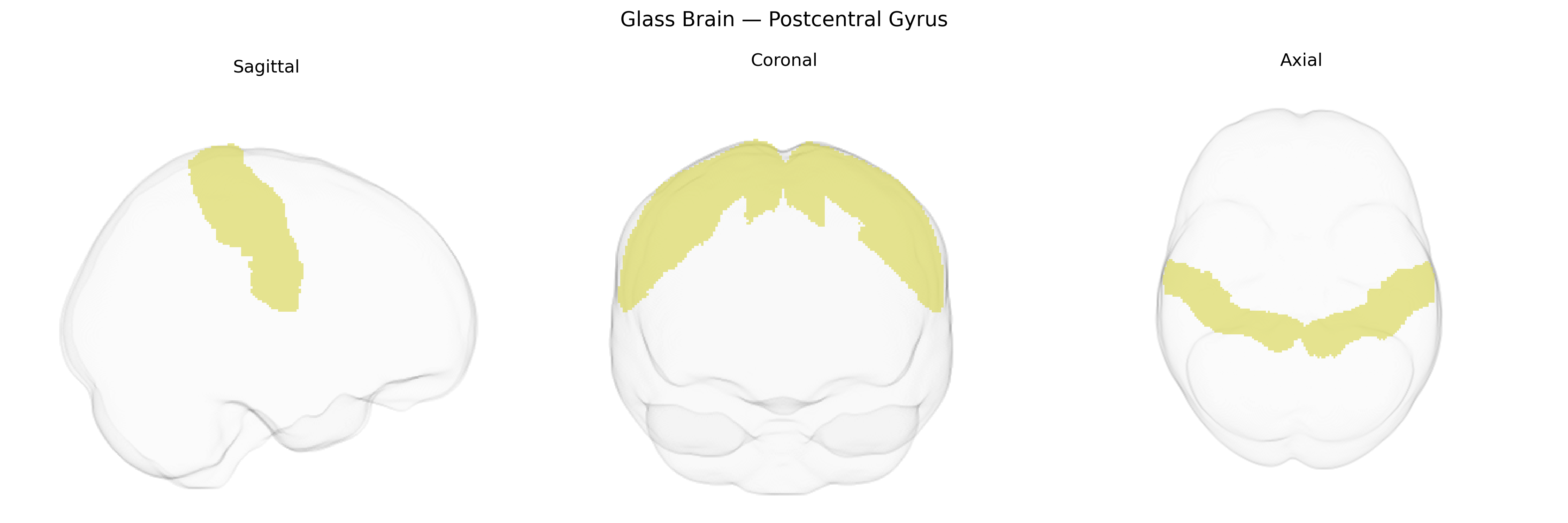
The bilateral Postcentral Gyrus, corresponding to the primary somatosensory cortex (Brodmann areas 3, 1, and 2), lies immediately posterior to the central sulcus in the parietal lobe and is topographically organized to represent the contralateral body surface in a somatotopic “homunculus.” Neurons in this region receive dense thalamocortical input, primarily from the ventral posterior nuclei of the thalamus, and subserve fine tactile discrimination, proprioception, and the conscious perception of bodily sensations such as touch, pressure, vibration, and joint position. The bilateral representation supports integration of sensory information from both sides of the body and contributes to sensorimotor coordination, body schema, and higher-order parietal processing. Functionally, this region is crucial for localizing stimuli on the body surface and for constructing detailed internal representations of external tactile environments. Postcentral gyrus
The bilateral postcentral gyrus, corresponding largely to primary somatosensory cortex (S1) in the Harvard-Oxford cortical atlas, shows robust heritability of cortical thickness and surface area, with numerous GWAS implicating variants in genes involved in neurodevelopment (e.g., microtubule and synaptic pathway genes) and general brain morphometry across widespread regions rather than in a postcentral-specific manner. Large consortia studies (ENIGMA, UK Biobank) have identified common variants associated with somatosensory cortical measures in or near genes such as HMGA2, KIAA0586, and others linked to global brain size, cortical folding, and skull/height traits, though effects are typically diffuse and polygenic. Functionally, the postcentral gyrus is regularly implicated in neurodevelopmental and neuropsychiatric GWAS that use imaging genetics: altered somatosensory cortical structure has been associated with polygenic risk for schizophrenia, autism spectrum disorder, ADHD, and depression, and with traits such as cognitive performance, pain sensitivity, and sensorimotor function, but these links generally reflect distributed network effects rather than single-locus, region-specific genetic associations. Additionally, rare variant and monogenic disorders affecting cortical development (e.g., certain forms of polymicrogyria or somatosensory epilepsy syndromes) can involve the postcentral gyrus, yet these are typically defined by broader cortical malformation genes (such as those in mTOR and migration pathways) rather than genes uniquely tied to this region. Overall, current evidence supports strong but highly polygenic and pleiotropic genetic influences on the structure and function of the postcentral gyrus, embedded in larger somatosensory and whole-brain genetic architecture.
Overview generated by GPT-4o (2026).
Region ID: 17
Hemisphere: bilateral
Atlas: HarvardOxford cort maxprob thr25 1mm
Full Quality Version: Download MP4
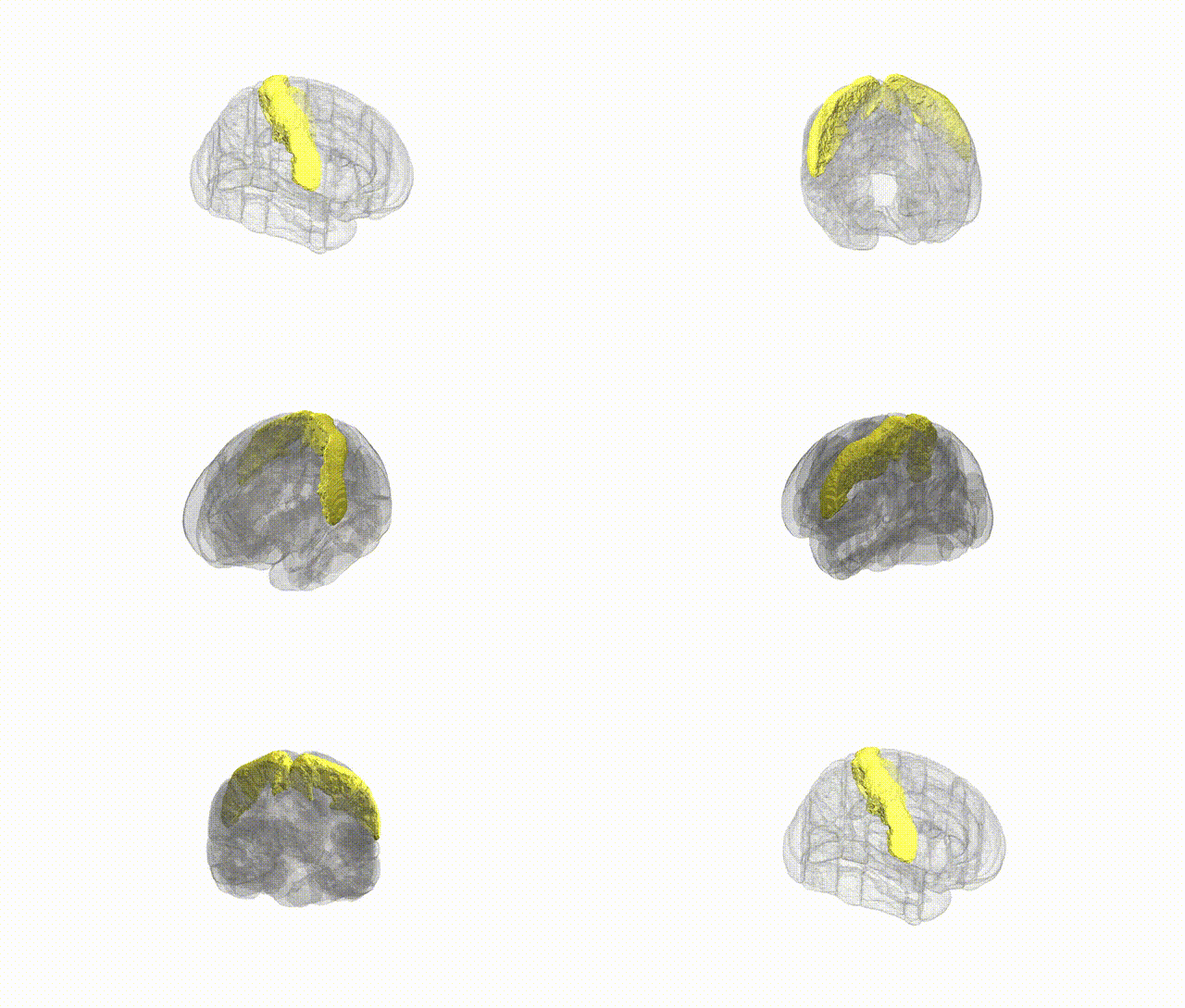
Full Quality Version: Download MP4
Wali Sidiqyar*, Gaurav Rudravaram*, Elyssa M. McMaster, Trent M. Schwartz, Adam M. Saunders, Kurt G. Schilling, Bennett A. Landman "Introducing SPINS: A Shared Public Visualization Library of Neuroanatomical Structures." Medical Imaging with Deep Learning- short paper
This resource is licensed under CC0 1.0 Universal (Public Domain).