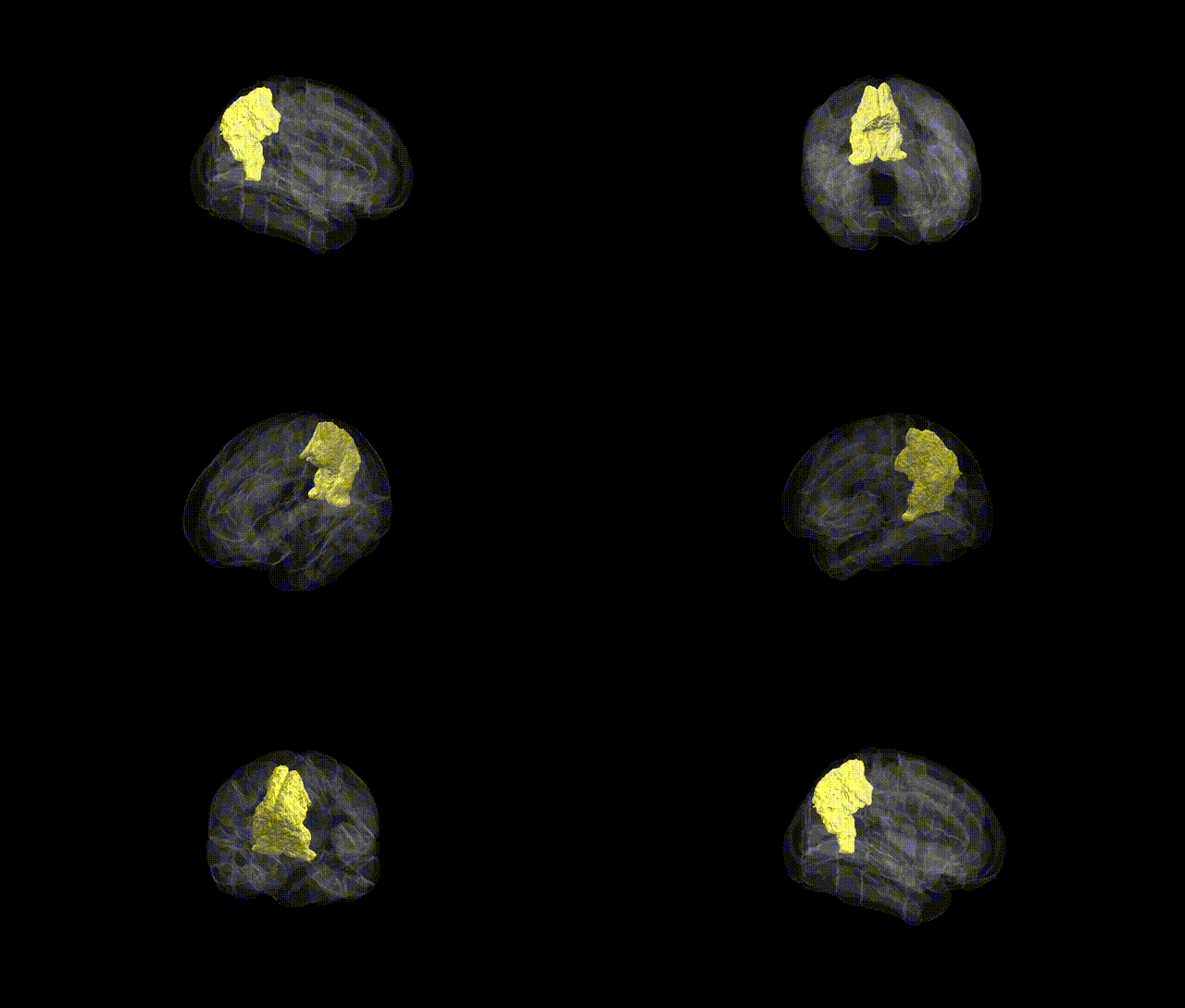
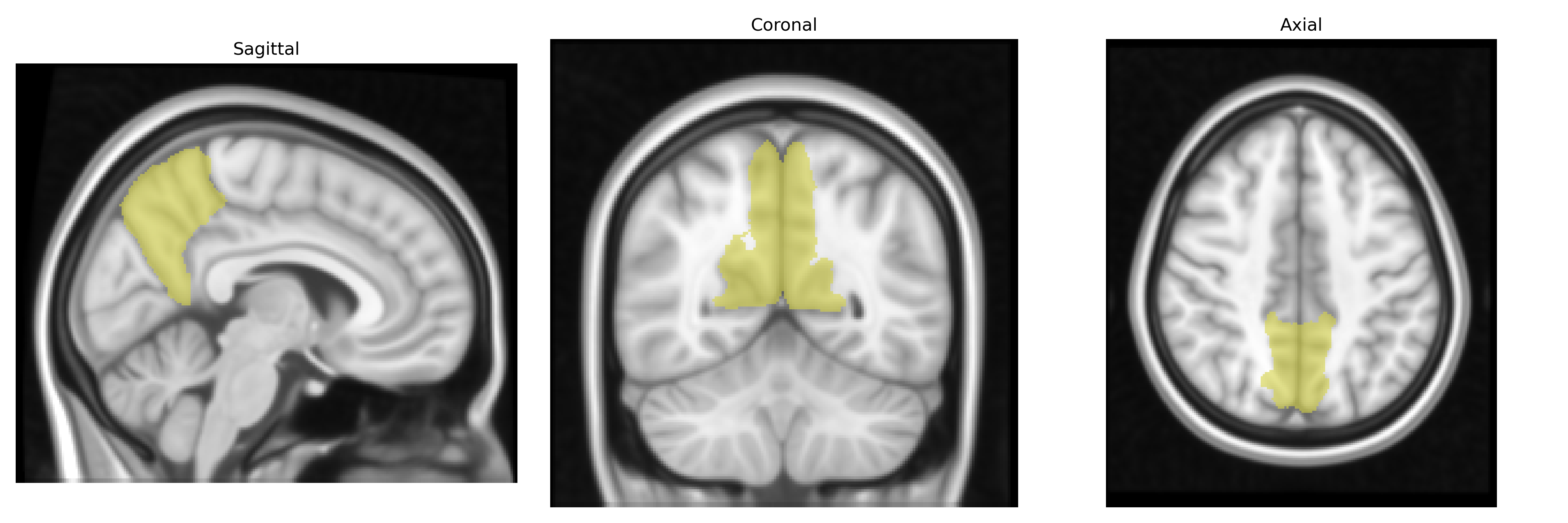
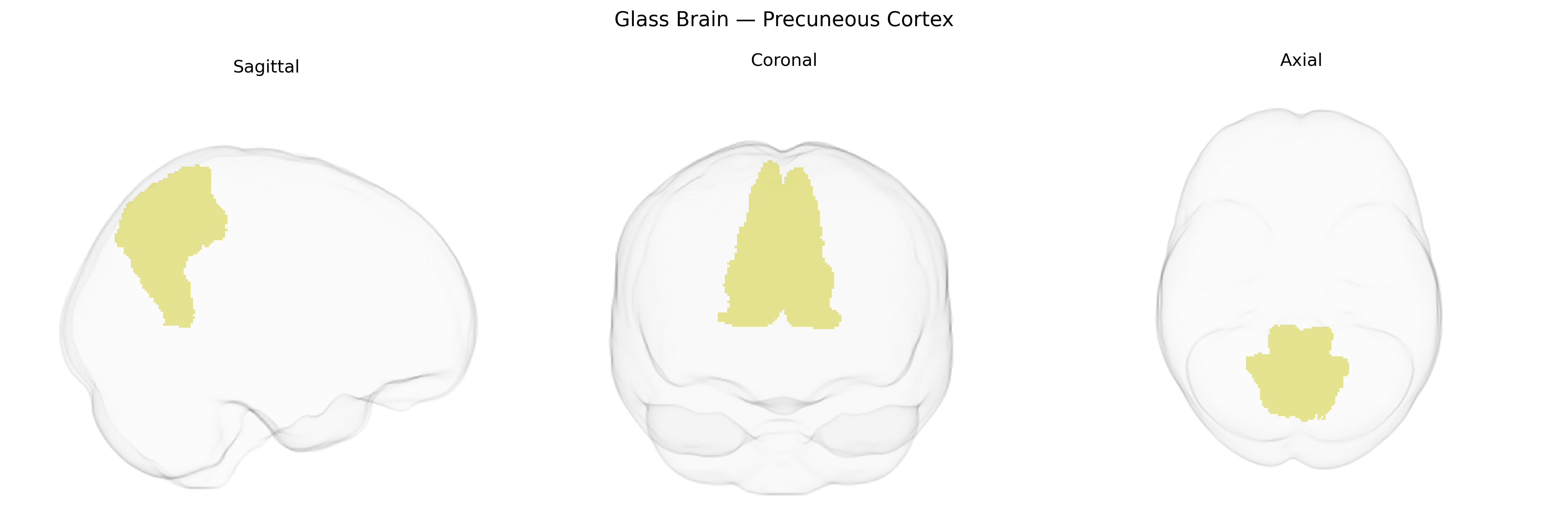
The bilateral Precuneous Cortex, as defined in the Harvard-Oxford Cortical Structural Atlas (maxprob thr25, 1 mm), corresponds to a medial parietal cortical region located on the medial surface of the cerebral hemispheres, anterior to the occipital lobe and posterior to the paracentral lobule. This region is considered part of the superior parietal lobule and is heavily implicated in visuospatial processing, self-referential and autobiographical memory functions, aspects of consciousness, and integration of multimodal sensory information. It is a key node of the default mode network and shows robust activity during rest and internally directed cognition, including mental imagery, episodic memory retrieval, and perspective-taking. Cytoarchitectonically, the precuneus is heterogeneous, with subregions supporting sensorimotor integration, higher-order cognitive functions, and connectivity with frontal, parietal, and limbic structures. A detailed description of this region is available at Precuneus.
The bilateral precuneus cortex, as defined in the HarvardOxford Cortical Atlas, shows convergent genetic associations from twin, imaging–genetics, and GWAS studies implicating genes and variants involved in synaptic plasticity, neurodevelopment, and Alzheimer’s disease–related pathways. Structural and functional measures of the precuneus are heritable and have been linked to common variants near or within APOE, CLU, PICALM, and BIN1 in the context of default mode network integrity, amyloid burden, and early Alzheimer’s disease vulnerability, as well as to genes such as BDNF and COMT that modulate cortical thickness, connectivity, and task-related activation. Large-scale neuroimaging GWAS (e.g., ENIGMA, UK Biobank) report associations between precuneus volume or surface area and loci enriched for neurodevelopmental and cell-adhesion genes, some overlapping with risk architecture for schizophrenia, major depressive disorder, and autism spectrum conditions, consistent with the region’s role in self-referential processing and internal mentation. Additional GWAS link precuneus structure and function to traits including general cognitive ability, intelligence, and educational attainment, where polygenic scores for these traits predict variation in precuneus morphology and default mode network activity, underscoring this region as a key neuroanatomical substrate through which polygenic influences on cognition and neuropsychiatric risk are partially expressed.
Overview generated by GPT-4o (2026).
Region ID: 31
Hemisphere: bilateral
Atlas: HarvardOxford cort maxprob thr25 1mm
Full Quality Version: Download MP4
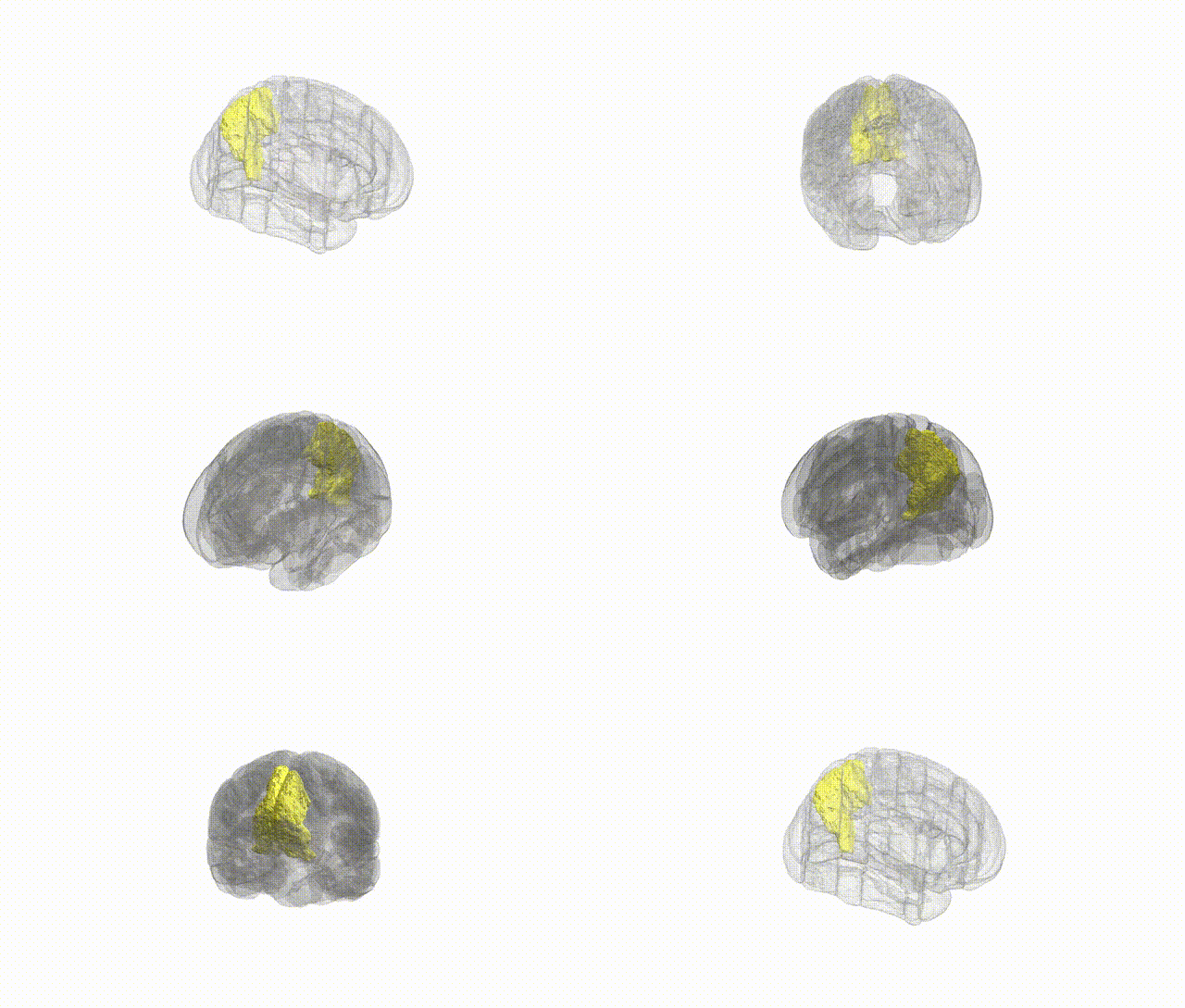
Full Quality Version: Download MP4
Wali Sidiqyar*, Gaurav Rudravaram*, Elyssa M. McMaster, Trent M. Schwartz, Adam M. Saunders, Kurt G. Schilling, Bennett A. Landman "Introducing SPINS: A Shared Public Visualization Library of Neuroanatomical Structures." Medical Imaging with Deep Learning- short paper
This resource is licensed under CC0 1.0 Universal (Public Domain).