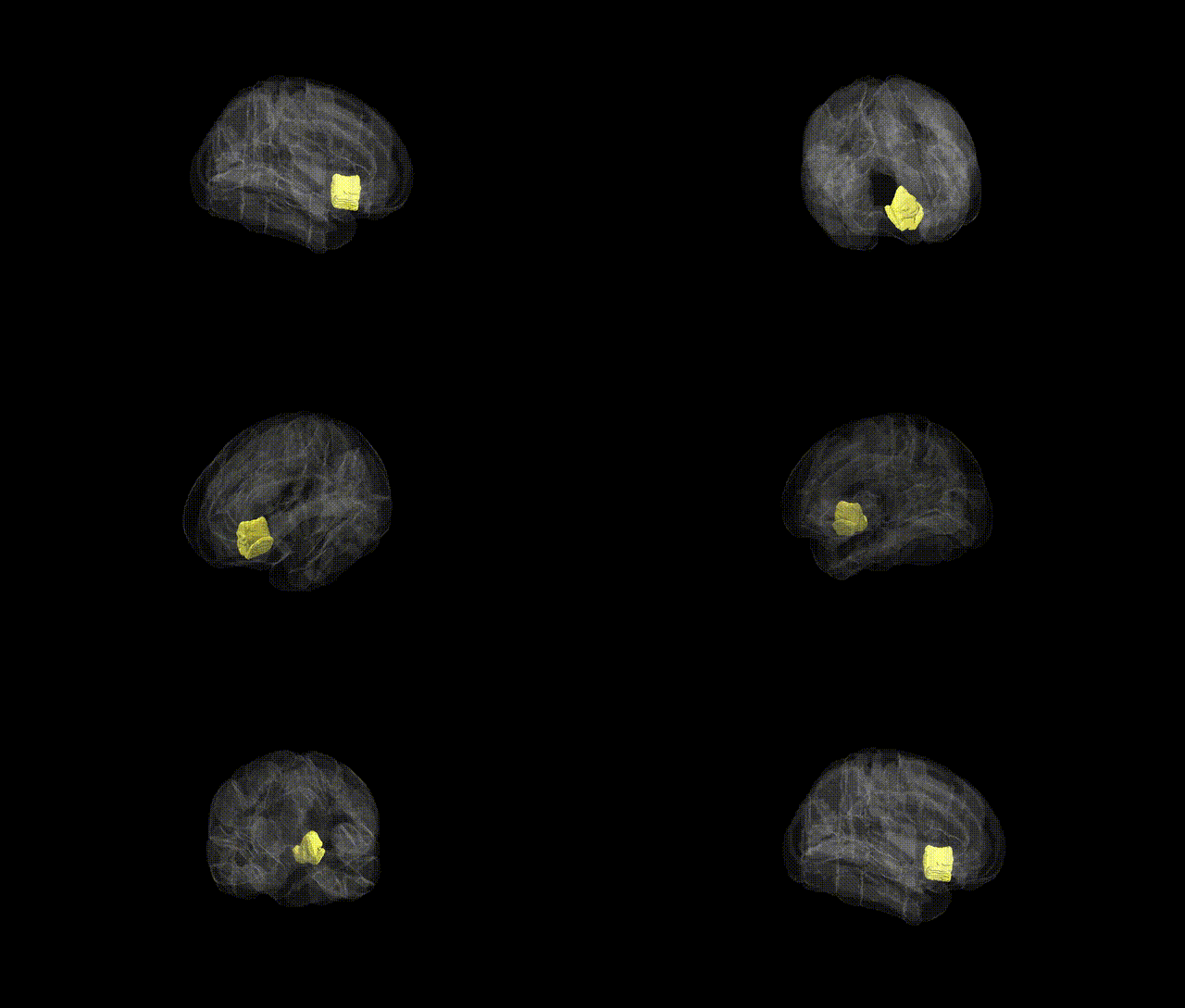
The bilateral Subcallosal Cortex, as defined in the Harvard-Oxford cortical atlas, corresponds largely to the subcallosal area (also referred to as Brodmann area 25, subgenual cingulate cortex, or subcallosal cingulate), a ventromedial prefrontal region located beneath the corpus callosum at the genu. This region is part of the limbic circuitry, closely associated with the anterior cingulate and orbitofrontal cortices, and is interconnected with the hypothalamus, amygdala, and other autonomic and emotional regulatory centers. Functionally, it plays a key role in affective processing, mood regulation, and visceromotor control, and has been strongly implicated in major depressive disorder, particularly in treatment-resistant depression, where it serves as a common deep brain stimulation target. There is no direct Wikipedia article for “Subcallosal Cortex”; a closely related and overlapping structure is the Subgenual anterior cingulate cortex.
The bilateral Subcallosal Cortex, as defined in the Harvard–Oxford atlas, overlaps substantially with subgenual anterior cingulate/ventromedial prefrontal regions that show strong genetic and GWAS-based associations with mood and affective traits, including major depressive disorder, neuroticism, and related internalizing symptoms. Large-scale imaging–genetics consortia (e.g., ENIGMA, UK Biobank analyses) have identified common variants affecting cortical thickness, volume, and connectivity in this area, with loci near or within genes such as SLC6A4, BDNF, and those in glutamatergic, GABAergic, and neurotrophic pathways often implicated in depression and antidepressant response, as well as polygenic risk scores for major depressive disorder and bipolar disorder correlating with structural variation in this region. GWAS of brain structural endophenotypes have reported SNP heritability for subcallosal/ventromedial prefrontal measures and have linked this region to genetic risk for disorders including major depressive disorder, bipolar disorder, and, to a lesser extent, anxiety and suicidality, consistent with its role in affect regulation and treatment response (e.g., deep brain stimulation targets). Overall, genetic studies converge on the subcallosal region as a key neuroanatomical substrate mediating polygenic risk for mood and related psychiatric disorders, though specific loci and causal mechanisms remain incompletely resolved and are often reported at the level of broader medial prefrontal or cingulate territories rather than the subcallosal cortex alone.
Overview generated by GPT-4o (2026).
Region ID: 27
Hemisphere: bilateral
Atlas: HarvardOxford cort maxprob thr25 1mm
Full Quality Version: Download MP4
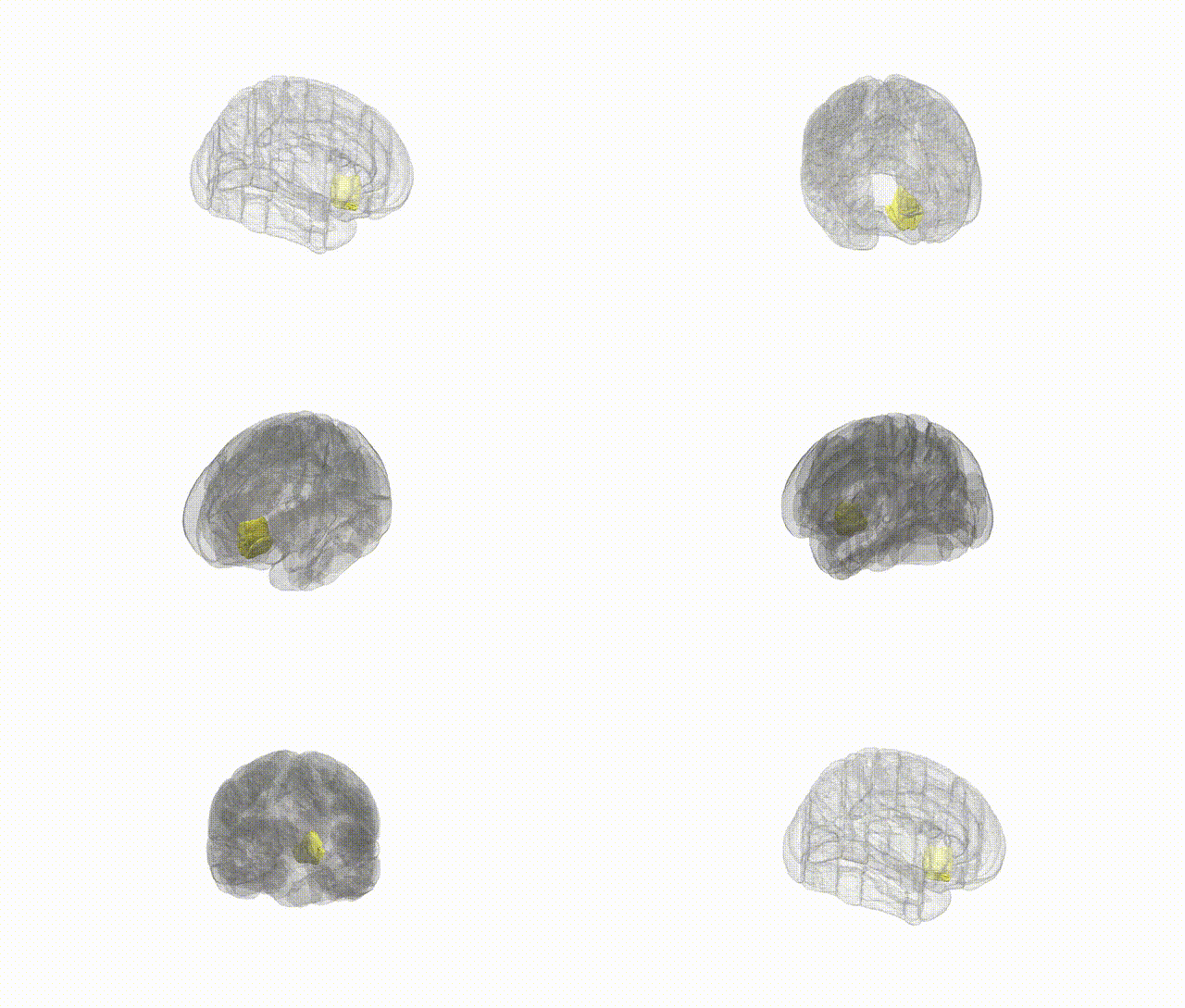
Full Quality Version: Download MP4
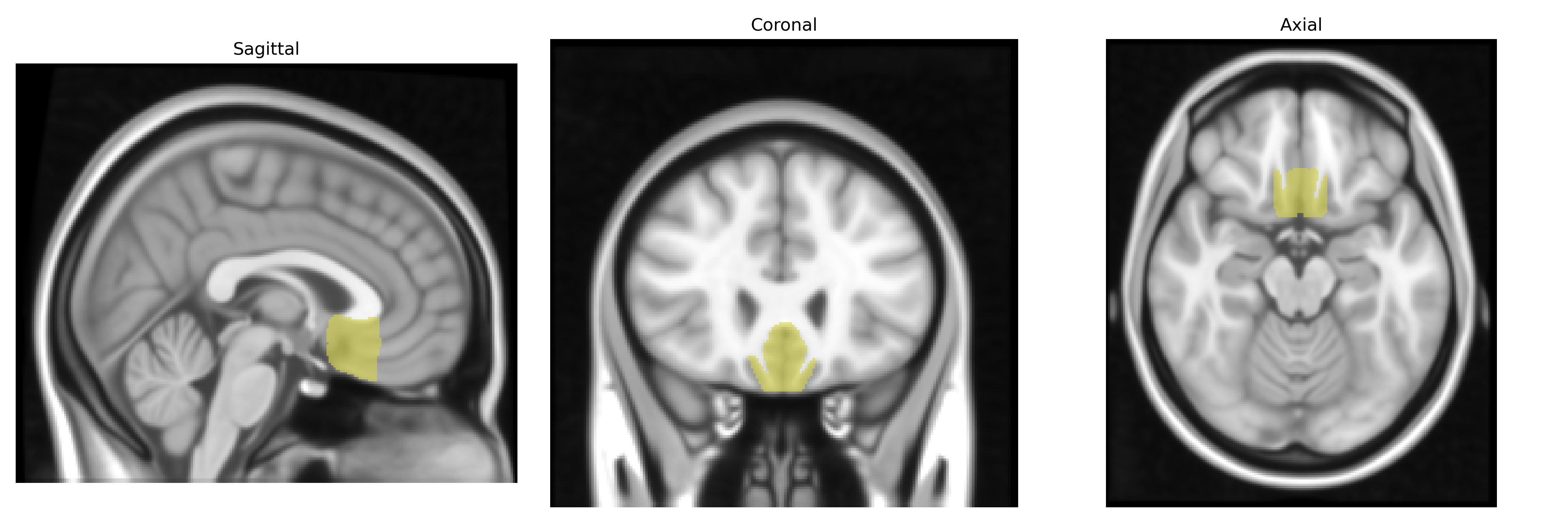
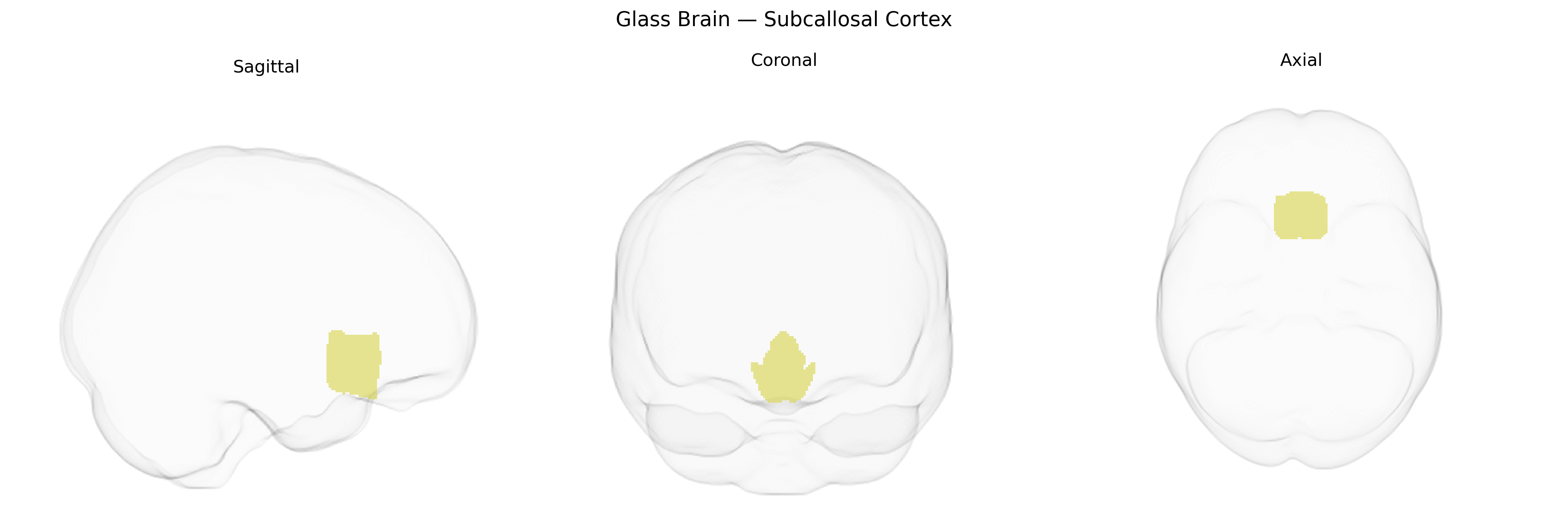
Wali Sidiqyar*, Gaurav Rudravaram*, Elyssa M. McMaster, Trent M. Schwartz, Adam M. Saunders, Kurt G. Schilling, Bennett A. Landman "Introducing SPINS: A Shared Public Visualization Library of Neuroanatomical Structures." Medical Imaging with Deep Learning- short paper
This resource is licensed under CC0 1.0 Universal (Public Domain).