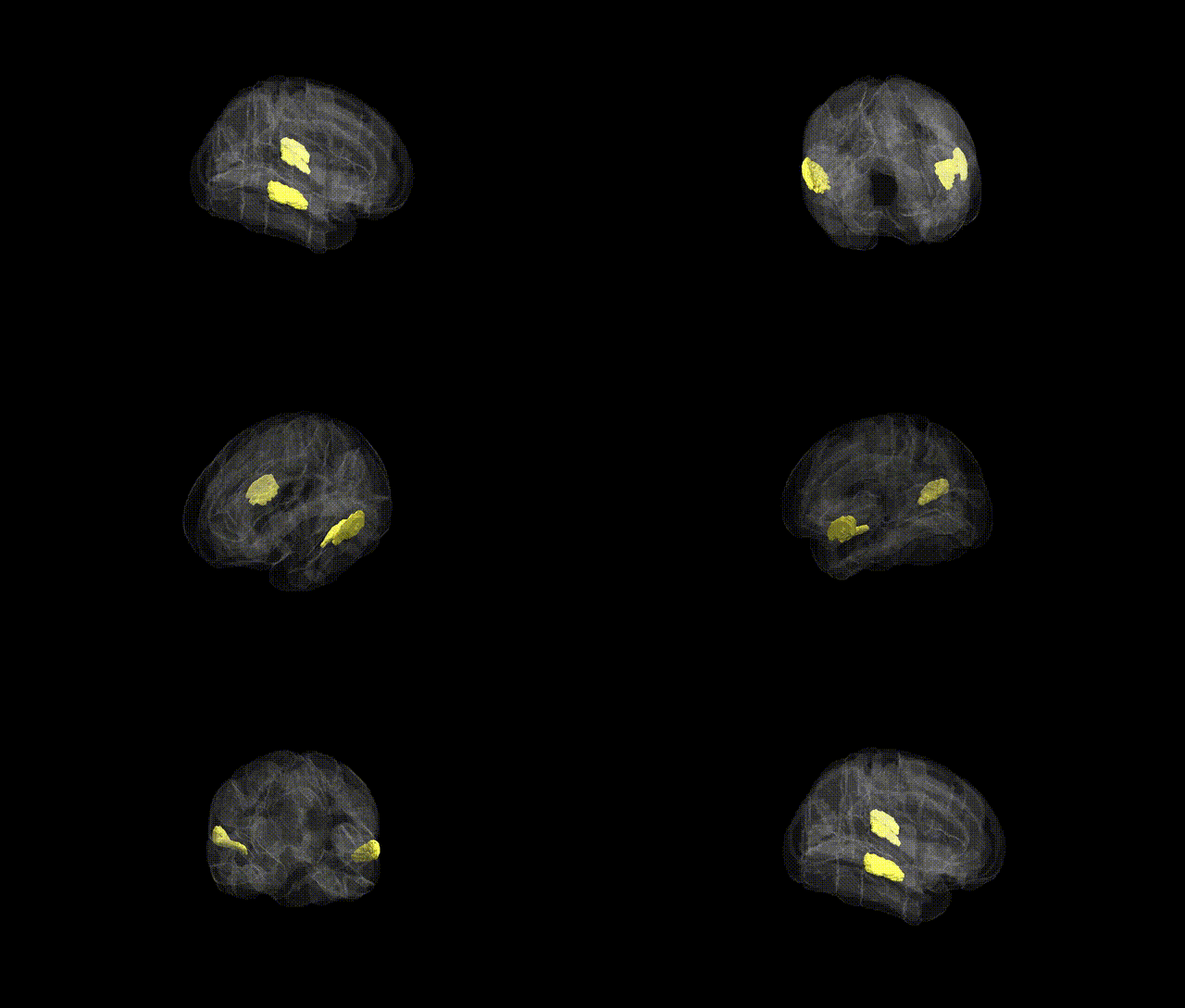
The bilateral Superior Temporal Gyrus, posterior division, as defined in the Harvard–Oxford Cortical Structural Atlas (maxprob thr25, 1 mm), corresponds to the posterior segment of the superior temporal gyrus encompassing key portions of the auditory association cortex and regions implicated in higher-order auditory processing, speech perception, and language comprehension. Anatomically, it lies inferior to the lateral sulcus (Sylvian fissure), superior to the middle temporal gyrus, and posterior to the primary auditory cortex in Heschl’s gyrus, extending toward the temporoparietal junction and bordering areas involved in multisensory integration (including regions often overlapping with or adjacent to Wernicke’s area in the dominant hemisphere). Functionally, this posterior division participates in the analysis of complex sounds (such as speech and environmental noises), phonological and lexical processing, and the mapping of auditory inputs to semantic representations, with bilateral contributions to auditory scene analysis and hemispheric specialization for language in the dominant hemisphere. There is no direct Wikipedia article for this exact atlas-defined subdivision; a closely related structure is the Superior temporal gyrus.
Genetic associations related to the bilateral posterior Superior Temporal Gyrus (STG) primarily emerge from imaging genetics and GWAS of brain structure and language-related traits, although most studies reference the STG more generally rather than the specific Harvard–Oxford posterior division parcel. Variants in genes such as CNTNAP2, FOXP2, DCDC2, KIAA0319, and ROBO1 have been linked to STG morphology or function and to language, reading, and developmental dyslexia, with some studies reporting altered cortical thickness or activation in posterior STG for risk alleles. Large-scale GWAS of cortical anatomy (e.g., ENIGMA consortium) have identified heritable influences on temporal lobe surface area and thickness, with loci near genes involved in neurodevelopment and synaptic function (such as genes in Wnt, axon guidance, and cell adhesion pathways) contributing to variance in posterior temporal regions that include the STG. GWAS and candidate-gene studies in schizophrenia, autism spectrum disorder, and specific language impairment have associated common variants and polygenic risk scores with structural and functional abnormalities in posterior STG, particularly in auditory and language processing tasks, implicating synaptic and neurotransmission genes (e.g., GRIN2A, NRG1, DISC1 and others) in altered temporal lobe connectivity. Additionally, risk alleles for hallucinations and psychosis, identified in psychiatric GWAS, show correlations with reduced gray matter or altered gyrification in posterior STG, suggesting a genetically mediated vulnerability of this region to disorders of auditory and speech perception.
Overview generated by GPT-4o (2026).
Region ID: 10
Hemisphere: bilateral
Atlas: HarvardOxford cort maxprob thr25 1mm
Full Quality Version: Download MP4
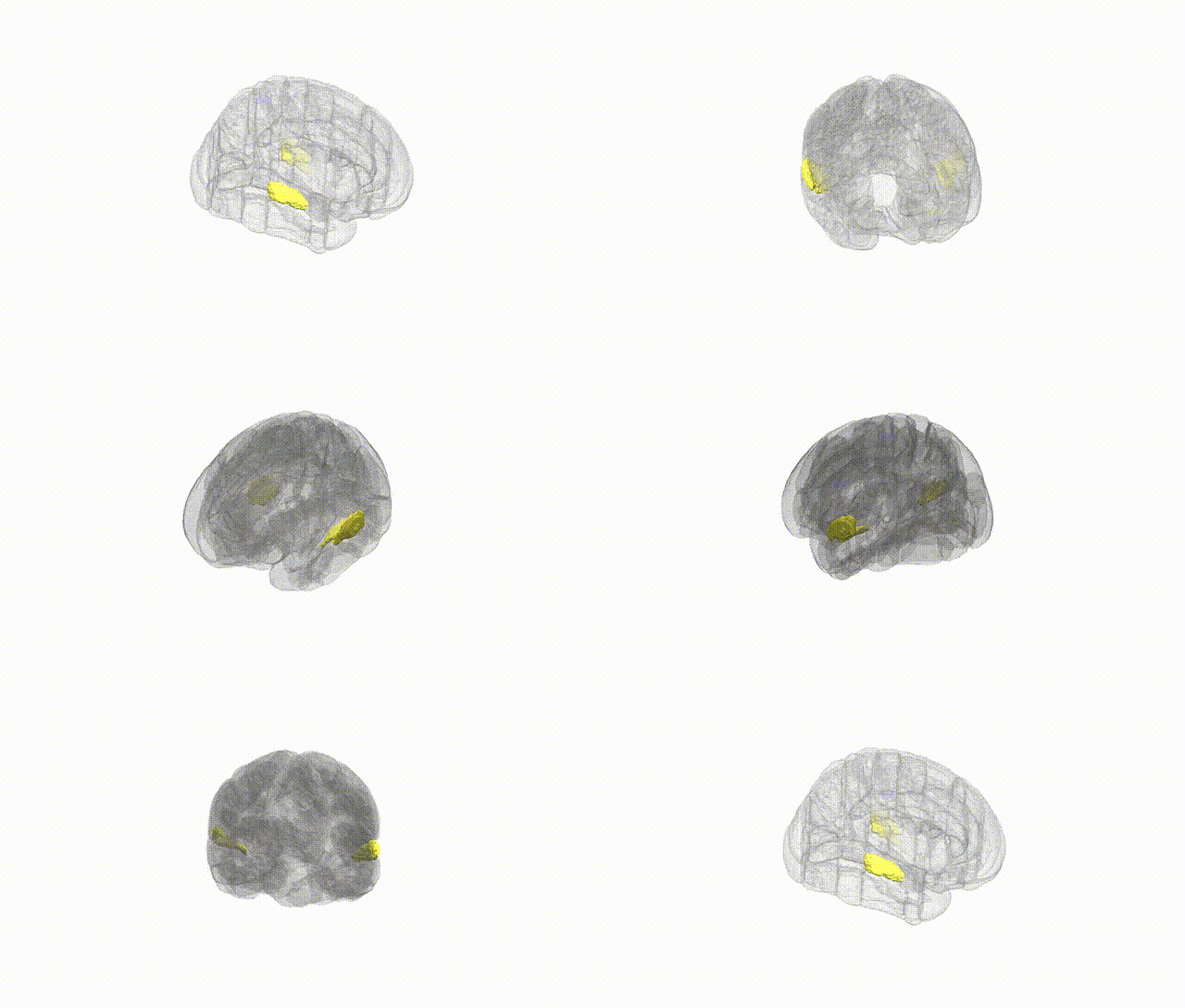
Full Quality Version: Download MP4
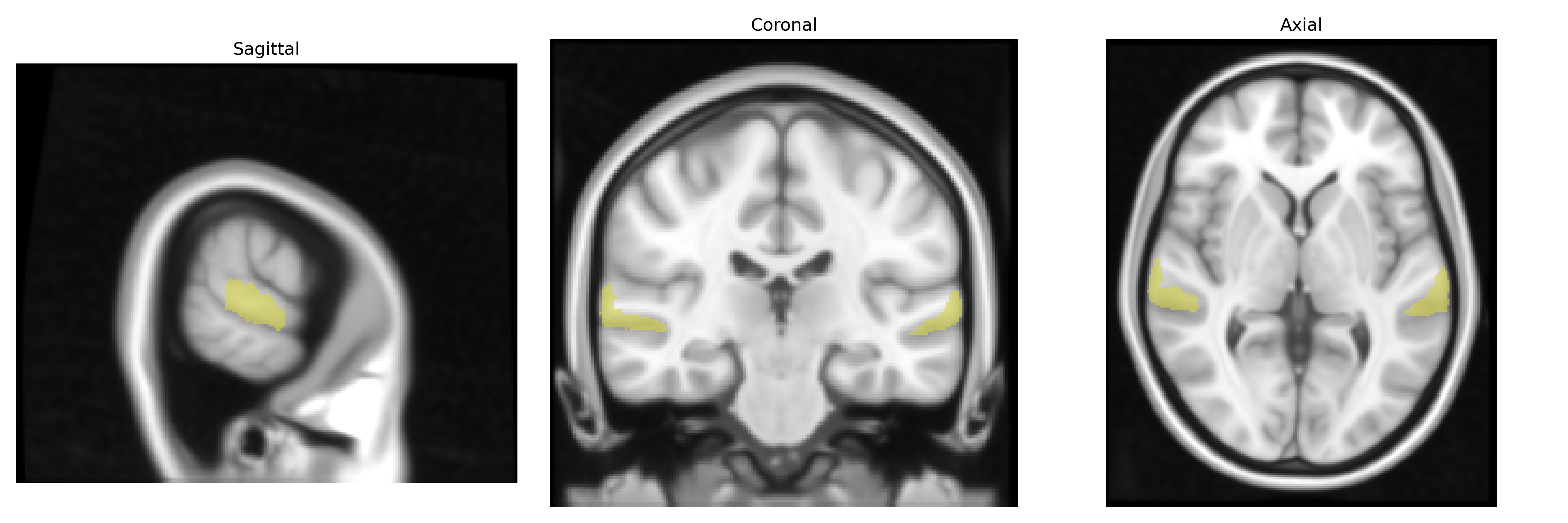
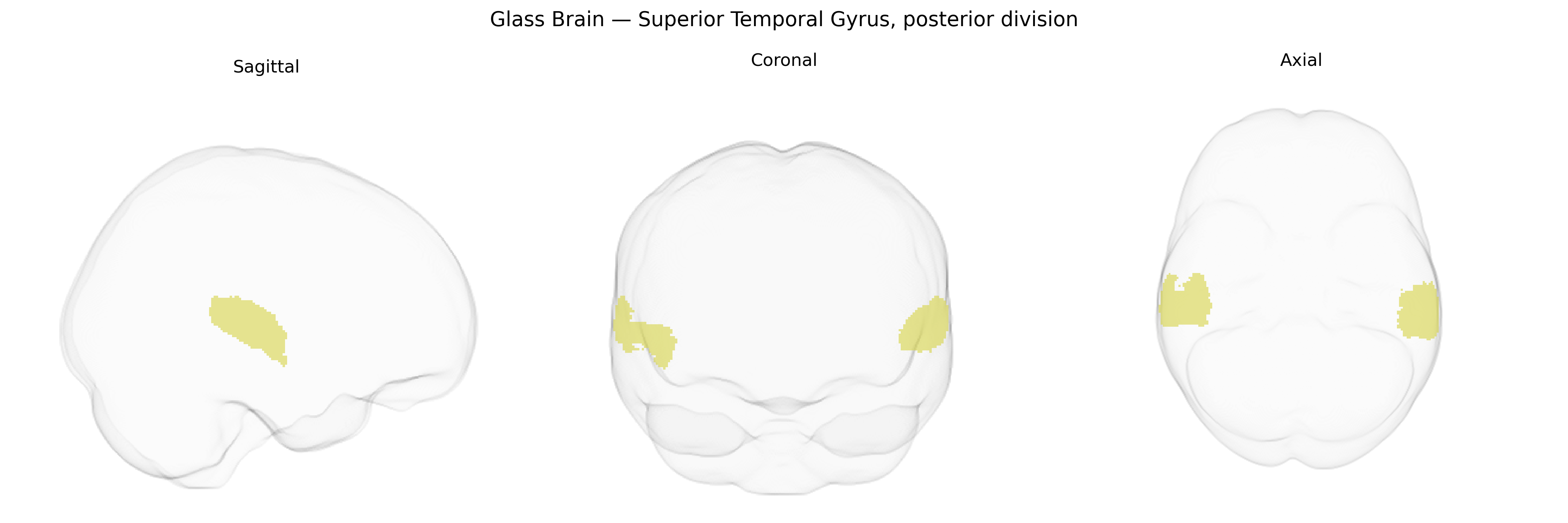
Wali Sidiqyar*, Gaurav Rudravaram*, Elyssa M. McMaster, Trent M. Schwartz, Adam M. Saunders, Kurt G. Schilling, Bennett A. Landman "Introducing SPINS: A Shared Public Visualization Library of Neuroanatomical Structures." Medical Imaging with Deep Learning- short paper
This resource is licensed under CC0 1.0 Universal (Public Domain).