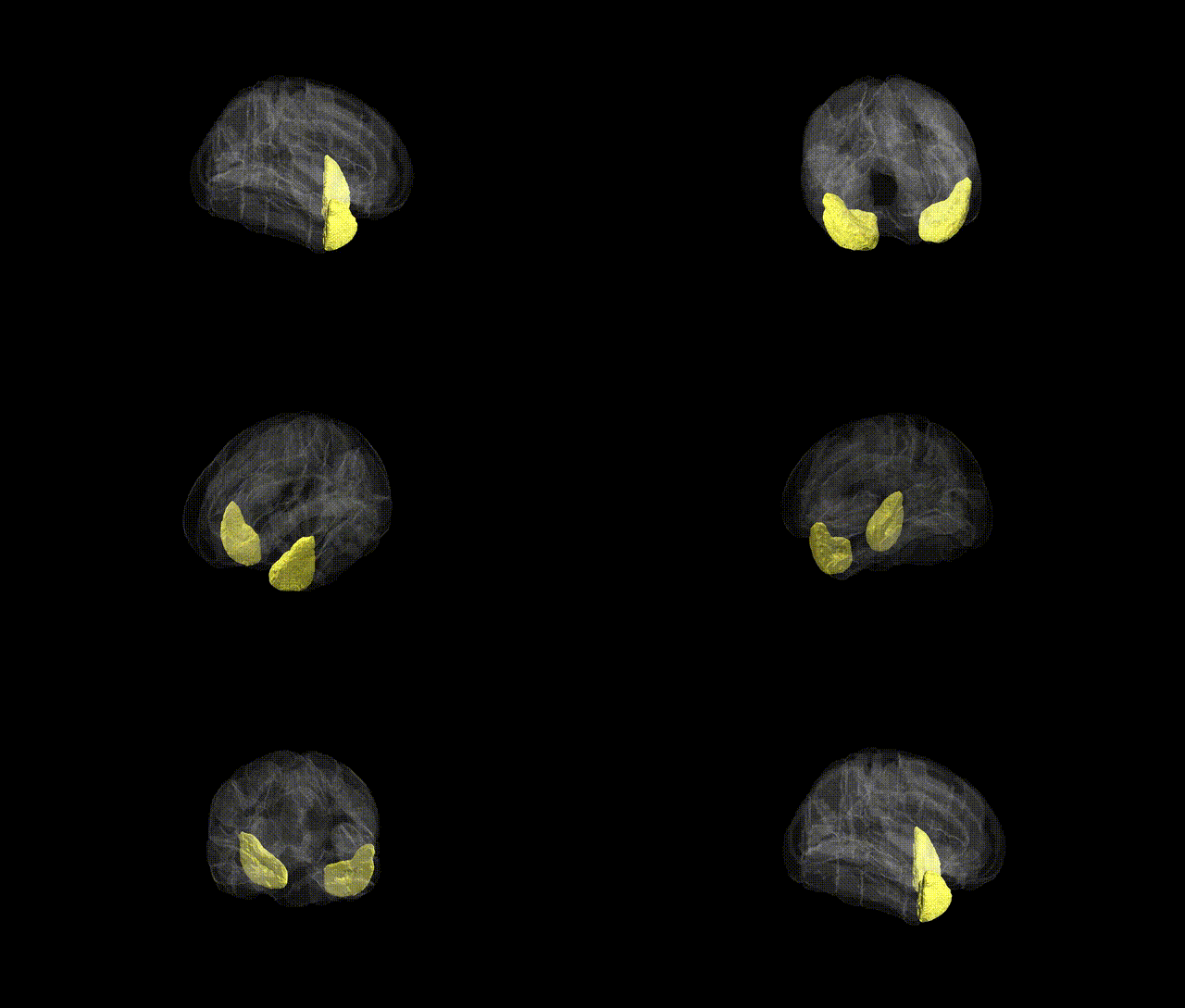
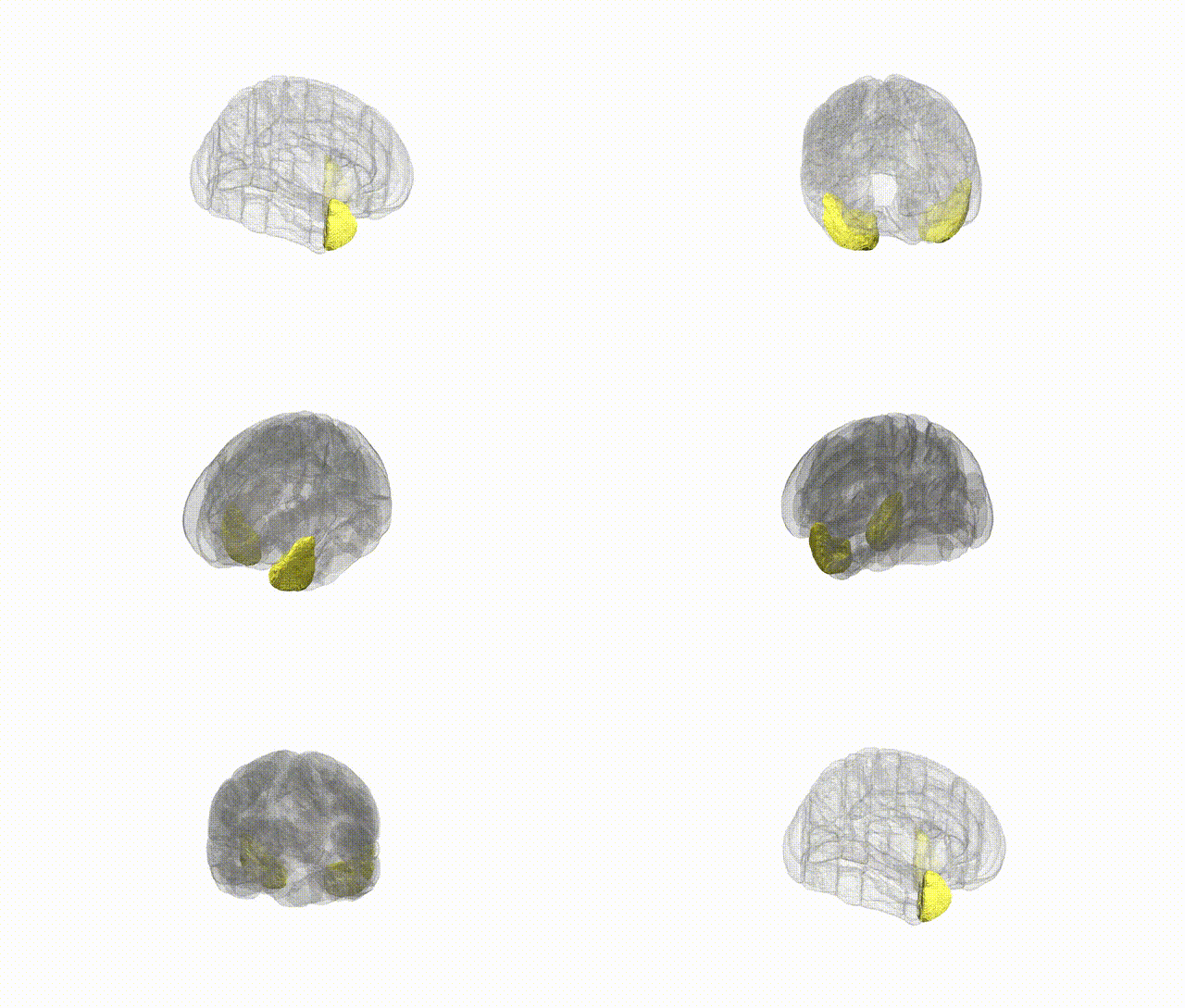
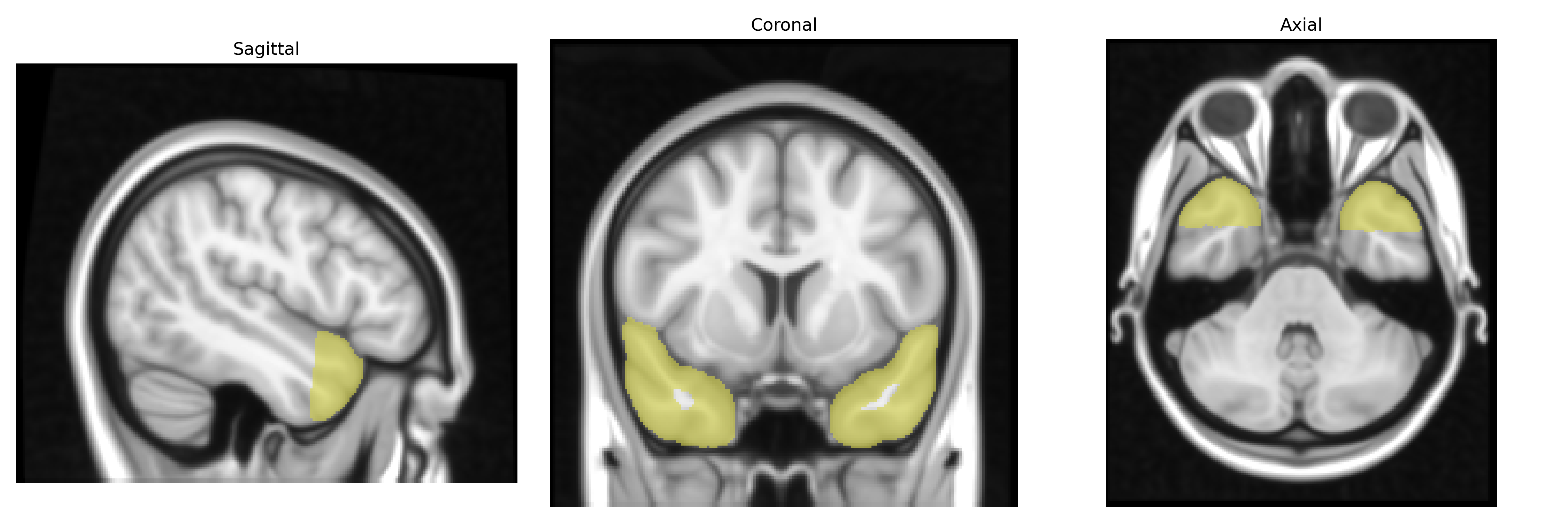
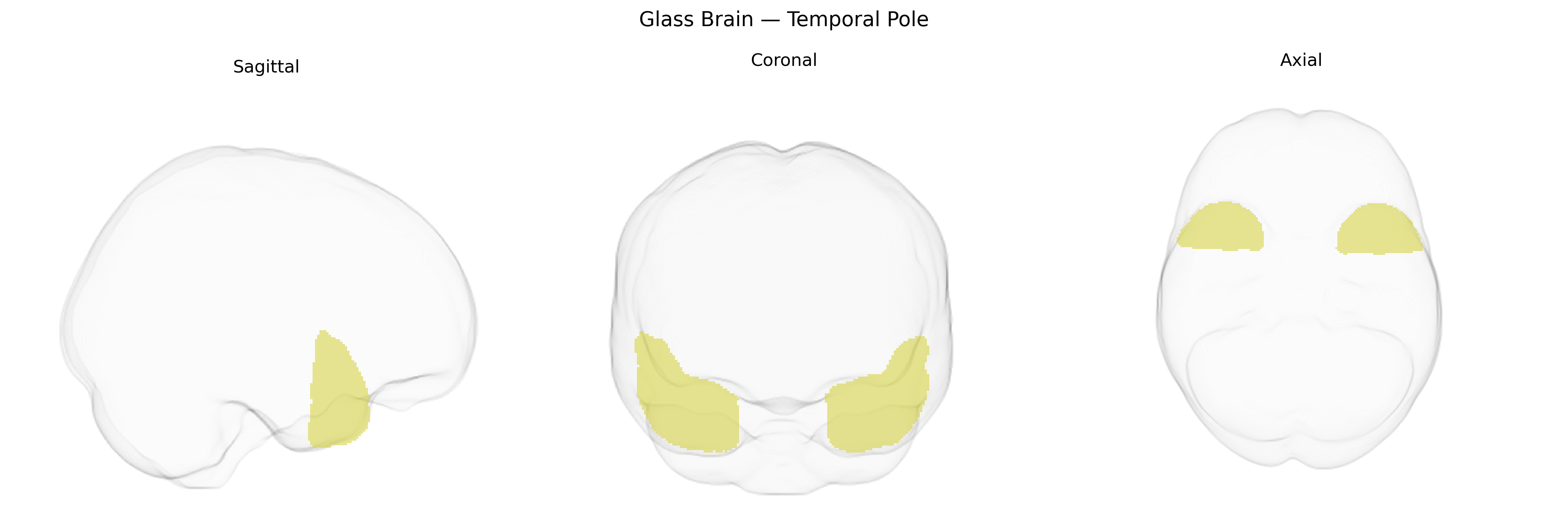
The bilateral temporal pole, corresponding to the most anterior portion of the temporal lobes, comprises cortex that is predominantly allocortical and paralimbic in nature and is heavily interconnected with the amygdala, hippocampus, orbitofrontal cortex, and medial prefrontal regions. This area is implicated in higher-order social-emotional processing, semantic memory integration, and the representation of complex conceptual knowledge, and it plays a role in language, particularly in naming and comprehension of meaningful stimuli. Lesions in the temporal pole have been associated with semantic dementia and changes in social behavior, highlighting its role in combining emotional salience with multimodal sensory and semantic information. There is no direct Wikipedia article for the “Temporal Pole” region; a closely related structure is the Temporal lobe.
The bilateral temporal pole (HarvardOxford cort maxprob thr25 1mm) has been implicated in several genetically influenced psychiatric and neurodevelopmental conditions, with converging evidence from GWAS and imaging–genetics studies linking variation in this region’s structure and function to risk loci for schizophrenia, major depressive disorder, bipolar disorder, autism spectrum disorder, and Alzheimer’s disease, as well as to polygenic scores for cognitive ability and educational attainment. Large-scale ENIGMA and UK Biobank analyses have identified associations between temporal pole cortical thickness or surface area and common variants in genes involved in synaptic function, neurodevelopment, and axonal guidance (for example, loci near MIR137, CACNA1C, GRIN2A, and genes within 17q21.31 and 3p21), while GWAS of intrinsic functional connectivity and resting-state networks show that temporal pole connectivity patterns share genetic architecture with psychiatric liability and social-cognitive traits. Rare variant and CNV studies in autism and language-related disorders also highlight genes affecting anterior temporal lobe development, consistent with the temporal pole’s role in semantic memory, social-emotional processing, and person knowledge, though the field still lacks many region-specific, temporally precise genetic associations isolated solely to this atlas-defined structure.
Overview generated by GPT-4o (2026).
Region ID: 8
Hemisphere: bilateral
Atlas: HarvardOxford cort maxprob thr25 1mm
Full Quality Version: Download MP4
Full Quality Version: Download MP4
Wali Sidiqyar*, Gaurav Rudravaram*, Elyssa M. McMaster, Trent M. Schwartz, Adam M. Saunders, Kurt G. Schilling, Bennett A. Landman "Introducing SPINS: A Shared Public Visualization Library of Neuroanatomical Structures." Medical Imaging with Deep Learning- short paper
This resource is licensed under CC0 1.0 Universal (Public Domain).