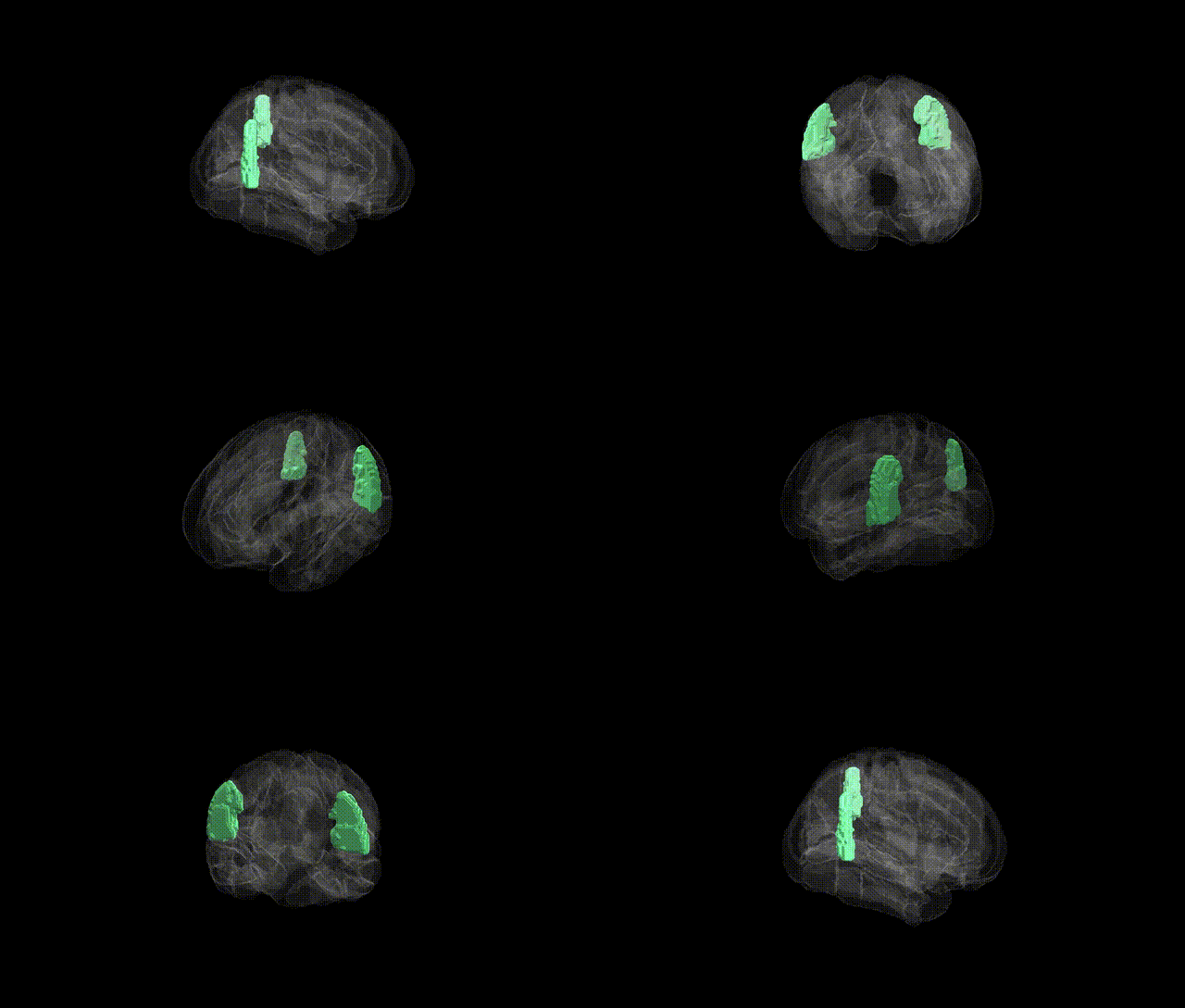
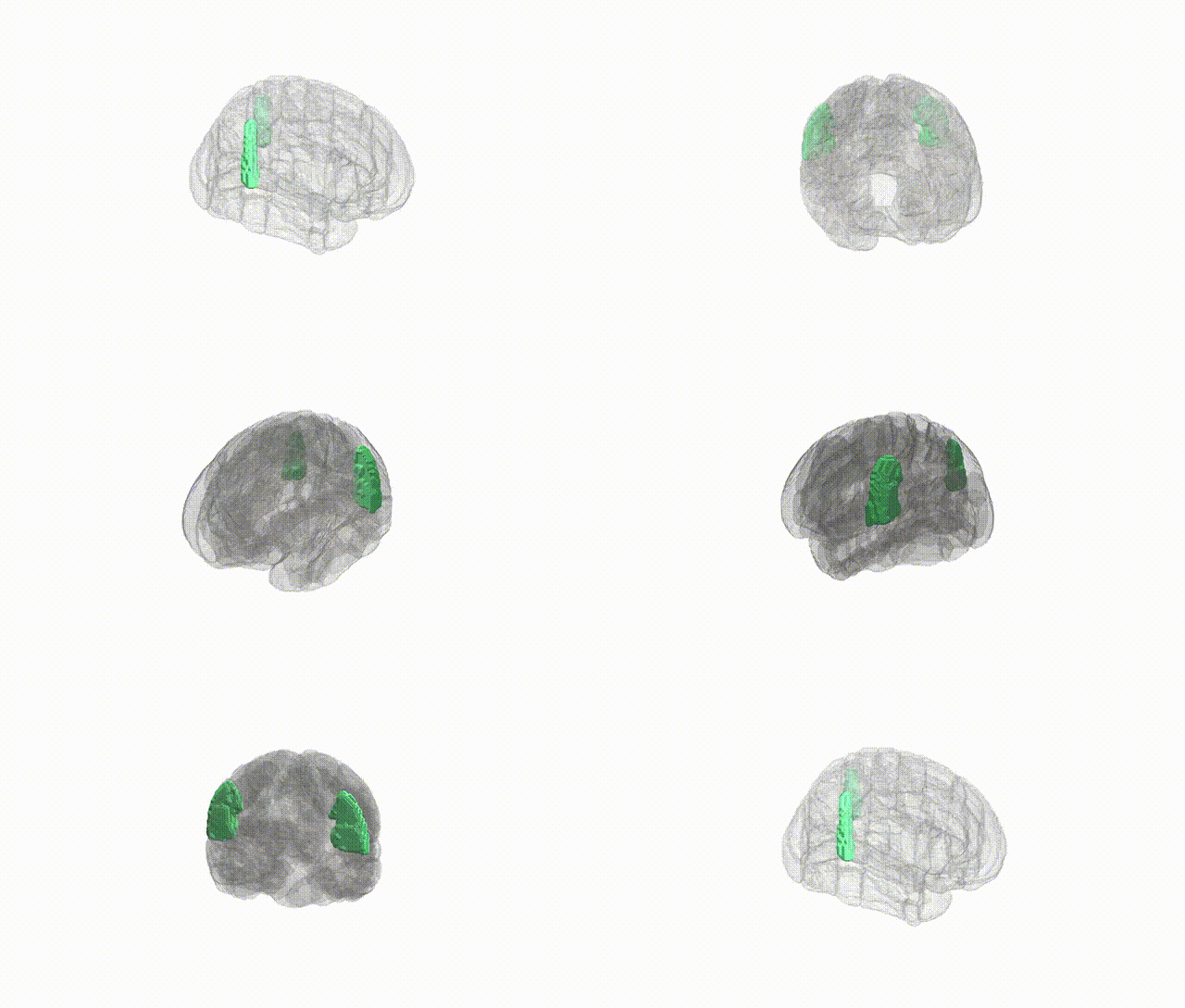
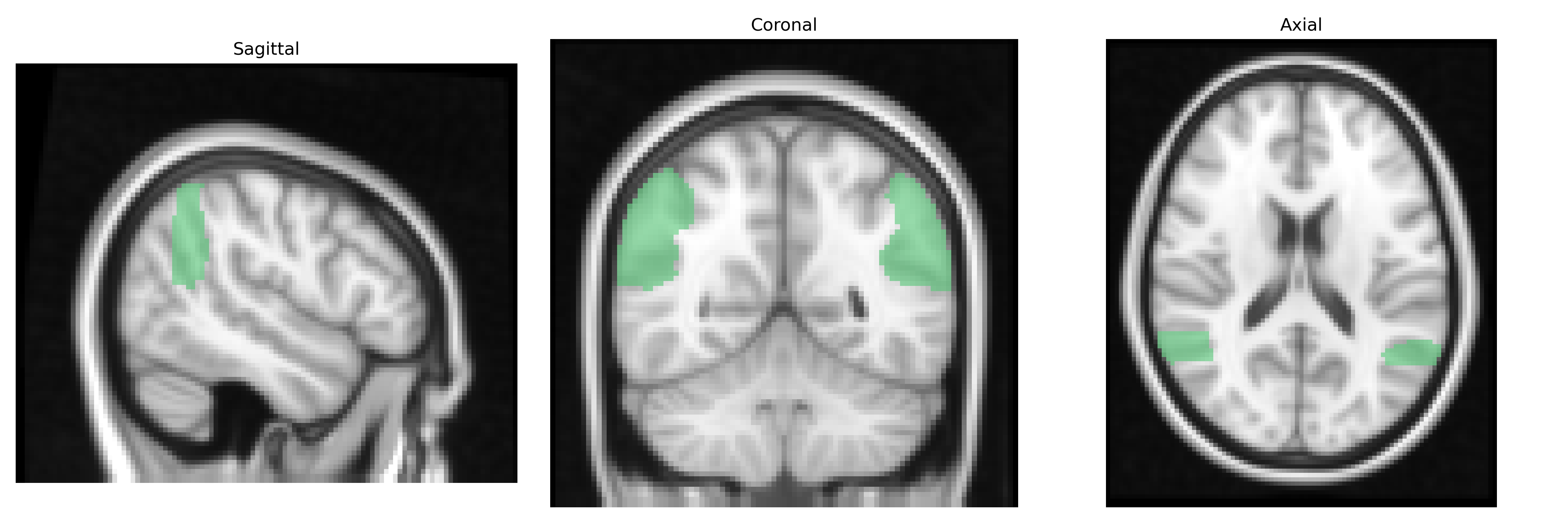
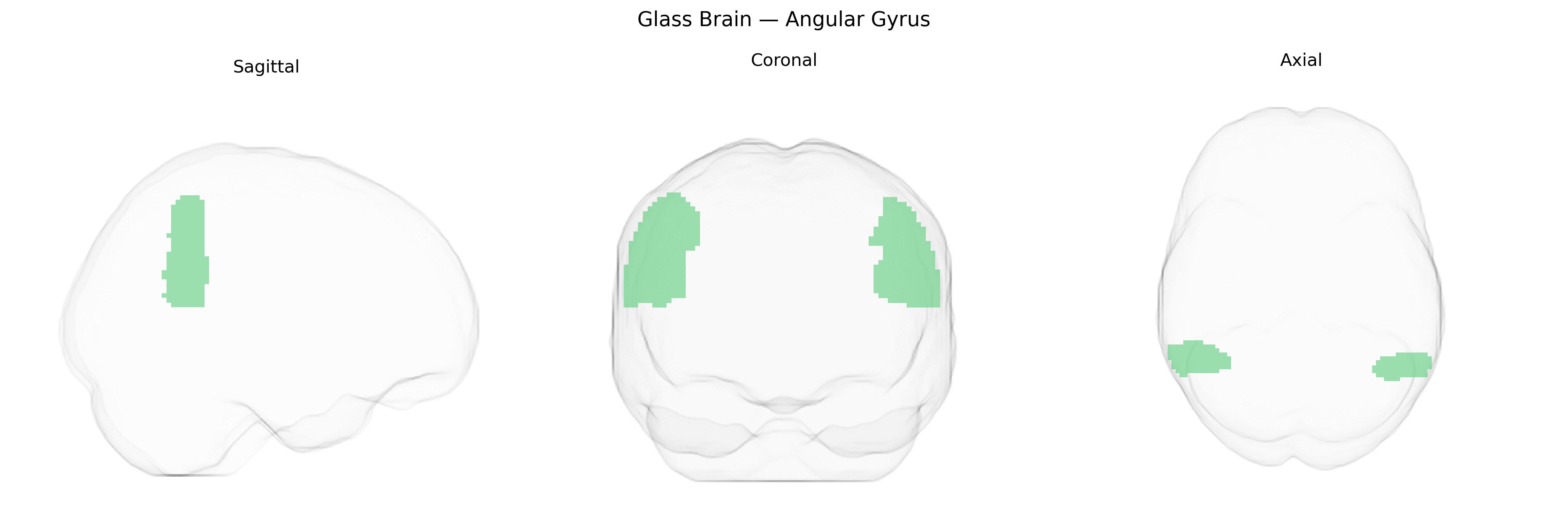
The bilateral Angular Gyrus, as defined in the Harvard-Oxford Cortical Structural Atlas (maximum probability, threshold 25%, 2 mm), is a heteromodal association region located in the posterior part of the inferior parietal lobule, bordering the superior temporal and occipital cortices. It is supplied by branches of the middle cerebral artery and is cytoarchitectonically heterogeneous, integrating inputs from visual, auditory, and somatosensory systems. Functionally, the angular gyrus is implicated in language comprehension (including reading and semantic processing), number processing, spatial cognition, memory retrieval, and aspects of social cognition such as theory of mind. Lesions in this region can result in disorders such as Gerstmann syndrome, alexia, agraphia, and various semantic or attentional deficits. Angular gyrus
The bilateral angular gyrus, as defined in the Harvard-Oxford cortical atlas, has been implicated in multiple genetic and GWAS-based associations primarily through large-scale imaging genetics and neuropsychiatric studies: common variants in genes related to synaptic plasticity and neurodevelopment (e.g., BDNF, COMT, CNTNAP2, and glutamatergic pathway genes) have been associated with inter-individual differences in angular gyrus structure and activation, particularly in tasks involving language, numerical cognition, and episodic memory. GWAS of cortical thickness and surface area have identified loci near genes such as MEF2C, KIAA0586, and microtubule- or cytoskeleton-related genes that show effects in inferior parietal and angular gyrus territories, linking these regions to neurodevelopmental patterning and general cognitive ability. The angular gyrus has also emerged in polygenic risk and imaging-genetics studies of schizophrenia, autism spectrum disorder, ADHD, and major depressive disorder, where risk alleles and higher polygenic scores relate to altered gray matter volume, connectivity, or task-related activation in inferior parietal/angular regions. Additionally, GWAS on educational attainment, intelligence, and reading/literacy traits implicate variants that modulate parietal and angular gyrus morphology and function, consistent with this region’s role in semantic processing and higher-order cognition, though specific variants are often pleiotropic and not exclusive to the angular gyrus.
Overview generated by GPT-4o (2026).
Region ID: 21
Hemisphere: bilateral
Atlas: HarvardOxford cort maxprob thr25 2mm
Full Quality Version: Download MP4
Full Quality Version: Download MP4
Wali Sidiqyar*, Gaurav Rudravaram*, Elyssa M. McMaster, Trent M. Schwartz, Adam M. Saunders, Kurt G. Schilling, Bennett A. Landman "Introducing SPINS: A Shared Public Visualization Library of Neuroanatomical Structures." Medical Imaging with Deep Learning- short paper
This resource is licensed under CC0 1.0 Universal (Public Domain).