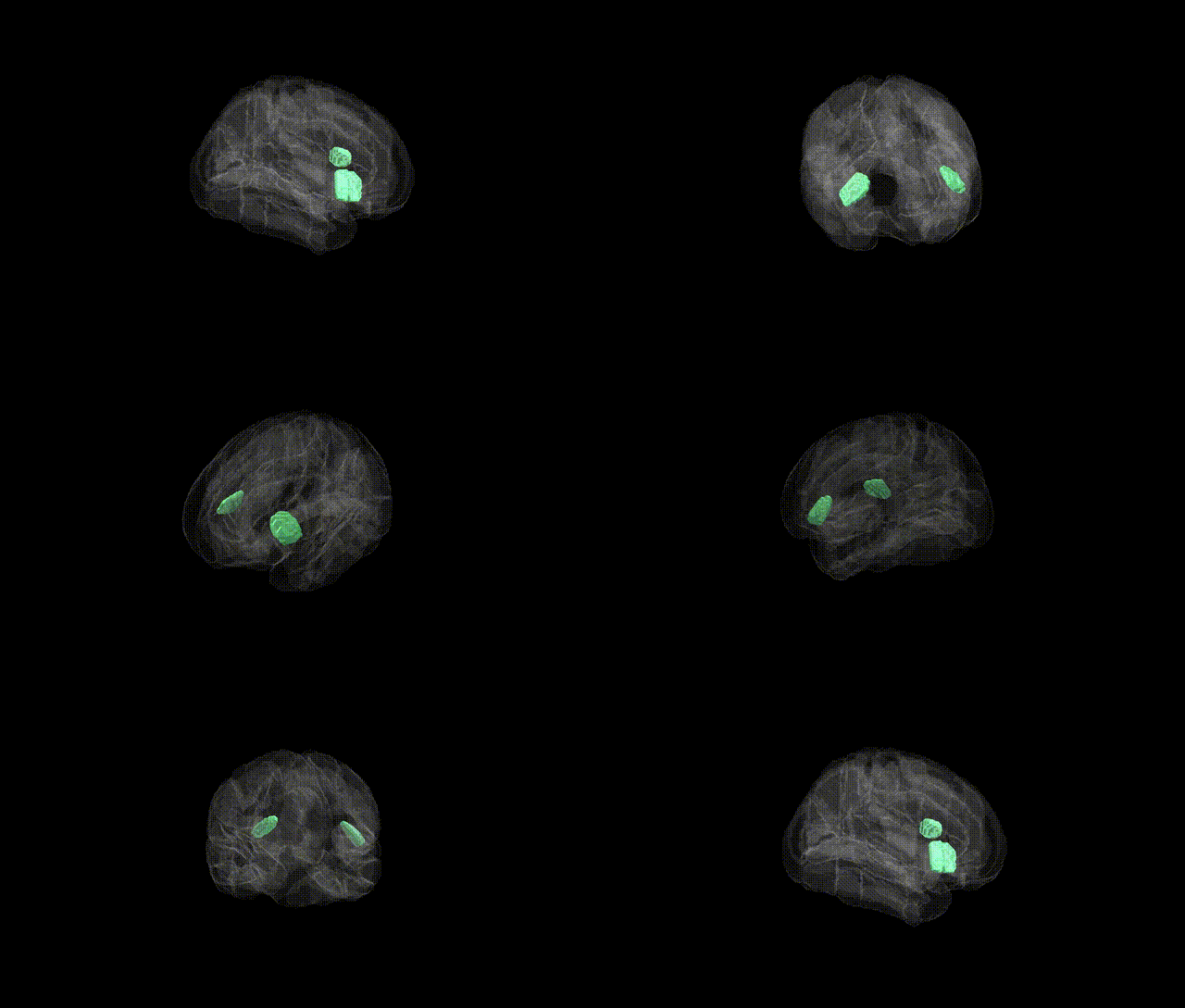
The bilateral Frontal Operculum Cortex, as defined in the Harvard–Oxford cortical max-probability atlas, corresponds to the opercular portion of the inferior frontal lobe that overlies the anterior insula and forms part of the lateral wall of the Sylvian (lateral) fissure. It includes sectors of the inferior frontal gyrus and adjacent cortex that participate in motor planning and control of orofacial and laryngeal musculature, speech production, and higher-order language functions, as well as in aspects of interoception and cognitive control via its close anatomical and functional coupling with the insular cortex and prefrontal networks. This region is supplied by branches of the middle cerebral artery and contains a mixture of agranular and dysgranular cortex, reflecting its role as a transitional zone between primary motor, premotor, and multimodal association areas. No direct Wikipedia article exists for the “Frontal Operculum Cortex” label in this atlas; a closely related structure is the Inferior frontal gyrus.
Genetic associations involving the bilateral Frontal Operculum Cortex—corresponding largely to inferior frontal regions implicated in language, speech motor control, and cognitive inhibition—have been identified through neuroimaging genetics and GWAS of brain structure, language-related traits, and psychiatric phenotypes. Large-scale MRI-based GWAS of cortical thickness and surface area (e.g., ENIGMA, UK Biobank) have linked common variants in genes such as FOXP2, CNTNAP2, DCDC2, KIAA0319, and other neurodevelopmental and synaptic plasticity genes to structural variation in inferior frontal and opercular areas, though regional specificity to the exact Harvard–Oxford Frontal Operculum ROI is often coarse. FOXP2 and CNTNAP2 variants have been repeatedly associated with speech and language impairments, verbal fluency, and developmental language disorders, consistent with functional roles of the opercular frontal cortex in articulatory and phonological processing. GWAS of stuttering, dyslexia, and broader language performance measures have implicated loci that modulate inferior frontal activation and structure, and imaging genetics studies in schizophrenia, bipolar disorder, ADHD, and major depression have shown that risk alleles in genes regulating glutamatergic and GABAergic signaling (e.g., GRM3, GABRA2), neurodevelopment (e.g., DISC1), and synaptic scaffolding (e.g., SAPAP/GDAP family) are associated with altered volume or functional connectivity of frontal opercular and adjacent insular regions. Additionally, polygenic risk for psychiatric disorders and traits such as cognitive ability and educational attainment has been associated with variability in inferior frontal and opercular cortical measures, reinforcing the view that this region is a convergence point for genetic influences on language, cognitive control, and psychopathology, although fine-grained, atlas-specific genetic mappings remain limited and are typically inferred from broader inferior frontal/anterior insular ROIs rather than the exact Harvard–Oxford Frontal Operculum Cortex label.
Overview generated by GPT-4o (2026).
Region ID: 41
Hemisphere: bilateral
Atlas: HarvardOxford cort maxprob thr25 2mm
Full Quality Version: Download MP4
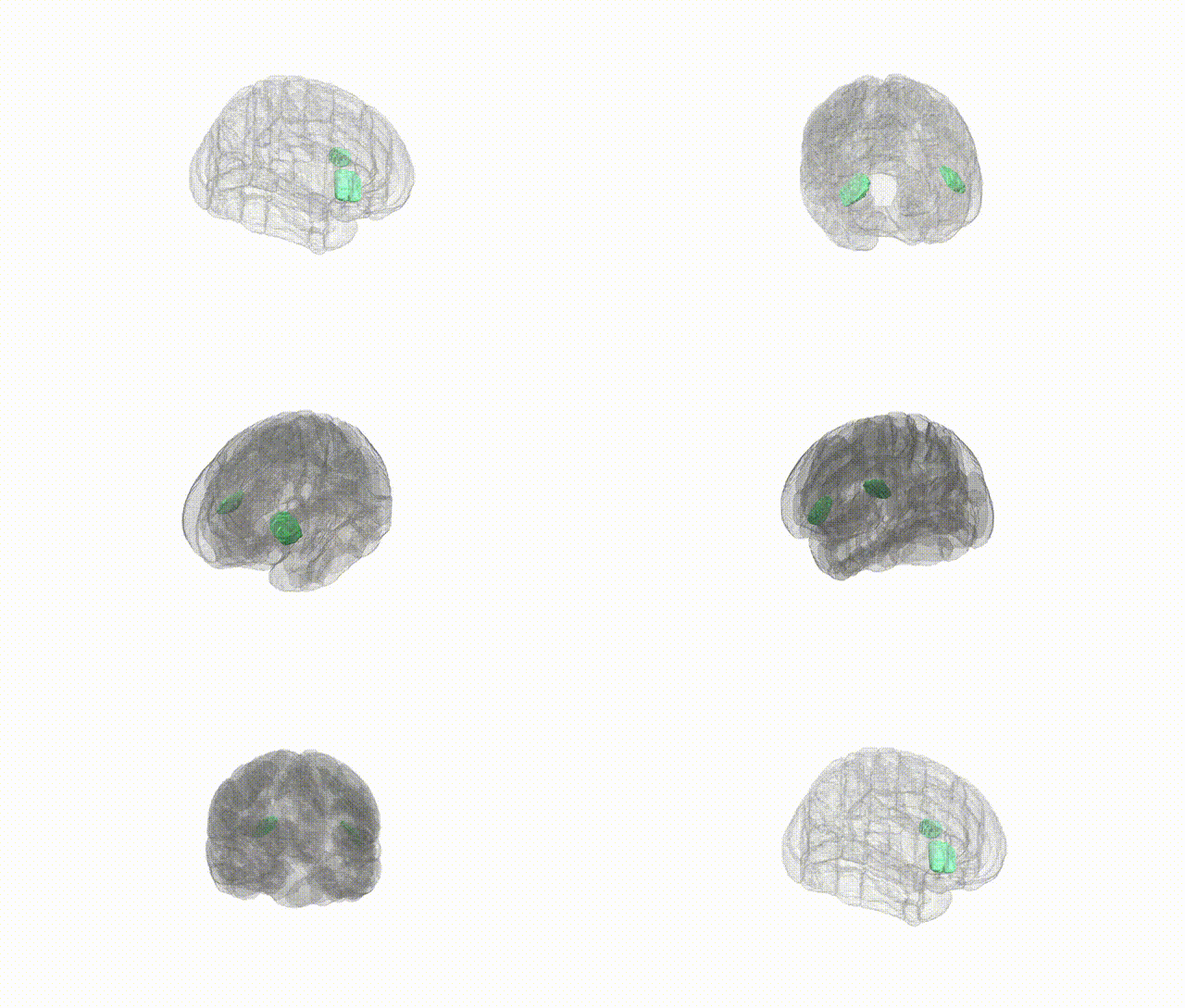
Full Quality Version: Download MP4
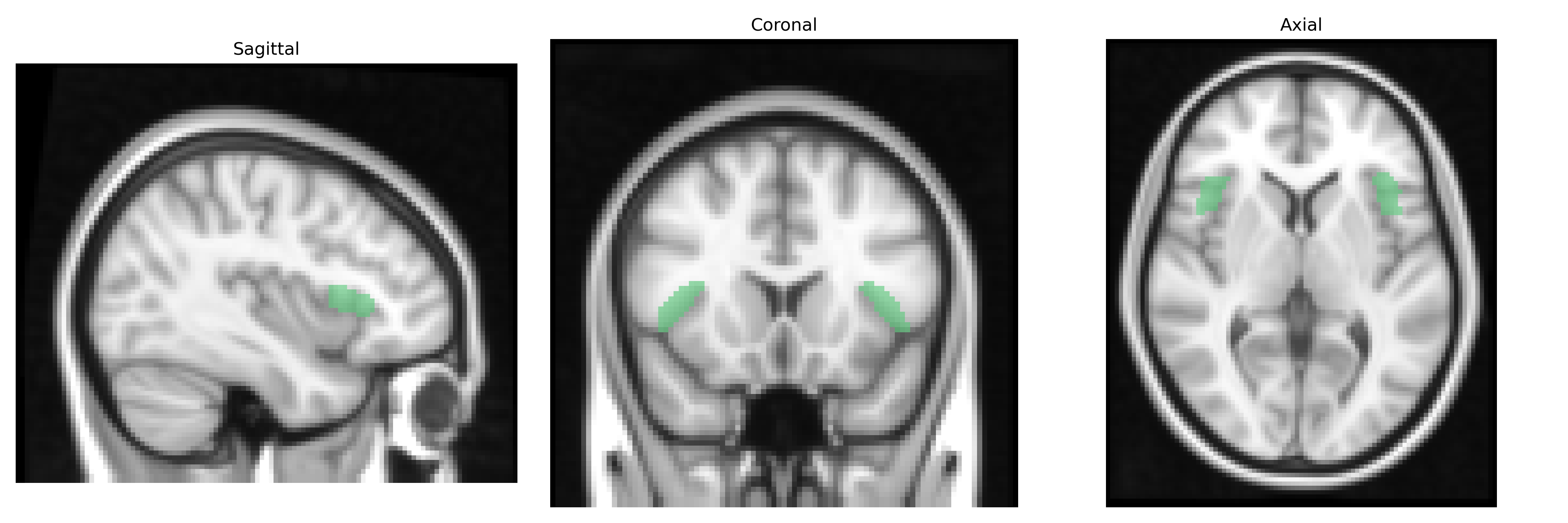
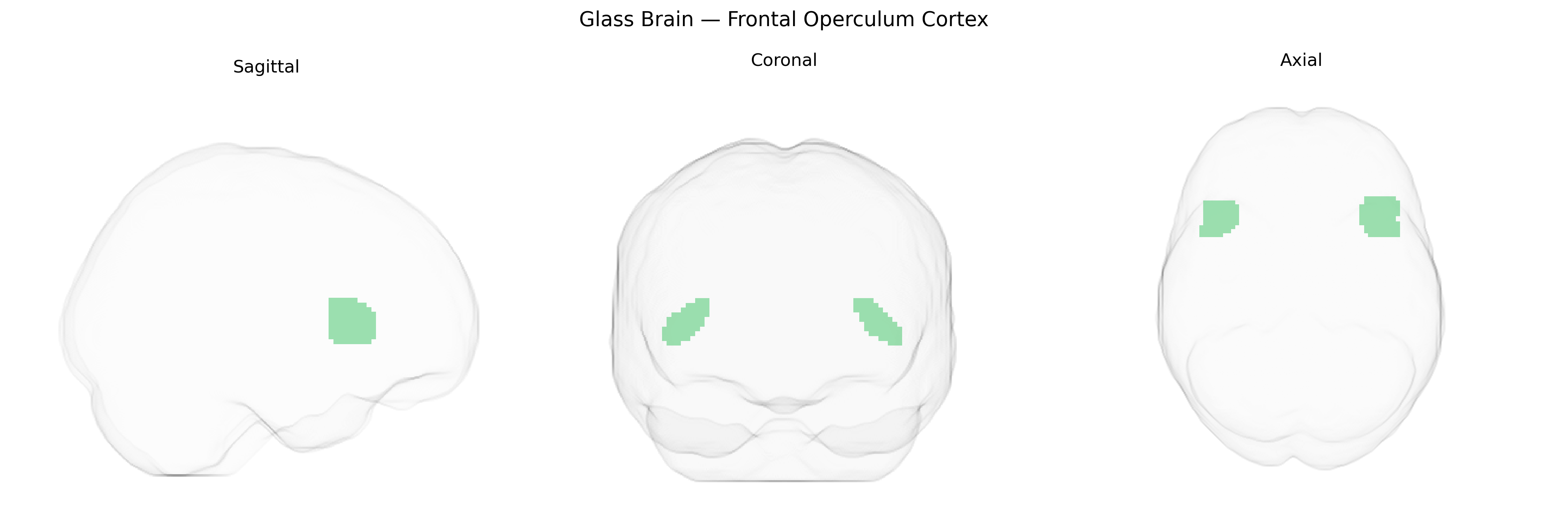
Wali Sidiqyar*, Gaurav Rudravaram*, Elyssa M. McMaster, Trent M. Schwartz, Adam M. Saunders, Kurt G. Schilling, Bennett A. Landman "Introducing SPINS: A Shared Public Visualization Library of Neuroanatomical Structures." Medical Imaging with Deep Learning- short paper
This resource is licensed under CC0 1.0 Universal (Public Domain).