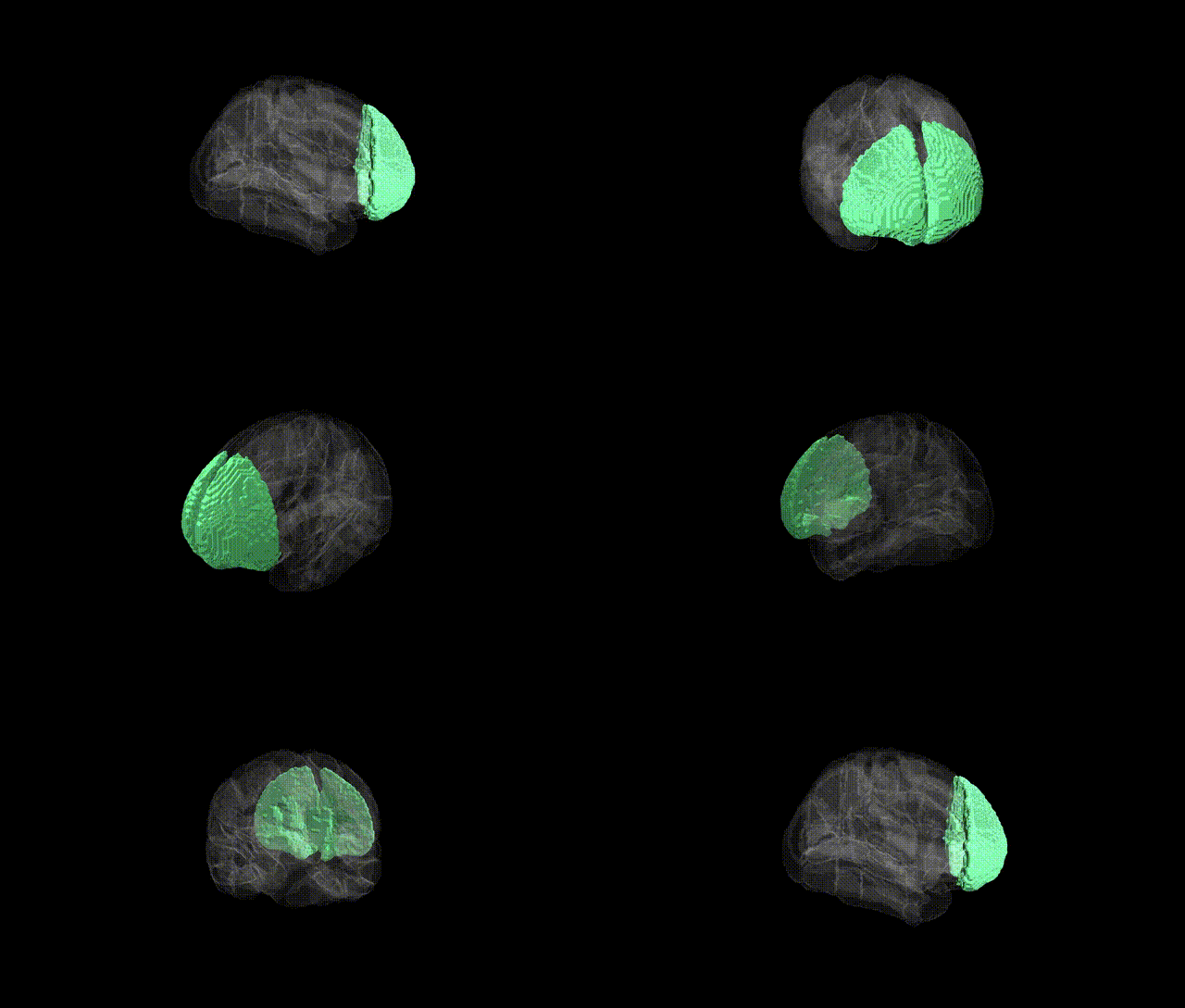
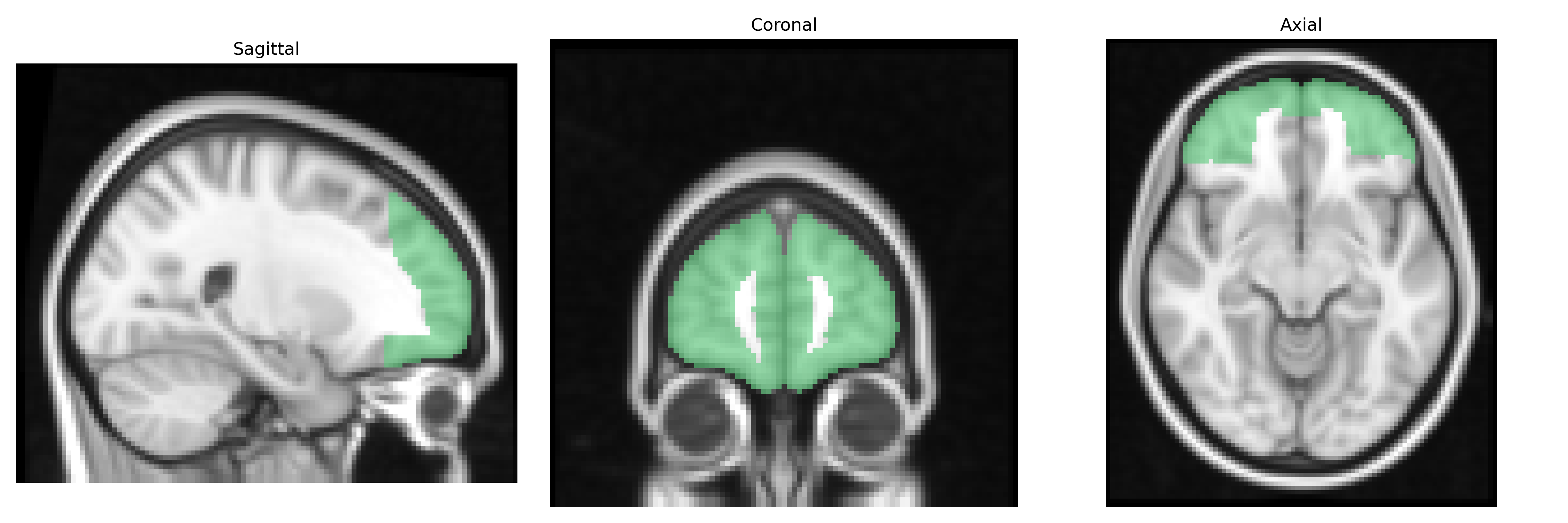
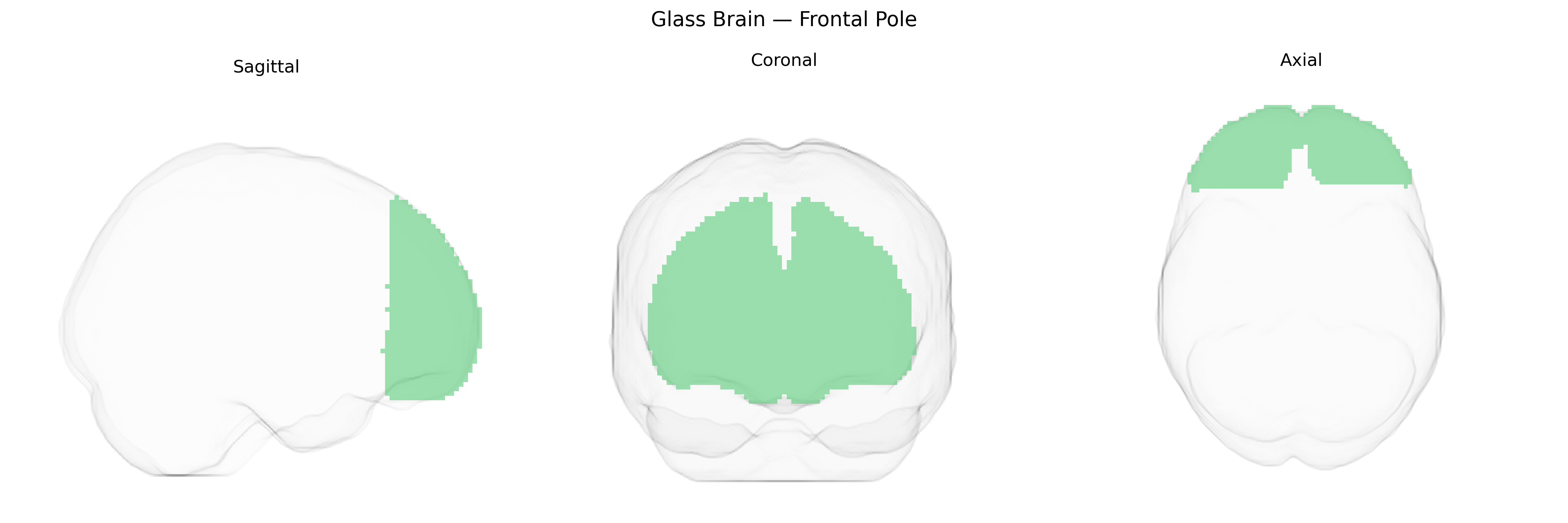
The bilateral frontal pole, corresponding to Brodmann area 10 and located at the most anterior portion of the prefrontal cortex, is implicated in higher-order cognitive processes including prospective memory, complex decision-making, multi-tasking, and the coordination of multiple goals over extended time scales. Structurally, it lies anterior to the dorsolateral and ventromedial prefrontal cortices and is characterized by dense reciprocal connections with other prefrontal regions, association cortices, and limbic structures, supporting its role in integrating internal states and external information to guide behavior. Functional imaging and lesion studies associate the frontal pole with abstract reasoning, metacognition, and social cognition, reflecting its involvement in evaluating future consequences and maintaining task sets. There is no direct link for “frontal pole” as a stand-alone article; see instead Brodmann area 10.
The bilateral frontal pole, corresponding to the most rostral part of the prefrontal cortex in the Harvard–Oxford cortical atlas, has been implicated in multiple genetic and GWAS findings related to higher-order cognition, psychiatric risk, and personality traits. Large-scale imaging genetics studies, including those from ENIGMA and UK Biobank, have identified common variants influencing frontal pole volume and cortical thickness, notably in or near genes associated with neurodevelopment, synaptic function, and neuronal signaling (such as variants in CADM2, which has also been linked to risk-taking and cognitive performance). GWAS of brain morphology have shown that frontal pole structural measures share polygenic overlap with general intelligence, educational attainment, and executive function, consistent with its role in prospective planning and abstract reasoning. Psychiatric GWAS for disorders including major depressive disorder, schizophrenia, bipolar disorder, and autism spectrum condition demonstrate genetic correlations with frontal pole structure and functional connectivity, suggesting that some risk loci exert effects via altered prefrontal development or top-down control networks. Additionally, polygenic scores for traits such as neuroticism, impulsivity, and substance use have been associated with variation in frontal pole anatomy and activation patterns, supporting a genetically influenced link between this region and mood regulation, decision-making, and complex social cognition.
Overview generated by GPT-4o (2026).
Region ID: 1
Hemisphere: bilateral
Atlas: HarvardOxford cort maxprob thr25 2mm
Full Quality Version: Download MP4
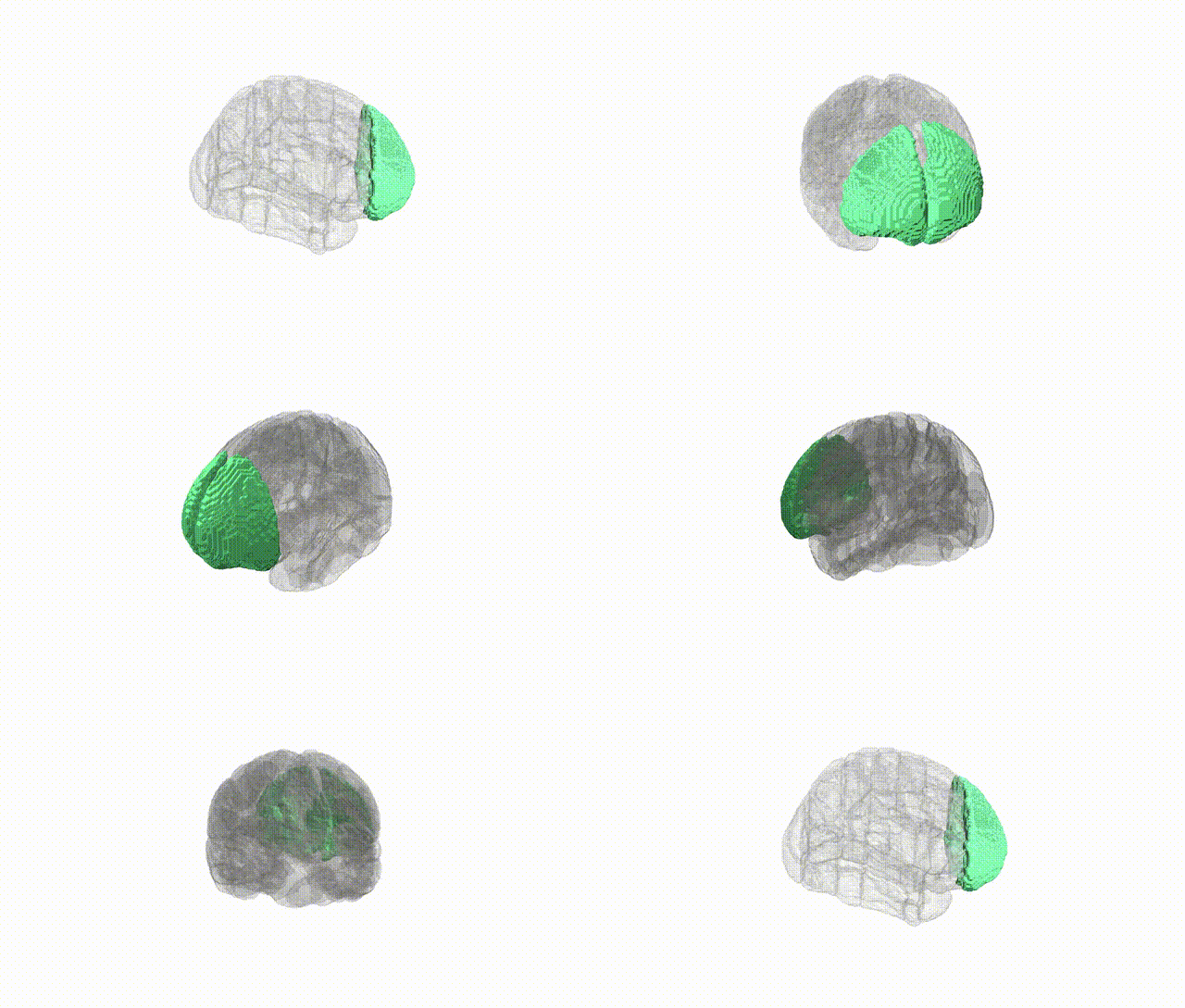
Full Quality Version: Download MP4
Wali Sidiqyar*, Gaurav Rudravaram*, Elyssa M. McMaster, Trent M. Schwartz, Adam M. Saunders, Kurt G. Schilling, Bennett A. Landman "Introducing SPINS: A Shared Public Visualization Library of Neuroanatomical Structures." Medical Imaging with Deep Learning- short paper
This resource is licensed under CC0 1.0 Universal (Public Domain).