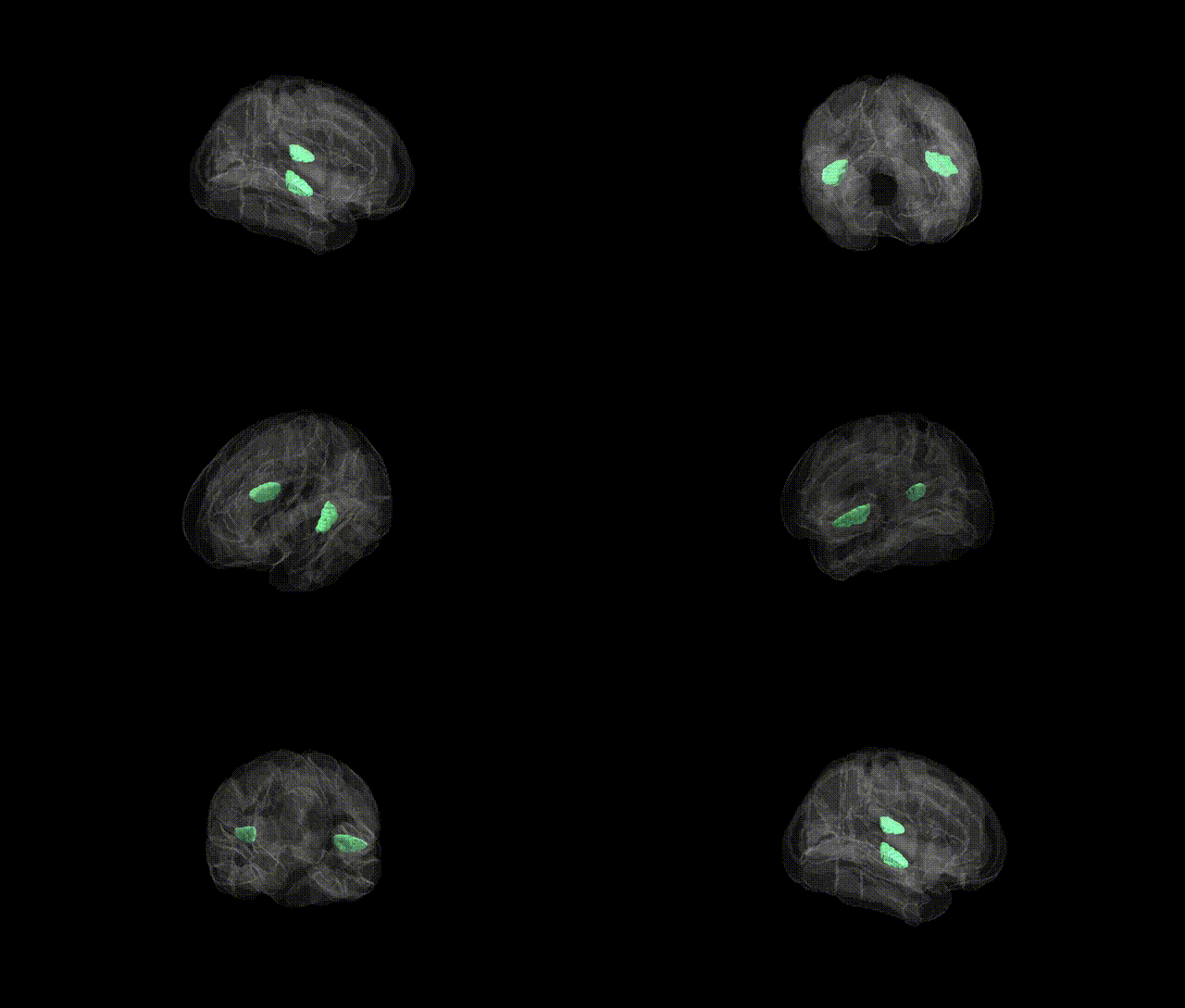
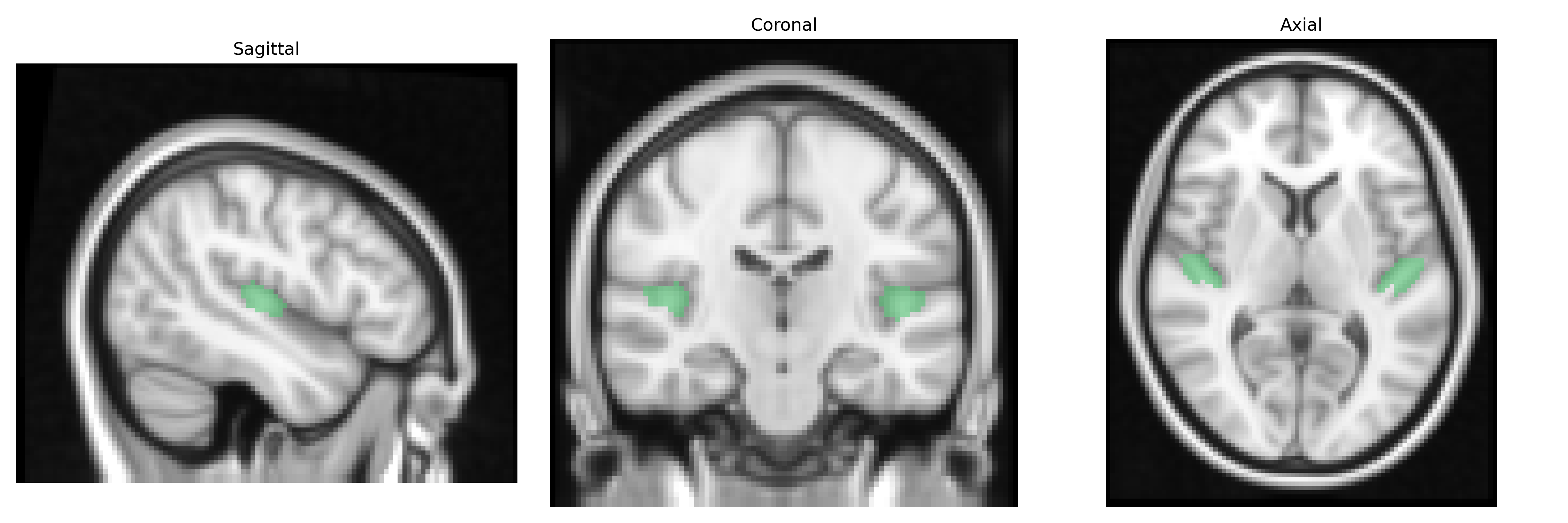
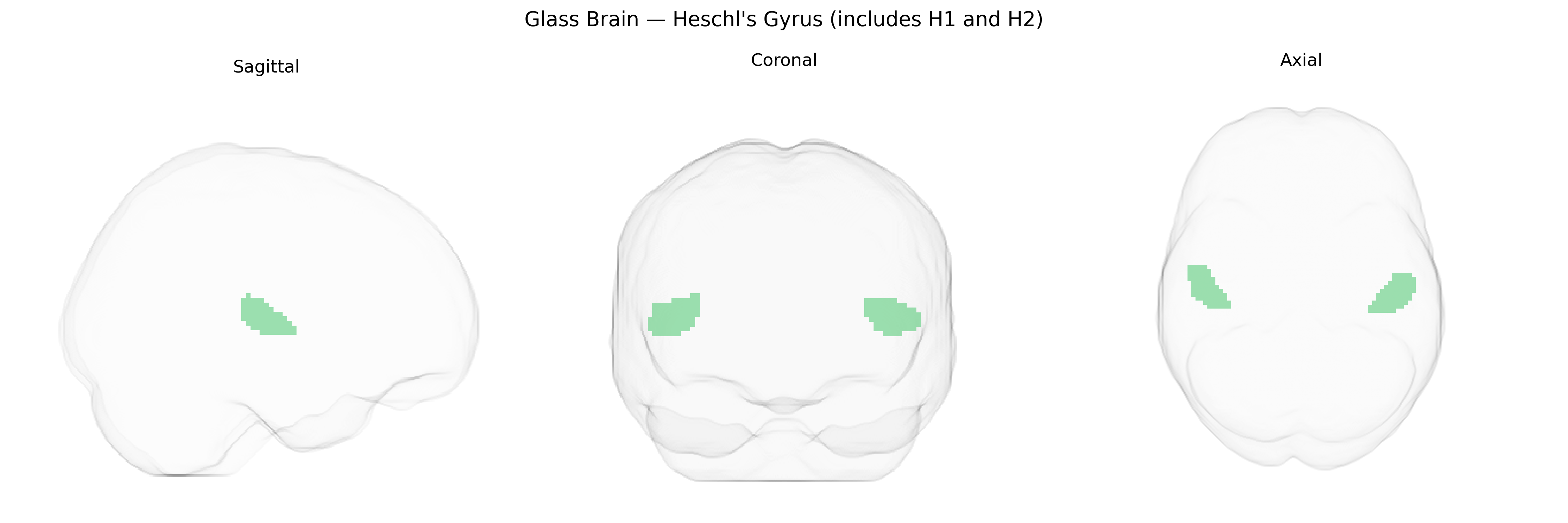
Bilateral Heschl’s gyrus (H1 and H2), as defined in the Harvard-Oxford cortical atlas (maxprob thr25, 2 mm), comprises the primary auditory cortex located on the superior surface of the temporal lobe within the transverse temporal gyri. This region is a key target of thalamocortical projections from the medial geniculate nucleus of the thalamus and is critical for early-stage cortical processing of acoustic information, including sound frequency, intensity, and temporal features. Cytoarchitectonically, it corresponds largely to Brodmann area 41 (and parts of area 42), featuring koniocortical architecture with a prominent granular layer IV. Functionally, bilateral Heschl’s gyrus is involved in the encoding of basic auditory features that support higher-order processes such as speech perception, music cognition, and auditory scene analysis, and serves as a core hub within the broader auditory network of the temporal lobe. Heschl’s gyrus
Genetic associations involving bilateral Heschl’s gyrus (including H1 and H2, corresponding to primary auditory cortex) have emerged mostly from imaging-genetics and GWAS of brain morphology, language, and auditory traits. Variants near DCDC2, KIAA0319, and CNTNAP2—genes implicated in developmental dyslexia and language disorders—have been linked to structural and functional differences in left perisylvian and auditory regions that encompass Heschl’s gyrus. Large neuroimaging GWAS (e.g., ENIGMA and UK Biobank–based analyses) have identified polygenic influences on cortical thickness and surface area in temporal lobe auditory regions, implicating genes involved in neurodevelopment, synaptic plasticity, and axon guidance, though specific single-gene effects on Heschl’s gyrus are typically modest and distributed. Variants in FOXP2 and related language networks have been associated with altered activation in Heschl’s gyrus during speech and auditory processing tasks. In psychiatric and neurodevelopmental disorders, schizophrenia, autism spectrum disorder, and dyslexia show heritable differences in Heschl’s gyrus volume or asymmetry, with implicated loci enriched in pathways for glutamatergic signaling, neuronal migration, and cortical patterning. GWAS of tinnitus and hearing-related traits have also reported associations near genes controlling cochlear function and central auditory processing (e.g., GRM7, PCDH20), with downstream effects on activity and structure in primary auditory cortex, including Heschl’s gyrus. Overall, genetic influences on this region are highly polygenic and shared with broader language, auditory, and neuropsychiatric circuits rather than being specific to Heschl’s gyrus alone.
Overview generated by GPT-4o (2026).
Region ID: 45
Hemisphere: bilateral
Atlas: HarvardOxford cort maxprob thr25 2mm
Full Quality Version: Download MP4
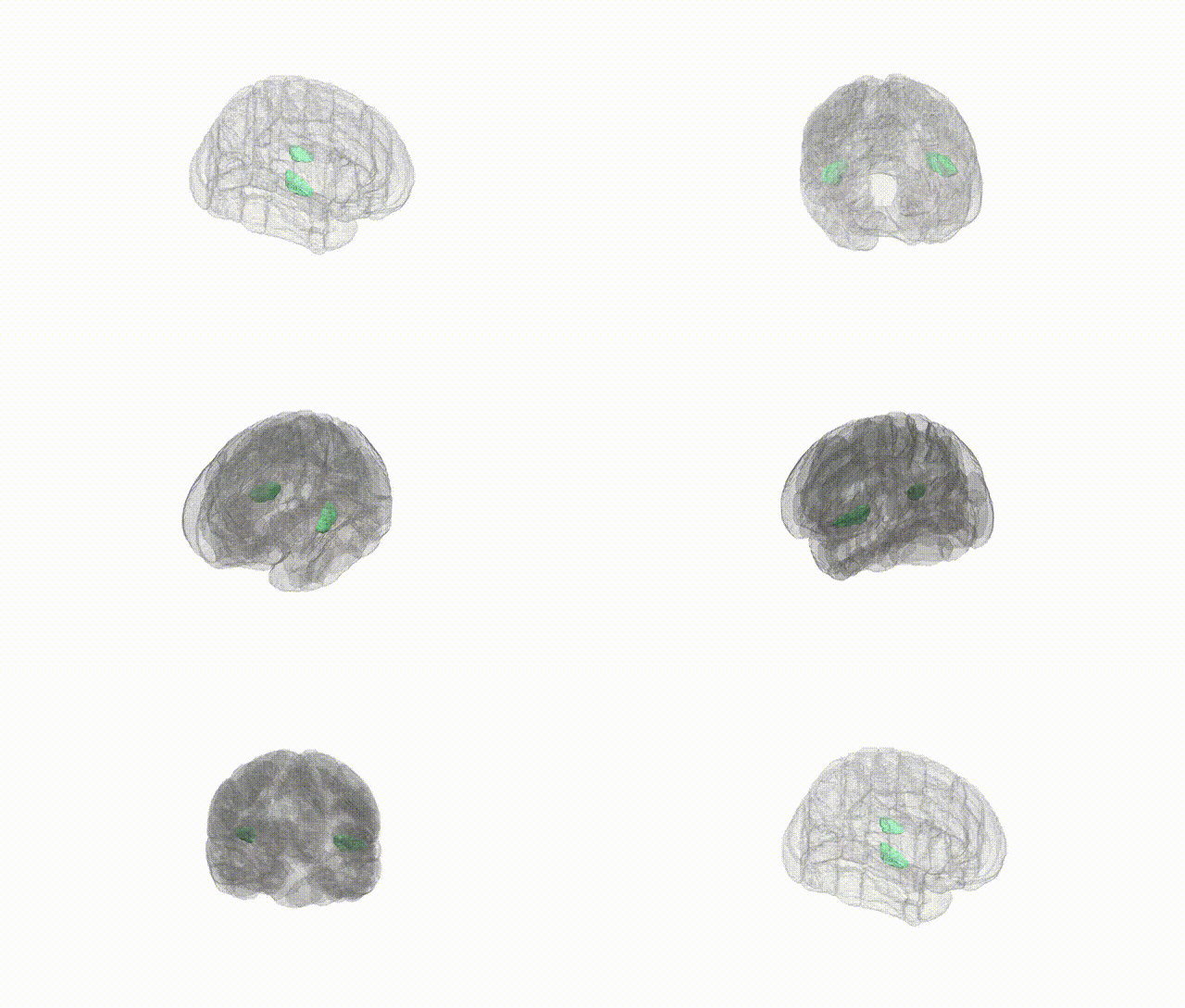
Full Quality Version: Download MP4
Wali Sidiqyar*, Gaurav Rudravaram*, Elyssa M. McMaster, Trent M. Schwartz, Adam M. Saunders, Kurt G. Schilling, Bennett A. Landman "Introducing SPINS: A Shared Public Visualization Library of Neuroanatomical Structures." Medical Imaging with Deep Learning- short paper
This resource is licensed under CC0 1.0 Universal (Public Domain).