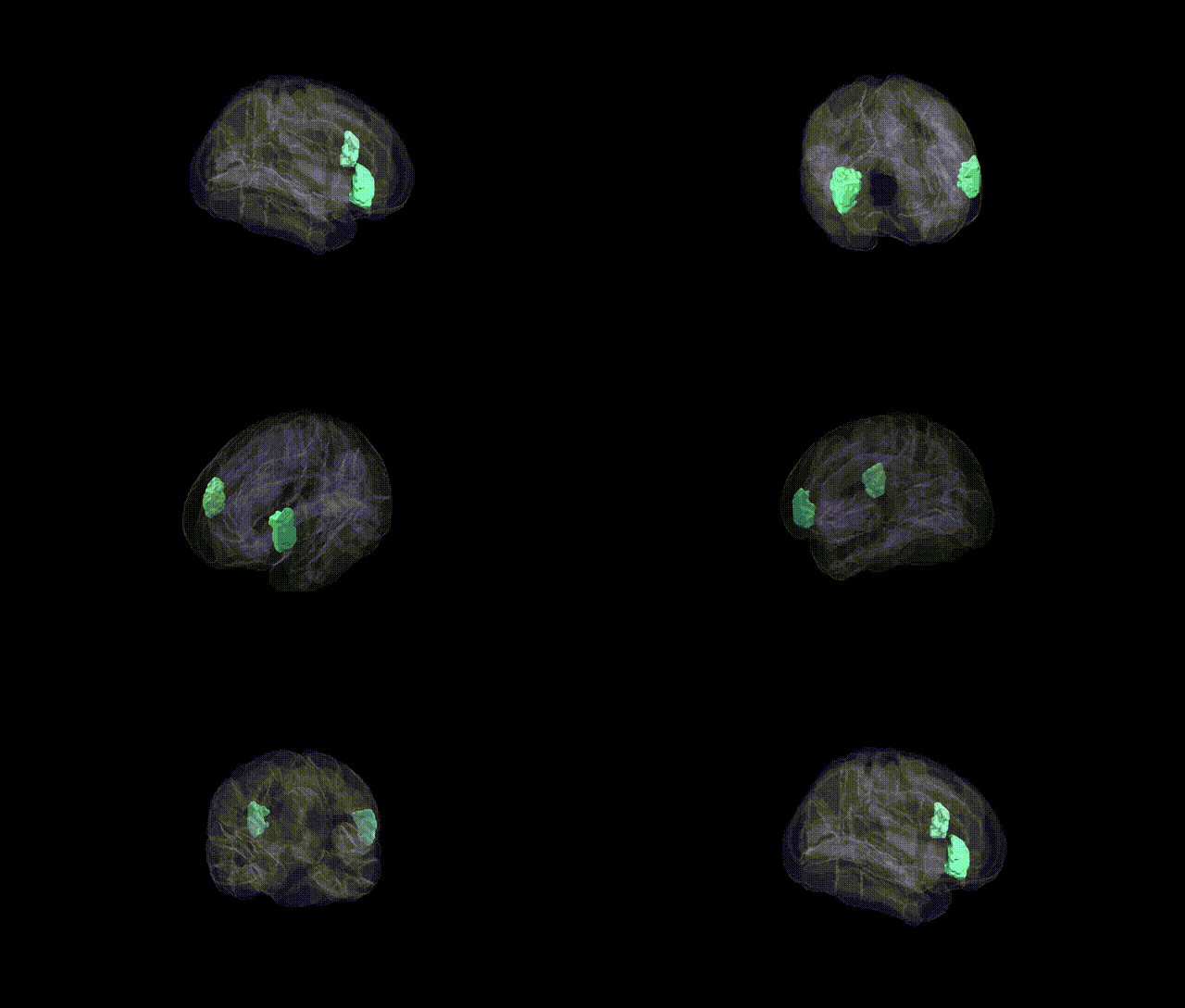
The bilateral Inferior Frontal Gyrus, pars triangularis, as defined in the Harvard-Oxford cortical atlas (maxprob, thr25, 2 mm), corresponds to the triangular portion of the inferior frontal gyrus located anteriorly between the ascending and horizontal rami of the lateral sulcus, forming part of the ventrolateral prefrontal cortex. In the left hemisphere, this region is a key component of the classical language network (often overlapping with Broca’s area), contributing to syntactic processing, semantic retrieval, and aspects of speech production, while in the right hemisphere it is implicated in prosody, pragmatic language functions, and higher-order cognitive control, including response inhibition and task switching. Cytoarchitectonically, it lies within the frontal lobe cortex anterior to the pars opercularis and posterior to the pars orbitalis, and it exhibits dense reciprocal connections with temporal and parietal association cortices, basal ganglia, and thalamus, supporting its integrative role in language, executive functions, and controlled retrieval of information. There is no direct Wikipedia article specifically for the pars triangularis subdivision; see the related structure Inferior frontal gyrus.
The bilateral inferior frontal gyrus pars triangularis (IFGtri), as defined in the Harvard-Oxford atlas, is a core language- and cognitive-control region whose structural and functional variation has been linked in genetic association studies to both language-related and broader neuropsychiatric traits. GWAS and imaging-genetics studies implicate common variants in FOXP2, CNTNAP2, DCDC2, KIAA0319, and other language and dyslexia risk loci in altered cortical thickness, surface area, or activation of inferior frontal language regions encompassing IFGtri, particularly during phonological and syntactic processing. Large-scale neuroimaging GWAS (e.g., ENIGMA, UK Biobank) have associated polygenic scores for educational attainment, general cognitive ability, and intracranial volume with morphology of frontal language areas including IFGtri, while genes involved in neurodevelopment (e.g., microtubule- and axon-guidance pathways) appear enriched among variants influencing these measures. Functionally, IFGtri activation and connectivity show heritable components and have been associated with polygenic risk scores for schizophrenia, autism spectrum disorder, and major depressive disorder, as well as with language impairment and stuttering, consistent with broader findings that frontotemporal language networks share genetic architecture with these conditions. Additionally, addiction- and impulsivity-related GWAS (e.g., involving DRD2 and other dopaminergic genes) have implicated inferior frontal regions, including IFG subdivisions, in response inhibition and substance use vulnerability, reflecting the role of IFGtri in cognitive control.
Overview generated by GPT-4o (2026).
Region ID: 5
Hemisphere: bilateral
Atlas: HarvardOxford cort maxprob thr25 2mm
Full Quality Version: Download MP4
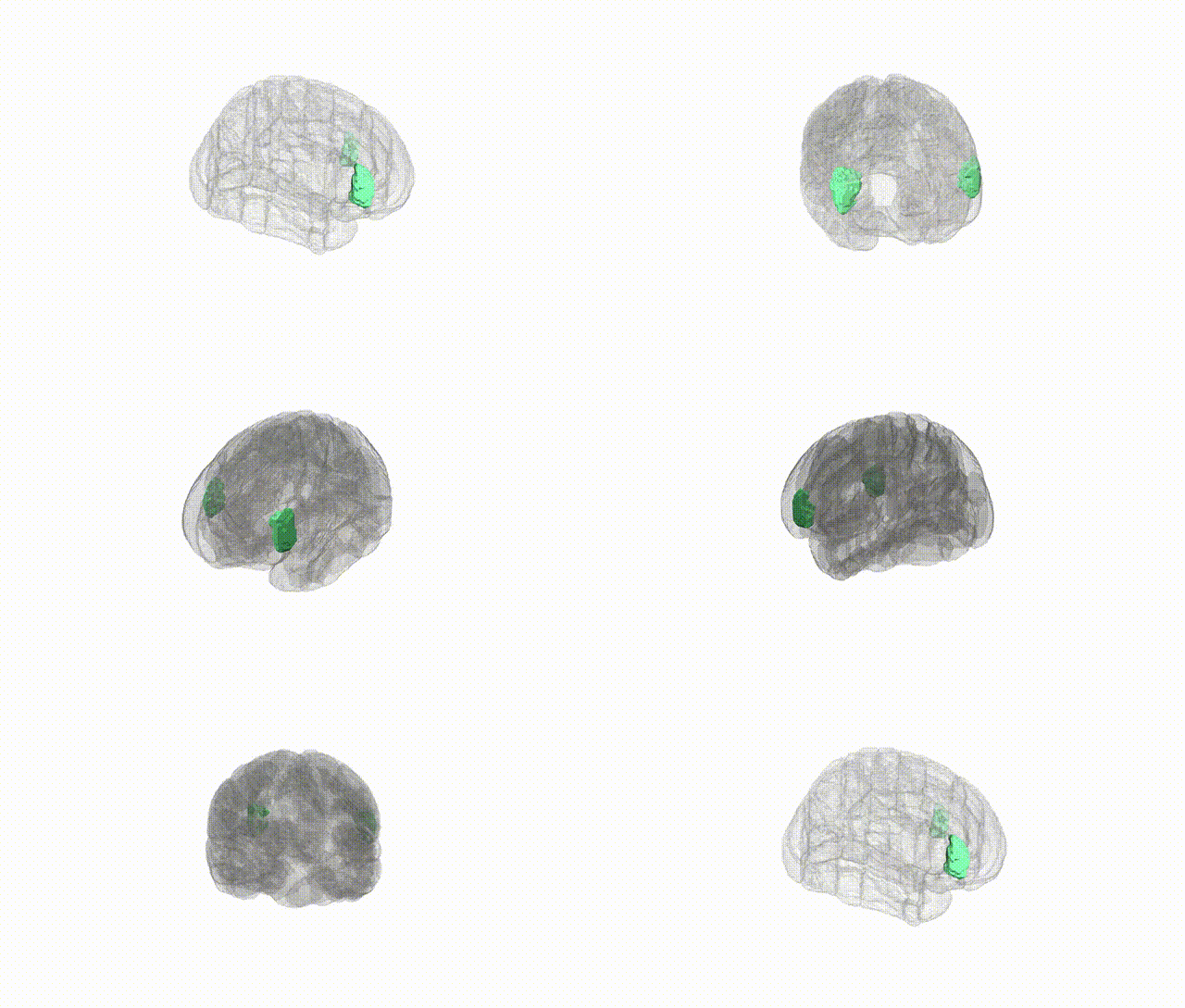
Full Quality Version: Download MP4
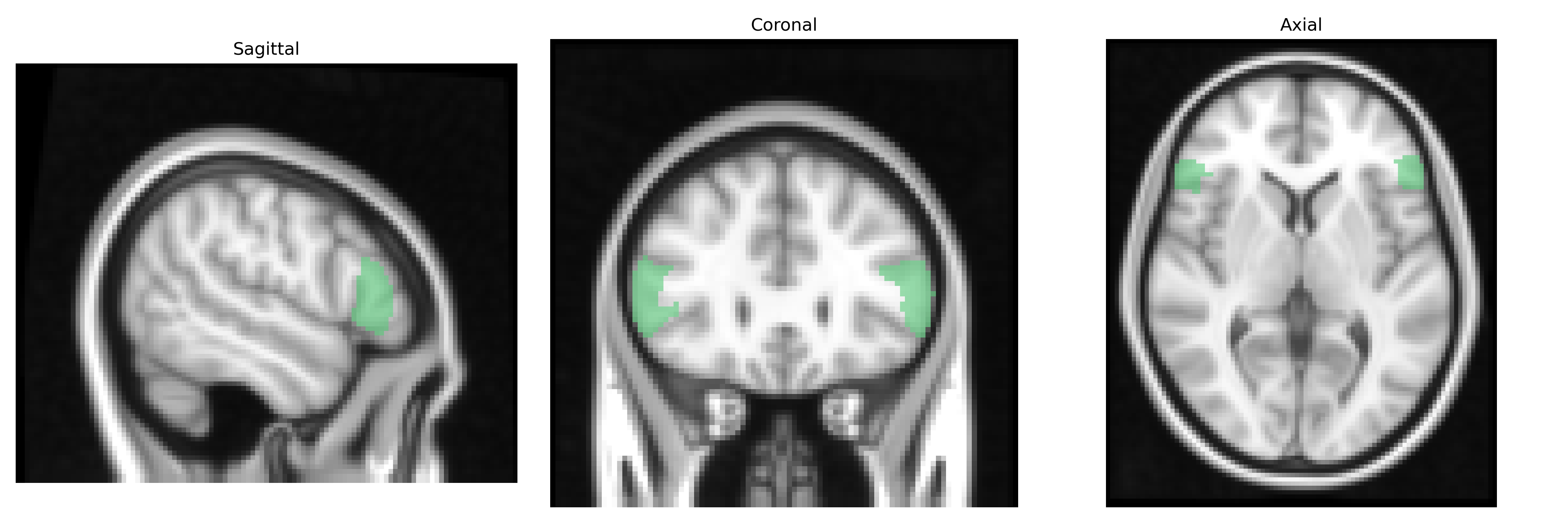
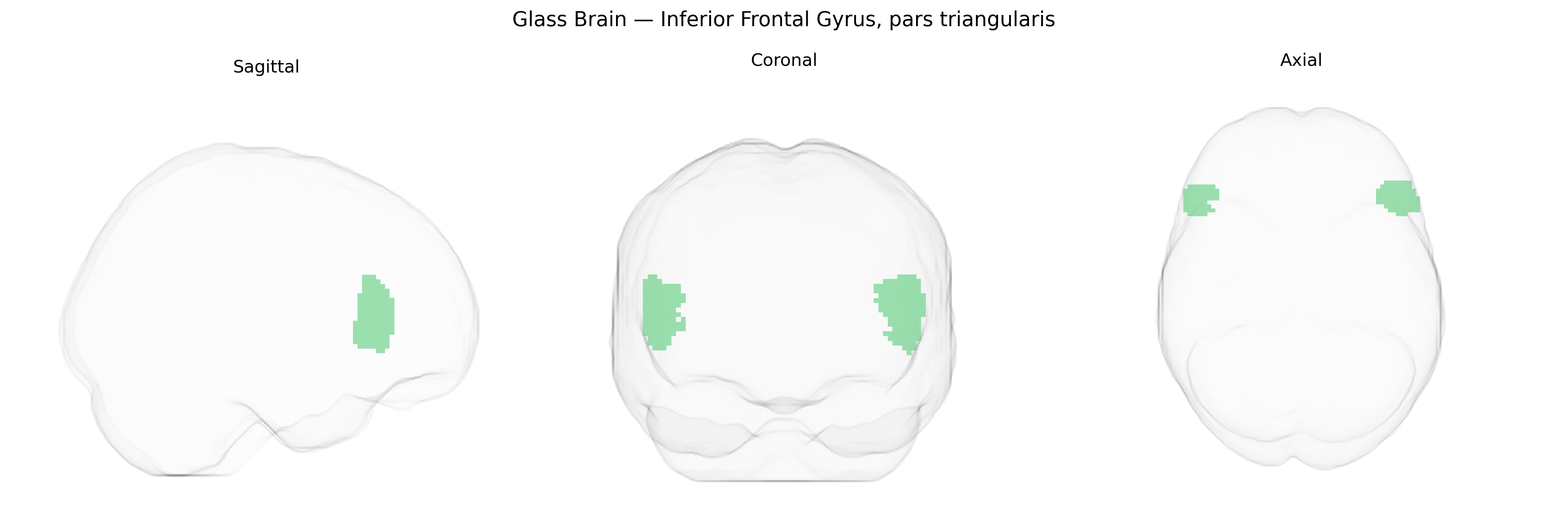
Wali Sidiqyar*, Gaurav Rudravaram*, Elyssa M. McMaster, Trent M. Schwartz, Adam M. Saunders, Kurt G. Schilling, Bennett A. Landman "Introducing SPINS: A Shared Public Visualization Library of Neuroanatomical Structures." Medical Imaging with Deep Learning- short paper
This resource is licensed under CC0 1.0 Universal (Public Domain).